The Missouri EV Incentive Landscape in 2026
Buyers searching for a Missouri EV tax credit often hit a wall: unlike states such as Colorado, California, or Massachusetts, Missouri does not currently offer a standalone state-level tax credit or rebate for purchasing a new battery-electric vehicle. That absence shapes the entire ownership math for Show-Me State shoppers, who must lean heavily on federal incentives, utility rebates, and long-term fuel and maintenance savings to close the price gap with gas cars.
This guide walks through exactly what incentives are available to Missouri EV buyers in 2026, what the five-year total cost of ownership looks like with real numbers, and where EVs genuinely save money — and where they cost more. No cherry-picking, no hype.
Federal EV Tax Credit: What Missouri Buyers Actually Qualify For
With no state credit to stack on top, the IRS §30D Clean Vehicle Credit is the single biggest price-reducer available to Missouri EV shoppers. The credit is worth up to $7,500, but it is not automatic — it is a combination of two halves, each with its own sourcing requirement, and it comes with hard income and MSRP caps.
§30D Eligibility Checklist (2026 Tax Year)
- $3,750 battery component requirement: A percentage of battery components must be manufactured or assembled in North America. The threshold tightens annually.
- $3,750 critical minerals requirement: A percentage of critical minerals must be sourced from the U.S. or a free-trade-agreement partner. This threshold also rises each year.
- Income caps (modified AGI): $300,000 joint / $225,000 head of household / $150,000 single filers.
- MSRP caps: $80,000 for SUVs, pickups, and vans; $55,000 for sedans and other body styles.
- Final assembly: Vehicle must undergo final assembly in North America (check the VIN at fueleconomy.gov).
- Point-of-sale transfer: Since 2024, you can transfer the credit to the dealer at purchase and take it as an immediate price reduction, even if your tax liability is lower than the credit amount.
- Vehicle eligibility list: Only models on the IRS's current qualified-vehicles list are eligible — this list changes as automakers reshuffle supply chains.
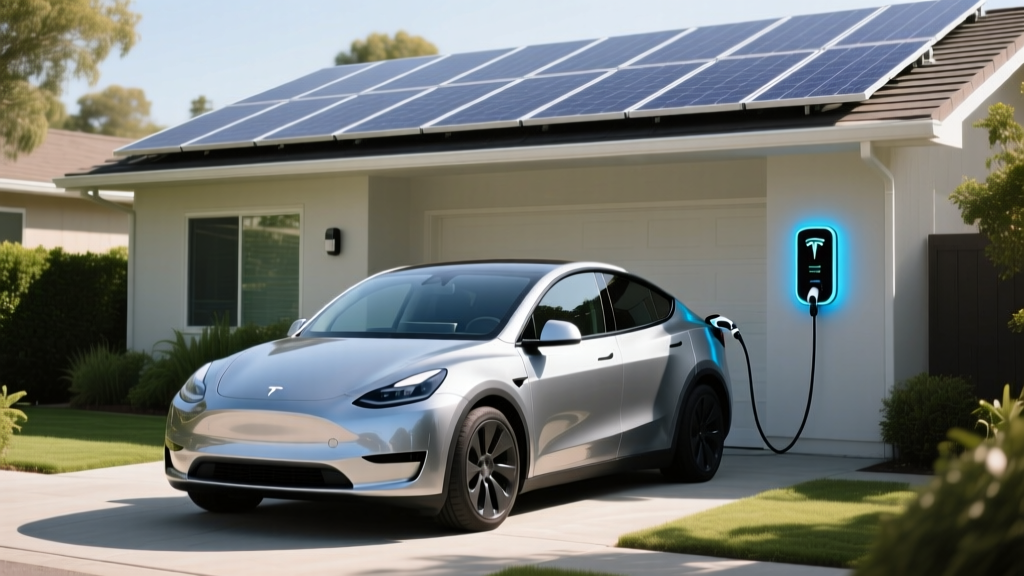
Many popular 2026 models — including the Tesla Model Y, Ford F-150 Lightning, Chevrolet Equinox EV, and Hyundai Ioniq 5 (U.S.-assembled trims) — qualify for at least a partial credit. But qualification is model- and trim-specific, and the IRS updates the eligible list periodically. Always verify the exact VIN before signing paperwork.
Missouri Utility Rebates and Local Incentives
State & Local Incentives Vary
While Missouri lacks a statewide EV purchase rebate, some utilities and municipalities offer their own incentives. These change frequently — always confirm with your provider before relying on them in your purchase math.
Missouri's major electric utilities have historically offered rebates tied to home charging equipment or EV-specific rate plans rather than vehicle purchase credits:
- Ameren Missouri: Has offered rebates for Level 2 home charger installations and time-of-use (TOU) rate plans that lower per-kWh costs for overnight charging. Check Ameren's current energy-efficiency programs for 2026 availability.
- Evergy (Kansas City area): Has provided EV charger rebates and special EV TOU rates. Evergy's Clean Charge program has been a key tool for KC-area buyers.
- Springfield City Utilities (CU): Has offered EV rate programs with off-peak discounts for customers who install smart chargers.
- Empire District: Southwest Missouri customers should check for any active charger-installation or demand-response incentives.
These rebates typically range from $250 to $500 for a Level 2 charger — helpful, but they don't move the needle on vehicle purchase price the way a state credit would. The real value lies in TOU rates that can drop your effective charging cost to $0.06–$0.09/kWh overnight.
5-Year Total Cost of Ownership: EV vs. Gas in Missouri
To make the purchase decision concrete, here's a side-by-side five-year TCO comparison using a popular midsize crossover EV (2026 Tesla Model Y Long Range AWD, ~$44,990 MSRP before incentives) versus a comparably equipped gas crossover (2026 Toyota RAV4 AWD, ~$33,500 MSRP). Assumptions: 15,000 miles/year, 75,000 miles total, Missouri average electricity at $0.13/kWh, Missouri regular gas at $3.10/gallon, and home Level 2 charging.
| Category | EV (Model Y LR AWD) | Gas (RAV4 AWD) |
|---|---|---|
| Purchase price (MSRP) | $44,990 | $33,500 |
| Federal tax credit (§30D) | −$7,500 | $0 |
| Effective purchase price | $37,490 | $33,500 |
| Fuel / energy (75k mi) | $2,925 (27 kWh/100mi × $0.13) | $7,750 (30 MPG × $3.10) |
| Maintenance (5 years) | $1,500 | $3,500 |
| Insurance (5 years) | $10,500 | $7,500 |
| Estimated depreciation | $18,750 (50%) | $13,400 (40%) |
| 5-Year Total | $71,165 | $65,650 |
| Cost per mile | $0.95 | $0.88 |
Key takeaway: the EV's massive fuel and maintenance savings (~$6,825 combined over five years) are real, but they don't fully offset the higher purchase price, steeper depreciation, and elevated insurance premiums. The gap narrows significantly if you qualify for the full $7,500 credit and charge primarily at home on TOU rates — and widens if you rely on expensive DC fast charging.
Charging vs. Gas: The Real Per-Mile Math in Missouri
Missouri's residential electricity rate averages around $0.13/kWh (close to the national average), while gas prices tend to run slightly below the national mean. Here's the per-mile cost at different charging scenarios:
| Scenario | Rate | Cost/Mile |
|---|---|---|
| Home Level 2 (MO avg) | $0.13/kWh | $0.035 |
| Home TOU off-peak | $0.07/kWh | $0.019 |
| Public DC fast (EA/EVgo) | $0.38/kWh | $0.103 |
| Tesla Supercharger (avg) | $0.28/kWh | $0.076 |
| Gas car (30 MPG, $3.10/gal) | — | $0.103 |
| Gas car (25 MPG, $3.10/gal) | — | $0.124 |
At home on standard rates, the EV costs roughly one-third what gas costs per mile. On a TOU plan, it drops to one-fifth. But frequent DC fast charging at public stations can actually cost more per mile than gasoline — a critical consideration for Missouri apartment-dwellers or rural drivers without home charging access. Missouri's public charging infrastructure is improving along I-70, I-44, and I-29 corridors, but charging deserts remain in many rural counties.
Maintenance Savings: Where EVs Genuinely Win
| Service Item | EV Cost | Gas Car Cost |
|---|---|---|
| Oil changes | $0 | $600–$900 |
| Brake pads/rotors | $0–$200 (regen extends life) | $600–$1,200 |
| Transmission fluid | $0 (single-speed) | $150–$300 |
| Cabin air filter | $100–$200 | $100–$200 |
| Tire rotation/replacement | $800–$1,200 (heavier, more torque) | $600–$1,000 |
| Coolant/other fluids | $100–$200 | $200–$400 |
| Total estimate | $1,000–$1,800 | $2,250–$4,000 |
The savings are real and structural: no internal combustion engine means no oil, no spark plugs, no timing belts, no exhaust system. Regenerative braking dramatically extends brake pad life — many EV owners report original pads lasting 80,000+ miles. The one area where EVs can cost more is tires: the combination of instant torque and higher curb weight (batteries add 500–1,000 lbs) accelerates tire wear by roughly 15–25% compared to equivalent gas vehicles.
Insurance Costs: The Uncomfortable Reality
EVs cost more to insure — typically 15–30% more than comparable gas vehicles. The reasons are straightforward:
- Higher repair costs: Battery packs are expensive to diagnose and replace after collision damage. Even minor rear-end impacts can total a battery.
- Specialized labor: High-voltage system repairs require certified technicians, and fewer shops are qualified.
- Parts availability: EV-specific body panels and battery modules can have longer lead times.
- Higher vehicle values: Insurers price collision/comprehensive coverage partly on replacement cost.
For the Model Y vs. RAV4 comparison above, expect annual EV insurance premiums in Missouri to run approximately $2,000–$2,200 vs. $1,400–$1,600 for the gas crossover, depending on your driving record, ZIP code, and coverage levels. Always get a quote from your insurer before purchasing — the spread varies significantly by carrier. Some insurers (like Progressive and State Farm) have started offering EV-specific discounts, but these don't eliminate the premium gap.
EV Depreciation and Resale Value in 2026
Depreciation has been the most volatile variable in EV ownership economics. After a brutal repricing wave in 2023–2024 (triggered by Tesla's price cuts, new model introductions, and the used-EV market correction), EV depreciation has stabilized but remains steeper than the gas-car average.
Current 5-year depreciation trends for mainstream EVs hover around 45–55% of original transaction price, compared to 35–45% for popular gas crossovers. Key factors dragging EV resale values:
- Rapid price competition: New EVs keep getting cheaper, which compresses used values.
- Battery health uncertainty: Used buyers remain cautious about out-of-warranty battery replacement costs ($10,000–$20,000 depending on pack size).
- Tech obsolescence: Charging speed, range, and software features advance quickly, making 3-year-old EVs feel dated.
- Leasing dominance: High lease volumes flood the used market with 3-year-old supply.
Brands with strong reliability reputations and longer battery warranties (Hyundai/Kia's 10-year/100,000-mile battery warranty, for example) tend to hold value better. Tesla's depreciation has improved somewhat after the 2023–2024 reset, but it remains sensitive to new-vehicle price changes.
Putting It Together: Is an EV Worth It in Missouri?
Choose an EV in Missouri if:
- You can install a Level 2 charger at home (the economics collapse on public-only charging)
- You qualify for the full or partial §30D federal tax credit
- Your daily commute is under 80 miles round-trip (well within any modern EV's real-world range)
- You plan to keep the vehicle 5+ years to recoup the purchase premium through fuel/maintenance savings
- Your utility offers a TOU rate plan for cheap overnight charging
Stick with gas or consider a PHEV if:
- You rent or live in a condo without charging access
- You regularly drive 250+ miles in a day through rural Missouri (charging infrastructure gaps remain)
- Your income exceeds §30D caps and you can't access the used-EV credit
- You change vehicles every 2–3 years (depreciation will sting more)
Missouri's lack of a state EV tax credit means buyers need to work harder to make the math pencil out. But with the federal credit, utility TOU rates, and genuine fuel and maintenance savings, the five-year gap is closer than the sticker prices suggest — and for high-mileage drivers who charge at home, the EV can actually come out ahead.
Frequently Asked Questions
Does Missouri have a state EV tax credit in 2026?
No. As of 2026, Missouri does not offer a state-level tax credit or purchase rebate for electric vehicles. Buyers rely on the federal §30D credit (up to $7,500), utility rebates for home chargers, and long-term fuel savings. Legislation has been proposed in past sessions to create a state incentive, but none has passed into law.
How much does it really cost to own an EV over 5 years in Missouri?
For a mainstream EV crossover like the Tesla Model Y or Hyundai Ioniq 5, expect a 5-year TCO of roughly $65,000–$75,000 (including purchase price after tax credit, fuel, insurance, maintenance, and depreciation). That's typically $3,000–$8,000 more than a comparable gas crossover over the same period, though the gap narrows with high mileage, TOU electricity rates, and full tax-credit qualification.
Do I qualify for the $7,500 federal EV tax credit?
It depends on your income, the vehicle's MSRP, and its battery sourcing. Your modified AGI must be under $300,000 (joint), $225,000 (head of household), or $150,000 (single). The vehicle MSRP must be under $80,000 for SUVs/trucks or $55,000 for sedans. The vehicle must be on the IRS qualified vehicles list and undergo final assembly in North America. You can transfer the credit to the dealer at point of sale for an immediate price reduction.
How much do I save on fuel and maintenance with an EV in Missouri?
At Missouri's average electricity rate of ~$0.13/kWh and gas at ~$3.10/gallon, a typical EV saves $4,000–$5,000 on fuel over 5 years (75,000 miles) compared to a 30 MPG gas car. Maintenance savings add another $1,500–$2,500 (no oil changes, reduced brake wear). Combined, expect $5,500–$7,500 in operational savings over five years.
Are EVs more expensive to insure in Missouri?
Yes, typically 15–30% more than comparable gas vehicles. Expect to pay $2,000–$2,200/year for full coverage on a midsize EV crossover vs. $1,400–$1,600 for a gas equivalent. Higher repair costs, specialized labor, and elevated vehicle values drive the premium gap. Get quotes before buying — the spread varies significantly by insurer.
How well do EVs hold their value?
EVs currently depreciate 45–55% over five years, compared to 35–45% for popular gas vehicles. The gap has narrowed since the 2023–2024 market correction but remains a real cost factor. Models with strong reliability records, longer battery warranties, and stable pricing (less discounting) tend to retain value better.