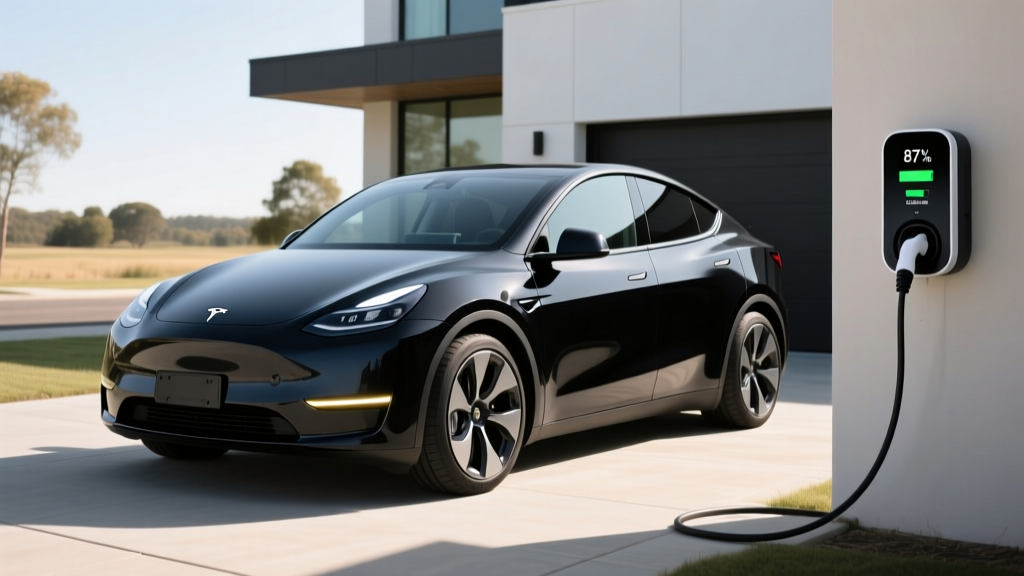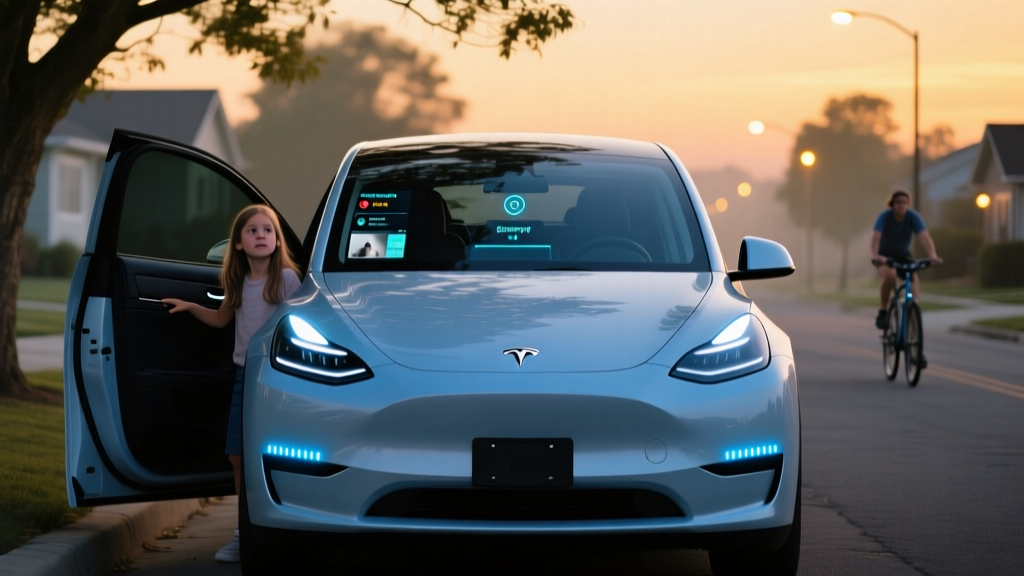
When headlines broke that a missing girl was found in a Tesla, it wasn't luck — it was the vehicle's integrated security and telematics ecosystem working exactly as designed. GPS tracking, Sentry Mode cameras, and remote app access gave authorities and family members the tools to locate the vehicle in real time. That incident crystallized what EV owners have known for years: modern electric vehicles double as rolling security platforms.
But beyond the safety story, the 2026 Tesla Model Y remains one of the most capable and scrutinized EVs on the market. Below, we break down every spec that matters — from EPA range and DC fast-charging curves to federal tax credit eligibility — and evaluate whether Tesla's safety-tech advantage justifies the purchase in 2026.
The Safety Story: How Tesla's Tech Stack Helped Find a Missing Child
The details that made the "missing girl found in Tesla" story possible rest on three pillars of Tesla's software-hardware integration:
- Sentry Mode: When parked, the vehicle's external cameras continuously monitor the surroundings. If a threat-level event is detected, the system saves footage to a USB drive and sends a push notification to the owner's phone. In the missing-child case, Sentry Mode footage provided timestamped visual evidence of the vehicle's location and who entered or exited.
- GPS Telematics & App Tracking: Tesla's mobile app provides real-time GPS coordinates of the vehicle. Family members or law enforcement (with proper authorization) can pinpoint the car's location within meters — a capability most legacy automakers still gate behind subscription services or don't offer at all.
- Pin to Drive: This security feature requires a PIN code to be entered on the touchscreen before the vehicle can be driven, preventing unauthorized use even if someone gains physical access to the cabin.
These features aren't unique to Teslas in concept, but Tesla's implementation is deeply integrated — no third-party dongles, no dealer-installed tracking modules. It's native to the vehicle's operating system and accessible from any smartphone with the Tesla app.
2026 Tesla Model Y: Full Spec Breakdown
The 2026 Model Y received Tesla's "Juniper" refresh, bringing updated styling, a ventilated-seat option, ambient lighting, and a revised suspension tune. Here's how the numbers stack up across the lineup:
| Spec | Long Range RWD | Long Range AWD | Performance |
|---|---|---|---|
| EPA Range | 320 mi | 303 mi | 285 mi |
| Battery (usable) | ~75 kWh (NMC) | ~75 kWh (NMC) | ~75 kWh (NMC) |
| Drivetrain | Rear-Wheel Drive | Dual-Motor AWD | Dual-Motor AWD |
| Horsepower | 346 hp | 384 hp | 456 hp |
| 0–60 mph | 5.4 sec | 4.6 sec | 3.5 sec |
| Top Speed | 125 mph | 125 mph | 155 mph |
| Max DC Charge Rate | 250 kW | 250 kW | 250 kW |
| 10–80% DC Time | ~27 min | ~27 min | ~27 min |
| Level 2 Rate | 11.5 kW (~44 mi/hr) | 11.5 kW (~44 mi/hr) | 11.5 kW (~44 mi/hr) |
| MPGe (combined) | 123 MPGe | 117 MPGe | 111 MPGe |
| Efficiency | 27 kWh/100mi | 29 kWh/100mi | 30 kWh/100mi |
| Base MSRP | $46,630 | $49,630 | $53,630 |
Source: fueleconomy.gov and Tesla's official specifications page.
Real-World Range: What the EPA Sticker Doesn't Tell You
EPA Sticker: 320 miles (Long Range RWD)
Real-World Expectation: ~265–290 miles on a mixed highway/city drive at 70–75 mph; expect ~220–250 miles in sub-freezing temperatures due to cabin heating demands and increased battery resistance.
The Model Y's NMC battery pack delivers strong energy density, but real-world efficiency depends heavily on driving style, ambient temperature, and terrain. In our experience with Tesla's NMC packs:
- Highway driving at 75 mph: Expect roughly 10–15% less range than the EPA combined figure. Aerodynamic drag dominates at speed.
- Cold weather (below 32°F): Range loss of 15–30% is typical, though the Model Y's heat pump (standard since 2021) mitigates this better than resistive heating systems in older EVs.
- City/regenerative driving: You can meet or slightly exceed the EPA estimate thanks to frequent regen braking recovering energy.
Preconditioning the battery before a fast-charge session or a cold-weather commute is essential. Tesla's navigation system does this automatically when a Supercharger is set as your destination — a significant advantage for charge-curve optimization.
Charging Speed: DC Fast, Level 2, and the Charge Curve Reality
| Charging Level | Power | Miles Added per Hour | Best Use Case |
|---|---|---|---|
| Level 1 (120V) | ~1.4 kW | ~4–5 mi/hr | Emergency/top-off only |
| Level 2 (240V, 48A) | 11.5 kW | ~44 mi/hr | Home overnight charging |
| DC Fast (Supercharger V3) | Peak 250 kW | ~1,000+ mi/hr (peak) | Road trips, rapid top-ups |
| DC Fast (Supercharger V4) | Peak 250+ kW | Similar to V3 for Model Y | Next-gen stalls |
A critical detail many buyers overlook: peak charge rate is not sustained charge rate. The Model Y's 250 kW peak applies only at low states of charge (roughly 10–30% SoC) when the battery is preconditioned. The charge curve tapers significantly above 60%, and by 80% SoC, you're pulling roughly 50–70 kW. This is why Tesla (and all EV makers) quote 10–80% times rather than 0–100%.
At home, a Wall Connector on a 60-amp circuit delivers 11.5 kW, adding roughly 44 miles of range per hour. A full overnight charge (8–10 hours) easily replenishes the entire battery. Home charging installation typically costs $800–$2,000 depending on panel capacity and run length — a licensed electrician should assess your 200-amp panel headroom before committing.
Sentry Mode, Autopilot, and the Full Safety-Tech Suite
SAE Automation Level: Tesla's Autopilot and Full Self-Driving (Supervised) are Level 2 driver-assistance systems. The driver must remain engaged, hands on the wheel, and eyes on the road at all times. These are not self-driving systems. Only Level 4 robotaxi services like Waymo operate without a human driver.
The 2026 Model Y continues to ship with Tesla's Hardware 4 (HW4) sensor suite: higher-resolution cameras, improved processing, and enhanced low-light performance. Here's what's included and what costs extra:
- Basic Autopilot (standard): Traffic-aware cruise control and autosteer on marked roads.
- Enhanced Autopilot ($6,000 option): Adds auto lane change, autosteer on city streets, summon, and smart summon.
- Full Self-Driving Supervised ($8,000 option): Adds traffic light and stop sign recognition, and broader city-street autosteer capabilities. Still requires active driver supervision.
- Sentry Mode (standard): 360-degree camera surveillance while parked, with event recording and app notifications.
- Dashcam (standard): Continuous forward-facing recording saved to USB.
- Pin to Drive (standard): Requires a PIN before the vehicle can be shifted into drive.
What Sentry Mode does NOT do: It does not provide live video streaming to your phone while parked (only event-triggered clips). It does not record audio. It deactivates automatically when the battery drops below 20% SoC to preserve driving range. In extreme heat, Sentry Mode may temporarily disable to protect the vehicle's electronics. Footage quality at night depends on ambient lighting — the cameras do not have infrared illumination.
Pricing, Trims, and Federal Tax Credit Eligibility
| Trim | Base MSRP | Est. After §30D Credit | Destination |
|---|---|---|---|
| Long Range RWD | $46,630 | ~$39,130* | $1,390 |
| Long Range AWD | $49,630 | ~$42,130* | $1,390 |
| Performance | $53,630 | ~$46,130* | $1,390 |
*Estimated price assumes full $7,500 federal tax credit eligibility. Actual credit depends on buyer income, battery sourcing, and MSRP caps under IRS §30D rules.
The Model Y qualifies for up to $7,500 under the federal clean vehicle credit, but eligibility is not automatic. Key requirements for 2026:
- MSRP cap: The vehicle's MSRP must not exceed $80,000 for SUVs (Model Y qualifies).
- Buyer income cap: Modified adjusted gross income must not exceed $150,000 (single), $225,000 (head of household), or $300,000 (joint).
- Battery sourcing: A percentage of critical minerals and battery components must be sourced from the U.S. or free-trade-agreement countries. Tesla has progressively shifted supply chains to meet these thresholds, but the exact credit amount ($3,750 or $7,500) depends on the specific build's compliance with both the critical-minerals and battery-component requirements.
- Point-of-sale transfer: As of 2024, buyers can transfer the credit to the dealer at point of sale, reducing the purchase price directly rather than waiting for a tax refund.
We strongly recommend consulting a tax professional and checking the latest IRS guidance before assuming the full $7,500. Battery-sourcing rules tighten annually, and eligibility can change between model years or even production batches.
Interior, Cargo, and Practicality
The Juniper-refreshed Model Y interior is noticeably quieter and more refined than pre-2025 models, with acoustic glass, ventilated front seats, and a rear-seat touchscreen for climate and media control.
- Cargo volume: 30.2 cu ft behind the second row; 72.1 cu ft with rear seats folded.
- Front trunk (frunk): 4.1 cu ft — useful for charging cables or a small bag.
- Legroom: 41.8 inches front / 37.4 inches rear.
- Seating: 5-passenger standard; a 7-seat option (third row) is available but extremely tight — suitable only for small children.
The Model Y's cargo advantage over the Model 3 sedan is substantial and is the primary reason families choose it. However, the sloping roofline cuts into vertical cargo space compared to boxier competitors like the Hyundai Ioniq 5 or Kia EV6.
Battery, Warranty, and Long-Term Ownership
Tesla equips the Model Y with an NMC (nickel manganese cobalt) battery pack. NMC offers higher energy density than LFP (lithium iron phosphate), which is why it's used in the Long Range and Performance trims — but it's more sensitive to sustained 100% states of charge. Tesla recommends daily charging to 80–90% for NMC packs and 100% only before long trips.
- Battery warranty: 8 years / 120,000 miles (Long Range), 8 years / 120,000 miles (Performance), with a minimum 70% capacity retention threshold.
- Drive unit warranty: 8 years / 120,000 miles.
- Bumper-to-bumper: 4 years / 50,000 miles.
Real-world degradation data from Tesla's fleet suggests NMC packs lose roughly 10–12% capacity over the first 100,000 miles, with the curve flattening significantly thereafter. Owners who avoid frequent DC fast charging and don't habitually charge to 100% tend to see better retention.
Battery replacement out of warranty remains expensive — estimated at $12,000–$16,000 for a Model Y pack in 2026 — but the vast majority of packs outlast their warranty period without needing replacement.
Pros, Cons, and the Competition
Pros
- Best-in-class Supercharger network — over 60,000 stalls globally, with the most reliable uptime of any public charging network
- Integrated safety/telematics suite (Sentry Mode, GPS tracking, Pin to Drive) at no extra cost
- Segment-leading efficiency — 27 kWh/100mi on the Long Range RWD is exceptional for a compact SUV
- Strong resale value relative to most EV competitors
- Over-the-air updates continuously add features and refinements
- Spacious cargo area with frunk versatility
Cons
- No Apple CarPlay or Android Auto — Tesla's infotainment is proprietary
- Ride quality, while improved with Juniper, is still firmer than the Hyundai Ioniq 5 or Kia EV9
- FSD Supervised remains a Level 2 system despite the name and $8,000 price tag
- Service center wait times can be lengthy in some metro areas
- Touchscreen-dependent controls (no physical buttons for climate, mirrors, or glovebox)
- Insurance premiums tend to run 15–25% higher than comparable ICE vehicles
Against key competitors, the Model Y's advantages center on the Supercharger ecosystem, energy efficiency, and software integration. The Hyundai Ioniq 5 offers faster 800V charging architecture (10–80% in ~18 minutes vs the Model Y's ~27), a more comfortable ride, and CarPlay support — but its public charging network access (via Electrify America and others) remains less reliable than Tesla's proprietary Superchargers, even with NACS adapter compatibility expanding.
The Ford Mustang Mach-E is a strong driver's car with engaging dynamics, but trails the Model Y in efficiency and cargo space. The Kia EV6 shares the Ioniq 5's 800V architecture and offers striking styling, but its rear-seat space is tighter.
Who Should Buy the 2026 Tesla Model Y?
Choose the Model Y if:
- You road-trip frequently and want the most reliable DC fast-charging network available
- Integrated vehicle security features (Sentry Mode, GPS tracking) are a priority — the "missing girl found in Tesla" case demonstrated their real-world value
- You value efficiency and want the most miles per kWh in the compact electric SUV segment
- You prefer a minimal, screen-centric interior and don't need CarPlay/Android Auto
Look elsewhere if:
- You want the fastest possible DC charging (consider the Ioniq 5 or EV6 with 800V architecture)
- You need physical buttons, a plush ride, or a third row with real adult legroom
- You're uncomfortable with Tesla's touchscreen-only control paradigm
Frequently Asked Questions
What is the real-world range of the 2026 Tesla Model Y?
The EPA rates the Long Range RWD at 320 miles. In real-world highway driving at 70–75 mph, expect roughly 265–290 miles. In cold weather below freezing, plan for 220–250 miles. Preconditioning and moderate speeds help close the gap.
How fast does the Model Y charge at home and on the road?
At home on a Level 2 Wall Connector (240V, 48A), the Model Y charges at 11.5 kW, adding about 44 miles of range per hour — a full charge overnight. On a Tesla V3 Supercharger, it peaks at 250 kW and charges from 10–80% in approximately 27 minutes, though the rate tapers significantly above 60% SoC.
How much does the 2026 Model Y cost after the federal tax credit?
The Long Range RWD starts at $46,630 before destination. If you qualify for the full $7,500 federal credit under IRS §30D, the effective price drops to roughly $39,130. Eligibility depends on your income (under $150K single / $300K joint), the vehicle's MSRP (must be under $80K for SUVs), and battery-sourcing compliance. The credit can be applied at point of sale. Consult a tax professional for your specific situation.
Does the 2026 Tesla Model Y qualify for the federal EV tax credit?
Yes — the Model Y is currently eligible for up to $7,500 under the §30D clean vehicle credit, provided the buyer meets income thresholds and the specific vehicle build meets critical-mineral and battery-component sourcing requirements. Because sourcing rules tighten over time, confirm eligibility on IRS.gov before purchasing.
Is the Model Y worth buying over competitors like the Ioniq 5 or Mach-E?
It depends on your priorities. The Model Y wins on efficiency, Supercharger network access, cargo space, and integrated security features. The Ioniq 5 wins on DC charging speed (18 min vs 27 min, 10–80%), ride comfort, and CarPlay support. The Mach-E wins on driving engagement. All three are strong choices — test-drive each and weigh which trade-offs matter to your daily routine.
What are the biggest pros and cons of the 2026 Model Y?
Top pros: Supercharger network, Sentry Mode and GPS security, class-leading efficiency, strong cargo capacity, OTA updates. Top cons: no CarPlay/Android Auto, firm ride, FSD costs $8,000 yet remains Level 2, touchscreen-only controls, higher insurance premiums.
Can Sentry Mode footage be used by law enforcement?
Yes. Sentry Mode saves event-triggered video clips to a USB drive in the vehicle. These clips are timestamped and can be provided to law enforcement. In the widely reported case of a missing girl found in a Tesla, Sentry Mode footage and GPS data were instrumental in locating the vehicle and confirming timelines. Tesla can also provide vehicle-location data to law enforcement with proper legal authorization (warrant or owner consent).