Minnesota's EV Incentive Landscape at a Glance
Minnesota does not currently offer a standalone state-purchase rebate for new electric vehicles the way Colorado or California do. Instead, Minnesota EV buyers stack federal incentives, utility rebates, and operational savings to close the price gap with gas cars. Understanding exactly which benefits apply to your income, vehicle, and utility territory is the difference between a $7,500 effective discount and leaving thousands on the table.
This guide walks through the real numbers: the IRS §30D federal credit as it stands for 2026, Minnesota-specific utility programs, and a five-year total cost of ownership model that accounts for the state's brutal winters, where cold-weather range loss and battery preconditioning matter more than in most markets.
Do I Qualify for the Federal EV Tax Credit in Minnesota?
The federal clean vehicle credit under §30D remains the single largest incentive available to Minnesota buyers, but it is not automatic. Eligibility hinges on four interlocking rules that changed significantly after the Inflation Reduction Act and have tightened further through 2025-2026 battery-sourcing requirements.
§30D Credit Eligibility Checklist (2026)
- Credit amount: Up to $7,500 ($3,750 for meeting critical-minerals requirements + $3,750 for battery-component requirements).
- Buyer income caps (modified AGI): $150,000 single / $225,000 head of household / $300,000 joint filers.
- Vehicle MSRP caps: $80,000 for SUVs, pickups, and vans; $55,000 for sedans and other body styles.
- Battery sourcing: Increasing percentages of critical minerals and battery components must be sourced from the U.S. or FTA partners — many vehicles that qualified in 2023 no longer qualify in 2026.
- Assembly: Final assembly must occur in North America (verify via the VIN decoder at fueleconomy.gov).
- Point-of-sale transfer: You can transfer the credit to the dealer at purchase, reducing your out-of-pocket price directly — you do not need to wait until tax filing.
- One credit per taxpayer per year: You cannot claim credits for multiple new EVs in the same tax year.
Because battery-sourcing rules have tightened annually, the list of qualifying vehicles is shorter in 2026 than it was in 2024. Always verify a specific VIN's eligibility on the DOE's clean vehicle credit lookup tool before signing paperwork — dealer claims are not always accurate.
Minnesota Utility Rebates & Local Incentives
Important: Utility rebates vary by service territory and are subject to funding availability. Confirm current amounts directly with your utility before budgeting around them.
Minnesota's investor-owned utilities and cooperatives offer some of the more practical incentive structures in the Midwest, primarily focused on home charging infrastructure rather than vehicle purchase price:
- Xcel Energy (Metro/Eastern MN): Historically offers rebates on Level 2 home charger hardware and installation, plus a reduced EV time-of-use (TOU) electricity rate that cuts charging costs significantly overnight.
- Dakota Electric Association: Has offered rebates for Level 2 charger installation and EV-specific rate plans — amounts have ranged from $500 to $1,000 for equipment.
- Minnkota Power Cooperative / municipal utilities: Various co-ops across greater Minnesota have offered charger rebates, though amounts vary widely ($200-$750 typical).
- Minnesota Pollution Control Agency (MPCA): Periodically administers fleet and commercial EV grants; consumer-facing programs have been limited but worth monitoring.
Minnesota does not impose an additional EV registration fee penalty as some states do to offset lost gas-tax revenue, which keeps annual registration costs comparable to a gas car. The state sales tax of 6.875% applies to EVs the same as any vehicle — the federal credit, when transferred at point of sale, effectively reduces the taxable base in some dealer implementations, but confirm this with your dealer and tax professional.
5-Year Total Cost of Ownership: EV vs. Gas in Minnesota
To ground this in real numbers, here is a modeled comparison between a representative EV (2026 Tesla Model Y Long Range AWD, ~$48,000 MSRP, 81 kWh usable battery, EPA 310 miles) and a comparable gas crossover (2026 Toyota RAV4 AWD, ~$33,000 MSRP, EPA 30 MPG combined). Both are driven 12,000 miles/year in the Minneapolis-St. Paul metro area.
| Cost Category (5 Years) | EV (Model Y LR AWD) | Gas (RAV4 AWD) |
|---|---|---|
| Purchase Price (after incentives) | $40,500 (after $7,500 §30D transfer) | $33,000 |
| Fuel/Energy (60,000 miles) | $2,880 ($0.12/kWh avg, 3.5 mi/kWh) | $7,200 ($3.00/gal, 30 MPG) |
| Maintenance | $1,500 | $3,750 |
| Insurance (5-year total) | $9,500 | $7,250 |
| Depreciation (est.) | $18,000 | $12,000 |
| Total 5-Year Cost | $72,380 | $63,200 |
| Cost Per Mile | $1.21 | $1.05 |
The EV still carries a cost premium over five years in this scenario, driven primarily by higher depreciation and insurance. However, the gap narrows significantly if you buy a lower-priced EV (a Chevy Equinox EV at ~$35,000 after credit), charge primarily on a utility TOU rate, or keep the vehicle beyond five years when the EV's lower operating costs compound.
Charging Cost vs. Gas: The Minnesota Math
Per-Mile Energy Cost
| Scenario | Cost per Mile | Assumptions |
|---|---|---|
| Home Level 2, Xcel TOU Rate | $0.028 | $0.08/kWh off-peak, 3.5 mi/kWh |
| Home Level 2, Standard Rate | $0.043 | $0.13/kWh avg, 3.5 mi/kWh |
| Public DC Fast Charger | $0.10-$0.14 | $0.35-$0.48/kWh, 3.5 mi/kWh |
| Gas Crossover (30 MPG) | $0.10 | $3.00/gallon |
| Gas Crossover (22 MPG, city) | $0.136 | $3.00/gallon |
The critical takeaway: home charging on a utility TOU rate is 3-4x cheaper per mile than gas. But if you rely entirely on public DC fast charging, your per-mile cost equals or exceeds a fuel-efficient gas car. Minnesota's charging infrastructure along I-35, I-94, and I-90 has improved substantially, but rural routes in western and northern Minnesota remain sparse — plan road trips around charger locations using apps like PlugShare or A Better Routeplanner.
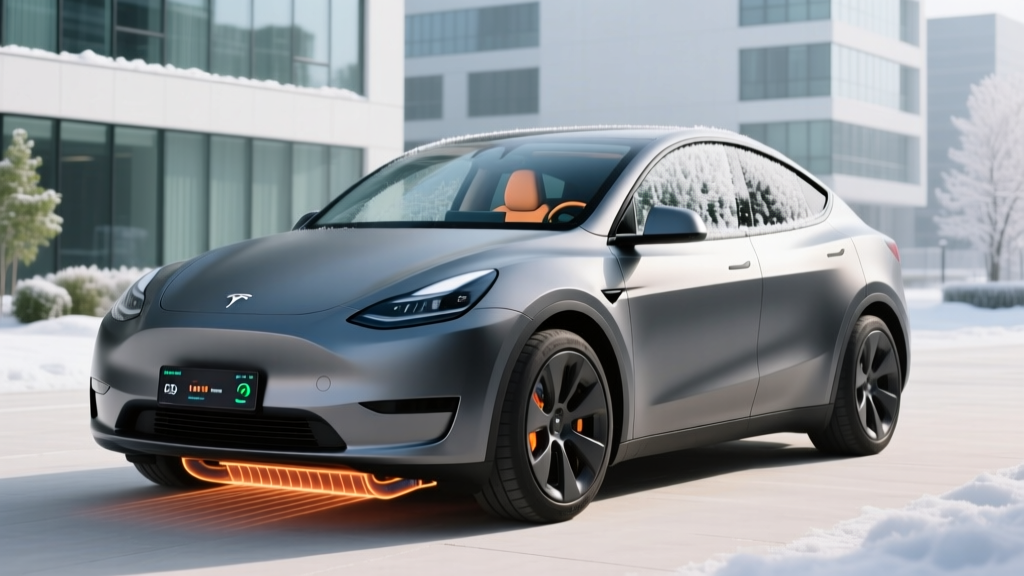
Cold-weather reality check: Minnesota winters reduce EV range by 20-35% in sustained sub-20°F driving due to cabin heating demand and battery chemistry limitations. A 310-mile EPA-rated Model Y may deliver 200-240 real-world miles on a January highway trip. Preconditioning the battery while plugged in mitigates some of this loss and preserves charging speed at DC fast chargers — always precondition before a fast-charge stop.
Maintenance Savings: Where EVs Actually Win
| Maintenance Item | EV Cost (5 yr) | Gas Car Cost (5 yr) |
|---|---|---|
| Oil changes | $0 | $400-$600 |
| Brake pads/rotors | $200-$400 (regen extends life) | $800-$1,200 |
| Transmission fluid/service | $0 | $200-$400 |
| Cabin air filter | $150 | $150 |
| Tire rotation/replacement | $1,000-$1,400 (heavier vehicle, more torque) | $800-$1,200 |
| Coolant/systems | $150 | $400 |
| Total | $1,500-$1,950 | $2,750-$3,950 |
EVs eliminate oil changes, transmission service, exhaust system repairs, and spark plug replacements. Regenerative braking dramatically reduces brake pad wear — many EV owners report original brake pads at 80,000+ miles. The offset: EVs are heavier and produce instant torque, which accelerates tire wear. Budget for tire replacement one interval earlier than you would on a comparable gas car.
Insurance Cost Reality for Minnesota EV Owners
Minnesota EV insurance premiums typically run 15-30% higher than equivalent gas vehicles. The reasons are structural, not arbitrary:
- Higher repair costs: EV collision repair requires specialized high-voltage training, and battery pack replacement after even moderate underbody damage can total a vehicle.
- Higher vehicle MSRP: Insurers base comprehensive/collision premiums partly on replacement cost.
- Limited repair network: Fewer certified EV body shops in greater Minnesota means longer rental-car claims and higher labor rates in metro areas.
Shop quotes aggressively. In Minnesota, carriers like State Farm, USAA, and some regional insurers have offered more competitive EV rates than national averages. Bundling home and auto, and maintaining a clean driving record, can bring EV insurance within 10% of a gas-car policy. Always get quotes before purchasing — the difference between carriers can be $500-$1,000/year on the same EV.
EV Depreciation and Resale Value in Minnesota
EV depreciation has been steeper than gas-car depreciation through 2024-2025, driven by aggressive price cuts from Tesla, a flood of new models expanding supply, and consumer uncertainty about battery longevity. A 3-year-old EV may retain 45-55% of its original MSRP, compared to 55-65% for a comparable gas crossover.
Factors that help or hurt Minnesota-specific resale:
- Battery health matters: A documented state of health (SoH) above 90% at trade-in significantly improves value. Minnesota's cold climate actually causes less long-term battery degradation than hot Southwest states, because heat is the primary driver of lithium-ion capacity loss.
- NACS/CCS compatibility: Vehicles with NACS (Tesla connector) or confirmed CCS-to-NACS adapter compatibility hold value better as the charging network consolidates around NACS through 2025-2026.
- Range tier: 300+ mile EPA models hold value better than sub-250 mile variants, especially in cold climates where real-world range shrinks.
If you plan to keep your EV 8-10 years, depreciation becomes less relevant — you are amortizing the purchase over the vehicle's full life and benefiting from a decade of lower operating costs. If you trade every 3-4 years, expect to lose more to depreciation than you would with a mainstream gas vehicle.
Minnesota EV Ownership: Frequently Asked Questions
Does Minnesota offer a state EV purchase rebate in 2026?
No. Minnesota does not currently have a direct-to-consumer state purchase rebate for new EVs. Minnesota buyers rely on the federal §30D credit (up to $7,500, subject to income, MSRP, and battery-sourcing requirements), utility charger rebates, and lower operating costs to offset the purchase premium.
Can I combine the federal credit with utility rebates?
Yes. The federal §30D credit and utility charger-installation rebates are separate programs with no conflict. Stack them: a $7,500 federal point-of-sale transfer plus a $500-$1,000 utility charger rebate meaningfully reduces your first-year out-of-pocket cost.
How much does home Level 2 charger installation cost in Minnesota?
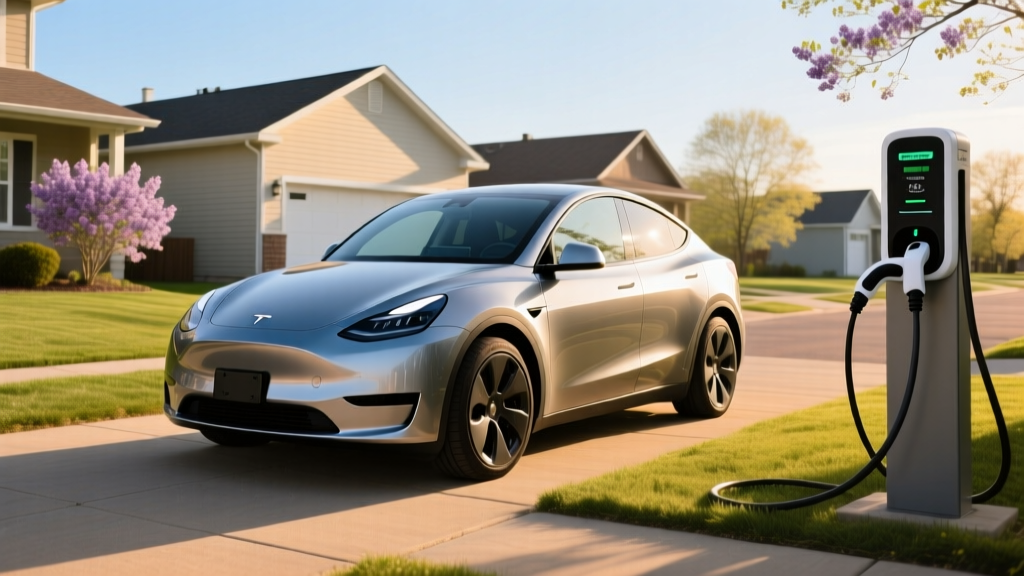
Expect $800-$2,500 for a quality 48-amp Level 2 charger (like a ChargePoint Home Flex or Emporia V2) plus licensed electrician labor, depending on whether your electrical panel needs an upgrade. A 200-amp panel typically supports a Level 2 circuit without modification. Older homes with 100-amp service may need a $1,500-$3,000 panel upgrade. Factor in your utility's charger rebate to offset equipment cost.
Is the federal EV tax credit refundable or non-refundable?
The §30D credit is non-refundable — it can reduce your federal tax liability to zero but won't generate a refund beyond that. However, the point-of-sale transfer option (effective since 2024) allows you to transfer the credit to the dealer as a down-payment reduction regardless of your tax liability, which functionally makes it accessible even to buyers with low tax burden. The dealer then claims the credit. Confirm transfer logistics with your dealer before signing.
Do EVs cost more to insure in Minnesota?
Typically 15-30% more than a comparable gas vehicle, driven by higher repair costs and MSRP. The gap varies by carrier — get at least three quotes before purchasing. Some insurers offer EV-specific discounts or bundling incentives.
How does Minnesota's cold affect EV battery longevity?
Counterintuitively, cold climates are gentler on long-term battery health than hot climates. Heat accelerates lithium-ion degradation. Minnesota winters do reduce daily range (20-35% in deep cold) and slow DC fast-charging speeds unless you precondition, but they do not meaningfully accelerate long-term capacity loss. Most EV batteries retain 85-92% capacity at 100,000 miles regardless of climate, and all major manufacturers warranty the battery for 8 years/100,000 miles with a minimum 70% capacity retention threshold.