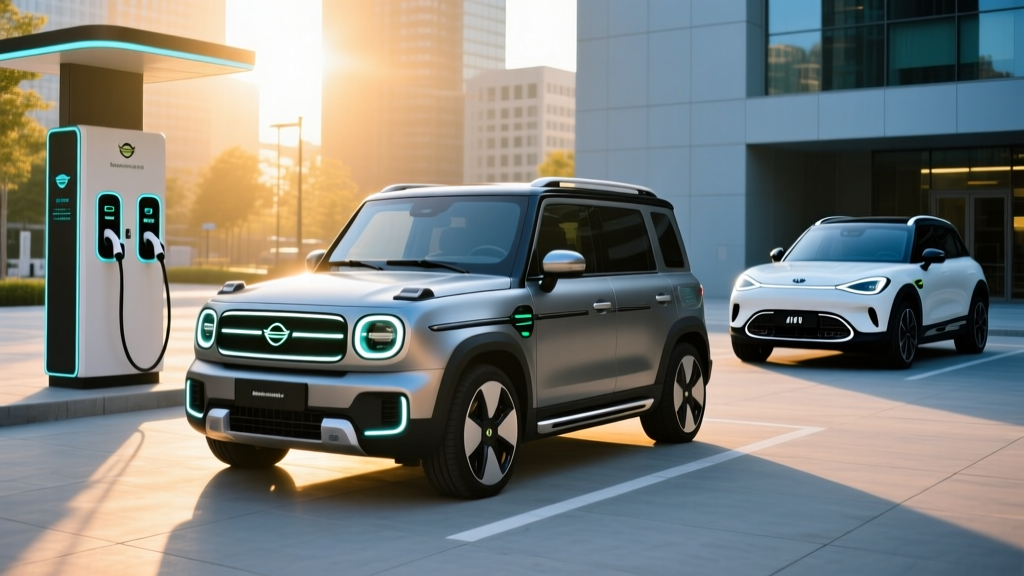
If you've been searching for a mini G Wagon electric alternative, the closest production vehicle wearing a related badge is the Smart #5 — a boxy, rugged-styled electric SUV from the Mercedes-Benz and Geely joint venture. However, as of early 2026, Smart has not officially launched in the US market, meaning American buyers cannot purchase one new through authorized dealers. Your realistic options are to wait for a potential US entry, import one under the 25-year rule (not practical for a new vehicle), or look at boxy electric SUVs already available stateside like the Hyundai Ioniq 5, Kia EV9, or the Mercedes-Benz G 580 with EQ Technology if budget allows.
Quick Answer: Can You Buy a Mini G Wagon Electric in the US?
No. The Smart #5 (the vehicle most commonly called the "mini G Wagon electric") is currently sold in Europe, China, and select Asian markets. Smart has not announced a US launch timeline. The actual Mercedes G-Class EV (G 580 EQ) starts above $150,000. US buyers wanting a similar boxy electric SUV should consider the Hyundai Ioniq 5 (EPA 303 mi, ~$45,000), Kia EV9 (EPA 304 mi, ~$55,000), or the upcoming boxy EV entrants expected later in 2026.
What Exactly Is the "Mini G Wagon Electric"?
The term "mini G Wagon electric" has become a viral search term driven by social media comparisons between the iconic Mercedes-Benz G-Class silhouette and the Smart #5, which shares Mercedes-Benz design DNA through the Smart joint venture. The Smart #5 is a mid-size electric SUV with deliberate off-road styling cues: squared wheel arches, a flat roofline, and an upright stance that echoes the G-Class at roughly two-thirds the size.
Here's where things stand with the Smart #5's known specifications from its European and Chinese market launches:
| Specification | Smart #5 (RWD Long Range) | Smart #5 (AWD Performance) |
|---|---|---|
| Battery Capacity | 80 kWh usable (NMC) | 80 kWh usable (NMC) |
| WLTP Range | ~440 km (~273 mi WLTP) | ~400 km (~249 mi WLTP) |
| Estimated EPA Range | ~230-245 mi (est.) | ~210-225 mi (est.) |
| Peak DC Charge Rate | ~150 kW | ~150 kW |
| 10-80% DC Charge Time | ~30 min (est.) | ~30 min (est.) |
| Level 2 AC Charging | 11 kW / 22 kW (market dependent) | 11 kW / 22 kW (market dependent) |
| Power Output | ~268 hp (200 kW) | ~422 hp (315 kW) |
| 0-100 km/h (0-62 mph) | ~6.9 sec | ~4.9 sec |
| Starting Price (Europe) | ~€45,000 (~$49,000) | ~€55,000 (~$60,000) |
Note: EPA range figures are estimates based on typical WLTP-to-EPA conversion ratios of roughly 85-90%. The Smart #5 has not been EPA-certified as it is not sold in the United States. Source: Smart official specifications (European market).
Real-World Range Reality Check
Even if the Smart #5 arrived in the US with an estimated EPA rating of ~235 miles, expect real-world highway driving at 70+ mph to yield approximately 190-210 miles. In cold weather (below 32°F / 0°C), NMC battery chemistry typically loses 20-30% of range, potentially dropping usable range to 160-185 miles on a full charge. This is a critical consideration for buyers in northern climates.
How Does the Smart #5 Compare to a Gas SUV (or a Hybrid)?
Since you can't buy the Smart #5 in the US yet, let's compare its known specs against what a similarly sized gas or hybrid SUV delivers in cost and efficiency. We'll use the Toyota RAV4 Hybrid as the comparison baseline — one of the best-selling compact SUVs in America.
| Metric | Smart #5 (RWD, Est. US) | Toyota RAV4 Hybrid AWD | Hyundai Ioniq 5 (SEL AWD) |
|---|---|---|---|
| MSRP (approx.) | ~$49,000 (est. if US) | $34,730 | $49,650 |
| EPA Range / Tank Range | ~235 mi (est.) | ~580 mi (14.5 gal) | 290 mi (EPA) |
| Efficiency | ~3.5 mi/kWh (~115 MPGe est.) | 39 MPG combined | 110 MPGe (EPA) |
| Fuel/Energy Cost per Mile | ~$0.04-0.05 (home charging) | ~$0.10 (at $3.40/gal) | ~$0.04-0.05 (home charging) |
| Annual Fuel/Energy (12k mi) | ~$500-600 | ~$1,200 | ~$500-600 |
| Maintenance (Annual Est.) | ~$300-400 | ~$600-800 | ~$300-400 |
| Federal Tax Credit (§30D) | Unknown (not US-certified) | None (HEV) | Up to $7,500 (eligibility varies) |
| 0-60 mph | ~6.5 sec (est.) | 7.4 sec | 5.0 sec |
The Smart #5 would sit in a tricky price bracket for US buyers — roughly $15,000 more than a RAV4 Hybrid with less than half the total range, but with significantly lower per-mile energy costs. Against the Ioniq 5, it would offer similar pricing and efficiency but less proven EPA-certified range and no established US service network.
Real Costs of Ownership: What the Numbers Actually Look Like
Let's break down what ownership of a boxy electric SUV in this class actually costs over five years, using the Hyundai Ioniq 5 as the closest purchasable proxy since the Smart #5 remains unavailable stateside.
| 5-Year Cost Category | Hyundai Ioniq 5 SEL AWD | Toyota RAV4 Hybrid XLE AWD |
|---|---|---|
| Purchase Price (MSRP) | $49,650 | $34,730 |
| Estimated Federal Tax Credit | -$7,500 (if eligible per IRS §30D) | $0 |
| Effective Purchase Price | $42,150 | $34,730 |
| Energy/Fuel (5 yrs, 60k mi) | ~$2,750 (home charging @ $0.14/kWh) | ~$6,000 (at $3.40/gal, 39 MPG) |
| Maintenance (5 yrs) | ~$1,750 | ~$3,500 |
| Insurance (5 yrs, avg.) | ~$10,500 ($2,100/yr avg.) | ~$7,500 ($1,500/yr avg.) |
| Estimated Depreciation | ~$18,000 | ~$12,000 |
| Total 5-Year Cost | ~$57,150 | ~$49,230 |
Even after the federal tax credit, the Ioniq 5 costs roughly $8,000 more over five years than a RAV4 Hybrid, driven primarily by higher insurance premiums and steeper depreciation. The energy and maintenance savings (~$5,000 combined) partially offset the higher purchase price. If the Smart #5 launched in the US at a similar price point, you could expect comparable economics — potentially worse if Smart's US dealer network is thin, which would hurt resale values.
What First-Time EV Buyers Should Know Before Chasing the Mini G Wagon Electric
The appeal of a mini G Wagon electric is understandable — iconic styling, compact footprint, and electric powertrain. But several practical realities deserve honest discussion before you commit to this segment.
Home Charging Is Non-Negotiable for Most Owners
Level 1 charging (standard 120V outlet) adds roughly 3-5 miles of range per hour — meaning a full charge of an 80 kWh battery takes over 20 hours. For daily usability, a Level 2 home charger (240V, 32-48 amps) is essential, adding 25-37 miles per hour and filling the battery overnight. Installation costs range from $800 to $2,500 depending on whether your electrical panel needs an upgrade from 100A to 200A service. If you live in an apartment or lack a dedicated parking spot with electrical access, public DC fast charging becomes your primary fueling method — and that costs $0.30-$0.50/kWh at networks like Electrify America, erasing much of the per-mile savings advantage.
Charging Speed vs. Charging Time: The Curve Matters
The Smart #5's estimated 150 kW peak DC charge rate means a 10-80% session takes roughly 30 minutes at a compatible fast charger. But peak rate is not sustained rate. Most EVs in this class taper significantly above 60% State of Charge (SoC), and charging from 80-100% can take as long as the 10-80% session. Plan road trips around 20-25 minute stops at 10-80%, not full charges.
Cold Weather Cuts Range — Significantly
NMC battery chemistry, which the Smart #5 uses, is susceptible to cold-weather capacity reduction. Expect 20-30% range loss in sustained sub-freezing temperatures, especially on short trips where the battery and cabin don't fully precondition. If your estimated EPA range is 235 miles, a January commute in Minneapolis might yield 165-185 miles of real range. A heat pump (confirmed on some Smart #5 trims) helps reduce HVAC energy draw but doesn't eliminate the loss.
Common Misconceptions About the Mini G Wagon Electric
| Myth | Fact |
|---|---|
| "The Smart #5 is a Mercedes product, so US Mercedes dealers will sell it." | Smart operates as a separate brand under the Mercedes-Benz/Geely JV. US Mercedes-Benz dealerships are not authorized Smart retailers, and no US launch has been announced. |
| "It's basically a baby G-Class EV for under $50k." | The Smart #5 rides on Geely's SEA platform, not the G-Class ladder frame. It shares styling philosophy but not engineering. The actual G 580 EQ starts above $150,000. |
| "I can import one from Europe or China." | The US 25-year import rule (NHTSA) effectively blocks importing new vehicles. DOT and EPA compliance certification is required, which Smart has not pursued for the US. |
| "The federal EV tax credit would apply if it came to the US." | The IRS §30D credit requires battery components and critical minerals to meet US-sourcing thresholds. Vehicles built on Chinese platforms with Chinese-sourced batteries face significant credit eligibility hurdles under current rules. |
| "Boxy EVs are just as efficient as sleek ones." | Aerodynamic drag increases with the square of speed. Boxy SUVs like the Smart #5 typically achieve 10-15% lower highway efficiency than sleeker designs like the Hyundai Ioniq 6 (EPA 361 mi), directly reducing real-world range at 70+ mph. |
If You Can't Get the Smart #5, What Should You Buy Instead?
US buyers who want the boxy-EV aesthetic and practical capability have several proven alternatives available right now.
Decision Framework: Which Boxy EV Fits Your Situation?
- Choose the Hyundai Ioniq 5 if you want the best balance of range (EPA 303 mi RWD), charging speed (peak 240 kW, 10-80% in ~18 min), and price (~$42,000 after tax credit). It's the segment benchmark for 2026.
- Choose the Kia EV9 if you need three rows of seating and don't mind a higher price (~$55,000 base, EPA 304 mi). It's the closest thing to a family-sized boxy electric SUV.
- Choose the Mercedes-Benz EQB if you want the three-pointed star badge in a compact electric SUV, though range is limited (EPA 245 mi) and pricing starts around $54,000.
- Choose the Toyota RAV4 Hybrid if you lack home charging access, regularly drive 400+ miles between stops, or want to minimize upfront cost. The 580-mile total range and $35k price remain hard to beat.
- Wait for the Smart #5 only if you're in no rush, live in a market where Smart has confirmed future entry, and are comfortable with first-year import risks (limited service centers, uncertain resale, potential tax-credit ineligibility).
Federal Tax Credit Reality for Imported or Future EVs
Even if Smart launches the #5 in the US, the §30D federal tax credit presents significant hurdles. Current rules require:
- MSRP cap: SUVs must be priced at or below $80,000 (the Smart #5 would likely qualify here)
- Buyer income cap: Modified adjusted gross income must not exceed $150,000 (single) / $300,000 (joint)
- Battery component sourcing: A percentage of battery components must be manufactured or assembled in North America, increasing annually
- Critical minerals: A percentage of critical minerals must be sourced from the US or free-trade-agreement partners
- Foreign entity of concern (FEOC): Vehicles with battery components from designated foreign entities (including many Chinese suppliers) are disqualified entirely
Given that the Smart #5 is built on Geely's SEA platform with significant Chinese supply-chain content, it is unlikely to qualify for the full $7,500 credit under current sourcing rules. Always verify eligibility with a tax professional and check the latest fueleconomy.gov credit listings before purchasing.
Frequently Asked Questions
Is Mercedes making a smaller electric G-Wagon?
Mercedes-Benz has not announced a smaller, more affordable electric G-Class. The current G 580 with EQ Technology is the full-size G-Class EV starting above $150,000. The Smart #5 is the closest "mini G Wagon electric" in terms of styling and brand association, but it is a separate brand product not sold in the US.
Will the Smart #5 ever come to America?
As of early 2026, Smart has not confirmed a US market entry. The brand previously sold the Smart Fortwo in the US but withdrew in 2019 due to low sales. A return with the #5 is possible but unconfirmed. Industry analysts suggest 2027 at the earliest if Smart pursues US certification.
What's the cheapest boxy electric SUV I can buy in the US right now?
The Hyundai Ioniq 5 SE Standard Range starts at approximately $42,000 (EPA 245 mi), with the long-range SEL AWD at ~$49,650 (EPA 290 mi). After the $7,500 federal tax credit (if eligible), effective pricing can drop to ~$34,500-$42,150. This makes it the most accessible boxy electric SUV with strong range and charging infrastructure compatibility.
How much does home charging installation cost for an EV like this?
A Level 2 home charger (240V, 40-amp circuit) typically costs $500-$800 for the equipment and $300-$1,500 for electrician labor, totaling $800-$2,300. If your home's electrical panel needs upgrading from 100A to 200A service, add $1,500-$3,000. Always get quotes from a licensed electrician before purchasing equipment.
Is the Smart #5 a good off-roader like the real G-Wagon?
No. The Smart #5 is a unibody crossover with available AWD and modest ground clearance. It has some off-road styling cues and a dedicated off-road driving mode, but it lacks the locking differentials, ladder frame, and extreme articulation of the G-Class. Think of it as a rugged-styled daily driver, not a serious off-road machine.