The Short Answer on Mini EVs
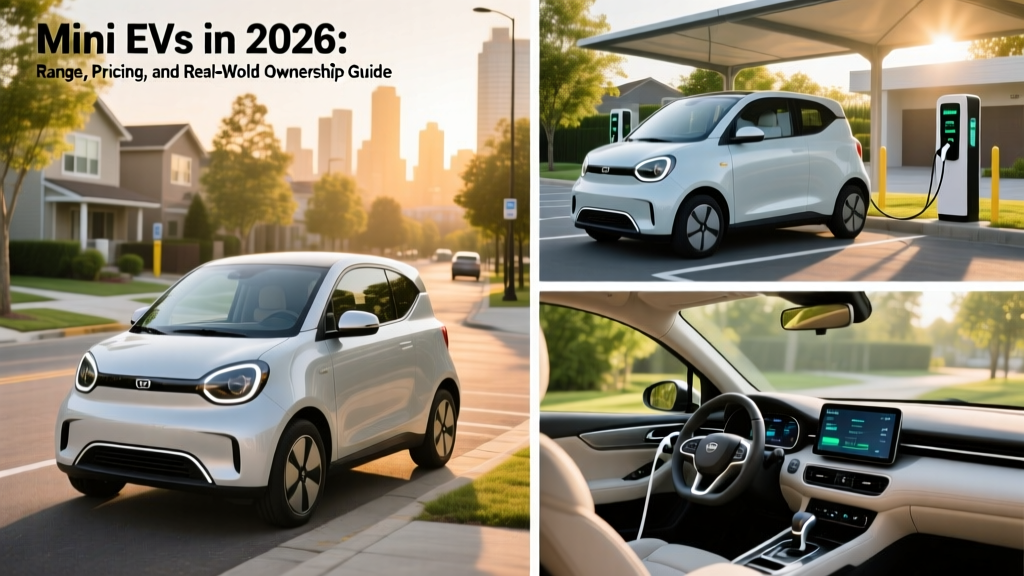
Mini EVs — compact, city-focused electric cars under $40,000 — are a practical choice for urban drivers with home charging and daily commutes under 100 miles. In 2026, the best options deliver 180–260 miles of EPA range, charge from 10–80% in 25–35 minutes on DC fast chargers, and can cost as little as $0.04–$0.06 per mile to fuel on residential electricity. They save $800–$1,400 annually in fuel versus a comparable gas subcompact, but they sacrifice highway passing power, cargo space, and long-distance comfort. If you lack home charging or regularly drive in sub-20°F winters, a plug-in hybrid may serve you better.
What Qualifies as a Mini EV in 2026?
The term "mini EV" covers a growing segment of small-footprint battery-electric vehicles optimized for city and suburban driving. These are not golf carts or neighborhood electric vehicles (NEVs) — they are fully highway-capable cars meeting all NHTSA safety standards, but with smaller battery packs (typically 30–65 kWh usable), shorter wheelbases, and curb weights under 3,800 lbs.
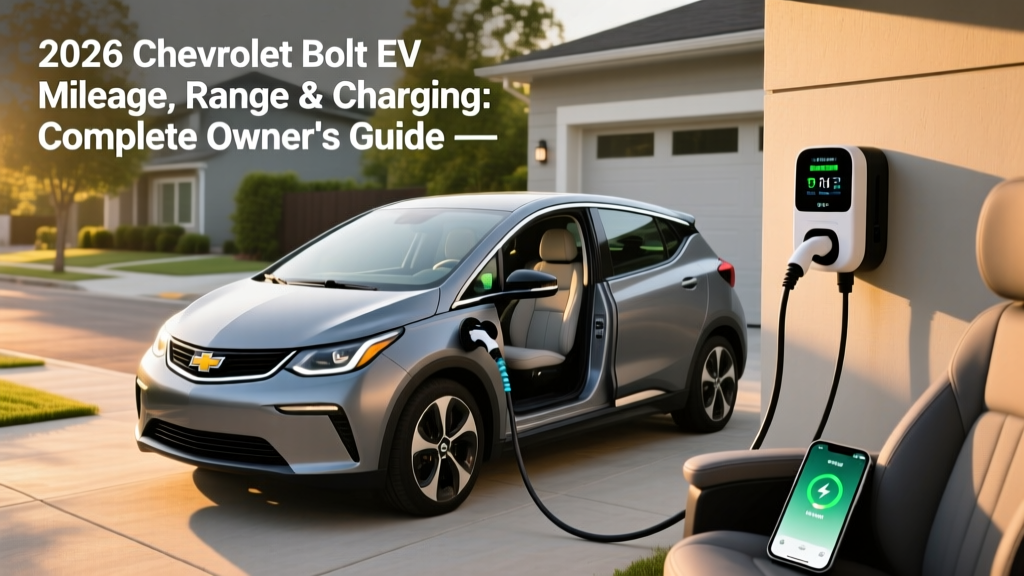
The segment in 2026 includes models like the Chevrolet Equinox EV (base LT, ~$33,600 MSRP), the Hyundai Kona Electric (redesigned, ~$33,550 MSRP), the Nissan Leaf (final production year, ~$28,140 MSRP), the MINI Cooper SE (new-gen, ~$30,900 MSRP), and the Volvo EX30 (~$36,345 MSRP). These vehicles prioritize maneuverability, low running costs, and easy parking over towing capacity or 300+ mile range.
Mini EV Range and Efficiency: EPA vs. Real World
EPA range estimates are a starting point, not a guarantee. Mini EVs with smaller batteries feel range variability more acutely than large-battery vehicles like the Tesla Model S or Rivian R1T. Here is what the data actually shows:
| Model | Battery (kWh usable) | EPA Range (mi) | Real-World Highway (~70 mph) | Cold-Weather Estimate (20°F) | MPGe Combined |
|---|---|---|---|---|---|
| Chevrolet Equinox EV 2LT | 85 kWh (NMC) | 315 | ~260–275 | ~220–240 | 115 |
| Hyundai Kona Electric SEL | 64.8 kWh (NMC) | 261 | ~220–235 | ~180–200 | 112 |
| MINI Cooper SE (Gen 3) | 54.2 kWh (NMC) | 235 | ~195–210 | ~160–175 | 110 |
| Volvo EX30 Single Motor | 69 kWh (NMC) | 265 | ~225–240 | ~185–200 | 109 |
| Nissan Leaf SV Plus | 60 kWh (NMC) | 212 | ~175–190 | ~145–160 | 111 |
Real-World Range Reality: Highway driving at 70+ mph reduces range 15–20% versus EPA combined estimates due to aerodynamic drag. Cold weather (below 30°F) without preconditioning can cut range 20–30% due to cabin heating demands and reduced battery chemistry efficiency. Mini EVs with heat pumps (Kona Electric, EX30, Equinox EV) lose less range in cold weather than those relying solely on resistive heating.
Charging Mini EVs: Speeds, Connectors, and Real Costs
Smaller batteries charge faster in absolute terms but also mean you will visit chargers more often on road trips. Understanding kW (power — the rate of energy flow) versus kWh (energy — total battery capacity) is essential.
| Level | Power (kW) | Miles Added per Hour | 10–80% Time | Typical Use Case |
|---|---|---|---|---|
| Level 1 (120V outlet) | 1.4 kW | ~4–5 mi/hr | ~40+ hours | Emergency / overnight trickle |
| Level 2 (240V home) | 7.7–11.5 kW | ~25–38 mi/hr | ~6–8 hours | Daily home charging |
| DC Fast Charge (peak) | 85–150 kW | ~180–320 mi/hr | ~25–35 min | Road trips / quick top-ups |
Charge curve reality: Peak DC fast-charge rates (e.g., 150 kW on the Kona Electric) are sustained only between roughly 10–50% state of charge. Above 80%, charging speed tapers sharply to protect battery longevity — a session from 80–100% can take as long as 10–80%. For road trips, plan to charge to 80% and go.
Connector note: The industry is transitioning from CCS1 to NACS (Tesla's connector standard). For 2026, the Chevrolet Equinox EV ships with NACS natively, while Hyundai, Volvo, and MINI still use CCS1 with NACS adapters available. The Nissan Leaf uniquely uses CHAdeMO, a legacy standard with declining public charger support — a significant drawback for road trips. Verify connector compatibility on fueleconomy.gov before purchasing.
Mini EV vs. Gas Subcompact: The Real Cost Breakdown
The purchase price of a mini EV is often $4,000–$8,000 higher than a gas subcompact like the Honda Civic or Toyota Corolla. The question is whether operating savings close that gap. Here is a 5-year comparison assuming 12,000 miles/year:
| Cost Category | Hyundai Kona Electric SEL (~$33,550) | Honda Civic LX (~$24,950) |
|---|---|---|
| Purchase Price (MSRP) | $33,550 | $24,950 |
| Federal Tax Credit (§30D) | –$3,750 to $7,500* | $0 |
| Fuel/Energy (60k mi) | $3,600 (home charging @ $0.15/kWh) | $7,200 (gas @ $3.50/gal, 33 MPG) |
| Maintenance (60k mi) | $900 (tire rotations, cabin filter, fluid top-offs) | $2,800 (oil changes, filters, brake pads, spark plugs) |
| Insurance (5-yr avg) | $9,500 | $7,800 |
| 5-Year Total | ~$36,250 – $43,850 | ~$42,750 |
*Federal §30D tax credit eligibility for 2026 depends on MSRP caps ($55,000 for cars), buyer income limits ($150,000 single / $300,000 joint AGI), battery critical-mineral sourcing, and North American assembly. The Kona Electric (assembled in South Korea) may qualify for $3,750 (critical minerals only) or $7,500 if sourcing requirements are met. Verify current eligibility on IRS.gov or consult a tax professional. Credits can now be transferred to the dealer at point of sale, reducing your upfront cost.
Common Mini EV Misconceptions
| Myth | Fact |
|---|---|
| "Mini EVs can't handle highway speeds." | All highway-legal mini EVs maintain 75–85 mph comfortably. The Kona Electric does 0–60 mph in 6.5 seconds with 201 HP — adequate for merging. |
| "The battery will need expensive replacement in a few years." | Modern NMC and LFP batteries are warrantied for 8 years/100,000 miles at 70% capacity retention. Real-world degradation data shows most EVs retain 90%+ capacity at 100k miles. |
| "You need a special home electrical upgrade." | Most homes with a 200-amp panel can support a 48-amp Level 2 charger on an existing 60-amp circuit. Panel upgrades ($1,500–$3,000) are needed only in older homes with 100-amp service. |
| "Mini EVs are too small to be safe." | The Volvo EX30 earned IIHS Top Safety Pick+ and the Kona Electric earned a 5-star NHTSA rating. Modern crumple zones and ADAS compensate for smaller mass. |
Real-World Ownership: What First-Time Mini EV Buyers Must Know
Home charging is the make-or-break factor. If you can install a Level 2 charger at home (garage, driveway, or dedicated parking spot), a mini EV is seamless — you wake up every morning with a "full tank." Installation costs typically range from $600–$2,500 for the charger and electrician work, assuming no panel upgrade is needed. Without home charging, you will rely on public Level 2 and DC fast chargers, which cost $0.30–$0.55/kWh (versus $0.12–$0.18/kWh at home) and add inconvenience to your routine.
Cold climate owners should prioritize a heat pump. Resistive cabin heaters draw 3–5 kW from the battery, directly reducing range. Heat pumps (standard on the Kona Electric, EX30, and Equinox EV) use 1–2 kW for the same heating output, preserving 10–15% more range in winter.
Insurance is typically 15–25% higher for EVs due to higher repair costs for battery and structural components. Get quotes before purchasing — the savings gap versus gas may narrow.
Depreciation is improving but still higher than gas cars. Mini EVs have historically lost 50–60% of value over 5 years (versus 40–45% for gas compacts), driven by rapid technology advances, price cuts from competitors, and battery-health uncertainty. Leasing can mitigate this risk.
Decision Framework: Is a Mini EV Right for You?
Choose a mini EV if:
- You have home charging access (garage, driveway, or landlord-approved outlet)
- Your daily driving is under 80 miles round-trip
- You rarely take road trips over 250 miles without overnight stops
- You live in a mild-to-moderate climate, or your EV has a heat pump
- You want to minimize fuel and maintenance costs over 5+ years of ownership
- You qualify for federal or state EV incentives that close the price gap
Choose a plug-in hybrid (PHEV) or gas car instead if:
- You lack reliable home or workplace charging
- You regularly drive 200+ miles in a single day or live in a charging desert
- You experience extended sub-10°F winters and cannot precondition in a garage
- You need to tow more than 1,500 lbs or carry 4+ adults with cargo regularly
- Your budget is under $25,000 and you cannot access used-EV credits
Frequently Asked Questions
Can I charge a mini EV on a regular household outlet?
Yes, but slowly. A standard 120V outlet delivers about 1.4 kW, adding roughly 4–5 miles of range per hour. For a 60 kWh battery, a full charge from empty takes 40+ hours. This works for drivers covering under 30 miles/day who can plug in overnight, but a 240V Level 2 charger ($600–$2,500 installed) is strongly recommended for daily convenience.
Do mini EVs qualify for the $7,500 federal tax credit?
Some do, partially or fully, but eligibility is complex under IRS §30D rules. Requirements include: MSRP under $55,000 (cars), buyer AGI under $150k single/$300k joint, battery components manufactured in North America, and critical minerals sourced from the US or free-trade-agreement partners. The Chevrolet Equinox EV (US-assembled) is more likely to qualify fully than import-assembled models. Always verify on the IRS website before purchase.
How long do mini EV batteries last?
EV batteries are warrantied for 8 years or 100,000 miles (whichever comes first) with a maximum capacity loss of 30% under federal mandate. Real-world data from Recurrent Auto shows most NMC batteries retain 88–93% capacity at 100,000 miles. Replacement is rarely needed before 150,000–200,000 miles, and costs $8,000–$14,000 if out of warranty.
Are mini EVs safe in a crash?
Yes. Size and mass matter in multi-vehicle collisions, but modern mini EVs compensate with rigid battery-pack structures (which act as a stressed member), advanced crumple zones, and standard ADAS features like automatic emergency braking and lane-keeping assist. The Volvo EX30 and Hyundai Kona Electric have earned top ratings from IIHS and NHTSA.
What is the cheapest mini EV available in 2026?
The Nissan Leaf S starts at approximately $28,140 MSRP, making it the most affordable new EV in the US market. However, its CHAdeMO connector and 149-mile EPA range (base 40 kWh battery) limit road-trip practicality. The Chevrolet Equinox EV LT at ~$33,600 offers better range (315 mi) and NACS compatibility for a moderate price premium.