Why "Mini Electric Jet Boats" Keeps Trending Among EV Shoppers
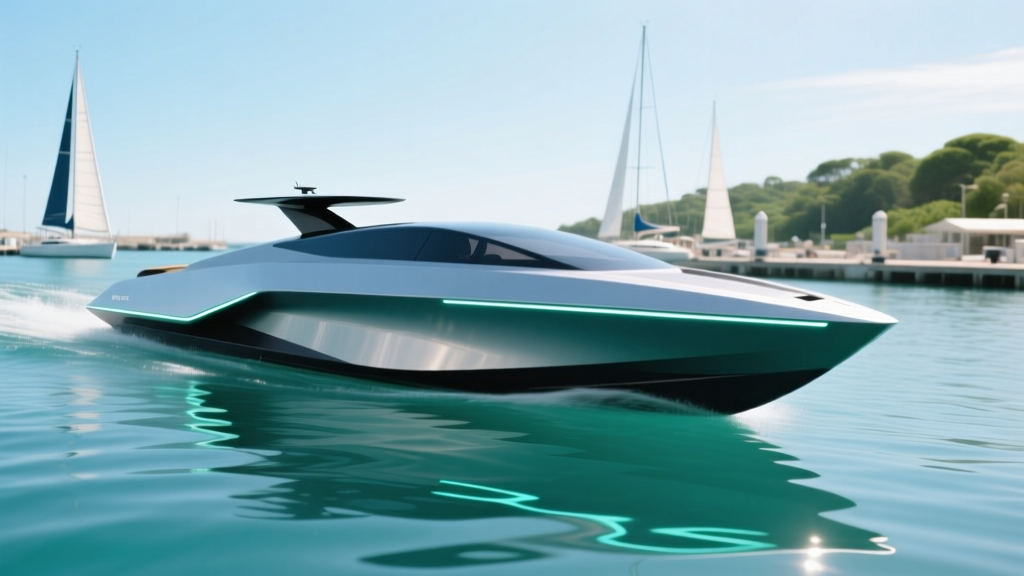
Search engines have an odd habit of surfacing mini electric jet boats alongside electric-car queries. The reason is simple: compact electric watercraft like the Lampuga Air, the RADinn electric surfboard, and the emerging class of personal electric jet-ski concepts have captured the imagination of anyone interested in battery-powered recreation. But for readers arriving at an automotive publication, the honest answer is that mini electric jet boats fall entirely outside the scope of road-legal electric vehicles, federal EV tax credits, and the charging infrastructure we cover every day.
That said, the curiosity behind the search is real. People want compact, thrilling, battery-powered machines — and the EV market in 2026 finally delivers several road-legal options that scratch the same itch: small, quick, tech-forward electric cars that feel more like personal gadgets than traditional automobiles. Below, we redirect that energy toward three vehicles that embody the "mini electric" ethos on four wheels, with exact specs, real-world range data, charging curves, and tax-credit math.
The Road-Legal Alternatives: Compact EVs That Feel Like Toys But Commute Like Cars
If the appeal of a mini electric jet boat is its compact size, instant torque, and weekend-fun factor, the closest four-wheeled equivalents available in the U.S. for the 2026 model year are:
- Mini Cooper SE (2026) — the electric icon, now with a larger battery and DC fast charging.
- Fiat 500e (2026) — Italian city-car charm with U.S. availability restored.
- Nissan LEAF (2026) — the practical compact EV with CHAdeMO legacy and a loyal following.
Each of these vehicles is EPA-rated, NHTSA-tested, and eligible for at least partial federal incentives. None of them will get you across a lake, but all of them will get you across town with the same grin a personal watercraft delivers.
Mini Cooper SE (2026): Specs, Range, and Charging
The 2026 Mini Cooper SE is the second generation of BMW's electric Mini, built on the dedicated J1 platform. It finally addresses the first generation's biggest complaint — anemic range — with a 54.2 kWh usable battery (NMC chemistry, supplied by CATL) and an EPA-estimated range of 183 miles.
| Spec | Value |
|---|---|
| EPA Range | 183 miles |
| Battery (usable) | 54.2 kWh, NMC |
| Motor | Single front-mounted, FWD |
| Horsepower | 215 hp (Classic/SE trim) |
| 0–60 mph | 6.7 seconds |
| Max DC Fast Charge | 95 kW (CCS) |
| 10–80% DC Time | ~28 minutes |
| Level 2 Home Charge | 11 kW (~37 mi/hr) |
| MPGe (combined) | 114 MPGe |
| Efficiency | 29 kWh/100 mi |
| Cargo Volume | 7.1 cu ft (rear seats up) |
| Battery Warranty | 8 years / 100,000 miles (70% capacity retention) |
| Base MSRP | $36,900 (Cooper SE Classic) |
| As-Tested (SE Signature) | $42,650 |
Charging Reality
The 95 kW peak DC rate is modest by 2026 standards. On a 150 kW Electrify America or Tesla Supercharger (via Magic Dock adapter), the Cooper SE will ramp quickly to ~90 kW between 10–50% SoC, then taper to ~60 kW through 70%, and drop sharply above 80%. That 28-minute 10–80% claim holds at stations with adequate power delivery, but real-world sessions on older 50 kW chargers will take closer to 55 minutes. For daily use, the 11 kW onboard AC charger fills the battery in about 5.5 hours on a Level 2 home wallbox — perfectly adequate for overnight replenishment.
Fiat 500e (2026): The Other Compact Contender
Fiat reintroduced the 500e to the U.S. market in 2024 and has kept it in the lineup through 2026. Its 42 kWh battery (NMC, Samsung SDI cells) yields an EPA-estimated 149 miles of range — enough for urban commuting but tight for road trips.
| Spec | Value |
|---|---|
| EPA Range | 149 miles |
| Battery (usable) | 42 kWh, NMC |
| Motor | Single front-mounted, FWD |
| Horsepower | 118 hp |
| 0–60 mph | 8.5 seconds |
| Max DC Fast Charge | 85 kW (CCS) |
| 10–80% DC Time | ~35 minutes |
| Level 2 Home Charge | 11 kW (~30 mi/hr) |
| MPGe (combined) | 116 MPGe |
| Cargo Volume | 7.5 cu ft |
| Battery Warranty | 8 years / 100,000 miles |
| Base MSRP | $34,095 (Red trim) |
The 500e's charm is its design and city maneuverability. Its limitations are real: 118 hp feels leisurely next to the Mini's 215 hp, and 149 miles of range means planning is mandatory on any trip beyond a 60-mile radius. The 85 kW charge rate is the slowest in this comparison, making DC fast stops noticeably longer.
Nissan LEAF (2026): The Value Play
The LEAF soldiers on in 2026 with its 60 kWh battery pack (NMC) and EPA-estimated 212 miles in SV Plus trim. It remains the most affordable way to get over 200 miles of EPA range in a new EV, starting at $29,135 before incentives.
| Spec | Value |
|---|---|
| EPA Range | 212 miles |
| Battery (usable) | 60 kWh, NMC |
| Motor | Single front-mounted, FWD |
| Horsepower | 214 hp |
| 0–60 mph | 6.8 seconds |
| Max DC Fast Charge | 100 kW (CCS, 2026 refresh) |
| 10–80% DC Time | ~32 minutes |
| Level 2 Home Charge | 7.2 kW (~24 mi/hr) |
| MPGe (combined) | 111 MPGe |
| Cargo Volume | 23.6 cu ft |
| Battery Warranty | 8 years / 100,000 miles |
| Base MSRP | $29,135 (SV Plus) |
Nissan's switch from CHAdeMO to CCS for the 2026 model year is a significant upgrade, unlocking the broader Electrify America and EVgo networks. The trade-off: the onboard AC charger is limited to 7.2 kW, meaning a full Level 2 home charge takes ~9 hours. For overnight charging, this is rarely a problem; for mid-day top-ups at public Level 2 stations, it's noticeably slower than the Mini or Fiat.
Federal Tax Credit Eligibility: What Actually Applies in 2026
The IRS §30D Clean Vehicle Credit remains in effect for 2026, but eligibility hinges on three moving targets: MSRP caps, buyer income limits, and battery-component/critical-mineral sourcing requirements. Here's how these three compact EVs stack up:
| Vehicle | Base MSRP | MSRP Cap (§30D) | Max Credit | Est. After Credit |
|---|---|---|---|---|
| Mini Cooper SE Classic | $36,900 | $55,000 (sedan/hatch) | Up to $7,500* | ~$29,400 |
| Fiat 500e Red | $34,095 | $55,000 | Up to $3,750** | ~$30,345 |
| Nissan LEAF SV Plus | $29,135 | $55,000 | Up to $7,500* | ~$21,635 |
*Full $7,500 requires meeting both battery-component and critical-mineral sourcing thresholds. **Partial credit applies when only one threshold is met. Verify current sourcing status on fueleconomy.gov before purchasing.
Income caps for 2026: $150,000 single / $225,000 head of household / $300,000 joint filers (modified AGI). Point-of-sale transfer is available, meaning the credit can reduce your dealer invoice directly rather than waiting for a tax refund.
- Confirm your MAGI falls under the IRS income caps for your filing status.
- Verify the specific VIN's battery sourcing on fueleconomy.gov — it can change mid-year.
- Ensure the MSRP of your configured trim (including dealer-installed options) stays under $55,000 for hatchbacks.
- Ask the dealer for the IRS seller report confirming credit eligibility at point of sale.
- Consult a tax professional if you have AMT exposure or other complicating factors.
Side-by-Side: Which Compact EV Wins Where?
| Category | Mini Cooper SE | Fiat 500e | Nissan LEAF SV+ |
|---|---|---|---|
| Range (EPA) | 183 mi | 149 mi | 212 mi ✓ |
| Fastest DC Charge | 95 kW ✓ | 85 kW | 100 kW ✓ |
| 0–60 mph | 6.7s ✓ | 8.5s | 6.8s |
| Cargo Space | 7.1 cu ft | 7.5 cu ft | 23.6 cu ft ✓ |
| Lowest Price | $36,900 | $34,095 | $29,135 ✓ |
| Infotainment | 9.4" OLED, Mini OS 9 | 10.25" Uconnect 5 | 8" NissanConnect |
| ADAS Suite | Driving Assistant (L2) | Level 2 ADAS pack | ProPILOT Assist (L2) |
Standout Tech & Notable Drawbacks
Mini Cooper SE: The circular OLED display is genuinely unique — a 9.4-inch round screen with Mini OS 9 that handles navigation, media, and vehicle settings with a playful interface. The optional augmented-reality head-up display is a segment first. Drawback: Rear seat legroom is just 28.5 inches — essentially unusable for adults on anything beyond a short trip.
Fiat 500e: The "Hey Fiat" voice assistant and the Fiat Pass app (which includes a complimentary first-year subscription to charge-point locators and a digital key) are clever touches. The 500e also offers a "Sherpa" drive mode that aggressively limits speed and climate power to stretch remaining range. Drawback: No DC charge port on the base Red trim in some markets — verify CCS inclusion before ordering.
Nissan LEAF: ProPILOT Assist is one of the more refined Level 2 systems available, with smooth lane-centering and stop-and-go cruise that feels natural in highway traffic. The e-Pedal one-pedal driving mode remains a fan favorite. Drawback: The LEAF's liquid cooling for the battery is less robust than competitors, meaning repeated DC fast charges in hot weather can trigger thermal throttling above 80°F.
Who Should Buy a Compact EV (And Who Shouldn't)
Pros and Cons at a Glance
- Engaging handling, 215 hp feels quick in a light chassis
- Circular OLED display is visually stunning
- Heat pump standard (cold-weather efficiency)
- Strong brand cachet and resale value
- Tight turning radius, effortless city parking
- Sherpa range-extender mode is genuinely useful
- Lowest MSRP of the three
- Best range-per-dollar in the segment
- Largest cargo area (23.6 cu ft)
- ProPILOT Assist is polished and reliable
- CCS adoption (2026) opens up charging networks
- Rear seats are essentially decorative for adults
- 95 kW DC charge rate trails rivals
- Options push price toward $45K quickly
- 149-mile range limits road-trip viability
- 118 hp feels underpowered on highway merges
- 85 kW DC charging is the slowest here
- 7.2 kW AC charger is slow for public Level 2
- Thermal management limits repeated fast charging
- Interior design feels dated vs. Mini and Fiat
About Mini Electric Jet Boats: What We Know and Don't Cover
For readers who arrived here specifically seeking mini electric jet boats — products like the Lampuga Air (inflatable electric surfboard), the RADinn electric wakeboard, or concepts from brands like Awake and Jetsurf — these are real and increasingly capable products. Battery packs in the 5–15 kWh range deliver 20–45 minutes of ride time at speeds up to 35 mph. However, they are classified as marine recreational equipment, not motor vehicles. They are not EPA-rated, not eligible for the §30D tax credit, and cannot be charged at Electrify America or Tesla Superchargers. We defer coverage of marine electric craft to dedicated boating and watersports publications.
If your interest in electric propulsion extends to amphibious or water-adjacent vehicles, the closest road-legal analogs are electric UTVs (like the Polaris Ranger EV) and electric personal watercraft from brands like Orca — but these remain niche, expensive, and outside the automotive regulatory framework.
Frequently Asked Questions
What is the real-world range of these compact EVs?
The Mini Cooper SE delivers ~150–160 miles on highway-heavy routes (vs. EPA 183). The Fiat 500e yields ~120–130 miles highway (vs. EPA 149). The Nissan LEAF SV Plus achieves ~175–190 miles highway (vs. EPA 212). Cold weather (below freezing) reduces all of these by 15–25% without preconditioning.
How fast do they charge at home and on DC fast chargers?
At home on Level 2 (240V): the Mini and Fiat charge at 11 kW (~5–6 hours for a full battery), while the LEAF is limited to 7.2 kW (~9 hours). On DC fast chargers, 10–80% takes ~28 min (Mini), ~35 min (Fiat), or ~32 min (LEAF) at stations delivering adequate power (150 kW+).
How much do these EVs cost after the federal tax credit?
Assuming full §30D eligibility ($7,500 credit, income under caps, battery sourcing confirmed): the Mini Cooper SE drops to ~$29,400, the Fiat 500e to ~$30,345 (with partial $3,750 credit), and the Nissan LEAF SV Plus to ~$21,635. Point-of-sale transfer lets you apply the credit at the dealer.
Does the Mini Cooper SE qualify for the $7,500 federal EV tax credit?
The Cooper SE meets the MSRP cap ($55,000 for hatchbacks) and, as of early 2026, its battery sourcing qualifies for the full $7,500 — but this can change if BMW/CATL adjust supply chains. Always verify the specific VIN on fueleconomy.gov before purchase.
Are mini electric jet boats eligible for any EV tax credits?
No. The IRS §30D credit applies only to highway-capable motor vehicles with four wheels and a gross vehicle weight rating under 14,000 lbs. Electric watercraft, surfboards, and personal jet-ski devices do not qualify. Some states may offer separate marine-electrification incentives — check your state energy office.
Which compact EV is the best value in 2026?
On pure value metrics (range per dollar, cargo space, credit-adjusted price), the Nissan LEAF SV Plus at ~$21,635 after credits is the segment leader. For driving engagement and tech, the Mini Cooper SE justifies its premium. The Fiat 500e is best reserved for buyers who prioritize style and city agility over range.
Sources: U.S. EPA / fueleconomy.gov, IRS §30D Clean Vehicle Credit, NHTSA, manufacturer press sites for Mini USA, Fiat, and Nissan (2026 model year).