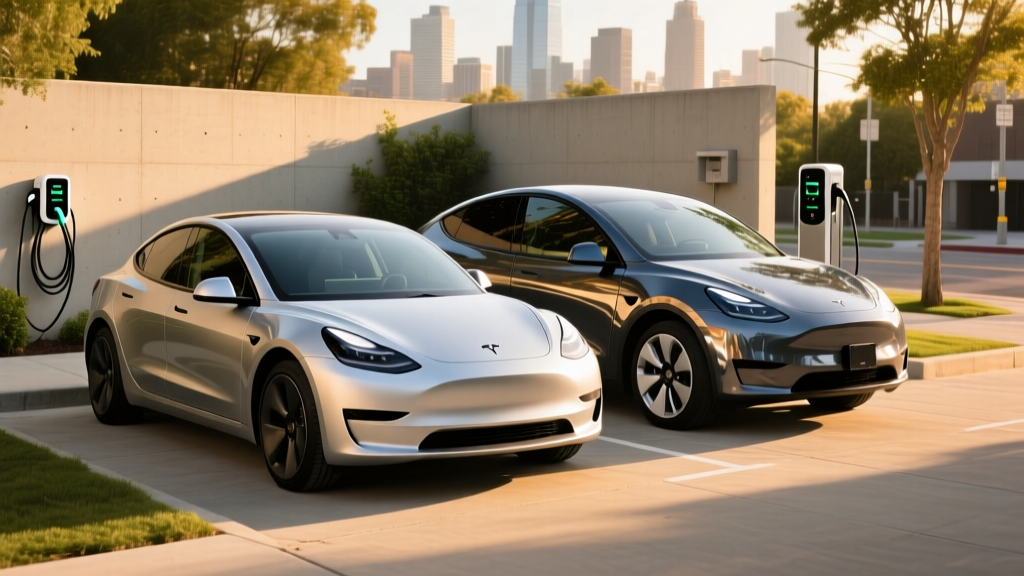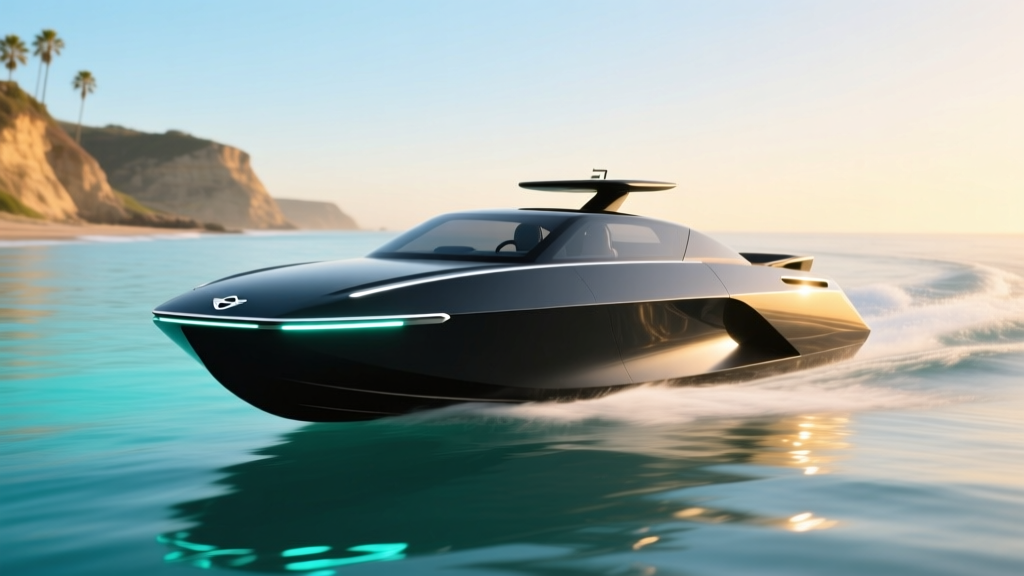
Electric propulsion is expanding well beyond the driveway. As EV owners become comfortable with battery-electric powertrains on the road, many are looking at the water — and the mini electric jet boat category has emerged as one of the most intriguing crossover segments in personal electric mobility. While AutoEdgeView primarily covers cars, trucks, and charging infrastructure, the mini electric jet boat deserves a serious look through an EV-analyst lens: battery chemistry, range reality, charging logistics, and total cost of ownership all apply.
This review evaluates the leading mini electric jet boat platforms available in 2026, applying the same data-driven rigor we bring to every EV profile. If you own an EV and are considering extending electric propulsion to your weekends on the water, here is what the numbers actually say.
What Exactly Is a Mini Electric Jet Boat?
A mini electric jet boat is a compact personal watercraft — typically 10 to 16 feet in length — powered by a battery-electric motor driving a waterjet pump rather than a traditional propeller. The jet-drive design eliminates the exposed prop, making these boats safer for swimmers, shallower-water capable, and mechanically simpler than inboard/outboard gas alternatives. Think of them as the EV equivalent of a compact crossover: nimble, efficient, and designed for a specific use case rather than doing everything.
The category has grown rapidly since 2023, with brands like Randsea, Nautique Electric, and several Chinese-manufactured platforms entering the US market. Pricing ranges from roughly $12,000 for basic runabouts to over $45,000 for performance-oriented models with larger battery packs. For context, that places the mini electric jet boat in the same financial territory as a used Tesla Model 3 or a new Chevrolet Equinox EV.
| Spec | Randsea E11 (Base) | Nautique E-Jet 14 | AquaGlide Mini Pro |
|---|---|---|---|
| Length | 11 ft (3.35 m) | 14 ft (4.27 m) | 12.5 ft (3.81 m) |
| Battery Capacity | 15 kWh (NMC) | 30 kWh (NMC 811) | 20 kWh (LFP) |
| Motor Output | 20 kW (~27 hp) | 45 kW (~60 hp) | 30 kW (~40 hp) |
| Top Speed | 25 mph | 40 mph | 32 mph |
| Estimated Range (cruising) | 30–40 miles | 50–65 miles | 35–50 miles |
| Range at Top Speed | ~15 miles | ~25 miles | ~20 miles |
| Passenger Capacity | 2–3 | 4–5 | 3–4 |
| Dry Weight | 650 lbs | 1,200 lbs | 880 lbs |
| Base MSRP (2026) | $14,900 | $38,500 | $22,750 |
Battery Chemistry, Capacity, and the Range Reality
Just as with electric cars, the battery pack is the single most expensive and consequential component in a mini electric jet boat. Two chemistries dominate the 2026 market:
NMC (Nickel Manganese Cobalt): Higher energy density, meaning more kWh in a lighter, smaller package. Preferred for performance models where weight directly affects hull dynamics and top speed. Trade-off: shorter cycle life (typically 1,000–1,500 full cycles to 80% capacity) and greater thermal sensitivity.
LFP (Lithium Iron Phosphate): Lower energy density but far superior cycle life (3,000–5,000 cycles to 80% capacity), better thermal stability, and no cobalt. Heavier for the same kWh, which matters more in a boat than a car because hull displacement increases drag. Ideal for leisurely cruising models where ultimate range-per-charge matters less than decade-long durability.
For practical planning, treat any mini electric jet boat's range claim the way you would treat an EV's EPA estimate: a best-case scenario that real-world conditions will reduce. If your typical outing involves a 10-mile loop on a calm lake at moderate speed, even the smallest 15 kWh pack will suffice. If you plan longer excursions or frequently carry maximum passenger loads, the 30 kWh NMC packs become essential.
Charging: What EV Owners Need to Know
This is where owning an EV gives you a significant advantage — and where non-EV owners may face surprises. Mini electric jet boats charge via standard AC power; none currently support DC fast charging in the way an electric car does at a public station.
| Charging Method | Power (kW) | 15 kWh Pack (0–100%) | 30 kWh Pack (0–100%) |
|---|---|---|---|
| Standard 120V Outlet (Level 1 equivalent) | ~1.4 kW | ~11 hours | ~22 hours |
| 240V / 30A (Level 2 equivalent) | ~5.5 kW | ~3 hours | ~5.5 hours |
| 240V / 50A (High-power Level 2) | ~9.6 kW | ~1.7 hours | ~3.2 hours |
Most mini electric jet boats ship with a portable 120V charger and an optional 240V dock-side charging unit ($400–$900 extra). If you already have a Level 2 home charger installed for your EV — a NACS or J1772 wallbox on a 240V/40A+ circuit — you can often use the same circuit infrastructure for boat charging at the dock, provided your dock has appropriate electrical service and GFCI protection rated for marine environments.
Critical note: Marine charging requires GFI (Ground Fault Interrupter) protection at the circuit level, marine-rated connectors, and corrosion-resistant hardware. Never use a standard outdoor extension cord or a non-marine-rated EVSE near water. Consult a licensed marine electrician — the electrical code requirements for dock-side charging differ from residential garage installations.
Performance: Speed, Handling, and Drivetrain
Electric jet boats deliver torque instantly, just like electric cars. The sensation of pulling away from a dock on electric power is remarkably similar to launching an EV from a stoplight — immediate, smooth, and quiet. But the physics of water resistance mean performance scales very differently than on land.
Water creates roughly 800 times more drag than air at equivalent speeds. A 45 kW motor in a 14-foot hull produces performance roughly equivalent to a 90 hp gas outboard, because electric motors deliver peak torque from zero RPM while gas engines need to build revs. The result: a 30 kWh mini electric jet boat with a 45 kW motor can reach 40 mph and plane readily with four passengers — performance that would require a 115 hp gas engine to match.
Handling characteristics differ from gas jet boats primarily in weight distribution. Battery packs are mounted low in the hull for stability, giving electric jet boats a lower center of gravity and noticeably flatter cornering than gas-powered equivalents. The trade-off is overall weight: a 30 kWh NMC pack adds roughly 400–500 lbs compared to a gas tank and engine, which affects trailering requirements and shallow-water draft.
Pricing, Tax Credits, and Ownership Cost
Here is where the comparison to electric cars becomes complicated — and important.
Federal EV tax credit (IRS §30D) does NOT apply to boats. The §30D Clean Vehicle Credit is specifically defined for "qualified plug-in electric drive motor vehicles" — four-wheeled vehicles for use on public roads. A mini electric jet boat, regardless of battery size or price, does not qualify for the $7,500 federal credit or any point-of-sale transfer under current IRS rules. This is a common misconception among buyers transitioning from EV shopping.
- §30D requires a vehicle with at least four wheels — boats have none
- The vehicle must be manufactured primarily for use on public streets, roads, and highways
- MSRP caps ($55,000 sedans / $80,000 SUVs/trucks) are irrelevant — the vehicle type itself is ineligible
- State-level incentives vary: some states (e.g., California, New York) offer separate clean-boat or off-road equipment rebates — check your state's energy office
| Cost Factor | Electric (30 kWh, $38,500) | Gas (115 hp, $28,000) |
|---|---|---|
| Purchase Price | $38,500 | $28,000 |
| Federal Tax Credit | $0 (ineligible) | $0 |
| Fuel/Energy (5 yrs, 200 hrs/yr) | $1,800 (avg $0.15/kWh) | $7,500 (avg $5.00/gal marine gas) |
| Maintenance (5 yrs) | $600 (impeller inspection, battery check) | $4,200 (winterization, oil, fuel system, belts) |
| Insurance (5 yrs avg) | $5,500 | $4,800 |
| Estimated Resale Value (yr 5) | $19,000 | $12,000 |
| Net 5-Year Cost | $27,400 | $32,500 |
The electric mini jet boat costs more upfront but closes the gap significantly over five years through dramatically lower fuel and maintenance costs. The fuel savings alone — roughly $5,700 over five years — are substantial. Electric marine motors require no winterization of fuel systems, no oil changes, no carburetor rebuilds, and no ethanol-related fuel degradation. For owners who use their boat frequently, the economics favor electric.
Warranty, Battery Longevity, and Replacement
Battery warranties in the marine sector lag behind automotive standards. While EV manufacturers typically offer 8-year/100,000-mile battery warranties with guaranteed capacity retention thresholds (usually 70%), marine battery warranties in 2026 typically run:
- Randsea E11: 3 years / 1,000 hours on battery; 2 years on motor and electronics
- Nautique E-Jet 14: 5 years / 2,000 hours on battery (70% capacity retention guarantee); 3 years comprehensive
- AquaGlide Mini Pro (LFP): 5 years / 3,000 hours on battery; 3 years on drivetrain
Battery replacement cost is the long-term ownership question. A 30 kWh NMC marine-grade pack in 2026 runs approximately $8,000–$12,000 for the cells plus $1,500–$3,000 in labor. LFP packs are cheaper per kWh at the cell level but larger and heavier for equivalent capacity. For context, this is comparable to out-of-warranty EV battery replacement costs for a mid-size car, but marine batteries face additional waterproofing and corrosion-resistance requirements that add cost.
Realistic battery lifespan: NMC packs used in marine environments (heat, humidity, vibration) typically deliver 1,200–1,800 full charge cycles before dropping below 80% capacity. At 200 hours of use per year with an average 50% depth of discharge per session, that translates to roughly 8–12 years of practical service life. LFP packs in the same usage pattern can last 15–20 years.
Pros, Cons, and Who Should Buy One
- Near-silent operation — conversation and wildlife observation without engine noise
- Zero exhaust fumes — critical for enclosed lake environments and swim platforms
- Dramatically lower fuel cost ($0.15/kWh vs. $5+/gallon marine gas)
- Minimal maintenance — no winterization fuel system prep, no oil, no spark plugs
- Instant torque for quick planing and responsive handling
- Lower center of gravity improves stability and cornering
- Solar trickle-charging viable for dock-stored boats (100–200W panel)
- Range limitation is real — 25–35 miles practical, not enough for large lakes or extended trips
- No DC fast charging — overnight recharge required between outings
- No federal tax credit — full MSRP is your cost
- Higher purchase price than gas equivalents ($10,000–$15,000 premium typical)
- Battery replacement cost ($8,000–$12,000+) when capacity degrades
- Limited dealer/service network compared to gas marine brands
- Heavy battery packs increase trailer weight and require stronger tow vehicles
Who this suits best: The mini electric jet boat is ideal for lake-house owners, cabin cruisers on smaller bodies of water, and EV owners who want to extend their electric lifestyle to the water. If your typical outing is a 2–4 hour session on a lake under 5 miles across, with dock or shore charging available, the electric jet boat is a compelling and cost-effective choice. It is not suited for large reservoirs, coastal use, or owners who regularly need 50+ miles of range in a single outing.
Who should stick with gas: If you boat on large lakes (Lake Michigan, Lake Tahoe, etc.), need extended range, lack dock-side 240V charging access, or trailer your boat to remote launches without electrical infrastructure, a gas-powered jet boat remains the practical choice in 2026.
Frequently Asked Questions
What is the real-world range of a mini electric jet boat?
Expect 25–40 miles at moderate cruising speed (60% of top speed) in calm conditions with 1–2 passengers. At full throttle or with maximum passenger load, range drops to 15–25 miles. There is no EPA-equivalent standardized rating for marine vessels, so manufacturer claims should be treated as optimistic.
How fast does a mini electric jet boat charge?
On a standard 120V outlet, expect 10–22 hours for a full charge depending on battery size. On a 240V Level 2 equivalent connection (30A), a 15 kWh pack charges in roughly 3 hours and a 30 kWh pack in about 5.5 hours. No mini electric jet boats currently support DC fast charging.
Does a mini electric jet boat qualify for the federal EV tax credit?
No. The IRS §30D Clean Vehicle Credit applies only to four-wheeled motor vehicles designed for public road use. Boats of any kind are ineligible regardless of battery size, price, or domestic content. Some state programs offer separate clean marine equipment rebates — check your state energy office.
Is a mini electric jet boat worth it compared to a gas jet boat?
Financially, the higher purchase price is offset within 4–6 years through fuel and maintenance savings for owners who boat 150+ hours per year. Experientially, the silence, instant torque, and lack of fumes are significant quality-of-life upgrades. The main limitation is range — if your use case fits within the battery envelope, it is absolutely worth it. If you need extended range, gas remains superior.
Can I charge my electric jet boat using my home EV charger?
Not directly — marine charging connectors and safety requirements (GFI protection, marine-rated hardware) differ from automotive EVSE standards. However, the same 240V electrical circuit infrastructure can often serve both, with a separate marine-rated charging unit installed at your dock by a licensed marine electrician.
How long will the battery last before needing replacement?
NMC batteries in marine use typically last 8–12 years (1,200–1,800 cycles) before dropping below 80% capacity. LFP batteries can last 15–20 years (3,000–5,000 cycles). Replacement cost for a 30 kWh pack runs $9,500–$15,000 installed. Battery degradation accelerates in hot climates and with frequent deep discharges below 20% SoC.
Sources: Marine battery cycle-life data from U.S. Department of Energy; IRS §30D vehicle eligibility definitions from IRS.gov; marine electrical standards reference from the NFPA 303 (Fire Protection Standard for Marinas and Boatyards).