Why the 2026 MINI Electric Hardtop Deserves a Closer Financial Look
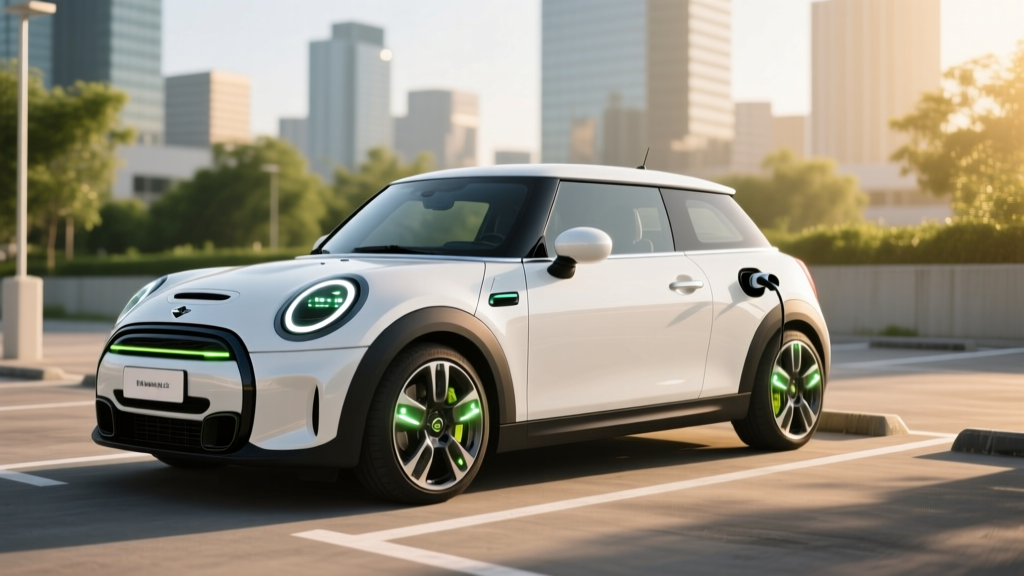
The MINI Cooper SE (officially the Electric Hardtop 2 Door) occupies a niche no other EV fills: a premium, personality-rich urban commuter with a sub-$35,000 starting price. But attractive MSRP stickers and eye-catching MINI Electric Hardtop 2 Door finance offers from dealers don't tell the full ownership story. To make a smart purchase decision, you need the real numbers — not just monthly payment estimates, but total cost of ownership, federal tax credit eligibility under current IRS §30D rules, insurance premiums, and how this EV's running costs compare to the gas-powered MINI Cooper you might be cross-shopping.
This guide breaks down every dollar you'll spend (and save) owning the 2026 MINI Electric Hardtop over five years, with exact figures sourced from the EPA, IRS, and MINI's official spec sheets.
2026 MINI Electric Hardtop 2 Door: Key Specs at a Glance
Before we get to the finance math, here are the hard numbers that define what you're buying. The 2026 model continues with the updated battery and platform introduced for the 2025 refresh.
| Spec | 2026 MINI Cooper SE (Electric Hardtop 2 Door) |
|---|---|
| EPA Range | 114 miles (Classic/Signature trim); 137 miles (with larger battery option on Iconic trim) |
| Real-World Range Expectation | ~95–110 mi highway; ~80–95 mi in cold weather (below 32°F) |
| Battery Capacity | 32.6 kWh usable (base); 40.7 kWh usable (extended range option) |
| Battery Chemistry | NMC (Nickel Manganese Cobalt) |
| Motor Output | 181 hp / 199 lb-ft torque |
| 0–60 mph | 6.5 seconds |
| DC Fast Charge (peak) | 95 kW (10–80% in ~28 minutes) |
| Level 2 AC Charge | 11 kW (~3.5 hours for full charge) |
| MPGe (combined) | 110 MPGe (base battery) |
| Efficiency | 30 kWh/100 mi |
| Starting MSRP | $30,900 (Classic trim, before destination) |
| Battery Warranty | 8 years / 100,000 miles (minimum 70% capacity retention) |
Federal Tax Credit: Do You Qualify Under Current §30D Rules?
The federal EV tax credit is the single largest incentive available, but eligibility for the MINI Electric Hardtop under IRS §30D depends on several factors that change periodically. Here's what applies for the 2026 tax year:
- ✓ MSRP Cap: The vehicle must have an MSRP below $55,000 (sedans/hatchbacks). The MINI Cooper SE qualifies at $30,900–$38,000 depending on trim.
- ✓ Buyer Income Cap: Modified adjusted gross income must not exceed $150,000 (single filers), $225,000 (head of household), or $300,000 (joint filers).
- ⚠ Battery Sourcing Requirements: The credit is split into two halves — $3,750 for meeting critical-minerals sourcing thresholds and $3,750 for battery-component manufacturing requirements. These thresholds tighten annually. Check the fueleconomy.gov tax credit lookup for the MINI Cooper SE's current qualification status, as battery supply chains shift.
- ✓ Point-of-Sale Transfer: As of 2024, you can transfer the credit to the dealer at purchase, reducing your out-of-pocket cost immediately rather than waiting for a tax refund. This directly impacts your finance offer — a $3,750 or $7,500 reduction in the capitalized cost lowers your monthly payment.
- ⚠ North American Assembly: The vehicle must undergo final assembly in North America. Verify the specific VIN via the NHTSA VIN decoder — some MINI models are assembled in the UK, which could affect eligibility.
5-Year Total Cost of Ownership: The Full Breakdown
Here's where the MINI Electric Hardtop's value proposition becomes clear — or doesn't — depending on your driving patterns. This table models 5 years / 60,000 miles of ownership, assuming 12,000 miles driven annually and home Level 2 charging for 90% of sessions.
| Cost Category | 2026 MINI Cooper SE (EV) | 2026 MINI Cooper S (Gas) | 5-Year EV Savings (+) or Cost (−) |
|---|---|---|---|
| Purchase Price (base MSRP + destination) | $31,900 | $32,400 | +$500 |
| Federal Tax Credit (if eligible) | −$3,750 to −$7,500 | $0 | +$3,750 to +$7,500 |
| Effective Purchase Price | $24,400–$28,150 | $32,400 | +$4,250 to +$8,000 |
| Fuel/Energy (60,000 mi) | $5,400 (at $0.15/kWh, 30 kWh/100mi) | $10,200 (at $3.40/gal, 30 MPG combined) | +$4,800 |
| Maintenance (5 years) | $1,200 | $3,800 | +$2,600 |
| Insurance (5 years) | $11,400 ($2,280/yr avg) | $9,600 ($1,920/yr avg) | −$1,800 |
| Depreciation (est. 5-yr) | $14,500 (~47% of net price) | $13,200 (~41% of MSRP) | −$1,300 |
| Total 5-Year Cost | $28,750–$32,500 | $56,000 | +$23,500 to +$27,250 |
The EV wins decisively on fuel and maintenance, but loses ground on insurance and depreciation. The federal tax credit is the swing factor: if you qualify for the full $7,500, the Cooper SE's total cost drops substantially. If the vehicle doesn't qualify due to assembly location, the gap narrows but the EV still comes out ahead over five years thanks to dramatically lower fuel and maintenance costs.
Charging Cost vs. Gas: The Per-Mile Math That Matters
The MINI Cooper SE consumes approximately 30 kWh per 100 miles (its EPA-rated efficiency). Your actual cost per mile depends entirely on how and where you charge:
| Charging Scenario | Cost per kWh | Cost per 100 Miles | Cost per Mile |
|---|---|---|---|
| Home Level 2 (national avg residential) | $0.15 | $4.50 | $0.045 |
| Home Level 2 (off-peak utility rate) | $0.09 | $2.70 | $0.027 |
| Public DC Fast Charging (avg) | $0.40 | $12.00 | $0.12 |
| Gas MINI Cooper S (30 MPG, $3.40/gal) | — | $11.33 | $0.113 |
At home on standard residential rates, the MINI Electric Hardtop costs less than half what the gas Cooper S costs per mile. Even at public DC fast-charging rates, the EV is roughly cost-competitive with gas — and far cheaper if you can charge at home, especially with time-of-use utility plans that offer off-peak rates around $0.09/kWh.
The MINI's relatively small battery (32.6 or 40.7 kWh) is actually an advantage here: a full charge at home costs just $4.89–$6.10 at $0.15/kWh. You're never staring down a $20+ fill-up.
Maintenance Savings: Where EVs Quietly Win
The Cooper SE eliminates nearly every recurring maintenance item that makes gas MINIs notoriously expensive to keep as they age:
| Maintenance Item | Gas MINI Cooper S | Electric MINI Cooper SE |
|---|---|---|
| Oil Changes (every 10,000 mi) | $120–$180 × 6 = $720–$1,080 | Not required |
| Brake Pad Replacement | $400–$700 at ~40,000 mi | Rarely needed in first 60,000 mi (regen braking) |
| Transmission Fluid | $200–$350 | Single-speed reduction gear — no fluid service |
| Spark Plugs | $300–$500 at ~60,000 mi | Not applicable |
| Air Filters (engine) | $50–$80 × 3 | Cabin filter only — $40–$60 × 3 |
| Coolant Flush | $150–$250 | Battery thermal system — less frequent, ~$150 |
| Estimated 5-Year Total | ~$3,800 | ~$1,200 |
Regenerative braking is the hidden hero here. The MINI Cooper SE's regen system handles the majority of deceleration, meaning your friction brake pads and rotors experience minimal wear. Many EV owners report original brake pads at 80,000+ miles. Tire rotations, cabin air filters, wiper fluid, and washer blades are essentially the only routine items.
Insurance Reality: The Cost Most Buyers Overlook
EV insurance premiums run 15–25% higher than equivalent gas vehicles, and the MINI Cooper SE is no exception. Based on national averages for a 35-year-old driver with a clean record:
- MINI Cooper SE (electric): ~$2,100–$2,500/year
- MINI Cooper S (gas): ~$1,700–$2,100/year
Why the premium? Three factors drive higher EV insurance costs:
- Higher repair costs after collisions: EV battery packs require specialized handling, and high-voltage system diagnostics require certified technicians. Even minor rear-end damage can trigger battery inspection protocols.
- Higher vehicle replacement cost: Though the Cooper SE starts at ~$31,000, its battery alone represents a significant portion of that value. Insurers price in total-loss scenarios.
- Limited historical claims data: Insurers have decades of data on gas MINIs. EV claims data is still maturing, and insurers price conservatively when uncertainty exists.
How to reduce your premium: Shop quotes from at least three carriers — EV insurance pricing varies wildly. Some insurers (GEICO, Progressive, Liberty Mutual) offer specific EV discounts. Bundling with homeowners/renters insurance and maintaining a clean driving record can close much of the gap.
Depreciation & Resale Value: What to Expect
EV depreciation has been volatile. Between 2023 and 2025, several EVs experienced steeper-than-expected depreciation due to aggressive price cuts on new models (notably Tesla), improving battery technology making older models less competitive, and shifting consumer sentiment. The MINI Cooper SE faces specific headwinds and tailwinds:
Headwinds (factors pushing depreciation higher):
- Relatively short range (114–137 mi EPA) compared to newer 250+ mile EVs entering the used market
- Small battery means faster-perceived obsolescence as energy density improves industry-wide
- DC fast-charge speed of 95 kW peak trails newer platforms at 150–350 kW
Tailwinds (factors supporting resale value):
- MINI brand loyalty and cult following — the Hardtop holds value better than many mainstream EVs due to its distinctive design and engaged owner community
- Affordable entry price means a lower absolute depreciation dollar amount
- Urban demand for compact EVs remains strong in metro areas with charging infrastructure
Expect the 2026 MINI Cooper SE to retain approximately 45–55% of its net purchase price after 5 years / 60,000 miles — meaning $13,000–$16,000 in estimated resale value from a ~$28,000 effective purchase price (after tax credit). This is competitive with the gas MINI Cooper's retention rate, though the gas model starts from a slightly higher depreciation base.
State, Local, and Utility Incentives: Stacking the Savings
Beyond the federal §30D credit, many buyers can stack additional incentives:
- State rebates: States like California (CVRP, up to $7,000 for income-eligible buyers), Colorado (up to $5,000 state tax credit), Massachusetts (MOR-EV, up to $3,500), and New York (Drive Clean Rebate, up to $2,000) offer substantial additional savings.
- Utility rebates: Many electric utilities offer $250–$1,500 rebates for EV purchase and/or Level 2 home charger installation. Check with your local utility — programs from PG&E, ConEdison, Xcel Energy, and others are common.
- HOV lane access: Several states (California, Colorado, Virginia, Maryland, and others) grant single-occupant HOV lane access to qualifying EVs — a significant time savings for commuters that has real economic value.
- Home charger tax credits: The federal §30C Alternative Fuel Vehicle Refueling Property Credit offers up to $1,000 (30% of cost) for home EV charger installation, subject to census-tract eligibility requirements.
A buyer in California who qualifies for the full federal credit ($7,500), the CVRP rebate ($7,000 for income-eligible buyers), a utility rebate ($500), and the home charger credit ($1,000) could see $16,000 in total incentives — bringing a $31,900 MINI Cooper SE down to an effective cost of roughly $15,900 before any dealer discounts or finance offers.
Finance Offers: How to Evaluate Dealer and Manufacturer Deals
MINI Financial Services periodically offers promotional APR rates and lease deals on the Cooper SE. When evaluating MINI Electric Hardtop 2 Door finance offers, focus on these variables:
- APR vs. cash rebate: Some offers feature 0.9%–2.9% APR for well-qualified buyers (720+ FICO). Others offer cash-back rebates instead. Calculate total interest paid over the loan term and compare against the rebate amount. On a $28,000 loan over 60 months, the difference between 1.9% APR ($1,380 total interest) and 6.9% APR ($5,150 total interest) is $3,770 — more than many cash-back offers.
- Lease considerations: MINI EV leases often feature attractive money factors, but verify whether the tax credit is being passed through as a capitalized cost reduction. Under §30D, the credit can be claimed by the lessor (the finance company) — some pass it to you as a lower lease payment, others don't. Always ask explicitly.
- Point-of-sale credit transfer: If buying, elect to transfer your federal credit to the dealer at point of sale. This reduces the amount you need to finance and lowers your monthly payment from day one — no waiting until tax season.
- Total loan cost: A lower monthly payment stretched over 72 or 84 months may cost you more in total interest. Always calculate the total of all payments plus any fees to compare offers accurately.
Frequently Asked Questions
How much does it really cost to own a MINI Electric Hardtop over 5 years?
Based on our analysis, total 5-year cost ranges from approximately $28,750 to $32,500 depending on federal tax credit eligibility. This includes purchase price (after incentives), home charging at $0.15/kWh, insurance at ~$2,280/year, estimated maintenance, and depreciation. The gas MINI Cooper S costs approximately $56,000 over the same period, making the EV $23,500–$27,250 cheaper — assuming you qualify for at least a partial federal tax credit.
Does the 2026 MINI Cooper SE qualify for the $7,500 federal tax credit?
It depends on your specific vehicle's VIN and your income. The §30D credit requires North American final assembly, compliance with battery-sourcing and critical-mineral thresholds, an MSRP under $55,000, and buyer income below specified caps. Because MINI has historically assembled the Hardtop in the UK, verify your vehicle's assembly location via the NHTSA VIN decoder before assuming eligibility. Check the current status on fueleconomy.gov.
How much do I save on fuel and maintenance vs. the gas MINI?
Over 60,000 miles, expect to save approximately $4,800 on energy costs (charging at home at $0.15/kWh vs. gasoline at $3.40/gallon) and $2,600 on maintenance (no oil changes, minimal brake wear from regenerative braking, no spark plugs or transmission fluid). Combined savings: ~$7,400 over five years.
Are electric MINIs more expensive to insure?
Yes, typically 15–25% more. Expect to pay $2,100–$2,500/year vs. $1,700–$2,100/year for the gas Cooper S. Higher repair costs, specialized technician requirements, and battery replacement risk in collision scenarios drive the premium. Shopping multiple carriers and bundling policies can reduce the gap significantly.
How well does the MINI Electric Hardtop hold its value?
Expect 45–55% value retention after 5 years / 60,000 miles. The MINI brand's enthusiast following and the Cooper SE's affordable price point support resale value, but the relatively short EPA range (114–137 miles) may limit appeal as longer-range EVs enter the used market. In absolute dollars, depreciation is moderate because the starting price is low.
Is 114 miles of range enough for daily driving?
For urban and suburban commuters with home charging, absolutely — the average American drives 37 miles per day according to FHWA data. The Cooper SE covers that with range to spare. For longer weekend trips or rural drivers without reliable home charging, the limited range and 95 kW peak DC fast-charge speed (10–80% in ~28 minutes) require more planning. The extended-range 40.7 kWh battery option (137 mi EPA) helps, but this EV is optimized as a city car, not a road-trip vehicle.