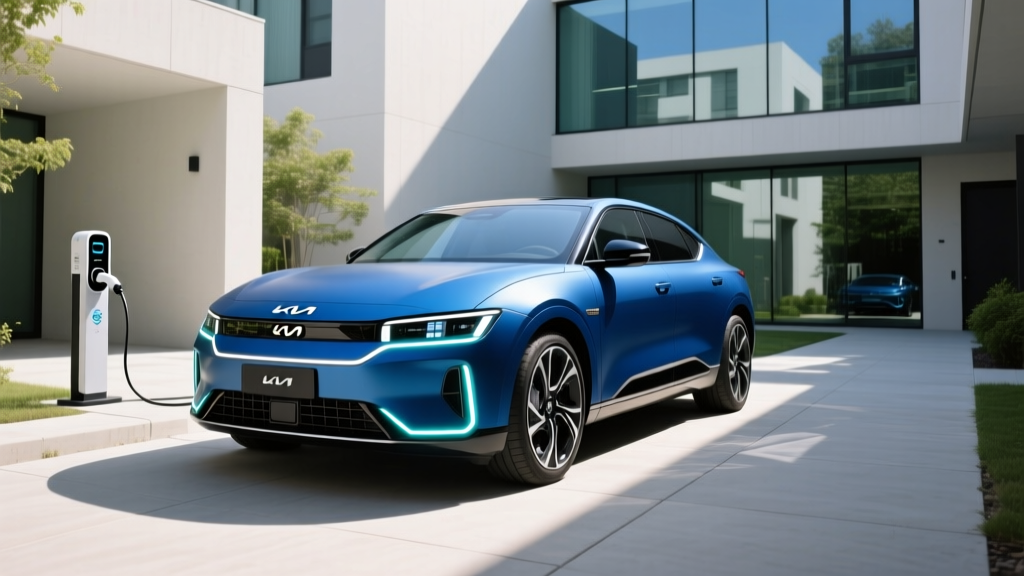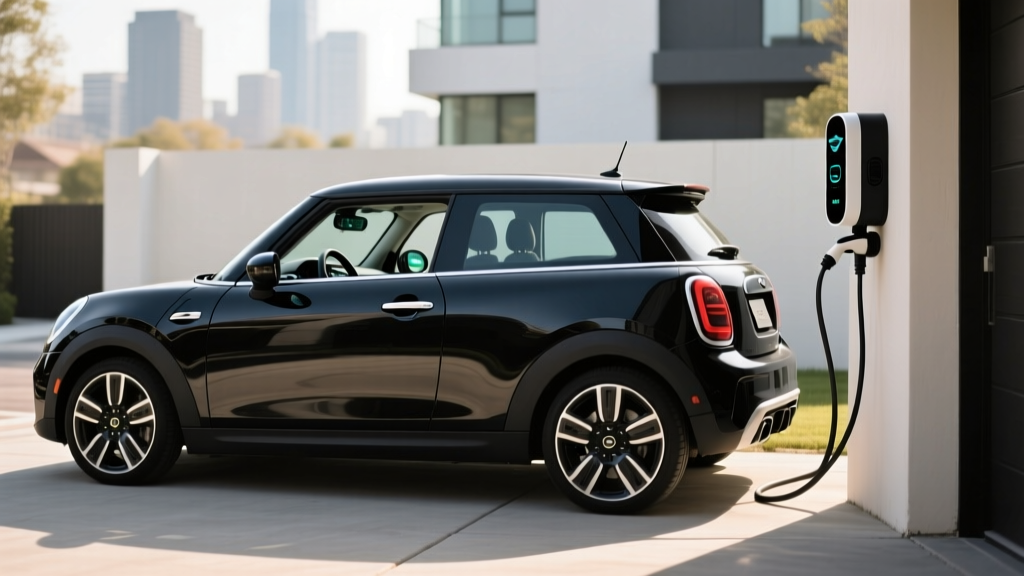
The 2026 Mini Cooper SE remains one of the most accessible premium electric hatchbacks on the US market, with a starting MSRP around $30,900. But for buyers evaluating Mini Electric finance options, the sticker price is only the beginning. This guide breaks down the true five-year cost of ownership — from federal tax credit eligibility and real-world charging costs to insurance premiums and resale value — so you can decide whether the Cooper SE makes financial sense for your commute.
2026 Mini Cooper SE: The Numbers That Matter
Before we run the ownership math, here are the core specifications that drive every cost calculation below. The 2026 Cooper SE uses a 54.2 kWh (gross) battery pack with NMC chemistry, of which roughly 49.5 kWh is usable. EPA-rated range sits at 162 miles — adequate for urban commuting but a limitation worth acknowledging for road trips. The single front-mounted motor produces 215 horsepower and 243 lb-ft of torque, delivering a 0-60 mph time of approximately 6.7 seconds.
| Spec | Value |
|---|---|
| EPA Range | 162 miles (real-world highway: ~130-140 mi; cold weather: ~110-120 mi) |
| Battery (Gross / Usable) | 54.2 kWh / ~49.5 kWh (NMC) |
| DC Fast Charge (Peak) | 95 kW (10-80% in ~28 min) |
| Level 2 AC Charge | 11 kW (~4.5 hours 0-100%) |
| Motor Output | 215 hp / 243 lb-ft |
| 0-60 mph | ~6.7 seconds |
| EPA Efficiency | 110 MPGe combined (30 kWh/100 mi) |
| Base MSRP (Classic) | $30,900 |
| Battery Warranty | 8 years / 100,000 miles (≥70% capacity retention) |
Federal Tax Credit: Does the Cooper SE Qualify Under §30D?
The IRS §30D Clean Vehicle Credit offers up to $7,500 for qualifying new EVs — but eligibility hinges on three interlocking rules that eliminate many vehicles and buyers. For the 2026 Mini Cooper SE, the picture is nuanced.
- MSRP Cap: The Cooper SE must have an MSRP at or below $55,000 (sedan/hatchback cap). At $30,900 base, the Cooper SE clears this easily, even in higher trims.
- Buyer Income Cap: Modified adjusted gross income (MAGI) must not exceed $150,000 (single filer), $225,000 (head of household), or $300,000 (married filing jointly).
- Battery Sourcing Requirements: The $7,500 credit is split into two halves — $3,750 for critical minerals and $3,750 for battery component assembly, each with escalating domestic-content thresholds. The Cooper SE's battery supply chain has historically relied on non-qualifying sources for some components, meaning many buyers may qualify for only $3,750 or potentially $0 depending on the model year's sourcing certification.
- ☐ Vehicle MSRP ≤ $55,000 (hatchback/sedan)
- ☐ Buyer MAGI within limits ($150K single / $300K joint)
- ☐ Battery critical minerals meet US/FTA-country thresholds ($3,750 portion)
- ☐ Battery components manufactured/assembled in North America ($3,750 portion)
- ☐ Vehicle assembled in North America (VIN verification required)
- ☐ Point-of-sale transfer elected at dealer (reduces purchase price directly) OR claimed on tax return
Point-of-sale transfer: Since 2024, buyers can transfer the credit to the dealer at purchase, reducing the vehicle price upfront rather than waiting to claim it on their tax return. This effectively functions as a down payment reduction and is available for the Cooper SE if the credit applies.
State, Local, and Utility Incentives
Beyond the federal credit, incentive availability varies significantly by jurisdiction:
- California: CVRP rebate up to $2,000 (income-dependent); additional utility rebates (e.g., PG&E, SCE) of $500-$1,500 for home charger installation
- Colorado: State tax credit up to $5,000 for EVs under $50,000 MSRP (2026 rules)
- New York: Drive Clean Rebate up to $2,000 (point-of-sale)
- Utility programs: Many utilities (Xcel Energy, ConEdison, National Grid) offer $250-$1,000 rebates for Level 2 charger purchase/installation, plus off-peak charging rate discounts
Five-Year Total Cost of Ownership: The Full Breakdown
Below is a five-year TCO model for the 2026 Mini Cooper SE assuming 12,000 miles/year (60,000 total), home Level 2 charging at $0.14/kWh (national average), and a mid-tier Signature trim at ~$34,000 MSRP. We compare against a gas-powered 2026 Mini Cooper S (2.0L turbo, 201 hp, ~$31,900 MSRP, 31 MPG combined).
| Cost Category | Cooper SE (Electric) | Cooper S (Gas) |
|---|---|---|
| Purchase Price (MSRP) | $34,000 | $31,900 |
| Federal Tax Credit | -$3,750 (estimated partial) | $0 |
| Net Purchase After Credit | $30,250 | $31,900 |
| Fuel/Energy (60,000 mi) | $2,520 (18,000 kWh × $0.14) | $6,580 (1,935 gal × $3.40) |
| Maintenance (5 years) | $1,200 | $3,100 |
| Insurance (5 years) | $9,600 ($160/mo avg) | $7,800 ($130/mo avg) |
| Depreciation (est. 5-yr) | -$16,500 (~55%) | -$14,700 (~46%) |
| Total 5-Year Cost | $27,070 | $34,680 |
| Cost Per Mile | $0.45/mi | $0.58/mi |
Key takeaway: The Cooper SE saves approximately $7,600 over five years in this model, driven primarily by fuel and maintenance savings that offset higher insurance and steeper depreciation. Your actual savings depend heavily on local electricity rates, gas prices, credit eligibility, and how long you hold the vehicle.
Charging vs. Gas: The Per-Mile Math
The Cooper SE's EPA efficiency rating of 110 MPGe translates to approximately 30 kWh per 100 miles. At the US residential average of $0.14/kWh (EIA data, early 2026), that works out to:
| Scenario | Cooper SE | Gas Cooper S (31 MPG) |
|---|---|---|
| Home charging ($0.14/kWh) / Gas ($3.40/gal) | $0.042/mi | $0.110/mi |
| Off-peak utility rate ($0.08/kWh) | $0.024/mi | $0.110/mi |
| DC fast charging ($0.40/kWh avg) | $0.120/mi | $0.110/mi |
| Gas at $4.50/gal | $0.042/mi (home) | $0.145/mi |
The savings are dramatic when charging at home — roughly $0.07/mile less than gas. But note the third row: if you rely exclusively on DC fast charging at public stations ($0.35-$0.48/kWh in most metro areas), the Cooper SE actually costs more per mile than a gas car. This is why home Level 2 charging access is the single biggest financial variable in EV ownership.
Maintenance Savings: Where the EV Advantage Is Real
The Cooper SE eliminates several routine gas-car maintenance items:
| Item | Gas Cooper S (5-yr est.) | Cooper SE |
|---|---|---|
| Oil changes (synthetic, ~$90 each, 2×/yr) | $900 | $0 |
| Spark plugs (replacement ~60K mi) | $400 | $0 |
| Transmission fluid service | $250 | $0 (single-speed reduction gear) |
| Brake pad replacement | $600-900 | $0-200 (regen braking extends pad life 2-3×) |
| Engine air filter | $150 | $0 |
| Exhaust system repairs | $200-500 | $0 |
The Cooper SE still requires cabin air filter replacements (~$50-80 every 2 years), tire rotations, brake fluid flushes (every 2 years), coolant checks, and windshield washer fluid. Budget approximately $200-250/year for these items — roughly 60% less than the gas equivalent.
Regenerative braking note: The Cooper SE's regen system handles most deceleration, meaning friction brakes see minimal use. Many EV owners report original brake pads lasting 80,000-100,000+ miles. However, periodic brake inspections remain important — calipers can seize from disuse if not exercised.
Insurance Reality: The Hidden EV Premium
EV insurance typically runs 15-25% higher than equivalent gas vehicles. For the Cooper SE, expect monthly premiums in the $140-$190 range depending on your state, driving record, and coverage level — compared to $115-$155 for the gas Cooper S.
Why the premium?
- Higher repair costs: Battery pack damage in a collision can total the vehicle; specialized EV repair training and parts cost more
- Higher purchase price: Insurers factor replacement cost, and EVs still carry a price premium in many segments
- Limited repair network: Fewer body shops have high-voltage certification, increasing labor rates and turnaround times
Cost-offset tip: Several insurers (Progressive, State Farm, Geico) now offer specific EV discounts or telematics-based programs that can narrow the gap by 5-10%. Shop quotes from at least three carriers before binding coverage.
Depreciation and Resale Value
EV depreciation has been a moving target. Early EVs suffered steep resale drops as battery longevity concerns and rapidly improving new models eroded demand. The Cooper SE specifically faces two headwinds:
- Short range by 2026 standards: At 162 miles EPA, the Cooper SE trails competitors like the Chevrolet Bolt EUV (259 mi), Hyundai Kona Electric (261 mi), and Volvo EX30 (275 mi). As newer EVs push past 300 miles, shorter-range models depreciate faster.
- Mini's niche positioning: The brand's US dealer network is smaller than mainstream competitors, limiting the used-car buyer pool.
Current projections place 5-year Cooper SE depreciation at approximately 50-58% of MSRP — steeper than the gas Cooper S (42-48%). In dollar terms, a $34,000 Cooper SE might resell for $14,300-$17,000 after five years and 60,000 miles, versus $16,600-$18,500 for the gas model.
This depreciation gap narrows if you buy used (absorbing the first owner's steepest depreciation curve) or if you hold the vehicle past year seven, where depreciation rates flatten for both EV and gas cars.
Mini Electric Finance Options: Lease vs. Buy
For buyers focused on monthly cash flow, Mini Financial Services (through BMW Financial Services) typically offers:
- 36-month lease: ~$349-$429/month depending on trim, with $3,000-$4,000 due at signing. Lease money factors in 2026 average around 0.00200 (equivalent to ~4.8% APR). Note: the §30D credit can be applied to a lease as a capital cost reduction through the lessor, but the leasing company captures the credit — confirm they pass it through as a discount.
- 60-month purchase loan: At 5.9% APR on a $30,250 net price (after $3,750 credit), expect ~$585/month. A 72-month term drops this to ~$500/month but adds ~$1,200 in total interest.
- Balloon financing: Available through select dealers with lower monthly payments and a larger final payment — useful if you plan to sell or trade before term end.
For buyers who do not qualify for the federal credit (income above caps or battery sourcing disqualification), the financial case tightens considerably. In that scenario, leasing often makes more sense, as you pay only for the depreciation during the lease term rather than absorbing the full resale-value hit.
Who Should (and Shouldn't) Finance a Mini Cooper SE?
- Your daily commute is under 80 miles round-trip with home Level 2 charging
- You qualify for at least the partial $3,750 federal credit
- You value driving dynamics and premium interior over maximum range
- You live in an urban area with abundant public DC fast chargers for occasional longer trips
- You regularly drive 150+ miles between charges or live in a charging-desert region
- You cannot install a Level 2 charger at home (reliance on DCFC erases fuel savings)
- You need cargo space for family hauling (11.1 cu ft trunk is compact)
- You plan to keep the vehicle 8+ years and are concerned about out-of-warranty battery replacement ($12,000-$16,000 estimate)
Frequently Asked Questions
How much does it really cost to own a Mini Cooper SE over 5 years?
Approximately $27,000-$28,000 in total cost of ownership (net of purchase price, energy, insurance, maintenance, and depreciation, offset by tax credits) for a buyer who qualifies for the partial federal credit and charges primarily at home. Without the credit, expect closer to $31,000.
Do I qualify for the $7,500 federal tax credit on the Mini Cooper SE?
Most buyers will qualify for $3,750 (one half of the credit) if their income is within limits ($150K single / $300K joint). The full $7,500 requires meeting both battery component and critical mineral sourcing thresholds, which the Cooper SE may not fully satisfy in 2026. Verify the current sourcing certification on the fueleconomy.gov tax credit lookup before purchasing.
How much do I save on fuel and maintenance vs. a gas Mini?
Approximately $4,000 in fuel savings and $1,900 in maintenance savings over 60,000 miles, assuming home charging at $0.14/kWh and gas at $3.40/gallon. Combined savings of ~$5,900 offset the higher insurance cost (~$1,800 premium over 5 years).
Are EVs more expensive to insure than gas cars?
Yes, typically 15-25% more. For the Cooper SE, expect $140-$190/month vs. $115-$155/month for the gas Cooper S. The gap is driven by higher repair costs, battery replacement risk, and a smaller EV-certified body shop network.
How well does the Mini Cooper SE hold its value?
The Cooper SE depreciates faster than its gas counterpart — approximately 50-58% over five years vs. 42-48% for the gas Cooper S. The 162-mile range is the primary drag, as the used-EV market increasingly favors 250+ mile vehicles. Buying used or leasing can mitigate this risk.
Sources: EPA efficiency data via fueleconomy.gov; IRS Clean Vehicle Credit rules via irs.gov; Mini USA specifications via miniusa.com.