Quick Verdict: The 2026 Mini Electric, Urban Joy Redefined
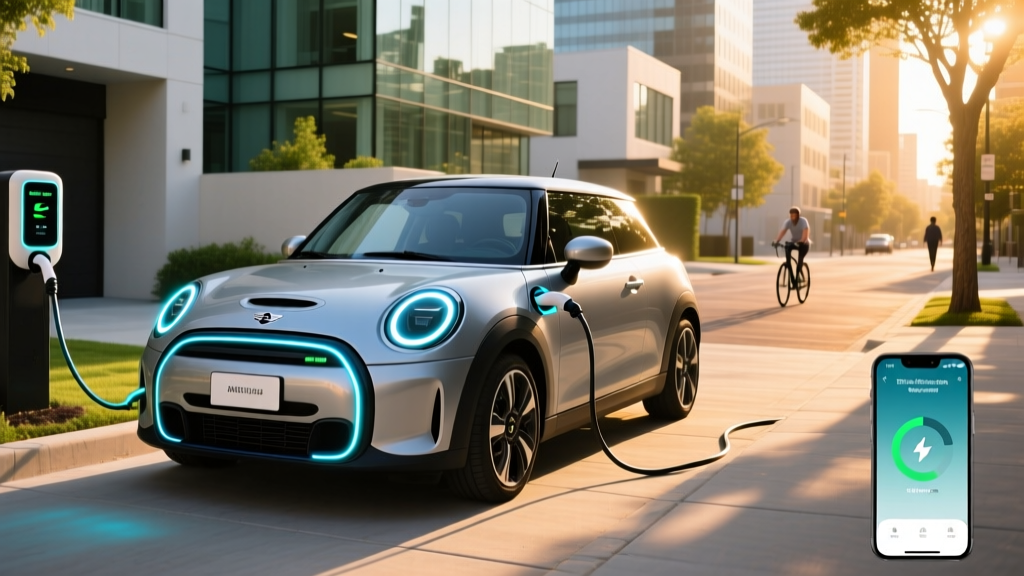
If you've been searching for a compact EV that delivers go-kart handling without the bulk of a crossover, the 2026 Mini Electric (officially the Mini Cooper Electric) deserves serious attention. Built on BMW's latest dedicated EV platform, this generation sheds the compromises of the older Cooper SE — most notably its anemic 114-mile range — and replaces them with a usable 162-mile EPA estimate, 95 kW fast charging, and a cabin that punches well above its weight in tech and materials.
But before you place a deposit, there are real-world caveats to understand: highway range drops noticeably, DC charging speeds trail segment leaders, and the rear seat is best reserved for occasional use or cargo overflow. This review covers every number that matters — from battery chemistry to tax credit eligibility — so you can decide if the Mini Electric fits your driving life.
Note: Some online searches conflate the Mini Electric with unrelated products (you may have seen queries like "mini electric jet boat temu" pop up in trending searches). This review focuses exclusively on the 2026 Mini Cooper Electric passenger vehicle sold through authorized Mini dealerships in the United States.
Range and Efficiency: EPA Numbers vs. the Real World
Real-World Expectation: 135–150 miles on mixed highway driving; 110–130 miles in freezing temperatures with cabin heat; 155–165 miles in city commuting with regen braking.
The 2026 Mini Electric is offered in two powertrain configurations. The single-motor Cooper E pairs a front-mounted electric motor with a 54.2 kWh (gross) battery, of which approximately 49.5 kWh is usable. The dual-motor Cooper SE uses a slightly smaller 49.4 kWh gross pack to offset the weight and complexity of the rear axle motor.
Both variants use NMC (nickel manganese cobalt) lithium-ion cells supplied by CATL, chosen for their energy density advantage in a compact vehicle where packaging space is at a premium. Mini has not offered an LFP option for this model year — a trade-off that prioritizes range-per-pound over the ultra-long cycle life and 100% daily charging tolerance that LFP chemistry provides.
| Specification | Cooper E (FWD) | Cooper SE (AWD) |
|---|---|---|
| EPA Range | 162 miles | 140 miles |
| Battery (Gross / Usable) | 54.2 kWh / 49.5 kWh | 49.4 kWh / 45.0 kWh |
| Chemistry | NMC | NMC |
| MPGe (City / Hwy / Combined) | 122 / 105 / 114 | 110 / 95 / 103 |
| kWh per 100 Miles | 29 | 32 |
On the efficiency front, the Cooper E's 114 MPGe combined is respectable for the subcompact segment, though it falls short of the Hyundai Ioniq 5's 114–132 MPGe depending on trim and the Tesla Model 3 RWD's 132 MPGe. In practical terms, you'll consume roughly 29 kWh per 100 miles in mixed driving, which translates to about $4.35 in electricity at the national average residential rate of $0.15/kWh — roughly a third of what a comparable gas-powered Mini Cooper would cost in fuel.
For authoritative efficiency data, see the EPA's fueleconomy.gov listing for the 2026 Mini Cooper Electric.
Charging Speed: DC Fast Charge and Home Level 2
Charging capability is where the 2026 Mini Electric shows clear generational improvement over its predecessor while still trailing the fastest-charging rivals. The Cooper E supports a peak DC fast-charge rate of 95 kW, while the Cooper SE peaks at 90 kW. Neither variant supports the 150–250+ kW rates found on Hyundai/Kia's E-GMP platform or Tesla's latest vehicles.
Here's what that means at the charger:
| Charging Method | Power (kW) | Speed | Time |
|---|---|---|---|
| Level 1 (120V household outlet) | 1.4 kW | ~5 miles/hour | Full charge in ~36 hours |
| Level 2 (240V, 32A home charger) | 7.4 kW | ~27 miles/hour | 10–100% in ~7 hours |
| Level 2 (240V, 48A charger) | 11 kW | ~40 miles/hour | 10–100% in ~4.5 hours |
| DC Fast Charge (Cooper E) | Peak 95 kW | ~200 miles/hour (peak) | 10–80% in ~28 minutes |
| DC Fast Charge (Cooper SE) | Peak 90 kW | ~185 miles/hour (peak) | 10–80% in ~30 minutes |
Charging curve reality: The 95 kW peak on the Cooper E is sustained roughly between 10% and 45% state of charge. Above 50%, the rate tapers progressively — dropping to around 60 kW at 60% SoC and further to 35–40 kW past 80%. This is standard behavior for NMC cells managed conservatively to protect long-term battery health, but it means a 10–80% session will average closer to 70–75 kW rather than the 95 kW headline figure.
For home charging, the onboard 11 kW AC charger is a strong point. If you install a 48-amp Level 2 wallbox (such as a ChargePoint Home Flex or Wallbox Pulsar Plus), you'll wake up to a full battery every morning in under five hours. Most Mini Electric owners will find a 32-amp/7.4 kW setup sufficient for overnight replenishment, which requires a standard NEMA 14-50 outlet and typically costs $800–$1,500 installed by a licensed electrician, depending on panel proximity.
The Mini Electric uses the CCS1 connector for DC fast charging in the United States. Mini has confirmed that NACS adapter compatibility will be available as an accessory for the 2026 model year, enabling access to Tesla Supercharger V2 and V3 stations — a meaningful expansion of public charging access given the Supercharger network's reliability advantage.
Performance and Driving Dynamics
Mini has always been about driving engagement, and the electric powertrain amplifies the brand's go-kart DNA rather than diluting it.
| Specification | Cooper E (FWD) | Cooper SE (AWD) |
|---|---|---|
| Horsepower | 184 hp | 218 hp (combined) |
| Torque | 214 lb-ft | 280 lb-ft (combined) |
| 0–60 mph | 6.7 seconds | 5.9 seconds |
| Drivetrain | Single-motor FWD | Dual-motor AWD |
| Top Speed | 99 mph (electronically limited) | 112 mph (electronically limited) |
The Cooper SE's 5.9-second 0–60 time puts it in hot-hatch territory, and the instant torque delivery makes it feel even quicker in stoplight-to-stoplight city driving. The low center of gravity from the under-floor battery pack reduces body roll through corners, and the steering retains the direct, communicative feel that Mini enthusiasts expect. Regenerative braking is adjustable through three levels via steering-wheel paddles, and a one-pedal driving mode is available in the highest regen setting.
Ride quality is firm — this is a Mini, not a luxury cruiser — but the 2026 model's longer wheelbase (up 2.8 inches over the previous generation) helps absorb larger road imperfections more gracefully. Road noise at highway speeds is noticeable but acceptable for the class.
Interior, Cargo, and Technology
The 2026 Mini Electric's cabin is a design standout. A 9.4-inch circular OLED display dominates the center stack, running Mini's latest Operating System 9 with wireless Apple CarPlay and Android Auto, native navigation with real-time charging station routing, and over-the-air update capability. The minimalist dashboard eliminates most physical buttons, consolidating climate and vehicle controls into the touchscreen — a choice that looks clean but requires more attention to operate while driving.
Passenger and cargo dimensions:
- Front headroom: 39.8 inches
- Front legroom: 41.2 inches
- Rear headroom: 37.1 inches
- Rear legroom: 32.5 inches
- Cargo volume (rear seats up): 7.1 cu ft
- Cargo volume (rear seats folded): 25.3 cu ft
- Frunk: Not available (no front trunk)
The rear seat is the Mini Electric's most obvious compromise. At 32.5 inches of legroom, it's tight for adults on anything beyond short trips. Cargo space at 7.1 cubic feet is sufficient for a week's groceries but falls well short of the Hyundai Kona Electric (25.5 cu ft behind the rear seats) and the Volvo EX30 (15.2 cu ft). If you regularly carry rear passengers or cargo, this will be a dealbreaker.
Driver assistance: The Mini Electric comes standard with Mini Driving Assistant, which includes forward collision warning, automatic emergency braking, lane departure warning, and park distance control. The optional Driving Assistant Professional adds adaptive cruise control with stop-and-go, lane centering, and evasive steering assist. This is SAE Level 2 driver assistance — the driver must remain fully engaged with hands on the wheel and eyes on the road at all times. Mini does not currently offer a hands-free highway driving system comparable to GM's Super Cruise or Ford's BlueCruise.
Pricing, Trims, and Federal Tax Credit Eligibility
| Trim | Base MSRP | Est. §30D Credit | Effective Price* |
|---|---|---|---|
| Cooper E Classic | $30,900 | Up to $7,500 | ~$23,400 |
| Cooper E Signature | $34,500 | Up to $7,500 | ~$27,000 |
| Cooper E Iconic | $37,900 | Up to $7,500 | ~$30,400 |
| Cooper SE Signature (AWD) | $38,500 | Up to $7,500 | ~$31,000 |
| Cooper SE Iconic (AWD) | $41,900 | Up to $7,500 | ~$34,400 |
*Effective price assumes full §30D credit eligibility. Destination charge ($995) not included. Actual credit depends on battery sourcing, buyer income, and tax liability. Consult a tax professional.
Federal §30D tax credit eligibility for the 2026 Mini Electric requires meeting several conditions under current IRS rules:
- MSRP cap: The vehicle's MSRP must not exceed $55,000 for sedans/hatchbacks (all Mini Electric trims qualify).
- Buyer income cap: Modified adjusted gross income must not exceed $150,000 (single), $225,000 (head of household), or $300,000 (joint filing).
- Battery sourcing: At least 60% of critical minerals and 75% of battery components must be sourced from the U.S. or free-trade-agreement partners to qualify for the full $7,500 ($3,750 for minerals + $3,750 for components). The Mini Electric's CATL-supplied cells have faced scrutiny under these rules — verify current-year eligibility on the IRS qualified vehicles list before purchase.
- Point-of-sale transfer: Under current rules, you can transfer the credit to the dealer at purchase for an immediate price reduction rather than waiting to claim it on your tax return.
Important caveat: Battery-sourcing requirements tighten annually. A model that qualifies for the full $7,500 in early 2026 may see partial eligibility if supply chains shift. Always confirm the specific VIN's eligibility with your dealer and cross-reference the IRS database at the time of purchase.
Warranty and Battery Longevity
Mini backs the 2026 Electric with the following coverage:
- Limited vehicle warranty: 4 years / 50,000 miles
- Battery and powertrain warranty: 8 years / 100,000 miles
- Battery capacity guarantee: Mini warrants that the high-voltage battery will retain at least 70% of its original usable capacity over the 8-year/100,000-mile warranty period.
- Complimentary maintenance: 3 years / 36,000 miles (covers brake fluid, cabin air filter, and vehicle check)
The 70% retention threshold is industry-standard, matching BMW Group's broader EV warranty policy. Based on real-world degradation data from similar NMC packs in the BMW i4 and iX, most owners can expect to see approximately 8–12% capacity loss over the first 100,000 miles under normal use patterns — well within the warranty buffer. To maximize longevity, Mini recommends avoiding prolonged storage above 90% SoC and using DC fast charging judiciously rather than as a daily routine.
Pros, Cons, and Who Should Buy
Pros
- Best-in-class handling and steering feel for a subcompact EV
- 11 kW AC onboard charger enables fast home charging
- Striking circular OLED display and premium interior materials
- Sub-$31K starting price before incentives
- NACS adapter availability for Supercharger access
- Instant torque and sub-6-second 0–60 (Cooper SE)
Cons
- 162-mile max range is limiting for road trips
- 95 kW DC peak charge rate trails rivals (Ioniq 5: 240 kW)
- Rear seat and cargo space are severely limited
- No front trunk (frunk) for additional storage
- Touchscreen-only climate controls are distracting
- NMC battery sourcing may affect full tax credit eligibility
Who the 2026 Mini Electric suits best: This is an ideal EV for urban and suburban drivers with reliable home charging, a commute under 60 miles round-trip, and a priority on driving enjoyment over utility. It works well as a second vehicle in a two-car household where a larger EV or PHEV handles road trips and cargo duties. It is not the right choice for families needing rear-seat space, frequent highway travelers, or anyone without access to overnight charging who would need to rely on its middling DC fast-charge speeds.
Choose the Mini Electric if: You prioritize driving dynamics, have home charging, commute under 60 miles daily, and want a premium-feeling subcompact under $35K after credits.
Look elsewhere if: You need 250+ miles of range (Tesla Model 3, Hyundai Ioniq 5), regular rear-seat passenger space (Volvo EX30, Kia Niro EV), or 200+ kW DC fast charging for road trips (Ioniq 5, EV6).
Mini Electric vs. Key Competitors
In the subcompact EV space, the Mini Electric faces strong alternatives. Here's how it compares on the metrics buyers care about most:
| Spec | Mini Cooper E | Hyundai Kona Electric | Volvo EX30 | Tesla Model 3 RWD |
|---|---|---|---|---|
| EPA Range | 162 mi | 261 mi | 265 mi | 272 mi |
| Battery (usable) | 49.5 kWh | 64.8 kWh | 69 kWh | 57.5 kWh |
| DC Fast Charge Peak | 95 kW | 100 kW | 153 kW | 170 kW |
| 0–60 mph | 6.7 sec | 7.6 sec | 6.2 sec | 5.8 sec |
| Cargo (seats up) | 7.1 cu ft | 25.5 cu ft | 15.2 cu ft | 23 cu ft |
| Base MSRP | $30,900 | $32,975 | $36,450 | $38,990 |
The Mini Electric wins on price and driving engagement. The Kona Electric and EX30 win decisively on range, cargo, and practicality. The Model 3 offers the best charging speed and range but at a higher entry price and a larger footprint.
Frequently Asked Questions
What is the real-world range of the 2026 Mini Electric?
The EPA rates the Cooper E at 162 miles and the Cooper SE AWD at 140 miles. In real-world mixed driving at highway speeds (70–75 mph), expect 135–150 miles from the Cooper E. In freezing temperatures with the cabin heater running, range can drop to 110–130 miles. City driving with regenerative braking can push the Cooper E close to its EPA rating or slightly above, reaching 155–165 miles.
How fast does the Mini Electric charge at home and on the road?
At home on a 48-amp Level 2 charger, the Mini Electric charges at up to 11 kW, adding roughly 40 miles of range per hour and reaching a full charge in about 4.5 hours. On a DC fast charger, the Cooper E peaks at 95 kW and charges from 10–80% in approximately 28 minutes. The charge rate tapers significantly above 80%, so plan to unplug at 80% for the fastest sessions.
Does the 2026 Mini Electric qualify for the $7,500 federal EV tax credit?
It may qualify for up to $7,500 under IRS §30D, but eligibility depends on several factors: your income must fall below the cap ($150K single / $300K joint), the vehicle MSRP must be under $55,000 (all trims qualify), and the battery must meet critical-mineral and component-sourcing thresholds. Because the Mini Electric uses CATL-supplied cells, sourcing compliance is the key variable. Check the IRS qualified vehicles list and confirm with your dealer at time of purchase.
Is the Mini Electric worth buying over the Hyundai Kona Electric or Volvo EX30?
It depends on your priorities. If driving fun, compact dimensions, and a sub-$24K effective price (after credits) matter most, the Mini Electric is the best choice in this segment. If you need more than 200 miles of range, regular rear-seat use, or significant cargo space, the Kona Electric or EX30 are more practical daily drivers despite their higher starting prices.
What are the biggest drawbacks of the Mini Electric?
The three most significant limitations are: (1) limited range — 162 miles maximum restricts road-trip viability without careful planning; (2) slow DC fast charging relative to competitors — 95 kW peak means longer stops on road trips; and (3) very limited rear-seat and cargo space, making it impractical as a primary family vehicle. The lack of a frunk also means you lose the front storage that most EVs provide.
Does the Mini Electric support Tesla Supercharger access?
Yes, Mini has confirmed that a NACS adapter will be available as an accessory for the 2026 model year, enabling access to Tesla's Supercharger network (V2 and V3 stalls). The native charge port remains CCS1, and you'll need the adapter for any NACS-only charger. Combined with the CCS1-compatible Electrify America, EVgo, and ChargePoint networks, this gives Mini Electric owners access to the broadest public charging footprint available.