The Quick Answer: Should You Buy the Mini Countryman Electric?
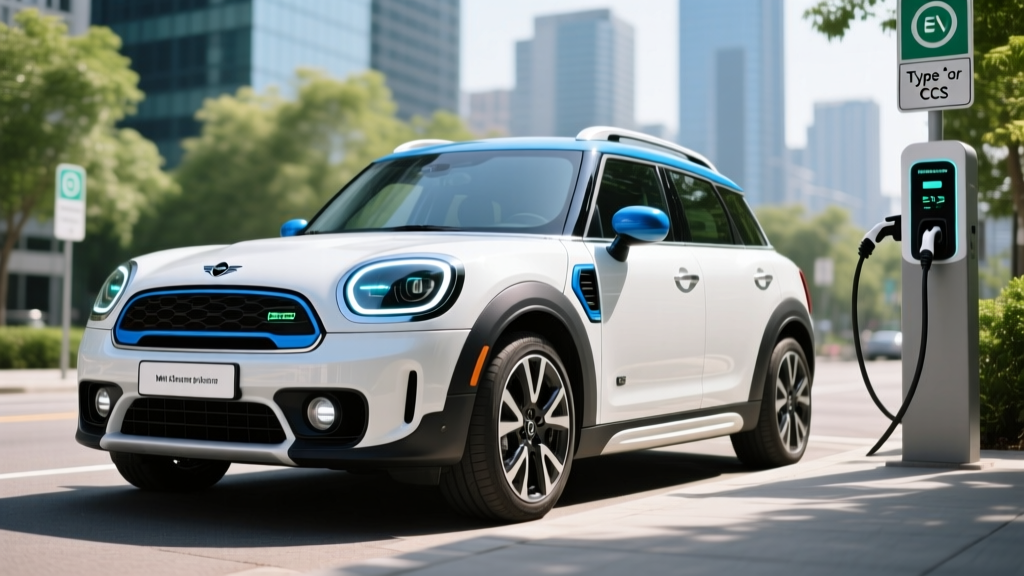
The Mini Countryman Electric (badged SE ALL4) is a compact luxury crossover offering an EPA-estimated 228 miles of range, a 66.5 kWh (usable) NMC battery, and 308 horsepower starting around $45,200 before incentives. It's best suited for urban and suburban drivers with home Level 2 charging access who prioritize style, premium interior quality, and nimble handling over maximum range. Expect roughly 190–210 miles of real-world highway range and closer to 160–180 miles in freezing temperatures. If you need 300+ miles of range or regularly road-trip in cold climates, a Hyundai Ioniq 5 or Tesla Model Y will serve you better. If you want a premium-feeling small EV SUV with adequate daily range and don't mind a higher price-per-mile-of-range ratio, the Countryman Electric delivers.
2025–2026 Mini Countryman Electric: Key Specs at a Glance
The all-electric Countryman rides on BMW's FAAR platform (shared with the BMW iX1) and comes in one dual-motor, all-wheel-drive configuration for the US market. Here are the numbers that matter:
| Specification | Mini Countryman SE ALL4 (Electric) |
|---|---|
| EPA Range | 228 miles |
| Battery (Usable / Gross) | 66.5 kWh / 64.7 kWh usable (NMC) |
| Powertrain | Dual-motor AWD |
| Horsepower / Torque | 308 hp / 364 lb-ft |
| 0–60 mph | 5.4 seconds |
| DC Fast Charge (Peak) | 130 kW (CCS) |
| 10–80% DC Charge Time | ~30 minutes |
| Level 2 AC Charge Rate | 11 kW (~7.5 hours 0–100%) |
| MPGe (Combined) | 99 MPGe |
| Cargo Volume | 16.5 cu ft (rear seats up) / 47.6 cu ft (folded) |
| Base MSRP (SE ALL4) | ~$45,200 |
| Battery / Powertrain Warranty | 8 years / 100,000 miles |
One immediate observation: 228 miles of EPA range is modest for the $45K+ segment. The Tesla Model Y Long Range delivers 308 miles, and the Hyundai Ioniq 5 Long Range AWD offers 290 miles — both at similar or lower starting prices. The Countryman's value proposition leans on interior quality, brand cachet, and driving dynamics rather than range-per-dollar.
Real-World Range: What You'll Actually Get
EPA vs. Reality
EPA sticker: 228 miles
Real-world highway (70 mph, 65°F): ~195–210 miles
Cold weather (32°F or below, highway): ~160–180 miles
Mixed city/suburban (moderate temps): ~215–230 miles (regen-heavy city driving can match or exceed EPA)
The Countryman Electric's 99 MPGe combined rating (roughly 3.0–3.2 kWh/mile depending on conditions) places it behind efficiency leaders like the Ioniq 5 (110 MPGe) and Model Y (117 MPGe). Its boxy shape and relatively heavy curb weight (~4,500 lbs) work against highway efficiency. According to fueleconomy.gov, the Countryman SE ALL4 consumes approximately 34 kWh per 100 miles in combined driving.
Cold weather is the real story. NMC batteries in this size class typically lose 20–30% of range in sustained freezing temperatures, especially on highway drives where cabin heating draws significant energy. The Countryman does include a heat pump (standard), which mitigates some loss compared to resistive heating, but physics is physics. If you live in the upper Midwest or Northeast and commute more than 80 miles one-way in winter, this vehicle requires careful planning.
On the positive side, the Countryman's regenerative braking system offers adjustable levels (including a one-pedal driving mode), which can recover meaningful energy in stop-and-go urban traffic and push real-world city range close to or slightly above the EPA figure.
Charging Speed and Infrastructure
| Charging Level | Power (kW) | Miles Added Per Hour | Typical Use Case |
|---|---|---|---|
| Level 1 (120V household) | ~1.4 kW | ~4–5 miles | Emergency/top-up overnight |
| Level 2 (240V home/public) | Up to 11 kW | ~33–36 miles | Daily home charging (7–8 hr full charge) |
| DC Fast Charging | Up to 130 kW (peak) | ~150+ miles in 30 min (10–80%) | Road trips |
The 130 kW peak DC fast-charge rate is the Countryman's most notable charging limitation. Competitors like the Ioniq 5 (up to 240 kW on 800V architecture) and the Tesla Model Y (up to 250 kW on V3 Superchargers) add range significantly faster on road trips. At 130 kW, the Countryman charges from 10% to 80% in roughly 30 minutes — adequate but not class-leading.
The charge curve tapers noticeably above 80% state of charge (SoC), as is standard for NMC chemistry. Expect 80–100% to add another 20–25 minutes. For road-trip efficiency, plan your stops around 10–80% intervals.
The Countryman uses the CCS1 connector for DC fast charging and a J1772 inlet for Level 2 AC. Mini has not announced a transition to the Tesla NACS standard for the current-generation Countryman. This means access to Electrify America, EVgo, and ChargePoint networks natively, but not Tesla Superchargers without an adapter (and even then, compatibility is not guaranteed for non-Tesla vehicles at all Supercharger locations — check Tesla's official adapter page for current compatibility lists).
Home charging reality: Most Countryman owners will install a 240V Level 2 home charger (a 48-amp hardwired unit like the ChargePoint Home Flex or Emporia V2). At 11 kW, you'll add roughly 33 miles of range per hour of charging — easily replenishing a day's driving in 2–3 hours. A full Level 2 installation (charger + electrician + permit) typically costs $800–$2,000 depending on panel proximity and local labor rates. If your home has a 200-amp electrical panel with spare capacity, you're likely in the lower end. Older homes with 100-amp panels may need an upgrade ($1,500–$3,500 additional).
Cost of Ownership: Countryman Electric vs. Gas Countryman
Let's put concrete numbers to the EV-vs-gas decision. The gas-powered Mini Countryman S ALL4 (241 hp, 2.0L turbo) starts around $38,600 and gets an EPA-estimated 27 MPG combined. Here's a 5-year / 75,000-mile comparison:
| Cost Category | Countryman SE ALL4 (Electric) | Countryman S ALL4 (Gas) |
|---|---|---|
| Base MSRP | $45,200 | $38,600 |
| Estimated Federal Tax Credit (§30D) | $0–$3,750 (see below) | $0 |
| Fuel/Energy (75,000 mi) | $2,800–$3,400 (home + public mix) | $8,900–$9,800 (at $3.40/gal, 27 MPG) |
| Maintenance (5 years) | ~$800–$1,200 (tires, cabin filter, wipers, brake fluid) | ~$2,500–$3,500 (oil, filters, brakes, spark plugs) |
| Estimated Insurance (5 yr total) | ~$9,500–$11,000 | ~$8,000–$9,500 |
| Home Charger Install (one-time) | $1,000–$2,000 | $0 |
| Estimated 5-Year Total | ~$55,500–$59,000 | ~$58,000–$61,400 |
Key takeaways:
- The electric Countryman breaks even or saves modestly over 5 years, primarily through fuel and maintenance savings. The higher purchase price and insurance premiums eat into the advantage.
- Savings grow substantially if you charge mostly at home on off-peak electricity rates ($0.10–$0.15/kWh) and shrink if you rely heavily on public DC fast chargers ($0.35–$0.55/kWh in many markets).
- Insurance for EVs tends to run 10–20% higher than equivalent gas models due to repair cost structures and higher vehicle values.
Federal Tax Credit: The §30D Reality
As of current IRS rules under §30D, the Mini Countryman Electric's eligibility for the full $7,500 federal tax credit is limited. BMW Group (Mini's parent) assembles the Countryman in Leipzig, Germany — meaning it does not meet the North American final assembly requirement for the new-vehicle credit under §30D. This is a critical disqualifier for the standard new-vehicle credit.
However, depending on your situation:
- Leasing: If you lease through BMW Financial Services, the lessor may pass through a commercial clean vehicle credit (§45W) benefit as a lease incentive (often $7,500 off the lease). This is a common strategy for imported EVs — ask your dealer specifically about lease credit pass-through.
- State incentives: Several states (California, Colorado, New York, Massachusetts, and others) offer their own rebates or tax credits that may apply regardless of assembly location. Check your state's energy office for current programs.
- Point-of-sale transfer: If the vehicle qualifies under any applicable credit provision, you can elect to transfer the credit to the dealer at purchase, reducing your out-of-pocket cost immediately rather than waiting for tax filing.
Always verify eligibility with a tax professional and the fueleconomy.gov tax credit lookup tool before committing to a purchase.
Myths vs. Facts: Common Misconceptions
| Myth | Fact |
|---|---|
| "228 miles of range means I'll get 228 miles." | EPA range is a laboratory estimate. Highway driving at 70+ mph, cold weather, and aggressive acceleration will reduce real-world range by 10–30%. Plan for ~195 miles on road trips. |
| "I can charge it at any Tesla Supercharger." | The Countryman uses CCS1. Tesla Supercharger access for non-Tesla vehicles is expanding but remains limited to select stations and requires a Tesla NACS adapter — and compatibility is not universal. |
| "EV batteries need replacing every few years." | Mini warrants the battery for 8 years/100,000 miles against degradation below 70% capacity. Real-world data from similar BMW Group NMC packs suggests 10–15% degradation over 100K miles is typical. Full replacement (rare) would cost $12,000–$18,000. |
| "It's basically a BMW iX1 in Mini clothes." | They share the FAAR platform and powertrain architecture, but the Countryman has distinct tuning, interior design, and software (Mini Operating System 9 vs BMW iDrive). The iX1 offers slightly more range (EPA ~230 miles) and a different price structure. |
| "I don't need home charging — public chargers are everywhere." | Public DC charging at $0.40–$0.55/kWh costs nearly as much per mile as gasoline in some markets. Home charging at $0.12–$0.15/kWh is where EV ownership economics work best. Without home charging, the cost advantage shrinks dramatically. |
| "The $7,500 tax credit applies to everyone." | §30D has income caps ($150K single / $300K joint for new vehicles), MSRP caps ($80K for SUVs), battery sourcing requirements, and a North American assembly requirement. The Countryman, built in Germany, does not currently qualify for the new-vehicle purchase credit. |
First-Time EV Buyer Checklist
If the Countryman Electric is your first EV, here's what you need to sort out before signing:
- Home charging access: Do you have a garage or dedicated parking spot with access to a 240V circuit (or the ability to install one)? A licensed electrician can assess your panel for $100–$200. If you live in an apartment or condo without charging access, weigh the cost and inconvenience of public-only charging carefully.
- Daily driving distance: If your round-trip commute is under 80 miles, the Countryman's 228-mile range provides ample buffer. If it exceeds 120 miles (especially in winter), you'll be charging daily and may want a longer-range vehicle.
- Road-trip frequency: For 2–3 road trips per year of 300+ miles, the 130 kW charge rate and ~200-mile real-world highway range mean stops every 150–170 miles (roughly every 2 hours). If you road-trip monthly, a faster-charging EV will save significant time.
- Climate: If you live where winters are consistently below freezing, budget 25–30% range loss. A heated garage helps preserve range and charge speed.
- Electrical panel capacity: A Level 2 charger draws 40–48 amps continuously. Homes with 100-amp panels may need a service upgrade to support simultaneous EV charging and other heavy loads (electric oven, dryer, HVAC).
- Insurance quotes: Get quotes before purchasing. EV insurance premiums can be 10–20% higher. Some insurers (Geico, Progressive, State Farm) offer EV-specific discounts.
Decision Framework: Is the Mini Countryman Electric Right for You?
Choose the Mini Countryman Electric IF:
- You want a premium compact EV crossover with distinctive design and a high-quality interior
- Your daily driving is under 80 miles round-trip and you have home Level 2 charging
- You value driving dynamics (308 hp, sporty AWD handling) over maximum range efficiency
- You road-trip infrequently (2–3 times/year) and don't mind 30-minute charge stops
- You can take advantage of a lease incentive to offset the higher MSRP
Look elsewhere IF:
- You need 300+ miles of real-world range (consider Tesla Model Y, Hyundai Ioniq 5 Long Range, or Chevrolet Equinox EV)
- You live in an extremely cold climate and commute long distances (the range penalty compounds)
- You lack home charging access and don't want to rely on public infrastructure
- Price-per-mile-of-range is your primary metric (the Countryman is expensive for 228 miles)
- You want the fastest possible DC charging for frequent road trips (130 kW trails 800V competitors)
Frequently Asked Questions
Does the Mini Countryman Electric qualify for the $7,500 federal tax credit?
No — the Countryman Electric is assembled in Leipzig, Germany and does not meet the North American final assembly requirement under IRS §30D for new-vehicle purchases. However, leasing may unlock a $7,500 commercial credit pass-through from the lessor, effectively reducing lease costs. State incentives may also apply independently of federal rules.
How long does it take to charge the Mini Countryman Electric at home?
On a 240V Level 2 charger at 11 kW, a full 0–100% charge takes approximately 7–8 hours. For typical daily use (replenishing 50–80 miles of driving), expect 2–3 hours. On a standard 120V Level 1 outlet, a full charge takes roughly 50+ hours — usable only for emergency trickle charging or very low daily mileage.
What is the real-world highway range of the Mini Countryman Electric?
In moderate temperatures (60–75°F) at sustained highway speeds (70 mph), expect approximately 195–210 miles. In freezing conditions (32°F and below), highway range drops to roughly 160–180 miles. City driving with regenerative braking can match or slightly exceed the 228-mile EPA estimate.
How does the Countryman Electric compare to the gas Countryman?
The electric SE ALL4 is faster (5.4s vs ~6.3s 0–60), smoother, and cheaper to fuel and maintain, but costs ~$6,600 more upfront and offers less total range between fill-ups/charges. Over 5 years, total cost of ownership is roughly comparable, with the EV pulling slightly ahead if you charge primarily at home.
Is the Mini Countryman Electric battery reliable long-term?
The NMC battery is covered by an 8-year/100,000-mile warranty against degradation below 70% of original capacity. BMW Group's NMC packs in the i3 and iX3 have demonstrated moderate degradation (roughly 10–15% over 100,000 miles) in real-world usage. Full battery replacement is rare but would cost an estimated $12,000–$18,000 out of warranty.
Can I tow with the Mini Countryman Electric?
The Countryman Electric is rated to tow up to 2,000 lbs (braked trailer). Note that towing significantly reduces range — expect a 30–50% reduction depending on trailer weight, aerodynamics, and speed. This is a light-duty tow rating suitable for small utility trailers or bike racks, not campers or boats.