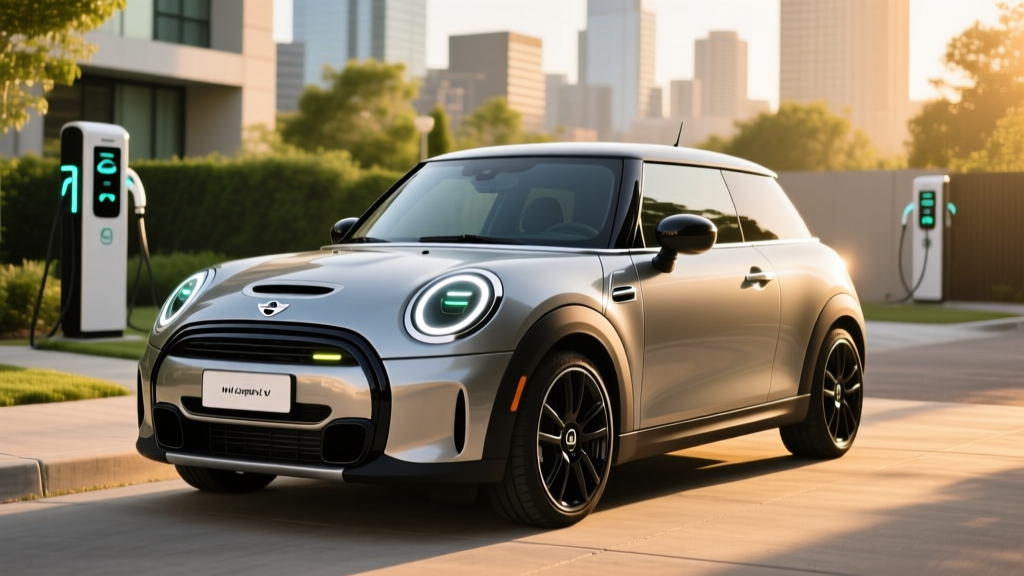
Quick Verdict: Is the Mini Cooper EV Worth It?
The 2026 Mini Cooper EV (Cooper SE and Cooper S E trims) delivers 183 to 245 miles of EPA-estimated range, 184 to 215 horsepower, and DC fast charging from 10–80% in approximately 28–30 minutes. Starting at roughly $30,900 before incentives, it qualifies for a partial or full §30D federal tax credit depending on battery sourcing and buyer income. Bottom line: It's one of the most affordable premium-badge EVs on the market, ideal for urban commuters with home charging access who prioritize driving dynamics over maximum range. If you regularly drive more than 200 miles between charges or live in extreme cold without a garage, consider a longer-range alternative or a PHEV.
Mini Cooper EV Lineup: Trims, Range, and Specs at a Glance
Mini offers two core EV variants for the 2026 model year, both built on BMW's updated front-wheel-drive EV platform with a choice of two battery sizes. Here are the headline numbers straight from manufacturer specifications and EPA data on fueleconomy.gov:
| Spec | Cooper SE (Standard Range) | Cooper S E (Extended Range) |
|---|---|---|
| EPA Range | 183 miles | 245 miles |
| Real-World Range (highway/cold caveat) | ~145–165 mi | ~195–220 mi |
| Battery Capacity (usable) | 40.7 kWh (LFP) | 54.2 kWh (NMC) |
| Horsepower | 184 hp | 215 hp |
| 0–60 mph | 6.7 sec | 6.1 sec |
| Max DC Fast Charge | 75 kW | 95 kW |
| 10–80% DC Charge Time | ~28 min | ~30 min |
| Level 2 AC Charge (7.4 kW) | ~4.5 hours (0–100%) | ~6.5 hours (0–100%) |
| MPGe (combined) | 118 MPGe | 114 MPGe |
| Starting MSRP | $30,900 | $35,900 |
| Battery/Powertrain Warranty | 8 yr / 100,000 mi | 8 yr / 100,000 mi |
Real-World Range Reality Check: EPA estimates assume moderate temperatures and mixed driving. In our experience and consistent with independent testing, expect the Cooper SE to deliver approximately 145–165 miles at sustained highway speeds (70+ mph), and as low as 130 miles in sub-freezing temperatures without preconditioning. The Cooper S E performs better at ~195–220 miles highway and ~170 miles in cold weather. Always precondition the battery via the Mini app before DC fast charging or cold-weather highway driving — it meaningfully preserves range and improves charge acceptance.
Charging the Mini Cooper EV: What You Actually Need to Know
Charging speed is where the Cooper EV's urban orientation becomes apparent. The 75 kW (SE) and 95 kW (S E) DC fast-charge peaks are modest compared to rivals like the Hyundai Ioniq 5 (up to 240 kW) or Chevrolet Equinox EV (up to 150 kW). On a road trip, you'll spend roughly 30 minutes at a DC charger going from 10–80%, plus the charge curve tapers significantly above 80% — plan for 45+ minutes if you need a full charge at a public station.
| Charging Level | Power | Cooper SE Miles/Hour | Cooper S E Miles/Hour | Where You'll Use It |
|---|---|---|---|---|
| Level 1 (120V) | ~1.4 kW | ~4 mi/hr | ~4 mi/hr | Emergency top-up only |
| Level 2 (240V, 32A) | 7.4 kW | ~24 mi/hr | ~24 mi/hr | Home daily charging |
| DC Fast Charge | 75–95 kW peak | ~150 mi in 30 min | ~170 mi in 30 min | Road trips, public stations |
Home charging is essential for this car. With 183–245 miles of range, relying exclusively on public DC fast charging is expensive (typically $0.30–$0.48/kWh at networks like Electrify America or EVgo) and time-consuming. A Level 2 home charger installed on a 240V circuit replenishes the Cooper SE overnight in about 4.5 hours and the S E in roughly 6.5 hours — both easily cover a full day's driving. Expect to pay $500–$1,200 for a quality Level 2 wallbox and $800–$2,500 for electrician installation, depending on your panel capacity and run length. If your home panel is at capacity (common in older homes), a 200-amp upgrade can add $1,500–$3,500. Consult a licensed electrician for a site-specific quote.
The Mini Cooper EV uses the CCS1 connector standard in North America for DC fast charging and J1772 for Level 2 AC. With the industry shift toward NACS (Tesla's connector), Mini has not announced a native NACS port for the 2026 model year, but a CCS-to-NACS adapter is available, granting access to Tesla Supercharger stalls that support non-Tesla vehicles.
EV vs. Gas Mini Cooper: Cost Comparison Over 5 Years
How does the Cooper EV stack up against its gas-powered sibling, the 2026 Mini Cooper S (2.0L turbo, 201 hp, EPA 32 mpg combined)? We modeled a 5-year, 60,000-mile ownership scenario assuming $3.50/gallon gas, $0.14/kWh home electricity, and a mix of 80% home / 20% public DC charging for the EV.
| Cost Category | Mini Cooper EV (S E) | Mini Cooper S (Gas) | EV Advantage |
|---|---|---|---|
| Purchase Price (MSRP) | $35,900 | $33,900 | –$2,000 (gas cheaper) |
| Federal Tax Credit (§30D est.) | –$3,750 (partial)* | $0 | +$3,750 |
| Effective Purchase Price | $32,150 | $33,900 | +$1,750 |
| Fuel/Energy (60k mi) | $4,200 | $6,560 | +$2,360 |
| Maintenance (60k mi) | $900 | $2,800 | +$1,900 |
| Insurance (5-yr avg total) | $8,750 | $7,500 | –$1,250 |
| Est. Depreciation (5 yr) | $14,500 | $13,200 | –$1,300 |
| Total 5-Year Cost | $60,500 | $63,960 | +$3,460 saved |
*Tax credit estimate assumes partial §30D eligibility based on current critical-mineral and battery-component sourcing rules. Full $7,500 credit may apply if sourcing requirements are met — verify on IRS.gov §30D guidance and confirm with a tax professional. Income caps ($150k single / $300k joint) and MSRP caps ($55k for cars) apply. The credit can now be transferred to the dealer at point of sale.
The EV wins on fuel and maintenance savings — no oil changes, no transmission fluid, significantly less brake wear thanks to regenerative braking. But insurance runs 15–20% higher on average for EVs, and EV depreciation has been steeper than gas counterparts in recent years due to price wars and rapid tech advancement. Your actual savings depend heavily on local electricity rates, whether you can charge at home, and how many miles you drive annually.
Battery Chemistry, Longevity, and What First-Time Buyers Should Know
The Cooper SE uses an LFP (lithium iron phosphate) battery, while the Cooper S E uses NMC (nickel manganese cobalt). This matters more than most buyers realize:
| Factor | LFP (Cooper SE) | NMC (Cooper S E) |
|---|---|---|
| Energy Density | Lower (smaller range per kg) | Higher (more range in same space) |
| Cycle Life | 3,000+ cycles (excellent) | 1,500–2,000 cycles (good) |
| Daily Charging to 100% | Recommended — no degradation penalty | Limit to 80–90% daily for longevity |
| Cold-Weather Performance | Weaker in extreme cold | Better low-temp performance |
| Cost | Lower (contributes to lower MSRP) | Higher |
Practical takeaway: If you want a daily commuter you can charge to 100% every night without worry, the LFP-equipped Cooper SE is the more carefree choice despite its shorter range. The NMC-equipped S E gives you more range but benefits from charging discipline — set your charge limit to 80–90% for daily use and save 100% for road trips.
Mini warranties the high-voltage battery for 8 years or 100,000 miles against capacity loss below 70% of original. Industry data from sources like Recurrent Auto suggests modern EV batteries typically retain 90–95% capacity after 5 years and 60,000 miles. A full battery replacement out of warranty would likely cost $8,000–$14,000 — a number to factor into long-term ownership plans if you intend to keep the car past the warranty period.
Common Mini Cooper EV Misconceptions, Corrected
| Myth | Fact |
|---|---|
| "183 miles of range isn't enough for anyone." | The average American drives 37 miles/day (FHWA data). 183 miles covers nearly 5 days of average driving. It's insufficient for road trips without planning, but more than adequate for commuting. |
| "EV batteries need replacing every few years." | Modern EV batteries are designed to outlast 150,000+ miles with gradual degradation. The 8-year/100,000-mile warranty provides a floor. Catastrophic failure is rare. |
| "The Mini Cooper EV gets the full $7,500 tax credit." | Eligibility depends on battery sourcing, buyer income, and MSRP caps under §30D. As of 2026, many Mini EVs qualify for a partial credit ($3,750) due to critical-mineral requirements. Always verify on IRS.gov before purchasing. |
| "I can rely on public charging alone." | You can, but it costs 2–3× more per mile than home charging and adds 30+ minutes per session. With 183–245 miles of range, public-only charging becomes a significant lifestyle burden. |
| "It charges as fast as other EVs at DC stations." | At 75–95 kW peak, the Cooper EV charges noticeably slower than rivals at 150–350 kW. A 10–80% session takes ~30 minutes vs. 18 minutes in a Hyundai Ioniq 5. Plan road-trip stops accordingly. |
Who Should Buy the Mini Cooper EV — and Who Shouldn't
Choose the Mini Cooper EV if:
- You have reliable home Level 2 charging access (garage or driveway with 240V circuit).
- Your daily commute is under 60 miles round-trip, and road trips are occasional (under 4–5 per year).
- You value premium-brand build quality, go-kart handling, and a distinctive design at a sub-$36,000 starting price.
- You want an LFP battery option (SE trim) for worry-free daily 100% charging.
- You're a single driver or couple — rear seats and cargo space (9.0 cu ft behind rear seats) are tight.
Look elsewhere if:
- You regularly drive 200+ miles between charges or take frequent long road trips — consider a Chevrolet Equinox EV (315 mi), Tesla Model 3 (341 mi), or Hyundai Ioniq 5 (303 mi).
- You live in an apartment without charging access and your area has limited public DC infrastructure.
- You live in extreme cold (sustained sub-20°F winters) without a garage — range drops 25–35%, and the smaller battery amplifies the impact.
- You need practical cargo space or regularly carry rear passengers — a compact SUV EV like the Volvo EX30 or Hyundai Kona Electric offers more room.
- Fast road-trip charging is a priority — the 75–95 kW peak charge rate is below the current mainstream benchmark of 150+ kW.
Frequently Asked Questions
Does the 2026 Mini Cooper EV qualify for the federal tax credit?
It may qualify for a partial or full §30D credit depending on battery component and critical-mineral sourcing, your adjusted gross income (capped at $150k single / $300k joint), and the vehicle's MSRP (capped at $55,000 for sedans/hatchbacks). The credit can be applied as a point-of-sale discount at the dealership. Verify current eligibility on fueleconomy.gov's tax credit page and consult a tax professional before relying on the credit in your budget.
How long does it take to charge the Mini Cooper EV at home?
On a Level 2 (240V, 32A) home charger delivering 7.4 kW, the Cooper SE charges from empty to full in approximately 4.5 hours, and the Cooper S E in about 6.5 hours. On a standard 120V household outlet (Level 1), expect roughly 4 miles of range per hour of charging — adequate only for emergency top-ups or very low-mileage drivers.
Is the Mini Cooper EV good in snow and cold weather?
It's competent with standard traction control and the instant torque of an EV helps with low-speed grip. However, cold weather reduces range by 25–35% in extreme conditions (below 20°F), and the smaller battery means that loss is felt more acutely. A heat pump is available (standard on S E trim in most markets) to mitigate cabin-heating energy drain. Preconditioning the battery and cabin while plugged in is essential for winter efficiency.
How does the Mini Cooper EV compare to the Fiat 500e or Volvo EX30?
The Fiat 500e offers 149 miles of range at ~$34,000 — less range for more money, though it's slightly smaller and more city-focused. The Volvo EX30 starts around $36,000 with up to 265 miles of range and more cargo space, making it a strong cross-shopping rival. The Mini wins on driving dynamics and brand cachet; the Volvo wins on range, practicality, and DC charging speed (up to 153 kW).
What is the real-world highway range of the Mini Cooper SE?
At sustained 70–75 mph in moderate temperatures (60–80°F), expect approximately 150–165 miles from the Cooper SE and 200–220 miles from the Cooper S E. At 80+ mph or in hot weather with A/C running heavily, subtract another 5–10%. These figures assume you're driving to near-zero state of charge; most owners charge to 80–90% daily, giving a practical daily range of about 130 miles (SE) or 180 miles (S E).
What maintenance does the Mini Cooper EV require?
Minimal compared to gas vehicles. Expect cabin air filter replacement (~$50–$80 every 2 years), brake fluid checks (every 2 years), tire rotations (every 5,000–7,500 miles — EVs wear tires faster due to instant torque and heavier weight), and windshield washer fluid. There are no oil changes, spark plugs, timing belts, or exhaust system repairs. Budget roughly $150–$250 per year for routine maintenance.