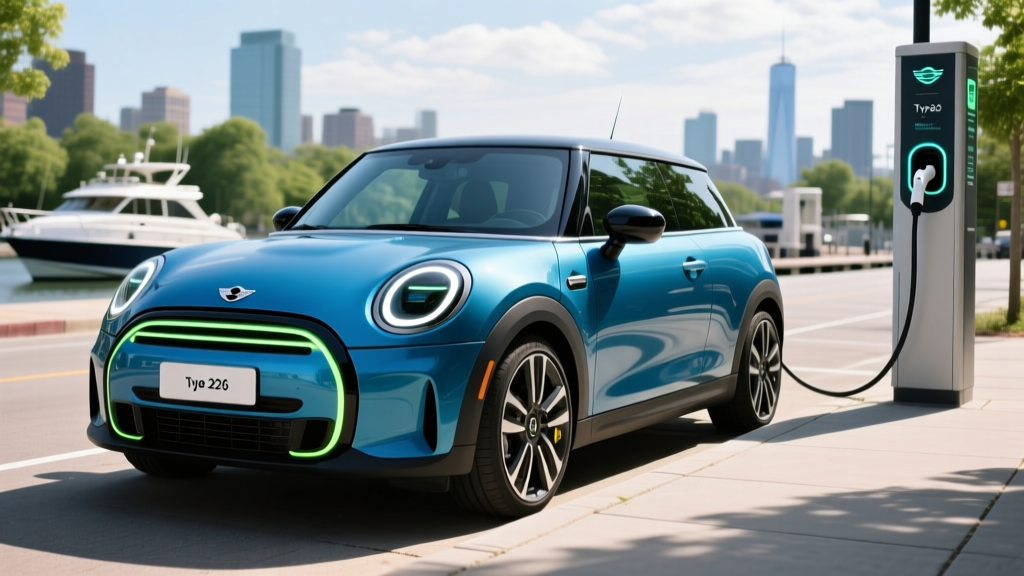
If your search for a "mini electric boat" landed you here, you're not alone. The phrase trends among EV shoppers looking for a compact, fun, and affordable electric vehicle that doesn't feel like a bloated crossover. While actual electric boats (like the Candela C-8 hydrofoil) belong to the marine world, the spirit of the query points to something specific on four wheels: a small, nimble, city-friendly EV with real range and honest pricing. The 2026 MINI Cooper EV (the hardtop 2-door, SE Electric trim) fits that brief precisely.
Below is a data-driven review covering EPA range, real-world expectations, charging curves, battery chemistry, pricing after federal tax credits, and how the Cooper EV stacks up against the Hyundai Kona Electric and Fiat 500e. If you want a pocket-sized EV that actually makes sense in 2026, this is the spec sheet to study.
2026 MINI Cooper EV: Quick Verdict
The 2026 MINI Cooper SE Electric starts at $30,900 (before destination and incentives) and delivers an EPA-estimated 242 miles of range from a 54.2 kWh (usable) NMC lithium-ion battery. It charges at up to 95 kW on DC fast chargers, reaching 10–80% in roughly 30 minutes. With 215 horsepower, a 6.7-second 0–60 mph time, and the classic go-kart handling MINI is known for, it's the most compelling subcompact EV for urban drivers who still want engagement on a back road. The biggest limitation is rear-seat and cargo space — this is strictly a two-adult-plus-groceries vehicle.
| Spec | Value |
|---|---|
| EPA Range | 242 miles |
| Battery (usable) | 54.2 kWh, NMC chemistry |
| Motor / Drivetrain | Single front motor, FWD |
| Horsepower / Torque | 215 hp / 243 lb-ft |
| 0–60 mph | 6.7 seconds |
| Top Speed | 112 mph (electronically limited) |
| DC Fast Charge (peak) | 95 kW (CCS1/NACS adapter) |
| 10–80% DC Charge Time | ~30 minutes |
| Level 2 AC Charge Rate | 11 kW (~37 mi/hr) |
| MPGe (combined) | 114 MPGe |
| Efficiency | 29 kWh/100 mi |
| Cargo (rear seats up / folded) | 7.1 / 25.3 cu ft |
| Base MSRP (SE Electric) | $30,900 + $995 destination |
| Battery Warranty | 8 years / 100,000 miles (70% capacity retention) |
Range: EPA Sticker vs. Real-World Driving
EPA Estimate: 242 miles
Real-World Expectation: 200–220 miles on mixed highway driving at 70 mph; 170–190 miles in freezing temperatures with cabin heat; 230+ miles in city/regen-heavy commuting.
The 242-mile EPA figure is a meaningful jump from the prior-generation Cooper SE's dismal 114-mile range. MINI achieved this by moving to a dedicated EV platform with a larger, more energy-dense NMC pack. On a 70-mph highway loop, expect to consume roughly 31–33 kWh/100 mi, which nets around 200–210 miles before you'd want to stop. In winter conditions (below 32°F), the Cooper EV's battery thermal management helps, but you'll still lose 15–25% of range — a reality for all EVs without a dedicated heat pump running at full efficiency. City drivers who lean on regenerative braking will see numbers at or slightly above the EPA sticker.
For context, a fueleconomy.gov search confirms the 114 MPGe combined rating, translating to roughly 29 kWh per 100 miles in mixed conditions. That's efficient for the class, though the Hyundai Kona Electric edges it out at 129 MPGe combined thanks to slightly lower curb weight and more aero-optimized bodywork.
Charging: DC Fast, Level 2, and What to Expect
Charging speed is where the Cooper EV is adequate but not class-leading. The 95 kW peak DC rate is modest compared to the Hyundai Kona Electric's 100+ kW or the Tesla Model 3's 170 kW capability. Here's the breakdown:
| Charging Level | Power | Rate / Time |
|---|---|---|
| Level 1 (120V household) | ~1.4 kW | ~5 miles per hour |
| Level 2 (240V home, 48A) | 11 kW | ~37 miles per hour (0–100% in ~6 hours) |
| DC Fast Charge (peak) | 95 kW | 10–80% in ~30 minutes |
| DC Fast Charge (sustained avg.) | ~70 kW | Average over 10–80% session |
A critical detail: the 95 kW figure is a peak, not a sustained rate. In practice, the Cooper EV holds near-peak speed only between roughly 15–50% state of charge, then tapers progressively. From 80–100%, expect speeds to drop below 25 kW as the battery management system protects cell longevity. This charge-curve taper is normal for NMC chemistry, but it means a "30-minute" 10–80% session can stretch to 45+ minutes if you push to 90 or 100%.
The Cooper EV ships with a CCS1 port in North America, but MINI provides a NACS adapter for Tesla Supercharger access — a significant practical advantage given the Supercharger network's reliability lead over Electrify America and EVgo in most regions. Home Level 2 charging at 11 kW means a full overnight refill on a standard 48-amp wallbox installation.
Battery Chemistry, Degradation, and Warranty
MINI uses an NMC (nickel manganese cobalt) battery pack in the Cooper EV. NMC offers higher energy density than LFP (lithium iron phosphate), which is how MINI fits 54.2 kWh usable into a small footprint. The trade-off: NMC cells degrade slightly faster than LFP over thousands of cycles and prefer not to sit at 100% state of charge for extended periods. For daily driving, set your charge limit to 80% and only charge to 100% before longer trips.
The federal mandate and MINI's own warranty guarantee at least 70% battery capacity retention over 8 years or 100,000 miles, whichever comes first. Independent fleet data from similar NMC packs (BMW i4, Hyundai Ioniq 5) suggests most packs retain 88–92% after 100,000 miles under normal use. Full pack replacement, if ever needed out of warranty, is estimated at $12,000–$16,000 based on current BMW Group parts pricing — though modular repair of individual cell groups may cost far less.
Pricing, Trims, and Federal Tax Credit Eligibility
The 2026 MINI Cooper EV comes in three trims for the US market:
| Trim | Base MSRP | + Destination | Est. After §30D Credit |
|---|---|---|---|
| SE Electric (Signature) | $30,900 | $31,895 | ~$24,395* |
| SE Electric (Iconic) | $34,400 | $35,395 | ~$27,895* |
| John Cooper Works (JCW) Electric | $38,900 | $39,895 | ~$32,395* |
*Assumes full $7,500 federal tax credit. Actual eligibility depends on IRS §30D rules — see details below.
Federal tax credit eligibility for the Cooper EV is not automatic. Under IRS §30D rules current for 2026, you must meet several requirements:
- MSRP Cap: The vehicle must have an MSRP at or below $55,000 (sedans/hatchbacks). All Cooper EV trims clear this.
- Buyer Income Cap: Modified adjusted gross income must not exceed $150,000 (single), $225,000 (head of household), or $300,000 (joint).
- Battery Sourcing: Critical minerals and battery components must meet phased-in domestic/free-trade-partner sourcing thresholds. As of early 2026, the Cooper EV qualifies for the full $7,500, but supply-chain shifts can change this mid-year — always verify at the point of sale.
- Point-of-Sale Transfer: You can apply the credit as an instant rebate at the dealer rather than waiting for tax filing, reducing your out-of-pocket cost immediately.
Consult a tax professional before relying on the credit, and ask your dealer for the IRS-confirmed credit amount at the time of purchase.
Interior, Cargo, and Technology
The Cooper EV's interior is where MINI's 2025+ redesign shines. A 9.4-inch circular OLED display dominates the dash, running MINI's latest operating system with wireless Apple CarPlay and Android Auto, navigation with real-time charging station routing, and an AI-driven voice assistant. The round display is a deliberate retro-modern choice — it works well, though some drivers find the lack of a traditional speedometer cluster takes a week of adjustment.
Space is the Cooper EV's most honest limitation:
- Front legroom: 41.3 inches — generous for a subcompact.
- Rear legroom: 29.8 inches — tight for adults on anything beyond short hops.
- Cargo behind rear seats: 7.1 cu ft — enough for two backpacks or a week's groceries for one.
- Cargo with rear seats folded: 25.3 cu ft — usable for a weekend trip for two.
Driver-assistance tech includes adaptive cruise control with stop-and-go, lane-keeping assist, and automated parking. These are SAE Level 2 systems — you must keep your hands on the wheel and eyes on the road. There is no hands-free driving capability, and MINI does not currently offer a subscription-based "full self-driving" feature. For urban commuters, the standard suite is well-tuned and non-intrusive.
Performance and Driving Dynamics
The single front-mounted motor produces 215 horsepower and 243 lb-ft of torque, routed to the front wheels. The 6.7-second 0–60 mph time won't embarrass you at a merge, and the instant torque delivery makes the Cooper EV feel quicker than the number suggests in city driving. Top speed is electronically limited to 112 mph.
MINI's trademark go-kart handling carries over. The low center of gravity from the floor-mounted battery pack, combined with quick steering (2.2 turns lock-to-lock), makes the Cooper EV one of the most engaging small EVs available. The trade-off is a firm ride — the sport-tuned suspension transmits more road imperfections than a Hyundai Kona Electric or a Fiat 500e. If your daily commute includes broken pavement or speed bumps, test-drive before committing.
Pros, Cons, and Who Should Buy
Pros
- Engaging, go-kart handling rare in the EV segment
- 242-mile EPA range eliminates daily range anxiety
- NACS adapter included for Tesla Supercharger access
- Sub-$25,000 effective price after tax credit (base trim)
- Distinctive design — doesn't look like every other EV crossover
- Strong infotainment with circular OLED display
Cons
- Rear seat is cramped for adults
- Cargo space is minimal (7.1 cu ft behind rear seats)
- 95 kW DC peak charge rate is below class average
- Firm ride on rough roads
- No all-wheel-drive or dual-motor option
- No frunk (front trunk)
Best for: Single drivers or couples with short-to-medium commutes (under 60 miles round-trip), access to home Level 2 charging, and a priority on driving enjoyment over utility. It's an excellent second car or a primary urban commuter.
Not ideal for: Families needing rear-seat space, road-trippers who want 300+ mile range and 150+ kW charging, or anyone who regularly hauls cargo beyond a few bags.
How It Compares: Cooper EV vs. Kona Electric vs. Fiat 500e
| Spec | MINI Cooper EV | Hyundai Kona Electric | Fiat 500e |
|---|---|---|---|
| EPA Range | 242 mi | 261 mi | 149 mi |
| Battery (usable) | 54.2 kWh (NMC) | 64.8 kWh (NMC) | 42.0 kWh (NMC) |
| DC Fast Charge (peak) | 95 kW | 100+ kW | 85 kW |
| 10–80% DC Time | ~30 min | ~43 min | ~35 min |
| 0–60 mph | 6.7 sec | 7.4 sec | 8.5 sec |
| Horsepower | 215 hp | 201 hp | 118 hp |
| Cargo (seats up) | 7.1 cu ft | 25.8 cu ft | 7.8 cu ft |
| Base MSRP | $30,900 | $32,975 | $32,500 |
| Federal Credit Eligible | Yes (verify sourcing) | Yes (verify sourcing) | Limited (check current IRS list) |
The Kona Electric wins on range and cargo. The Fiat 500e is charming but its 149-mile range limits it to strict city duty. The Cooper EV splits the difference: better range than the Fiat, more personality than the Hyundai, and the strongest driving dynamics of the three.
Frequently Asked Questions
What is the real-world range of the 2026 MINI Cooper EV?
Expect 200–220 miles in mixed highway driving, 230+ miles in city commuting with regenerative braking, and 170–190 miles in freezing weather. The EPA sticker is 242 miles, but real-world conditions — especially sustained highway speeds and cold temperatures — reduce that figure by 10–25%.
How fast does the Cooper EV charge at home and on the road?
At home on a Level 2 (240V, 48A) charger, it adds roughly 37 miles of range per hour, with a full 0–100% charge in about 6 hours. On DC fast chargers, it peaks at 95 kW and reaches 10–80% in approximately 30 minutes, though sustained average speed is closer to 70 kW due to charge-curve taper above 50% SoC.
How much does the MINI Cooper EV cost after tax credits?
The base SE Electric trim starts at $31,895 (including destination). If you qualify for the full $7,500 federal §30D credit — meeting income, MSRP, and battery-sourcing requirements — the effective price drops to approximately $24,395. Higher trims (Iconic at ~$27,895, JCW at ~$32,395 after credit) remain under $40,000.
Does the 2026 MINI Cooper EV qualify for the $7,500 federal tax credit?
As of early 2026, yes — but eligibility is not guaranteed for every buyer. You must meet IRS income caps ($150K single / $300K joint), the vehicle's MSRP must be under $55,000 (all trims qualify), and the battery must meet critical-mineral and component sourcing thresholds that are subject to mid-year updates. Always confirm with your dealer and review IRS guidance before purchasing.
Is the MINI Cooper EV worth buying over the Hyundai Kona Electric?
If you prioritize driving engagement, compact size for city parking, and distinctive design, the Cooper EV is the stronger choice. If you need more range (261 vs. 242 miles), significantly more cargo room (25.8 vs. 7.1 cu ft), and don't mind a less engaging drive, the Kona Electric is the pragmatic pick. Both qualify for similar tax-credit-adjusted pricing.
Can I charge the Cooper EV at Tesla Superchargers?
Yes. The 2026 Cooper EV includes a NACS adapter, granting access to Tesla's Supercharger network (with V2 and V3 stalls supporting CCS vehicles via adapter). This is a meaningful advantage for road-trip charging reliability.
What is the battery warranty?
MINI covers the high-voltage battery for 8 years or 100,000 miles against defects and excessive degradation (below 70% capacity retention). The general vehicle warranty is 4 years / 50,000 miles.