The Verdict: A City Commuter With Genuine Personality
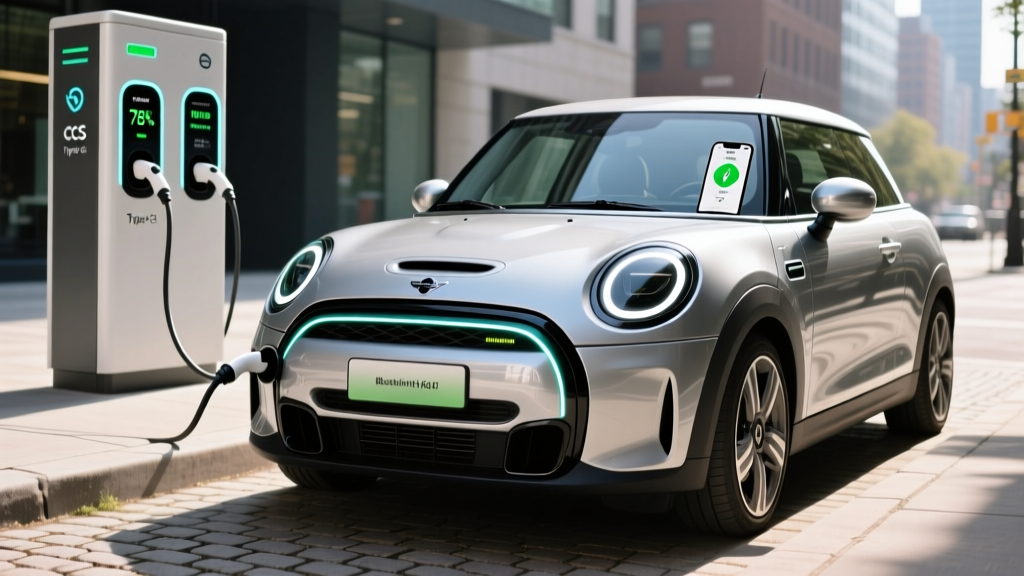
The 2026 Mini Cooper Electric (officially the Mini Cooper SE in the U.S. market) occupies a narrow but compelling niche in the EV landscape. It is not a road-trip machine, a family hauler, or a range-anxiety cure. What it is: a sub-$31,000 mini electric ev with the best steering feel in its price bracket, DC fast-charging capability its predecessor lacked, and enough urban range to handle a week of commuting between charges.
Mini has overhauled the Cooper Electric for the 2025-2026 model years, moving to a dedicated EV platform (Spotlight, co-developed with Great Wall Motors) and substantially upgrading the battery, motor, and charging hardware. The result is a car that finally feels like a complete product rather than a compliance conversion — though its footprint and range still demand that buyers honestly assess their driving patterns before committing.
Specs at a Glance: 2026 Mini Cooper Electric
| Attribute | 2026 Mini Cooper SE (Classic) | 2026 Mini Cooper SE (Signature) |
|---|---|---|
| EPA Range | 114 miles | 114 miles |
| Battery (Usable) | 40.7 kWh (NMC) | 40.7 kWh (NMC) |
| Motor Output | 181 hp / 210 hp (Iconic trim) | 210 hp |
| 0-60 mph | 6.7 sec (181 hp) / 5.9 sec (210 hp) | 5.9 sec |
| Drivetrain | FWD, single motor | FWD, single motor |
| DC Fast Charge (Peak) | 95 kW | 95 kW |
| 10-80% DC Time | ~28 minutes | ~28 minutes |
| Level 2 Charge Rate | 11 kW (AC) | 11 kW (AC) |
| EPA Efficiency | 110 MPGe (combined) | 110 MPGe (combined) |
| Cargo Volume (rear seats up) | 7.1 cu ft | 7.1 cu ft |
| Cargo Volume (rear seats folded) | 25.3 cu ft | 25.3 cu ft |
| Base MSRP | $30,900 | $34,900 |
| Battery/Powertrain Warranty | 8 years / 100,000 miles | 8 years / 100,000 miles |
Range and Efficiency: What the EPA Number Doesn't Tell You
EPA Estimated Range: 114 miles
Real-World Expectation: In mild weather (55-75°F) with mixed city/highway driving, expect 100-110 miles before the low-battery warning. On sustained highway runs at 70-75 mph, plan for 85-95 miles. In freezing temperatures (below 32°F), range can drop to 70-80 miles due to cabin heating demands and reduced battery efficiency. The Mini Cooper Electric does not offer a standard heat pump in all trims — verify your configuration, as this significantly impacts cold-weather range.
The 40.7 kWh usable battery pack uses NMC (nickel-manganese-cobalt) chemistry, chosen for energy density within the Cooper's compact floorpan. This is a meaningful upgrade from the prior-generation Cooper SE's 28.9 kWh pack, which delivered only 110 miles EPA. However, 114 miles remains firmly in "urban commuter" territory. For context, the Chevrolet Bolt EV (now discontinued but still a comparison benchmark) offered 259 miles, and the Nissan Leaf S delivers 149 miles on a similarly priced platform.
Efficiency is rated at 110 MPGe combined (roughly 30 kWh/100 miles), which is respectable for the vehicle's weight and frontal area but not class-leading. The Hyundai Kona Electric, for comparison, achieves 129 MPGe combined on a larger battery. Part of the Mini's efficiency penalty comes from its emphasis on driving dynamics — the suspension tuning and wider tires trade a small amount of range for genuinely engaging handling.
According to fueleconomy.gov, the annual fuel cost for the Cooper SE is approximately $600 at national-average electricity rates (15 cents/kWh), assuming 15,000 miles of driving. That figure assumes consistent home charging; reliance on public DC fast-charging networks will push costs higher due to per-kWh pricing that often exceeds $0.35-$0.50/kWh.
Charging Speed: DC Fast and Home Level 2
| Charging Method | Power (kW) | Time / Rate | Notes |
|---|---|---|---|
| Level 1 (120V household) | ~1.4 kW | ~3.5 miles per hour | Full charge: ~30+ hours |
| Level 2 (240V, 48A circuit) | 11 kW | ~4.5 hours (0-100%) | Requires 60A breaker; overnight-ready |
| DC Fast Charge (CCS) | 95 kW peak | 10-80% in ~28 min | Tapers significantly above 80% SoC |
The 95 kW peak DC fast-charging rate is the headline improvement over the previous generation, which maxed out at 50 kW and made road-trip stops painfully slow. At 95 kW, the Cooper SE can add roughly 70-80 miles of range in 20 minutes under ideal conditions (battery preconditioned, moderate ambient temperature, sub-50% starting SoC).
However, the charging curve tapers aggressively above 80% state of charge. Expect the 80-100% portion to take nearly as long as the 10-80% segment — a common trait in smaller-battery EVs where the battery management system protects cell longevity. For practical road-trip use, plan to charge from 10% to 70-75% (about 20-25 minutes), then move on rather than waiting for a full top-off.
At home on a Level 2 charger (11 kW onboard charger), the Cooper SE fills from empty to full in roughly 4.5 hours. This means even a partial overnight session easily restores a day's worth of commuting. Installation of a 240V/48A home charger typically costs $800-$2,000 depending on your electrical panel's capacity and the run distance from panel to garage — factor this into your purchase budget if you don't already have a Level 2 setup.
The Cooper SE uses the CCS1 connector standard for DC fast charging in North America. Mini has not announced a transition to the NACS (Tesla Supercharger) connector for the 2026 model year, though a CCS-to-NACS adapter may become available through Mini or third parties. This is worth monitoring if Tesla Supercharger access is a priority for your road-trip plans.
Performance and Driving Dynamics
The 2026 Cooper Electric is offered in two output levels depending on trim: 181 horsepower in the Classic trim and 210 horsepower in the Signature and Iconic trims. Both send power to the front wheels through a single-speed reduction gear — there is no AWD option.
The 210-hp version hits 60 mph in 5.9 seconds, which is quick enough to merge confidently and entertaining on a back road. The 181-hp variant takes 6.7 seconds, still brisk by subcompact standards. Instant electric torque (available from 0 RPM) makes the car feel even quicker in stoplight-to-stoplight urban driving than the 0-60 time suggests.
Where the Cooper Electric genuinely distinguishes itself is steering feel and chassis balance. Mini has preserved the go-kart handling character that defines the brand, and the EV's low center of gravity (battery pack under the floor) reduces body roll compared to the gas Cooper. The steering is weighted and communicative in a way that most EVs in this price range — and many above it — simply are not. If driving engagement matters to you, this is the strongest argument for the Cooper SE over more range-rich but dynamically numb competitors.
Ride quality is firm. Mini does not pretend this is a luxury cruiser, and broken pavement will transmit more impact into the cabin than a Nissan Leaf or Chevrolet Bolt would. This is a trade-off for the handling, and whether it suits you depends on your local road conditions and tolerance for sporty firmness.
Interior, Tech, and Cargo Practicality
The 2026 Cooper Electric features Mini's latest circular OLED center display (9.4 inches), which consolidates infotainment, climate controls, and vehicle settings into a single round screen. The interface is visually distinctive and generally responsive, though the decision to route climate controls through the touchscreen rather than physical buttons draws criticism from drivers who prefer tactile access while driving.
Standard tech includes wireless Apple CarPlay and Android Auto, a digital instrument cluster, and Mini's Driving Assistant package (forward collision warning, automatic emergency braking, lane departure warning, and speed limit assist). Adaptive cruise control with stop-and-go and a 360-degree camera are available on higher trims. Note that all of these are SAE Level 2 driver-assistance features — the driver must remain fully engaged and hands-on-wheel at all times. This is not autonomous or self-driving capability.
Cargo space is the Cooper Electric's most significant practicality limitation. With rear seats upright, you get just 7.1 cubic feet — enough for a couple of grocery bags or a small gym bag, but not much else. Fold the rear seats (50/50 split) and capacity expands to 25.3 cubic feet, which can accommodate a week's worth of luggage for two people or a modest IKEA run. There is no front trunk (frunk); the space under the hood houses the motor and power electronics.
Passenger space is tight in the rear. Legroom measures approximately 30.5 inches, which is adequate for children or short-trip adults but will feel cramped for taller passengers on longer drives. Front-seat occupants fare much better, with supportive sport seats (especially on the Signature trim) and reasonable headroom even with the panoramic moonroof option.
Pricing, Trims, and Federal Tax Credit Eligibility
| Trim | Base MSRP | Destination | As-Tested (Typical) | Potential §30D Credit* |
|---|---|---|---|---|
| Cooper SE Classic | $30,900 | $995 | $31,895 | Up to $7,500 |
| Cooper SE Signature | $34,900 | $995 | $37,500-$39,000 | Up to $7,500 |
| Cooper SE Iconic | $38,900 | $995 | $41,000-$43,500 | Up to $7,500 |
*Federal tax credit eligibility under IRS §30D is subject to multiple requirements that change periodically. The following constraints apply as of the 2026 tax year:
- MSRP Cap: The vehicle's base MSRP must not exceed $55,000 for sedans/hatchbacks. All Cooper SE trims clear this threshold.
- Buyer Income Cap: Modified adjusted gross income must not exceed $150,000 (single filers), $225,000 (head of household), or $300,000 (married filing jointly).
- Battery Sourcing: The $7,500 credit is split into two halves — $3,750 for critical minerals and $3,750 for battery component sourcing, each with escalating domestic-content requirements. As of 2026, vehicles with battery cells or minerals sourced from a "foreign entity of concern" (FEOC) may be disqualified from one or both halves. Mini's supply chain for the Cooper SE's NMC cells (produced in China through the Spotlight JV with Great Wall Motors) may not meet all sourcing thresholds. Verify current-year eligibility on irs.gov before purchasing.
- Point-of-Sale Transfer: Eligible buyers can transfer the credit to the dealer at purchase, reducing the out-of-pocket price immediately rather than waiting for a tax refund.
The critical uncertainty for the Cooper SE is battery sourcing. The Spotlight platform is manufactured in China, and the NMC cells are produced by a joint venture partner. Under 2026 FEOC restrictions, this may disqualify the Cooper SE from part or all of the federal credit. Buyers should request the manufacturer's IRS compliance letter and confirm eligibility with a tax professional before finalizing a purchase. If the full $7,500 credit applies, the Classic trim drops to an effective ~$24,395 — exceptional value. If it does not qualify, the value proposition tightens considerably against competitors like the Nissan Leaf ($28,140 MSRP, 149-mile range, confirmed credit eligibility).
Ownership Costs and Warranty
Mini provides an 8-year / 100,000-mile warranty on the high-voltage battery and electric powertrain, matching the industry standard. The battery warranty guarantees that capacity will not fall below 70% of original capacity during the coverage period — a threshold consistent with most competitors. The vehicle's limited bumper-to-bumper warranty runs 4 years / 50,000 miles.
Insurance costs for the Cooper SE tend to run 10-20% higher than an equivalent gas-powered Mini Cooper due to EV repair-cost structures and battery replacement pricing. Expect annual premiums in the $1,600-$2,200 range depending on your location, driving record, and coverage levels (based on national averages for subcompact EVs).
Maintenance costs are minimal: no oil changes, no spark plugs, no transmission fluid. Expect cabin air filter replacement ($30-$60 annually), brake fluid checks (every 2 years), and tire rotation. Regenerative braking significantly extends brake pad life; many EV owners report original pads lasting 80,000+ miles.
Depreciation is the wildcard. Subcompact EVs have historically depreciated faster than larger EVs and gas cars, partly due to range limitations becoming more conspicuous as battery technology advances. Plan for 45-55% depreciation over 5 years, which is steeper than a Tesla Model Y or Hyundai Ioniq 5 but roughly in line with a Nissan Leaf.
Pros and Cons: The Honest Summary
Pros
- Genuine driving engagement — best steering and chassis balance in the subcompact EV segment
- Sub-$31,000 starting price (Classic trim) before incentives
- 95 kW DC fast charging is a major upgrade over prior generation
- Compact dimensions make parking and urban maneuverability effortless
- Distinctive design and interior personality (circular OLED display)
- Low running costs when home-charged (~$600/year electricity)
Cons
- 114-mile EPA range limits usefulness to urban commuting — not viable as a sole vehicle for most households
- Tight rear-seat legroom and minimal cargo space (7.1 cu ft)
- Firm ride quality on rough pavement
- Battery sourcing from China may disqualify from federal tax credit (verify before purchase)
- No heat pump on all trims — cold-weather range suffers
- No front trunk (frunk) for additional storage
- Climate controls buried in touchscreen interface
Who Should Buy the 2026 Mini Cooper Electric?
This mini electric ev is best suited for a specific buyer profile: a single person or couple living in an urban or suburban area with reliable home charging (Level 1 or Level 2), whose daily driving rarely exceeds 60-70 miles round-trip, and who values driving dynamics over range and cargo practicality. It works exceptionally well as a second vehicle in a two-car household where a larger EV or gas car handles road trips and hauling.
If you need more than 150 miles of range, carry rear-seat passengers regularly, or live in an apartment without charging access, the Cooper SE is not the right fit. Consider the Chevrolet Equinox EV (315 miles, ~$33,000), Hyundai Kona Electric (261 miles, ~$33,000), or Nissan Leaf (149 miles, ~$28,140) instead. Each sacrifices some driving character but delivers substantially more everyday versatility.
If your commute is short, your charging situation is secure, and you want an EV that makes you smile on a back road — the Cooper Electric is the most fun you can have for under $35,000 in the EV market.
Frequently Asked Questions
What is the real-world range of the 2026 Mini Cooper Electric?
The EPA rates the Cooper SE at 114 miles. In real-world mixed driving at moderate temperatures, expect 100-110 miles. Highway driving at 70+ mph reduces this to 85-95 miles, and freezing weather can push range down to 70-80 miles, especially without a heat pump. Plan your daily use around 80-90 miles of comfortable range to avoid stress.
How fast does the Mini Cooper Electric charge?
On a DC fast charger, the Cooper SE peaks at 95 kW and charges from 10% to 80% in approximately 28 minutes under ideal conditions. At home on a 240V Level 2 charger (11 kW), a full charge takes about 4.5 hours. On a standard 120V outlet (Level 1), expect roughly 3.5 miles of range per hour of charging — adequate for overnight top-ups if your daily driving is under 30 miles.
Does the 2026 Mini Cooper SE qualify for the $7,500 federal EV tax credit?
Possibly, but it is not guaranteed. The Cooper SE's MSRP is well below the $55,000 cap for sedans/hatchbacks, and buyer income limits apply ($150K single / $300K joint). However, the battery is manufactured in China through Mini's Spotlight joint venture with Great Wall Motors. Under 2026 FEOC (foreign entity of concern) rules, this may disqualify the vehicle from part or all of the credit. Check the latest eligibility list on fueleconomy.gov and consult a tax professional before purchasing.
Is the Mini Cooper Electric worth buying over competitors?
If driving enjoyment and urban maneuverability are your top priorities and you have home charging, yes — no other subcompact EV handles this well. If range, cargo space, or rear-seat room matter more, the Hyundai Kona Electric (261 miles), Chevrolet Equinox EV (315 miles), or even the Nissan Leaf (149 miles, lower price) are more practical choices. The Cooper SE wins on personality and price-per-smile; it loses on versatility.
How long will the Mini Cooper Electric's battery last?
Mini warranties the high-voltage battery for 8 years or 100,000 miles, guaranteeing at least 70% capacity retention. NMC chemistry typically degrades 1.5-2.5% per year under normal use, meaning you can expect roughly 85-90% capacity after 5 years and 75-82% after 10 years. Real-world data from prior-generation Cooper SE owners suggests degradation is manageable within the warranty period. Avoid habitual DC fast-charging to 100% and prolonged storage at very low or very high state of charge to maximize longevity.
Can I take the Mini Cooper Electric on road trips?
You can, but you will plan carefully. With 114 miles of range and 95 kW DC fast charging, expect to stop every 70-80 miles for a 20-25 minute charge on longer trips. This is viable for 200-300 mile journeys with one or two stops, but cross-country travel becomes time-consuming. Most Cooper SE owners use a second vehicle or rent for road trips exceeding 250 miles.