Quick Answer: Does Mini Cooper Make an Electric Car?
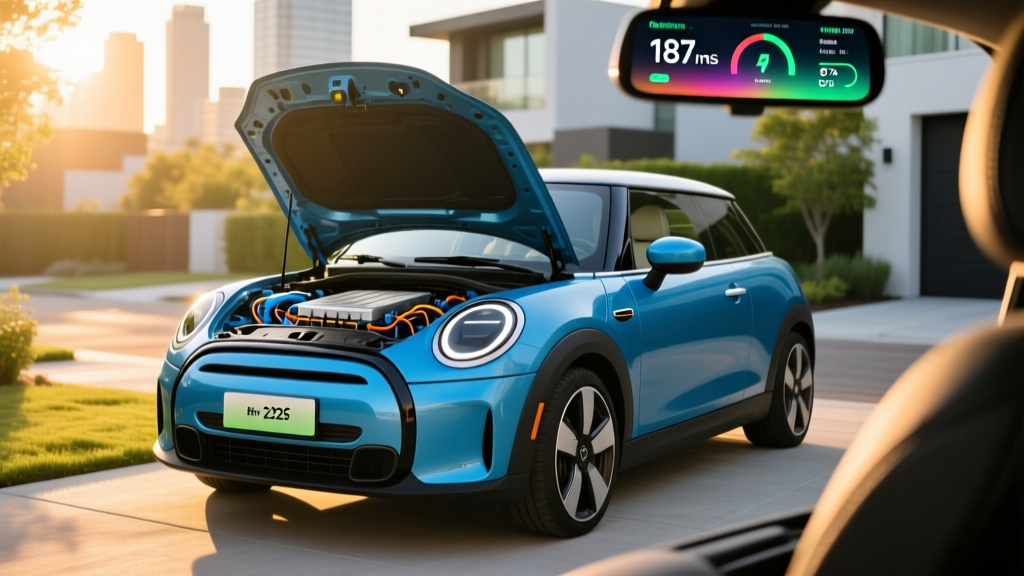
Yes. For 2026, Mini sells the Cooper Electric (available as a 2-door hardtop) built on BMW's dedicated EV platform. The lineup includes the Cooper E with an EPA-estimated 185 miles of range and the Cooper SE with up to 234 miles. Pricing starts around $30,900 before destination. A 5-door electric variant and the electric Aceman crossover are also part of Mini's electrified portfolio in select markets. The Cooper Electric uses a 54.2 kWh battery pack (NMC chemistry) and supports DC fast charging up to 95 kW.
2026 Mini Cooper Electric: Specs at a Glance
The current-generation Cooper Electric is a ground-up EV, not a converted gas car like the previous-generation Mini Cooper SE (which managed only 114 miles of range). Here's what the 2026 lineup delivers:
| Spec | Cooper E | Cooper SE |
|---|---|---|
| EPA Range | ~185 mi | ~234 mi |
| Battery (usable) | 40.7 kWh (LFP) | 54.2 kWh (NMC) |
| Horsepower | 184 hp | 218 hp |
| 0–60 mph | 7.3 sec | 6.7 sec |
| DC Fast Charge (peak) | 75 kW | 95 kW |
| 10–80% DCFC Time | ~28 min | ~30 min |
| Level 2 Charge Rate | 11 kW | 11 kW |
| MPGe (combined) | ~115 MPGe | ~110 MPGe |
| Starting MSRP | $30,900 | $35,900 |
| Battery/Powertrain Warranty | 8 yr / 100,000 mi | 8 yr / 100,000 mi |
Sources: fueleconomy.gov, Mini USA. Real-world range will vary — expect roughly 150–160 miles for the Cooper E and 190–210 miles for the Cooper SE during sustained highway driving at 70+ mph, with further reductions of 20–30% in sub-freezing temperatures.
Cooper Electric vs. Gas Mini Cooper: Cost Comparison
The most common cross-shopping decision is between the Cooper Electric and the conventional gas-powered Mini Cooper. Here's how they stack up on cost over a typical 5-year ownership period, assuming 12,000 miles per year and national average energy prices:
| Cost Factor | 2026 Cooper SE Electric | 2026 Mini Cooper S (Gas) |
|---|---|---|
| Base MSRP | $35,900 | $32,500 |
| Federal Tax Credit (§30D) | Up to $7,500* | $0 |
| Effective Purchase Price | ~$28,400 | $32,500 |
| Annual Fuel/Energy Cost | ~$540 (electricity) | ~$1,740 (premium gas) |
| 5-Year Fuel/Energy Total | ~$2,700 | ~$8,700 |
| Annual Maintenance | ~$300 | ~$650 |
| 5-Year Maintenance Total | ~$1,500 | ~$3,250 |
| 5-Year Total Cost (purchase + fuel + maint.) | ~$32,600 | ~$44,450 |
*§30D credit eligibility depends on MSRP caps, buyer income limits, battery component sourcing, and point-of-sale transfer rules. Verify current eligibility at IRS.gov before purchase. The Cooper E with LFP battery chemistry may face different critical-mineral sourcing requirements than the NMC-equipped Cooper SE.
What This Means in Practice
Even with a higher sticker price, the Cooper SE Electric can undercut the gas Cooper S by roughly $11,850 over five years when the full federal credit applies and you charge primarily at home. The savings narrow if you rely on public DC fast charging, where costs can run $0.35–$0.50/kWh — pushing your annual energy spend closer to $900–$1,100. If you lack home charging access, the gas Mini's economics become more competitive.
Real-World Ownership: What First-Time EV Buyers Should Know
Buying a Mini Cooper Electric isn't just about the sticker price. Here's what shapes the actual ownership experience:
Home Charging Is the Linchpin
The Cooper Electric's 11 kW onboard charger means a Level 2 home wallbox (240V, 48A circuit) can fully replenish the 54.2 kWh battery in roughly 5.5 hours — ideal for overnight charging. A standard 120V outlet (Level 1) adds only about 3–4 miles of range per hour, which is impractical as a primary charging strategy for anything beyond short commutes. Budget $500–$1,500 for a quality Level 2 charger and professional installation, or up to $3,000+ if your electrical panel needs a 200A upgrade.
Charging Speed Reality Check
Mini quotes a peak DC fast-charge rate of 95 kW for the Cooper SE. In practice, this peak is sustained only between roughly 10–40% state of charge. Above 60%, the charge curve tapers significantly — you'll see rates drop to 40–50 kW, then below 25 kW past 80%. The 10–80% time of ~30 minutes is realistic at a properly rated 150+ kW station, but older 50 kW chargers will stretch that to well over an hour. This is normal for this vehicle class, but it means road-trip stops take longer than in vehicles with 200+ kW peak rates.
Cold-Weather Range Loss
The Cooper Electric uses a heat pump (standard), which mitigates cabin-heating energy draw. Still, expect 20–30% range reduction when temperatures drop below 30°F. A Cooper SE rated at 234 miles may deliver only 165–185 miles in January in Chicago or Minneapolis. Preconditioning the battery while plugged in — using the Mini app to warm the pack before departure — recovers some of that loss and preserves fast-charge speeds.
Insurance Considerations
EV insurance premiums tend to run 10–20% higher than equivalent gas vehicles due to battery replacement cost and specialized repair requirements. Expect annual premiums in the $1,600–$2,200 range for the Cooper SE depending on your state and driving record. Shop quotes from EV-friendly insurers before committing.
Common Misconceptions About the Mini Cooper Electric
| Myth | Fact |
|---|---|
| "Mini doesn't make a real EV — it's just a golf cart." | The 2026 Cooper SE has 218 hp, a 234-mile EPA range, and a dedicated EV platform co-developed with BMW. It's a legitimate daily driver. |
| "The old 114-mile Mini EV is the same car." | The previous-generation Cooper SE (2020–2023) had a 32.6 kWh battery and 114-mile range. The current generation is an entirely new vehicle with double the usable battery capacity. |
| "It qualifies for the full $7,500 tax credit automatically." | §30D credit eligibility depends on battery component and critical-mineral sourcing thresholds, buyer AGI limits ($150K single / $300K joint), and the $55,000 MSRP cap for sedans. Always verify at IRS.gov and with your dealer at point of sale. |
| "I can't take it on road trips." | With 234 miles of range and 95 kW DC fast charging, highway trips are feasible with 25–35 minute stops every 150–180 miles. It's slower than a Tesla or Hyundai Ioniq 5 on the charger, but workable with route planning via the Mini app or PlugShare. |
| "The battery will need replacing in a few years." | Mini warranties the high-voltage battery for 8 years / 100,000 miles against capacity loss below 70%. NMC batteries in modern thermal-managed packs typically retain 85–90% capacity after 100,000 miles based on industry-wide degradation data. |
Decision Framework: Should You Buy the Mini Cooper Electric?
Choose the Cooper SE Electric If:
- You have home charging access (garage or driveway with a 240V circuit) — this is the single biggest determinant of EV satisfaction.
- Your daily commute is under 80 miles round-trip, meaning you'll rarely need public charging on weekdays.
- You want a premium subcompact with personality and don't need more than ~12 cu-ft of cargo space.
- You qualify for the §30D credit, which can bring the effective price below a comparably equipped gas Cooper S.
- You live in a mild-to-moderate climate or can tolerate 20–30% winter range loss without anxiety.
Choose the Gas Mini Cooper (or Look Elsewhere) If:
- You rely on street parking with no charging access — public-only charging adds cost and inconvenience that erode EV savings.
- You regularly drive 200+ miles between stops and don't want to plan charging stops on road trips.
- You need cargo practicality — consider the electric Aceman crossover or a larger EV like the Volvo EX30 if you need more room.
- You live in extreme cold (consistently below 10°F) where the 234-mile range can shrink to ~155 miles, making the car less practical for longer commutes.
- You don't qualify for the federal credit (income above limits or vehicle sourcing doesn't meet requirements) — the price premium over the gas model takes longer to recoup.
Frequently Asked Questions
Does Mini make a fully electric car in 2026?
Yes. The 2026 Mini Cooper Electric is available as the Cooper E (185-mile range, 184 hp) and Cooper SE (234-mile range, 218 hp). Both are battery-electric vehicles with no gas engine. Mini also offers the electric Aceman crossover in select markets.
How much does the 2026 Mini Cooper Electric cost?
The Cooper E starts at approximately $30,900 and the Cooper SE starts around $35,900 before destination fees and options. With the full $7,500 federal tax credit (if eligible), effective pricing can drop to roughly $23,400–$28,400.
What is the real-world range of the Mini Cooper Electric?
The EPA rates the Cooper SE at 234 miles. In real-world mixed driving, expect 200–220 miles. Sustained highway driving at 75 mph reduces that to roughly 190–210 miles, and cold weather (below 30°F) can push it down to 165–185 miles. The Cooper E's real-world range is approximately 150–170 miles in similar conditions.
How long does it take to charge the Mini Cooper Electric?
On a Level 2 home charger (11 kW), a full charge takes about 5.5 hours for the Cooper SE. On a DC fast charger, 10–80% takes approximately 30 minutes at peak rate (95 kW). Level 1 (120V) charging is very slow — roughly 30+ hours for a full charge — and is best used only as a backup.
Does the Mini Cooper Electric qualify for the $7,500 federal tax credit?
It may, but eligibility is not guaranteed. The §30D credit requires the vehicle to meet battery component and critical-mineral sourcing thresholds, the buyer's AGI must not exceed $150,000 (single) or $300,000 (joint), and the MSRP must be under $55,000 for passenger cars. The credit can be transferred to the dealer at point of sale as an instant discount. Verify current eligibility at IRS.gov and confirm with your Mini dealer.
Is the Mini Cooper Electric good for road trips?
It's workable but requires planning. With ~200 real-world highway miles and 30-minute fast-charge stops, a 500-mile trip means two charging stops adding roughly 60–70 minutes total. That's slower than EVs with 200+ kW charging (like the Ioniq 5 or Tesla Model 3), but acceptable for a few road trips per year. Use PlugShare or the Mini navigation system to map CCS-compatible chargers along your route.
What's the difference between the Cooper E and Cooper SE?
The Cooper E uses a smaller 40.7 kWh LFP (lithium iron phosphate) battery with 184 hp and 185 miles of range — it's lighter, less expensive, and LFP chemistry tolerates frequent 100% charging better. The Cooper SE uses a larger 54.2 kWh NMC (nickel manganese cobalt) battery with 218 hp and 234 miles of range — it offers more performance and range but benefits from charging to 80% for daily use to preserve long-term battery health.