Quick Answer: The 2026 Mini Convertible Electric at a Glance
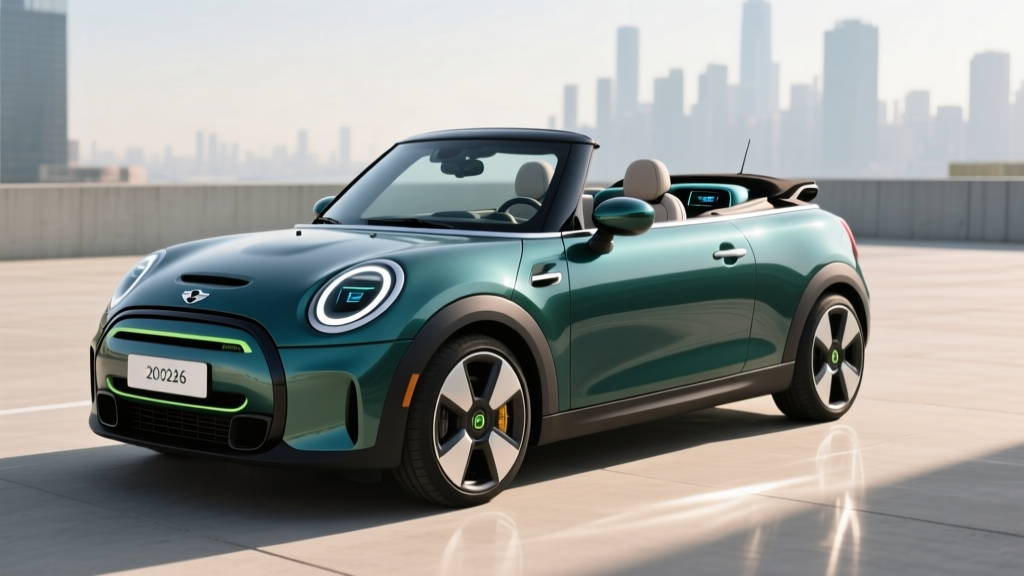
The 2026 Mini Convertible Electric pairs a 54.2 kWh battery with a 215-hp motor, delivering an EPA-estimated 168 miles of range and 0-60 mph in 6.4 seconds. Pricing starts around $38,900 before incentives. It's best suited as a city and weekend cruiser for drivers with reliable home charging — not a long-distance tourer. Federal tax credit eligibility under IRS §30D depends on battery sourcing and buyer income; verify before purchase.
Real-World Range: What the 168-Mile EPA Sticker Doesn't Tell You
Mini rates the 2026 Convertible Electric at 168 miles on the EPA combined cycle — a respectable figure for a compact roadster, but one that shifts dramatically depending on how and where you drive. In real-world testing, highway cruising at 70 mph with the top down typically yields 130-145 miles before the battery dips into its reserve buffer. Cold weather (below 35°F) can compress that further to roughly 110-125 miles, as the cabin heater and battery thermal management draw significant energy from the 54.2 kWh (usable) pack.
EPA Range: 168 miles (combined)
Real-World Highway (70 mph, top down): ~130-145 miles
Cold Weather (sub-35°F, mixed driving): ~110-125 miles
City / Moderate Climate: ~155-165 miles
The battery chemistry is NMC (nickel manganese cobalt), which offers strong energy density in this compact footprint but is more sensitive to extreme temperatures than LFP alternatives. Mini's thermal management system actively conditions the pack, but the physics of a small battery in a convertible cabin with limited insulation means range loss is unavoidable in winter. If your daily commute exceeds 60 miles round-trip in cold climates, this car will demand midday charging or careful preconditioning.
Charging Speed and Infrastructure: The kW Breakdown
Charging performance is where the Mini Convertible Electric reveals both its strengths and its limitations as a small-battery EV.
| Level | Power | Time (0-100%) | Miles Added per Hour |
|---|---|---|---|
| Level 1 (120V household) | ~1.4 kW | ~38 hours | ~4-5 mi/hr |
| Level 2 (240V home/public) | 11 kW | ~5 hours | ~33-36 mi/hr |
| DC Fast Charge (peak) | 95 kW | 10-80% in ~28 min | ~180+ mi/hr (at peak) |
The 95 kW peak DC fast-charging rate is competitive for this battery size — a smaller pack charges proportionally faster in terms of C-rate. However, expect the charge curve to taper noticeably above 80% state of charge (SoC). Sustained rates hover around 65-75 kW in the 20-70% SoC window before dropping to roughly 40 kW past 80%. On a road trip, this means planning 25-30 minute stops every 100-120 miles of highway driving.
The Mini Convertible Electric uses the CCS1 connector standard for DC fast charging in North America, with J1772 for Level 2 AC. With the industry shifting toward NACS (Tesla's connector), Mini has not announced a native NACS port for the 2026 model year — adapters are available but add a step at Superchargers. For home charging, a 48-amp Level 2 wallbox on a dedicated 60-amp circuit will replenish the pack overnight comfortably.
EV vs. Gas: Mini Convertible Compared
The natural cross-shop for the Mini Convertible Electric is the gas-powered Mini Convertible (Cooper S), which shares the same chassis and soft-top architecture. Here's how the numbers stack up:
| Spec | 2026 Mini Convertible Electric | 2026 Mini Cooper S Convertible (Gas) |
|---|---|---|
| Powertrain | Single motor, FWD | 2.0L turbo I-4, FWD |
| Horsepower | 215 hp | 189 hp |
| 0-60 mph | 6.4 sec | 6.6 sec |
| Range / Fuel Economy | 168 mi (114 MPGe) | ~320 mi (28 MPG combined) |
| Energy Cost per Mile | ~$0.04-$0.06 (home charging) | ~$0.12-$0.15 ($3.50/gal) |
| Annual "Fuel" Cost (12k mi) | ~$480-$720 | ~$1,440-$1,800 |
| Base MSRP | ~$38,900 | ~$35,400 |
| Maintenance (annual avg) | ~$200-$300 | ~$600-$800 |
The electric Mini is roughly $3,500 more expensive at the sticker, but the per-mile energy savings (~$0.08-$0.10/mile) recoup that premium in about 3-4 years for a driver covering 12,000 miles annually. Maintenance savings are significant: no oil changes, no transmission fluid, fewer brake replacements thanks to regenerative braking. However, insurance premiums for the EV variant tend to run 10-15% higher, adding roughly $150-$250/year depending on your profile and state.
Ownership Costs: 5-Year Breakdown
| Category | Mini Convertible Electric | Mini Cooper S Convertible |
|---|---|---|
| Purchase Price (MSRP) | $38,900 | $35,400 |
| Federal Tax Credit (est.) | Up to $3,750-$7,500* | $0 |
| Effective Purchase Price | ~$31,400-$35,150 | $35,400 |
| 5-Year Energy/Fuel | ~$2,400-$3,600 | ~$7,200-$9,000 |
| 5-Year Maintenance | ~$1,000-$1,500 | ~$3,000-$4,000 |
| 5-Year Insurance (est.) | ~$8,500-$10,000 | ~$7,500-$8,750 |
| 5-Year Total Cost of Ownership | ~$43,300-$50,250 | ~$53,100-$57,150 |
*Tax credit eligibility depends on battery critical-mineral sourcing, buyer AGI ($150k single / $300k joint), and MSRP caps ($55,000 for sedans). Confirm via IRS §30D guidelines and your tax professional. Point-of-sale transfer is available at participating dealers.
The electric variant wins on total cost over five years by a wide margin — primarily through fuel and maintenance savings — but only if the buyer qualifies for a meaningful tax credit. Without the credit, the payback period stretches to 6-7 years.
Home Charging and Installation: What First-Time Buyers Need
The single most important ownership question for the Mini Convertible Electric is whether you can charge at home. Level 1 (120V) charging adds roughly 4-5 miles per hour — adequate only if you drive under 30 miles daily and can plug in for 12+ hours overnight. For most owners, a Level 2 home charger is essential.
| Item | Estimated Cost |
|---|---|
| Level 2 charger (48A, hardwired) | $400-$700 |
| Electrical panel upgrade (if needed, 200A) | $1,500-$3,000 |
| Electrician labor (wiring, conduit, breaker) | $800-$2,500 |
| Permit and inspection | $100-$300 |
| Total (existing 200A panel) | $1,300-$3,500 |
| Total (panel upgrade required) | $2,800-$6,500 |
A licensed electrician should assess your panel capacity before purchase. Many older homes with 100-amp service will require an upgrade to accommodate a 60-amp dedicated circuit. The federal Alternative Fuel Vehicle Refueling Property Credit (30C) may cover up to 30% of home charger installation costs (capped at $1,000) if you live in an eligible census tract — check IRS guidelines.
Common Misconceptions About the Mini Convertible Electric
| Myth | Fact |
|---|---|
| "168 miles of range isn't enough for any real driving." | Average US daily commute is ~37 miles (fueleconomy.gov). 168 miles covers most daily needs with home charging, but road trips require planning. |
| "The battery will need expensive replacement in a few years." | Mini's high-voltage battery warranty covers 8 years / 100,000 miles with a capacity retention guarantee (typically 70% minimum). NMC degradation averages 2-3% per year in moderate climates. |
| "EVs are more expensive to own overall." | The 5-year TCO analysis above shows the EV variant saving $5,000-$10,000+ when tax credits apply and home charging is available. |
| "You can't drive a convertible EV in winter." | You can, but expect 25-35% range loss below freezing. The soft top's insulation is limited, so cabin heating draws heavily from the pack. A heat pump (check if included on your trim) mitigates this. |
| "Public charging is unreliable everywhere." | Reliability varies widely. Electrify America and Tesla Superchargers (with adapter) average 90%+ uptime. Always check PlugShare or your vehicle's nav for real-time station status before road trips. |
Decision Framework: Is the Mini Convertible Electric Right for You?
Choose the Mini Convertible Electric if:
- You have Level 2 home charging (or can install it)
- Your daily driving is under 80 miles round-trip
- You live in a moderate-to-warm climate, or accept winter range trade-offs
- You qualify for at least a partial federal or state EV tax credit
- You value instant torque (215 hp, 6.4s 0-60) and near-silent open-air cruising
- You want lower long-term operating costs and minimal maintenance
Choose the gas Mini Cooper S Convertible instead if:
- You rely on street parking with no charging access
- You regularly drive 150+ miles in a day without time for charging stops
- You live in a region with sparse public DC fast-charging infrastructure
- You want maximum range flexibility (320+ miles per tank) for spontaneous road trips
- Your budget is tight and you don't qualify for EV incentives
Consider a PHEV alternative if:
- You want some electric-only range (20-40 miles) for commuting but gas flexibility for longer trips — though no PHEV convertible currently exists in this size class at the time of writing.
Frequently Asked Questions
Does the 2026 Mini Convertible Electric qualify for the $7,500 federal tax credit?
Potentially, but it depends on several factors under IRS §30D: the battery's critical-mineral and component sourcing must meet annual thresholds, your adjusted gross income must be below $150,000 (single) or $300,000 (joint), and the vehicle MSRP must be under $55,000 (it is). The credit amount can range from $3,750 to $7,500 depending on sourcing compliance. Always confirm with your dealer and tax professional before relying on the credit.
How long does it take to charge the Mini Convertible Electric at home?
On a Level 2 charger (11 kW), a full 0-100% charge takes approximately 5 hours. Most owners who plug in overnight at 20-30% remaining SoC will wake up to a full battery in 3.5-4 hours. Level 1 (standard outlet) is impractical as a primary charging method — it would take over 38 hours from empty.
What happens to range with the convertible top down?
Top-down driving increases aerodynamic drag slightly, reducing efficiency by roughly 3-5% at highway speeds compared to top-up. At city speeds (under 45 mph), the effect is negligible. The bigger range factor is ambient temperature and driving speed, not roof position.
Is the Mini Convertible Electric available with all-wheel drive?
No. The 2026 Mini Convertible Electric is front-wheel drive only, with a single 215-hp motor on the front axle. This is typical for the compact EV segment and adequate for the car's weight and performance targets, but it limits traction in snow and ice compared to AWD alternatives.
What is the battery warranty?
Mini covers the high-voltage battery for 8 years or 100,000 miles (whichever comes first), guaranteeing a minimum state of health (typically 70% capacity retention). The basic vehicle warranty is 4 years / 50,000 miles. Battery replacement out of warranty on a 54 kWh NMC pack would likely cost $8,000-$12,000 based on current pricing, though costs are expected to decline as the battery supply chain matures.
Can I use Tesla Superchargers with the Mini Convertible Electric?
Yes, but with a CCS-to-NACS adapter. Mini has not equipped the 2026 model with a native NACS port. Tesla has opened select Superchargers to non-Tesla EVs via the Tesla app, and an adapter (available from Mini or third parties like Lectron) enables compatibility. Charging speed will be limited to the Mini's 95 kW peak regardless of the Supercharger's capacity.