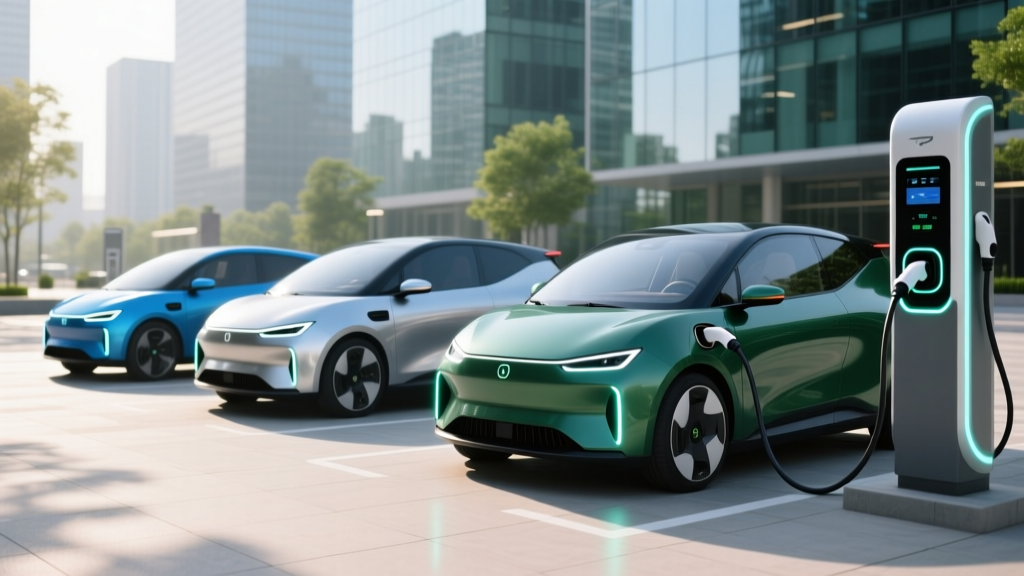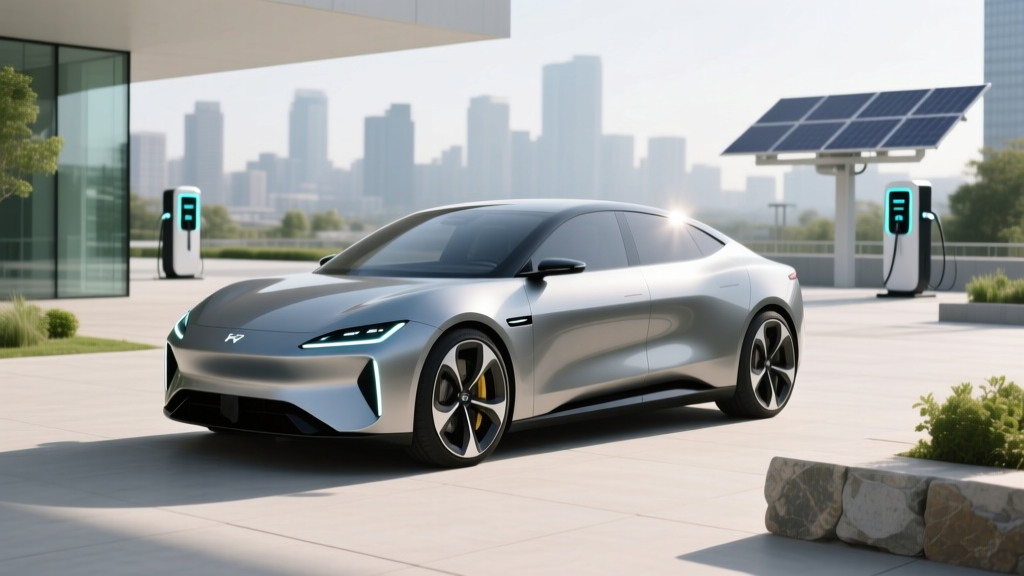
If you've been searching for a mini car Tesla, you're not alone. The idea of a small, affordable Tesla — something city-friendly, easy to park, and priced well under $30,000 — is one of the most persistent wish-list items in the EV world. But here's the 2026 reality: Tesla does not currently sell a dedicated mini car or subcompact EV in the United States. The closest vehicle in Tesla's lineup to a "mini" offering remains the Tesla Model 3, a compact sedan that, while smaller than the Model Y or Model S, is hardly a micro-car.
That hasn't stopped the rumor mill. For years, reports have circulated about a next-generation, smaller Tesla platform (sometimes referred to as the "Model 2" or "Redwood") targeting a ~$25,000 price point. As of early 2026, Tesla has not officially announced specs, pricing, or a launch date for such a vehicle in the U.S. market. Tesla CEO Elon Musk has referenced a more affordable next-gen vehicle during earnings calls, but concrete details remain scarce and production timelines have shifted repeatedly.
So what should a buyer actually do if they want a compact, city-sized electric car with Tesla-like tech? This guide breaks down the closest thing Tesla offers today, the real-world data you need, and the compact EV alternatives that might better fit the "mini car" brief.
The Closest Tesla Gets to a Mini Car: 2026 Model 3
The 2026 Tesla Model 3 (refreshed for the 2024 model year with the "Highland" update and carried forward with minor changes) remains Tesla's smallest and most affordable vehicle. It's a compact sedan — not a subcompact or micro-car — but it's the answer to anyone asking whether Tesla makes a small car.
| Spec | Model 3 RWD | Model 3 Long Range AWD | Model 3 Performance |
|---|---|---|---|
| EPA Range | 272 miles | 363 miles | 315 miles |
| Battery Capacity (usable) | ~57.5 kWh (LFP) | ~75 kWh (NMC) | ~75 kWh (NMC) |
| Drivetrain | Rear-Wheel Drive | Dual-Motor AWD | Dual-Motor AWD |
| Horsepower | 271 hp | 346 hp | 510 hp |
| 0–60 mph | 5.8 sec | 4.2 sec | 2.9 sec |
| Peak DC Fast Charge | 170 kW | 250 kW | 250 kW |
| 10–80% DC Charge Time | ~25 min | ~22 min | ~22 min |
| Level 2 Home Charge Rate | 11.5 kW (~44 mi/hr) | 11.5 kW (~44 mi/hr) | 11.5 kW (~44 mi/hr) |
| EPA Efficiency (MPGe) | 132 MPGe | 132 MPGe | 118 MPGe |
| kWh per 100 Miles | 25 kWh | 25 kWh | 28 kWh |
| Cargo Volume | 23 cu ft (trunk + frunk combined) | ||
| Rear Legroom | 35.3 inches | ||
| Battery Warranty | 8 years / 100,000 miles (RWD); 8 yr / 120,000 mi (AWD) | ||
| Base MSRP | $38,990 | $45,490 | $52,990 |
The EPA-rated 272 miles on the RWD trim is achievable in mixed city/suburban driving at moderate temperatures. Expect ~220–240 miles on sustained highway trips at 70–80 mph, and ~190–210 miles in cold weather (below 30°F) without preconditioning. The Long Range AWD's 363-mile EPA figure translates to roughly 300–320 miles highway and 260–280 miles in deep cold. Always precondition the battery via the Tesla app before fast charging or cold-weather departures — it meaningfully preserves range and charge speed.
Charging Speed: DC Fast Charging and Home Setup
Charging infrastructure is where Tesla still holds a significant edge. The Model 3 charges on Tesla's Supercharger network — widely regarded as the most reliable public DC fast-charging network in the U.S., with over 20,000 stalls nationally. The Model 3 uses the NACS (North American Charging Standard) connector natively, which is now being adopted by virtually every major automaker for 2025–2026 models.
| Charge Level | Power / Rate | Miles Added per Hour | Notes |
|---|---|---|---|
| Level 1 (120V household) | ~1.2 kW | ~3–5 mi/hr | Emergency/trickle only |
| Level 2 (240V home, 48A) | 11.5 kW | ~44 mi/hr | Full charge in ~6–8 hours |
| DC Fast (V3 Supercharger) | Up to 250 kW | ~175 mi in 15 min (peak) | Curve tapers above 60% SoC |
| DC Fast (V4 Supercharger) | Up to 250 kW | Similar to V3 for Model 3 | Newer stalls; same vehicle limit |
Charging curve reality: The Model 3 Long Range and Performance hit peak 250 kW only between roughly 10–30% state of charge. From 30–60%, rates settle to ~150–180 kW. Above 80%, charging slows dramatically to protect the battery — expect 20–40 kW. This is why Tesla (and most EV makers) quote 10–80% times rather than 0–100%. For daily driving, charging to 80% at home on Level 2 is the sweet spot for battery longevity, especially on NMC trims.
The RWD trim's LFP (lithium iron phosphate) battery is a notable exception: Tesla recommends charging LFP batteries to 100% regularly to maintain accurate state-of-charge calibration, and LFP chemistry degrades more slowly over time. This is a genuine ownership advantage for the base model.
Pricing, Trims, and Federal Tax Credit Eligibility
The 2026 Tesla Model 3 starts at $38,990 (RWD) before destination fees, making it one of the more affordable premium EVs — but it's not the budget mini car many hoped for. Here's how pricing and incentives break down:
| Trim | Base MSRP | Federal §30D Credit | Effective Price (est.) |
|---|---|---|---|
| Model 3 RWD | $38,990 | Up to $7,500* | ~$31,490* |
| Model 3 Long Range AWD | $45,490 | Up to $7,500* | ~$37,990* |
| Model 3 Performance | $52,990 | Up to $7,500* | ~$45,490* |
*Critical tax credit caveats (IRS §30D, 2026 rules):
- Income caps: Modified AGI must not exceed $150,000 (single), $225,000 (head of household), or $300,000 (joint filers).
- MSRP cap: The vehicle's MSRP must not exceed $55,000 for sedans. All current Model 3 trims fall under this cap.
- Battery sourcing: The full $7,500 credit requires meeting both critical-mineral and battery-component sourcing thresholds set by the IRS. Tesla's U.S.-assembled vehicles have generally qualified, but partial credit ($3,750) may apply if only one threshold is met. Check the latest IRS guidance on fueleconomy.gov before purchasing.
- Point-of-sale transfer: As of 2024, buyers can transfer the credit to the dealer at purchase, reducing the upfront cost rather than waiting for a tax refund.
- Tax liability: The credit is non-refundable — you must have sufficient federal tax liability to benefit from it (unless transferred at point of sale).
For the most current eligibility details, consult the fueleconomy.gov tax credit lookup tool and a qualified tax professional.
Tech, Interior, and Driver Assistance
The Model 3's interior is famously minimalist: a single 15.4-inch touchscreen handles everything — climate, navigation, media, vehicle settings — with no physical instrument cluster or stalks (turn signals are on the steering wheel in the Highland refresh). Love it or hate it, the approach is distinctly Tesla.
Standout tech features:
- Tesla Supercharger network access — the gold standard for road-trip charging reliability
- Over-the-air (OTA) updates — new features, efficiency improvements, and UI changes delivered wirelessly
- Sentry Mode and Dashcam — built-in camera recording for security and incident capture
- Heat pump (standard on all trims) — significantly improves cold-weather range vs. resistive heating
- Ventilated front seats and ambient lighting (added in Highland refresh)
- Tesla app integration — remote preconditioning, location, Summon, and phone-as-key
Autopilot and FSD (Supervised):
Tesla's Autopilot (standard) and Full Self-Driving (Supervised) — an optional $8,000 package or $99/month subscription — are Level 2 driver-assistance systems under SAE classification. This means the driver must remain fully engaged, hands on or near the wheel, and eyes on the road at all times. These systems do not make the car self-driving. Only Level 4 systems (like Waymo's robotaxi service in select cities) operate without driver supervision. Tesla's FSD (Supervised) can navigate highway interchanges and some city streets, but it requires constant oversight and can make errors that demand immediate driver intervention.
Notable drawbacks:
- No physical controls for climate or volume — everything is touchscreen-mediated
- Rear-seat space is tight for taller adults (35.3" legroom vs. 38+" in midsize sedans)
- No traditional instrument cluster or heads-up display
- Turn-signal buttons on the steering wheel (replacing stalks) remain polarizing
- Build quality has improved but still inconsistent vs. legacy luxury brands
- Insurance costs tend to run 15–30% higher than comparable non-Tesla sedans
Compact EV Alternatives: True "Mini" Options
If the Model 3 is still larger or pricier than what you had in mind for a "mini car Tesla," several compact and subcompact EVs offer smaller footprints, lower prices, and competitive range — though none match Tesla's Supercharger ecosystem:
| Vehicle | EPA Range | Battery | Base MSRP | Length | DC Fast Charge |
|---|---|---|---|---|---|
| Tesla Model 3 RWD | 272 mi | ~57.5 kWh (LFP) | $38,990 | 184.8" | 170 kW |
| Hyundai Kona Electric | 261 mi | 64.8 kWh (NMC) | $32,975 | 171.5" | ~100 kW |
| Chevrolet Bolt EV (if available) | 259 mi | 65 kWh (NMC) | ~$26,500 | 163.2" | 55 kW (CCS) |
| Volvo EX30 | 275 mi (est.) | 69 kWh (NMC) | $36,150 | 166.5" | 153 kW |
| Nissan Leaf | 212 mi (SV Plus) | 60 kWh (NMC) | $28,140 | 176.4" | ~50 kW (CHAdeMO) |
The Hyundai Kona Electric and Volvo EX30 come closest to the "mini car" ideal — they're subcompact crossovers with under-172" lengths, making them genuinely city-friendly, while offering 260+ miles of range. The Chevrolet Bolt EV (production status varies by 2026 model year — verify availability with your dealer) historically offered the lowest entry price in the segment, though its 55 kW DC fast-charging speed is a significant road-trip limitation.
None of these alternatives offer access to the Tesla Supercharger network natively (though Hyundai, Volvo, and others are transitioning to NACS for 2025–2026 models, with Supercharger adapter access expanding). If road-trip charging reliability is a priority, Tesla's ecosystem advantage remains substantial.
Who Should Buy the Model 3 — And Who Should Look Elsewhere
- You want access to the Supercharger network for hassle-free road trips
- You value OTA updates, app integration, and cutting-edge software
- You're a tech-forward commuter who appreciates minimalist design
- Your household has Level 2 home charging and most trips are under 250 miles
- You want strong performance (especially Long Range and Performance trims)
- You need a truly small car for tight city parking (sub-170" length)
- Your budget is firmly under $30,000 before incentives
- You prefer physical controls, a traditional instrument cluster, or Apple CarPlay/Android Auto
- Rear-seat passenger space is a regular need (the Model 3's 35.3" is tight)
- You primarily drive in urban areas and don't need 270+ miles of range
Pros and Cons at a Glance
- Class-leading Supercharger network access
- Excellent efficiency (132 MPGe / 25 kWh/100mi)
- LFP battery on RWD: longer cycle life, 100% charging recommended
- Heat pump standard — better cold-weather range retention
- Strong performance across all trims (2.9–5.8 sec 0–60)
- OTA updates continually add features
- Qualifies for up to $7,500 federal tax credit (subject to §30D rules)
- Not a true "mini" car — 184.8" length, compact sedan class
- Base MSRP $38,990 is above budget-EV territory
- No Apple CarPlay or Android Auto
- Touchscreen-only controls aren't for everyone
- Rear legroom (35.3") trails midsize competitors
- Insurance premiums tend to be above segment average
- Steering-wheel turn-signal buttons remain divisive
Frequently Asked Questions
Does Tesla make a mini car or subcompact EV?
No. As of 2026, Tesla's smallest and most affordable vehicle is the Model 3, a compact sedan measuring 184.8 inches long with a starting price of $38,990. Tesla has discussed a more affordable next-generation vehicle, but it has not been officially announced for the U.S. market with confirmed specs or a release date.
What is the real-world range of the Tesla Model 3?
The EPA rates the Model 3 RWD at 272 miles and the Long Range AWD at 363 miles. In real-world highway driving at 70–80 mph, expect roughly 220–240 miles (RWD) and 300–320 miles (Long Range). In cold weather below 30°F, subtract another 15–25% unless you precondition the battery. Source: fueleconomy.gov.
How fast does the Model 3 charge at home and on the road?
At home on a 240V Level 2 charger (48A), the Model 3 adds about 44 miles of range per hour, reaching a full charge in 6–8 hours. On a Tesla V3 Supercharger, the Long Range and Performance trims peak at 250 kW and can add up to 175 miles in 15 minutes, with a 10–80% charge taking approximately 22 minutes. The RWD trim peaks at 170 kW with a 10–80% time of about 25 minutes.
Does the Tesla Model 3 qualify for the federal EV tax credit?
The Model 3 has generally qualified for up to $7,500 under IRS §30D, but eligibility depends on your income (capped at $150K single / $300K joint), the vehicle's MSRP (under $55K for sedans — all trims qualify), and battery-sourcing requirements. Credit amount may be $3,750 or $7,500 depending on critical-mineral and component sourcing. Always verify current eligibility on fueleconomy.gov and consult a tax professional.
Is the Model 3 worth buying vs. compact competitors?
The Model 3 is worth buying if Supercharger access, software sophistication, and strong efficiency are your top priorities. If you want a genuinely small, city-friendly car under $30,000, the Hyundai Kona Electric, Volvo EX30, or a used Chevrolet Bolt EV may better fit the "mini car" description — though they sacrifice charging speed and network access. The Model 3 remains the benchmark for compact EVs in tech and charging infrastructure, but it's not a budget micro-car.
What's the difference between LFP and NMC batteries in the Model 3?
The RWD trim uses an LFP (lithium iron phosphate) battery, which offers longer cycle life, slower degradation, and can be charged to 100% daily without concern. The Long Range and Performance trims use NMC (nickel manganese cobalt) chemistry, which provides higher energy density (more range per kg) but benefits from being charged to 80–90% for daily use to maximize longevity. For city commuters who charge at home nightly, LFP is arguably the more practical chemistry.
Is Tesla's Autopilot or FSD actually self-driving?
No. Both Autopilot (standard) and FSD (Supervised) are SAE Level 2 driver-assistance systems. The driver must remain fully engaged and responsible for the vehicle at all times. These are not Level 4 autonomous systems like Waymo's driverless robotaxis. FSD (Supervised) can handle many highway and city driving tasks, but it requires constant supervision and can make errors.
Sources: fueleconomy.gov (EPA range and efficiency data), IRS §30D Clean Vehicle Credit guidelines, Tesla.com official specifications. All pricing and specs reflect 2026 model year information available at time of publication. Tax credit eligibility is subject to change — verify with official sources before purchasing.