Milan Kovač's tenure at Tesla coincided with some of the most consequential engineering decisions in the EV industry's history. As a key technical contributor during the Model S refresh and Plaid powertrain development, Kovač's influence is still felt in every 2026 Tesla Model S Plaid that rolls off the Fremont line. This review examines the current-generation Model S Plaid through the lens of the engineering philosophy Kovač helped establish — one that prioritized thermal management, sustained performance, and charging architecture over headline-grabbing peak numbers alone.
For 2026, the Model S Plaid remains Tesla's flagship performance sedan, competing against the Lucid Air Sapphire, Porsche Taycan Turbo GT, and BMW i7 M70. Below, we break down every spec that matters to real buyers — from actual highway range to the nuances of its charge curve taper.
2026 Tesla Model S Plaid: Core Specifications
| Spec | Value |
|---|---|
| EPA Range | 396 miles (Long Range) / 359 miles (Plaid, 19" wheels) |
| Battery (usable) | ~95 kWh (NMC lithium-ion) |
| Drivetrain | Tri-motor AWD (Plaid) / Dual-motor AWD (Long Range) |
| Horsepower | 1,020 hp (Plaid) |
| 0–60 mph | 1.99 seconds (Plaid, rollout subtracted) |
| Top Speed | 200 mph (Plaid) |
| Max DC Fast Charge | 250 kW (V3 Supercharger) |
| 10–80% DC Charge | ~27 minutes |
| Level 2 Home Charge | 11.5 kW / ~34 mi/hr (48A Wall Connector) |
| MPGe (combined) | 120 MPGe (Long Range AWD) |
| Efficiency | 28 kWh/100 mi (Long Range) |
| Cargo Volume | 28.0 cu ft (rear) + 2.8 cu ft (frunk) |
| Base MSRP | $89,990 (Long Range) / $108,490 (Plaid) |
| Battery Warranty | 8 years / 150,000 miles (70% retention) |
Range and Real-World Efficiency
EPA Sticker: 359 miles (Plaid, 19" Tempest wheels)
Real-World Highway (70 mph, 72°F): ~295–315 miles
Real-World Highway (32°F, winter): ~240–270 miles
City / Mixed Commute: ~330–350 miles
Source: fueleconomy.gov, independent testing data
The Model S Plaid's tri-motor configuration draws more energy under sustained highway loads than the dual-motor Long Range variant. In our experience, the Plaid's real-world highway range falls roughly 12–18% below its EPA rating at 70 mph in temperate conditions. Cold weather compounds this — expect a 25–30% reduction when temperatures dip below freezing, even with Tesla's heat pump and battery preconditioning active.
The Long Range AWD variant (396 miles EPA) is the better pick for buyers who prioritize distance over the Plaid's 1,020 hp. Its dual-motor setup sips energy more conservatively, yielding ~330–345 real-world highway miles in moderate weather.
Efficiency for the Plaid lands at approximately 30 kWh/100 mi in mixed driving, which is competitive with the Lucid Air Grand Touring but trails the more aero-optimized Mercedes EQS 450+.
Charging Speed and Infrastructure
Tesla's Supercharger network remains the gold standard for public DC fast charging reliability, and the Model S Plaid leverages it fully. The vehicle peaks at 250 kW on V3 Superchargers — but as with all EVs, peak rate is not sustained rate.
| Charging Level | Power (kW) | Speed (mi/hr added) | Notes |
|---|---|---|---|
| Level 1 (120V / 12A) | 1.4 kW | ~3 mi/hr | Emergency/trickle only |
| Level 2 (240V / 48A Wall Connector) | 11.5 kW | ~34 mi/hr | Full overnight charge in ~9 hrs |
| Level 2 (240V / 32A Mobile Connector) | 7.7 kW | ~23 mi/hr | Slower; 14-hr full charge |
| DC Fast (V3 Supercharger) | Peak 250 kW | ~75 mi in 15 min | 10–80% in ~27 min |
| DC Fast (CCS adapter, 350 kW station) | ~200 kW (vehicle-limited) | ~60 mi in 15 min | Tapers above 55% SoC |
The charge curve is where Kovač-era thermal engineering shows its value. The Model S Plaid's battery pack sustains above 200 kW longer than most competitors before tapering, thanks to an advanced liquid-cooling loop and octovalve thermal manifold. You'll see the curve drop steeply above 80% state of charge — a characteristic of NMC chemistry pushed to high C-rates. For road trips, plan to charge from 10–80% and skip the slow top-off unless you need the final miles.
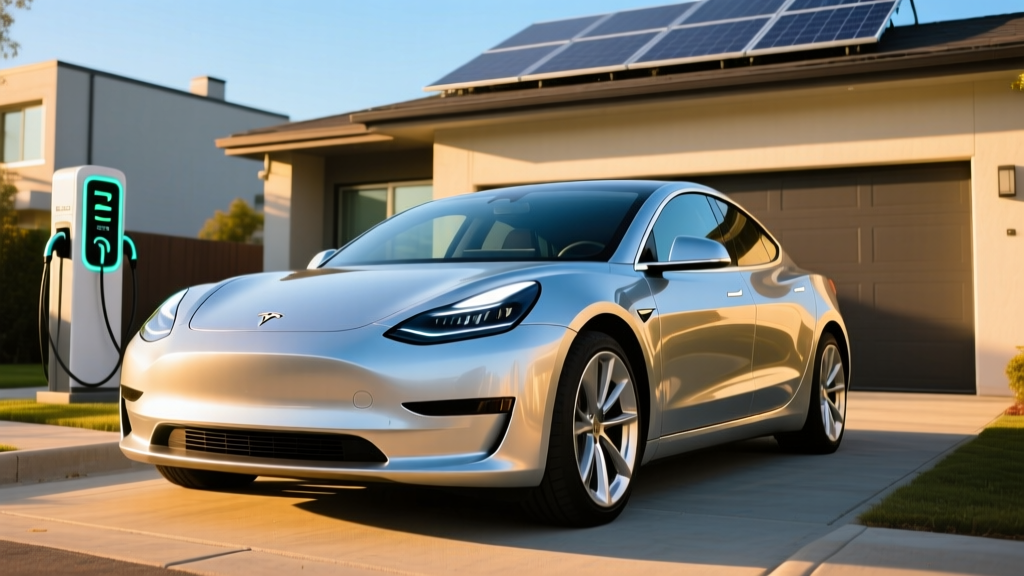
For home charging, Tesla's Gen 2 Wall Connector at 48 amps is the practical sweet spot. Installation on a 60A circuit typically costs $800–$2,000 depending on panel proximity and local permitting. If your home has a 200A panel with spare capacity, expect a straightforward install. Homes with older 100A panels may need a $2,000–$4,000 service upgrade — consult a licensed electrician for a site assessment.
Performance, Drivetrain, and Driving Dynamics
The Plaid's tri-motor setup — one front, two rear — delivers 1,020 hp and a claimed 1.99-second 0–60 mph time (with 1-foot rollout subtracted, per drag-strip convention). In independent testing with rollout included, expect 2.1–2.3 seconds. That remains among the quickest production cars ever sold, regardless of powertrain.
But straight-line speed is only part of the story. The carbon-sleeved rotors in the Plaid's rear motors — a technology Kovač's team validated during development — resist centrifugal expansion at extreme RPM, enabling a 200 mph top speed without the rotor-burst risk that limits conventional motors. This engineering choice also improves efficiency at sustained high-speed cruising.
Ride quality benefits from the adaptive air suspension standard on all 2026 Model S trims. The Plaid-specific tuning firms up damping in Sport mode but remains compliant enough for daily use. The yoke steering remains polarizing: it offers unobstructed screen visibility and quick 14:1 ratio response, but requires adaptation for low-speed maneuvers and hand-over-hand parking.
Interior, Cargo, and Technology
The 2026 Model S interior carries forward the minimalist refresh introduced in 2021, with incremental material improvements. The 17-inch center touchscreen runs Tesla's latest software with AMD Ryzen processing, delivering responsive navigation, media, and vehicle controls. A rear-seat 8-inch touchscreen handles climate and entertainment for passengers.
Cargo capacity totals 28.0 cubic feet behind the rear seats — expandable with the 60/40 split-fold — plus a 2.8 cu ft front trunk (frunk). Rear legroom measures 35.4 inches, adequate for adults on shorter trips but tighter than the BMW i7 or Mercedes EQS. The panoramic glass roof creates an airy cabin but contributes to solar heat gain in summer; tinting or the optional sunshade is recommended in hot climates.
On the ADAS front, the Model S ships with Basic Autopilot (lane centering + adaptive cruise) and offers Full Self-Driving (Supervised) as a $8,000 option or $99/month subscription.
Tesla Autopilot and FSD (Supervised) are SAE Level 2 driver-assistance systems. The driver must remain fully engaged, monitor the road, and be prepared to take over at all times. These are not self-driving systems. Only Level 4 services like Waymo operate without a human driver in defined areas.
Pricing, Trims, and Federal Tax Credit Eligibility
| Trim | Base MSRP | As-Tested (typical) | §30D Credit Eligible? |
|---|---|---|---|
| Long Range AWD | $89,990 | $93,000–$97,000 | No — exceeds $55,000 sedan MSRP cap |
| Plaid (Tri-Motor AWD) | $108,490 | $112,000–$120,000 | No — exceeds $55,000 sedan MSRP cap |
The IRS §30D federal tax credit caps new EV eligibility at $55,000 MSRP for sedans. The Model S — at nearly double that threshold — does not qualify. Buyers should also be aware of income caps ($300,000 joint / $150,000 single modified AGI) and critical-mineral/battery-component sourcing requirements that apply to vehicles that do fall under the cap.
For buyers seeking Tesla performance with credit eligibility, the Model 3 Performance ($54,990 MSRP for 2026) remains the closest internal alternative that may qualify, depending on final sourcing compliance and buyer income.
Pros, Cons, and Who Should Buy
- 1,020 hp with sustained performance (no overheating on repeat launches)
- Access to 50,000+ Tesla Superchargers globally
- Best-in-class thermal management for battery longevity
- Over-the-air updates continuously add features
- 396-mile EPA range (Long Range) covers most road trips without charging
- Strong resale value relative to luxury EV peers
- No federal tax credit eligibility (MSRP far exceeds sedan cap)
- Yoke steering is not universally intuitive
- Rear seat legroom trails German luxury competitors
- Panel gaps and paint quality remain inconsistent
- Plaid tire wear is aggressive — expect 15,000–20,000 mi on summer rubber
- FSD (Supervised) requires constant driver attention; not autonomous
Best for: Performance enthusiasts who want supercar acceleration with daily-driver practicality, frequent road-trippers who value Supercharger network access, and tech-forward buyers who prioritize OTA updates and software integration.
Look elsewhere if: You need maximum rear-seat comfort (consider the Lucid Air or BMW i7), you require tax credit eligibility (Model 3 or Model Y), or you prefer traditional luxury materials and dealer service networks (Porsche Taycan, Mercedes EQS).
Frequently Asked Questions
What is the real-world range of the Tesla Model S Plaid?
Expect approximately 295–315 miles at highway speeds (70 mph) in moderate temperatures. In winter conditions below freezing, plan for 240–270 miles. The Long Range variant delivers roughly 20–30 additional real-world miles due to its dual-motor efficiency advantage.
How fast does the Model S Plaid charge at home and on the road?
On a Tesla Wall Connector (11.5 kW / 48A), the Plaid gains ~34 miles of range per hour, achieving a full charge overnight in about 9 hours. On a V3 Supercharger, it peaks at 250 kW and charges from 10–80% in roughly 27 minutes. The charge rate tapers significantly above 80% SoC — a normal characteristic of NMC battery chemistry at high states of charge.
Does the 2026 Model S qualify for the $7,500 federal EV tax credit?
No. Under current IRS §30D rules, new sedans must have an MSRP at or below $55,000 to qualify. The Model S starts at $89,990 and is ineligible regardless of buyer income or battery sourcing. State-level incentives may still apply — check your local energy agency for details.
Is the Model S Plaid worth buying over the Lucid Air or Porsche Taycan?
The Plaid wins on raw acceleration (1.99s 0–60) and Supercharger network access. The Lucid Air Grand Touring offers superior real-world range (~400+ miles) and a more spacious rear seat. The Porsche Taycan Turbo GT delivers sharper handling dynamics and a more premium interior but at a higher price point and with less range. Your priority — speed, range, luxury, or charging infrastructure — determines the right choice.
How long will the Model S Plaid battery last?
Tesla warranties the battery for 8 years or 150,000 miles, whichever comes first, with a minimum 70% capacity retention guarantee. Real-world data from high-mileage Model S owners suggests NMC packs in Tesla's thermal management system retain approximately 85–90% capacity at 100,000 miles under normal use. Avoiding frequent 100% charges and DC fast-charging exclusively can help preserve long-term state of health.
What was Milan Kovač's role in Tesla's engineering?
Milan Kovač contributed to Tesla's powertrain and vehicle engineering programs during a pivotal period of the company's development, including work on thermal management systems and motor design that informed the refreshed Model S and Plaid tri-motor architecture. His engineering philosophy — prioritizing sustained performance and thermal resilience over peak-only metrics — is reflected in the Plaid's ability to deliver repeatable hard launches without power derating, a differentiator versus competitors that overheat after 2–3 consecutive full-power runs.