What Is the Microlino EV and Can You Actually Buy One?
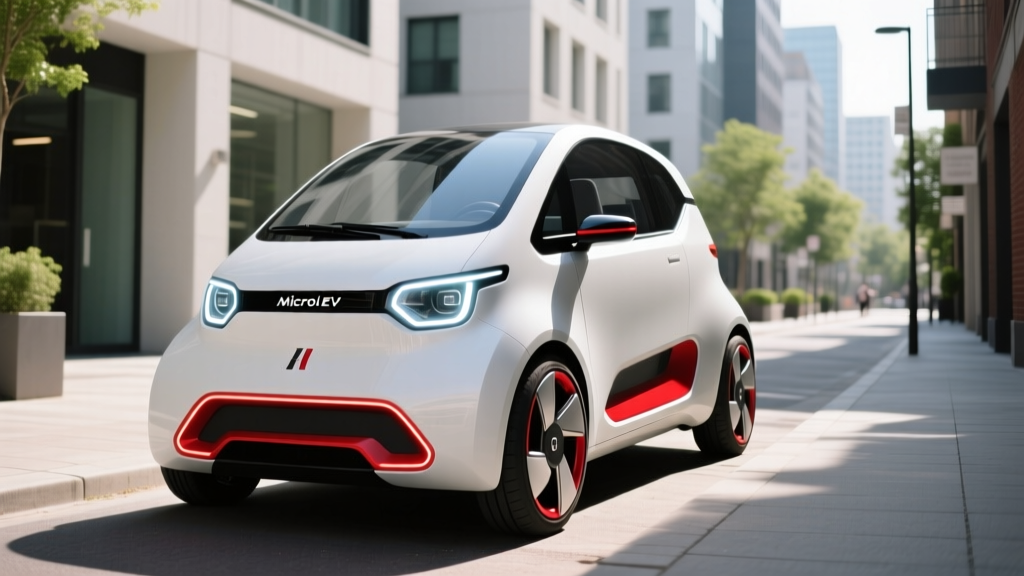
Bottom line: The Microlino is a Swiss-designed, BMW Isetta-inspired electric quadricycle (not a full passenger car) with a 6–14 kWh LFP battery, 57–109 miles of WLTP range, and a top speed of 56 mph. As of early 2026, it is not sold in the United States. Micro Mobility Systems has focused production on European markets, where it qualifies under the lighter L7e heavy quadricycle class. If you're a US-based shopper, the closest legal equivalents are the Arcimoto FUV (discontinued) or low-speed neighborhood electric vehicles (NEVs) like the Polaris GEM. European buyers can order the Microlino directly, with prices starting around €17,990 in key markets.
The Microlino EV occupies a category that barely exists in the US: the urban microcar. It seats two adults side by side, has a front-opening "fridge door" (a nod to the 1950s BMW Isetta bubble car), and is built for short city commutes, grocery runs, and dense parking environments. It is not a highway vehicle, not a family hauler, and not a replacement for a conventional EV like the Chevrolet Equinox EV or Hyundai Kona Electric. But for the right use case — a European urban dweller with a sub-15-mile daily commute — it is one of the most space-efficient EVs on the road.
Range, Battery, and Charging: The Real Numbers
The Microlino is offered in three battery configurations for the 2025–2026 model years. All use lithium iron phosphate (LFP) chemistry, which trades energy density for longevity, thermal stability, and lower degradation over time. Here's the full spec breakdown:
| Spec | Microlino Urban (6 kWh) | Microlino Dolce (10.5 kWh) | Microlino Competizione (14 kWh) |
|---|---|---|---|
| Battery chemistry | LFP | LFP | LFP |
| Usable capacity | ~5.8 kWh | ~10.2 kWh | ~13.5 kWh |
| WLTP range | ~57 mi (91 km) | ~109 mi (175 km) | ~140 mi (225 km)* |
| Top speed | 56 mph (90 km/h) | 56 mph (90 km/h) | 56 mph (90 km/h) |
| 0–30 mph | ~5.0 sec | ~5.0 sec | ~5.0 sec |
| Motor output | ~12.5 kW (17 hp) | ~12.5 kW (17 hp) | ~12.5 kW (17 hp) |
| AC charging (Level 2) | ~3.6 kW (Type 2) | ~3.6 kW (Type 2) | ~3.6 kW (Type 2) |
| DC fast charging | Not available | Not available | Not available |
| Charge time 0–100% (L2) | ~2 hours | ~3 hours | ~4 hours |
| Vehicle weight | ~957 lbs (435 kg) | ~1,003 lbs (455 kg) | ~1,069 lbs (485 kg) |
| Starting price (EU) | ~€17,990 | ~€21,990 | ~€24,990 |
*Competizione 14 kWh range is estimated based on Micro's published efficiency data; final WLTP certification pending for some markets.
Real-world range reality: WLTP testing is more generous than the US EPA cycle. Expect real-world range to be roughly 15–25% lower than the WLTP figure. For the 10.5 kWh Dolce model, plan for 80–90 miles in mild weather and as little as 55–65 miles in freezing temperatures. LFP batteries experience greater cold-weather voltage sag than NMC cells, so winter commuters should size up to the 14 kWh battery if daily round trips exceed 40 miles.
Charging is AC-only. The Microlino has no DC fast-charging capability. You charge via a standard Type 2 connector (Europe) at up to 3.6 kW. On a typical European household outlet (Schuko, ~2.3 kW), a full charge of the 10.5 kWh battery takes roughly 4.5 hours. This is fine for overnight home charging but means the Microlino cannot meaningfully use public fast-charging networks like Ionity or Tesla Superchargers.
How the Microlino Compares to a Gas Car or Full-Size EV
The Microlino is not competing with the Tesla Model 3 or even the Fiat 500e. It's competing with scooters, e-bikes, and the occasional Smart EQ ForTwo. Here's how it stacks up against a small gas car and a mainstream compact EV on the metrics that matter for urban use:
| Metric | Microlino Dolce (10.5 kWh) | Fiat 500 (gas, EU) | Fiat 500e (EV, EU) |
|---|---|---|---|
| Price (EU approx.) | €21,990 | €16,500 | €34,900 |
| Real-world city range | ~85 mi | ~350 mi (8 gal tank) | ~140 mi |
| Energy cost per mile | ~€0.03 (home charge) | ~€0.14 (gasoline) | ~€0.04 (home charge) |
| Parking footprint | ~26 sq ft | ~56 sq ft | ~54 sq ft |
| Top speed | 56 mph | 106 mph | 93 mph |
| Seats | 2 | 4 | 4 |
| Cargo (behind seats) | ~8.1 cu ft (230 L) | ~6.5 cu ft (185 L) | ~6.5 cu ft (185 L) |
| Highway capable | No (56 mph limit) | Yes | Yes |
| Crash-test rated (Euro NCAP) | No (quadricycle class) | Yes (4 stars) | Yes (4 stars) |
The trade-off is clear: the Microlino wins on parking footprint, energy cost per mile, and purchase price (vs. the 500e). It loses on range, speed, passenger capacity, and crucially, crash safety. As an L7e quadricycle, the Microlino is not required to meet the same crash standards as a full passenger car. It has a steel-tube safety cell, but it has not been tested by Euro NCAP. This is the single biggest ownership consideration for buyers who share roads with full-size vehicles.
Real Costs of Ownership: Purchase, Charging, and Maintenance
For European buyers, the Microlino's total cost of ownership (TCO) is compelling if your use case fits. Here's a 5-year cost projection for the Dolce trim (10.5 kWh), assuming 7,500 miles/year, home charging at €0.28/kWh, and no incentives:
| Cost Category | Microlino Dolce (5 yr) | Fiat 500 Gas (5 yr) | Fiat 500e (5 yr) |
|---|---|---|---|
| Purchase price | €21,990 | €16,500 | €34,900 |
| Fuel/energy (37,500 mi) | €1,125 | €5,250 | €1,500 |
| Insurance (avg EU urban) | €3,750 | €4,500 | €5,000 |
| Maintenance | €750 | €3,000 | €1,200 |
| Estimated depreciation | €8,800 (40%) | €7,425 (45%) | €15,705 (45%) |
| 5-year total | €36,415 | €36,675 | €58,305 |
The Microlino's low weight means minimal tire and brake wear (regenerative braking handles most deceleration), and the LFP battery is rated for 2,000+ charge cycles before reaching 80% state of health — that's well over 100,000 miles. Micro offers a 2-year vehicle warranty and an 8-year/62,000-mile battery warranty on the traction pack.
Insurance note: Quadricycle insurance in Europe is typically cheaper than full-car policies, but coverage varies significantly by country. In Germany and France, specialized micro-car policies exist. In the UK, some insurers classify the Microlino as a car, which raises premiums.
Common Misconceptions About the Microlino EV
| Myth | Fact |
|---|---|
| "It qualifies for the US $7,500 federal EV tax credit." | The Microlino is not sold in the US and does not meet FMVSS safety standards for a passenger vehicle. Even if imported, it would not qualify for the IRS §30D clean vehicle credit, which requires a 4-wheeled vehicle with a GVWR under 14,000 lbs and specific battery-sourcing compliance. |
| "It can charge at public DC fast chargers." | No. The Microlino is AC-only (Type 2, max 3.6 kW). It physically cannot connect to CCS or CHAdeMO DC chargers. |
| "It's as safe as a Smart car." | The Smart EQ ForTwo is a homologated M1 passenger car with Euro NCAP crash ratings. The Microlino is an L7e quadricycle and has not undergone equivalent crash testing. The safety cell provides rollover protection, but crash energy management is fundamentally different at this vehicle class. |
| "LFP batteries don't degrade." | LFP degrades more slowly than NMC and can handle more charge cycles, but it still loses capacity over time — typically 10–15% over 8 years under normal use. LFP is also more susceptible to cold-weather range loss due to higher internal resistance at low temperatures. |
| "You can drive it on the highway." | The 56 mph (90 km/h) top speed makes it unsuitable for most highways. It's designed for city streets, suburban roads, and low-speed zones. |
First-Time Buyer Considerations: Home Charging and Daily Use
If you're evaluating the Microlino (or any micro-EV) as a first-time electric vehicle buyer, these are the practical realities to assess before committing:
1. Do you have reliable home charging? The Microlino has no DC fast-charging option, so public charging infrastructure is largely irrelevant. You need access to a standard household outlet (Schuko in Europe) or a Level 2 wallbox. A full charge on a standard outlet takes 4–6 hours depending on battery size. If you live in an apartment without dedicated parking and a plug, the Microlino becomes impractical.
2. What does your daily commute look like? The 10.5 kWh model offers roughly 80–90 real-world miles. If your round-trip commute is under 40 miles with some buffer for errands, the Dolce trim is sufficient. If you regularly exceed 50 miles or drive in hilly terrain, the 14 kWh Competizione is the safer choice.
3. What's your local winter like? LFP batteries lose more range in cold weather than NMC. In Scandinavian or Alpine winters, expect a 30–40% range reduction. A Microlino with 109 WLTP miles may deliver only 65 miles at 20°F (-7°C). The Microlino does not have a heat pump; cabin heating draws directly from the traction battery, further reducing range.
4. Is this your only vehicle? For most buyers, the Microlino works best as a second car for urban errands, paired with a larger vehicle for road trips, family duties, or highway commuting. As a sole vehicle, its limitations — 56 mph top speed, 2 seats, no DC charging — are restrictive.
Decision Framework: Is the Microlino EV Right for You?
Choose the Microlino if:
- You live in a European city with dense parking and short daily commutes (under 40 miles round-trip).
- You have home charging access (garage, driveway, or dedicated parking with a plug).
- You want the lowest possible energy cost per mile and minimal maintenance.
- This is a second vehicle or dedicated urban runabout.
- You value a tiny parking footprint (the Microlino fits perpendicular in many standard parallel-parking spots).
Look elsewhere if:
- You live in the United States (not available, not street-legal as a passenger car).
- You need highway speeds (anything above 55 mph).
- You carry more than one passenger regularly.
- You lack home charging access.
- Crash-test safety ratings are a priority for you (consider the Fiat 500e, Renault Zoe, or Dacia Spring instead).
- Your winters are harsh and your commute is long (LFP cold-weather losses will bite).
Frequently Asked Questions
Will the Microlino EV ever be sold in the United States?
There are no announced plans for US sales as of 2026. The Microlino would need to meet FMVSS crash-safety standards to be sold as a passenger vehicle, which would require significant structural redesign. Micro Mobility Systems has indicated that its production capacity is focused on European demand for the foreseeable future.
How long does the Microlino battery last before replacement?
The LFP battery is rated for 2,000+ full charge cycles before dropping to 80% state of health. At 80 miles per charge cycle (Dolce model), that's approximately 160,000 miles before meaningful degradation. Micro provides an 8-year/62,000-mile battery warranty. Replacement cost has not been publicly disclosed but is estimated at €3,000–€5,000 based on the battery's kWh capacity and current LFP cell pricing.
Can I charge the Microlino from a regular wall outlet?
Yes. The Microlino includes a cable for standard Schuko (European household) outlets at ~2.3 kW. A 10.5 kWh battery charges from 0–100% in roughly 4.5 hours on a standard outlet. For faster Level 2 charging (~3.6 kW), you'd need a Type 2 wallbox installed by a licensed electrician.
Does the Microlino have regenerative braking?
Yes, but it is not adjustable and does not enable true one-pedal driving. The regen is moderate — enough to recover energy on deceleration but not strong enough to bring the car to a complete stop without using the brake pedal.
What about the Microlino Lite version?
Micro has announced a Microlino Lite, classified as an L6e light quadricycle with a top speed of 28 mph (45 km/h). In some European countries, it can be driven by 16-year-olds with a moped license. Pricing and availability for the Lite variant are expected later in 2026; specs are preliminary.