The Short Answer on the Microlino Electric Microcar
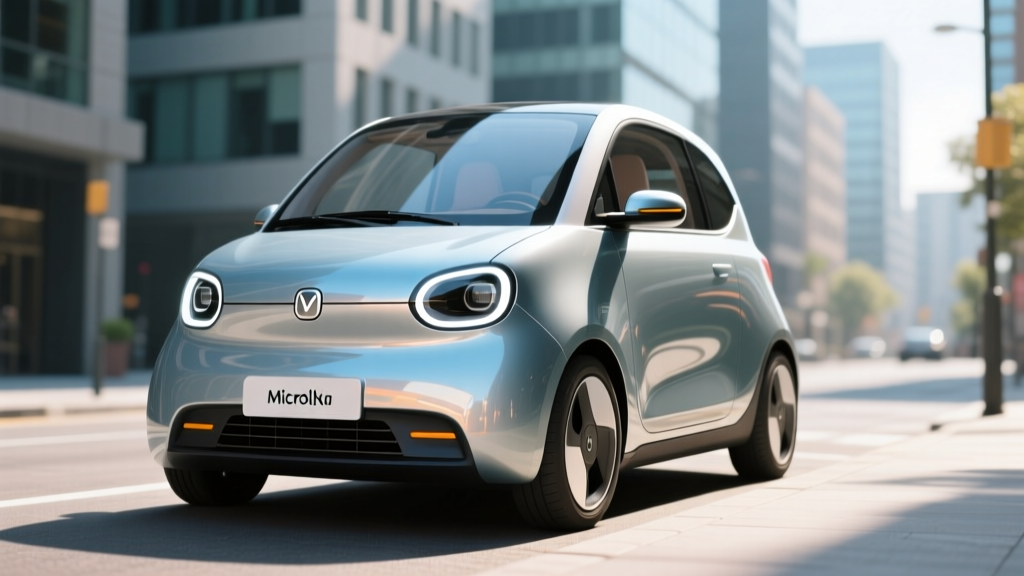
The Microlino is a two-seat, ultra-compact electric vehicle built by Swiss manufacturer Micro Mobility Systems. It offers up to 230 km (approximately 143 miles) of WLTP range from its largest 15 kWh battery option, charges on standard European Type 2 AC power (no DC fast charging), and starts around €19,900 in Europe. However, the Microlino is not currently sold or homologated for the United States market. It is classified in Europe as a heavy quadricycle (L7e), a vehicle category that does not have a direct US federal equivalent, which creates significant regulatory barriers to import. If you are a US-based buyer, the Microlino is not a purchasable option today, and there is no confirmed timeline for a US launch.
What Exactly Is the Microlino?
The Microlino is a modern, all-electric reinterpretation of the classic BMW Isetta bubble car — a tiny, front-opening-door microcar designed strictly for urban commuting. Micro Mobility Systems, the Swiss company behind the Micro Kickboard scooter brand, began production in Turin, Italy, in 2022 after years of development and a well-publicized patent dispute with Chinese competitor City Transformer.
The vehicle is designed to solve a specific problem: dense European city driving where parking is scarce, trips are short, and full-size EVs are overkill. It seats two adults (tightly), has a cargo shelf behind the seats, and uses a single front-hinged door that opens the entire front face of the car — a signature design element inherited from the Isetta.
Key Specifications at a Glance
| Spec | Microlino Urban (6 kWh) | Microlino Dolce (10.5 kWh) | Microlino Competizione (15 kWh) |
|---|---|---|---|
| Battery Capacity (usable) | 6 kWh | 10.5 kWh | 15 kWh |
| WLTP Range | 91 km (~57 mi) | 177 km (~110 mi) | 230 km (~143 mi) |
| Motor Output | 11.8 kW continuous / 19 kW peak (~16 hp / ~25 hp peak) | ||
| Top Speed | 90 km/h (~56 mph) | ||
| 0–50 km/h | 5.0 seconds | ||
| AC Charging (Type 2) | ~4 hours (6 kWh) to ~10 hours (15 kWh) from 0–100% | ||
| DC Fast Charging | Not available | ||
| Length × Width × Height | 2,519 mm × 1,473 mm × 1,501 mm | ||
| Curb Weight | ~530 kg (~1,168 lbs) depending on battery | ||
| Base Price (Europe) | ~€19,900 | ~€22,900 | ~€24,900 |
Important note on range figures: The Microlino's range is rated under WLTP, the European testing standard, which tends to produce higher numbers than the US EPA cycle. A real-world EPA-equivalent estimate for the 15 kWh model would likely fall in the 90–110 mile range under mixed driving, and considerably less in cold weather or at sustained higher speeds. The 6 kWh Urban model's real-world range may drop to 35–45 miles in demanding conditions.
Why the Microlino Is Not Available in the US
This is the most critical point for American buyers. The Microlino faces three major regulatory barriers to US sale:
- Vehicle classification: In Europe, the Microlino is homologated under the L7e heavy quadricycle category, which has different crash-safety, emissions, and equipment requirements than full passenger cars (M1 category). The US NHTSA does not have an equivalent quadricycle classification for vehicles of this weight and speed, meaning the Microlino would need to meet full Federal Motor Vehicle Safety Standards (FMVSS) — including crash testing, airbags, and structural requirements — that its lightweight design was never engineered to satisfy.
- 25-Year Import Rule: Under current US law, non-conforming foreign vehicles generally cannot be imported until they are at least 25 years old, unless they go through the expensive and uncertain Registered Importer (RI) process, which requires modifying the vehicle to meet FMVSS — practically impossible for a low-volume microcar.
- No US Service Infrastructure: Micro Mobility Systems has not announced any US dealer network, service centers, or parts supply chain.
Micro has occasionally expressed interest in exploring international markets beyond Europe, but as of 2026, there is no confirmed US launch plan. Buyers who see the Microlino on social media or YouTube should understand that importing one for road use is not legally straightforward.
Microlino vs. Gas Car: What Would the Economics Look Like?
Even though the Microlino isn't available in the US, it's useful to model the cost comparison for readers who might encounter similar micro-EVs or who are curious about the economics of ultra-small electric vehicles versus a conventional gas-powered city car.
Estimated Annual Operating Cost: Microlino (15 kWh) vs. Gas City Car
| Category | Microlino (15 kWh) | Gas City Car (35 MPG combined) |
|---|---|---|
| Energy/Fuel Cost per Mile | ~$0.04–$0.06 (home charging at $0.14/kWh) | ~$0.10 (at $3.50/gal) |
| Annual Energy/Fuel (6,000 mi/yr) | ~$240–$360 | ~$600 |
| Oil Changes | $0 | ~$200–$300/yr |
| Brake Wear (with regen) | Minimal | ~$150–$250/yr |
| Estimated Annual Maintenance | ~$100–$150 | ~$400–$600 |
| Total Annual Operating Cost | ~$340–$510 | ~$1,200–$1,500 |
Assumptions: 6,000 miles/year (city commuting), US average residential electricity rate of $0.14/kWh, average US gasoline price of $3.50/gal. Actual costs vary by region and driving pattern.
The Microlino's tiny 15 kWh battery means charging costs are trivially low. Even at public charging rates of $0.30–$0.40/kWh, a full charge costs only $4.50–$6.00. The trade-off is that you will never take a road trip in this vehicle — it is a dedicated city runabout, and the economics only make sense in that narrow use case.
Charging Reality: What Microlino Owners Experience in Europe
The Microlino charges exclusively via AC power using a Type 2 connector (the European standard equivalent to the J1772 connector used in North America). There is no DC fast-charging capability — this is a deliberate design choice to keep costs and weight down, and because the battery is small enough that overnight AC charging is sufficient for its intended use.
| Charging Method | Power | Time (6 kWh) | Time (10.5 kWh) | Time (15 kWh) |
|---|---|---|---|---|
| Standard Household Outlet (Schuko) | ~2.3 kW | ~3 hours | ~5 hours | ~7 hours |
| Type 2 Wallbox / Public AC | ~3.7 kW (max onboard charger) | ~2 hours | ~3.5 hours | ~4.5 hours |
The onboard AC charger is limited to approximately 3.7 kW. This is a critical detail: even if you plug into a 7 kW or 11 kW public AC charger, the Microlino will only draw 3.7 kW. For the 15 kWh model, that means roughly 4–4.5 hours for a full charge regardless of the station's rated capacity.
For European owners with home garages or dedicated parking spots, this is a non-issue — you plug in overnight and wake up with a full battery every morning. For apartment dwellers relying on street parking and public chargers, the lack of DC fast charging is a genuine limitation. You cannot add 50 miles of range in 15 minutes the way you can with a full-size EV supporting 150+ kW DC charging.
Real-World Ownership Considerations
If the Microlino were available in the US — or if you are considering a comparable ultra-compact EV like the upcoming US-market micro-EVs or a used electric vehicle from the EPA's database — here are the practical ownership factors to weigh:
Home Charging Access
The Microlino's small battery makes it one of the few EVs that can genuinely charge on a standard 120V household outlet in a reasonable timeframe. In the US, a standard NEMA 5-15 outlet delivers about 1.2–1.4 kW continuously. For a 6 kWh battery, that is roughly 4–5 hours. For a 15 kWh battery, it is 11–13 hours — feasible for overnight charging but tight if you need a same-day turnaround. A Level 2 home charger (240V, 16A–32A) would be a significant upgrade, but installation costs typically range from $500 to $2,000 depending on electrical panel capacity and wiring distance.
Cold-Weather Range Loss
Lithium-ion batteries lose efficiency in cold temperatures, and small batteries have less thermal mass to work with. Expect 20–35% range reduction in sustained freezing temperatures (below 32°F / 0°C). For the 15 kWh Microlino, that means a real-world winter range of approximately 60–80 miles — still adequate for most city commutes but a meaningful drop. The Microlino does not appear to feature an active battery thermal management system (liquid heating/cooling), which is common in larger EVs but would add cost and weight to a microcar.
Safety and Highway Use
The Microlino's 90 km/h (56 mph) top speed makes it unsuitable for US interstate highways, where speed limits of 65–80 mph are standard. In Europe, where it is used primarily in cities with 30–50 km/h zones, this is appropriate. In the US, even suburban arterials with 45 mph speed limits would push the vehicle to its design limits. Crash safety is also a concern: while the Microlino has a steel space frame, it was not designed to meet US FMVSS crash-test requirements, and its lightweight construction (530 kg) puts it at a severe disadvantage in any collision with a full-size vehicle.
Insurance
Micro-EVs and low-speed vehicles typically carry lower insurance premiums than full-size EVs, but the lack of US availability means no actuarial data exists. If imported, expect specialty-insurance pricing similar to imported novelty vehicles — potentially $800–$1,500 annually depending on the insurer and usage restrictions.
US Alternatives: What Can You Actually Buy?
Since the Microlino is not a US option, here are the closest purchasable alternatives for buyers seeking a compact, affordable electric city car:
| Vehicle | EPA Range | Battery | DC Fast Charge | Starting MSRP (approx.) | Notes |
|---|---|---|---|---|---|
| Mini Cooper SE (2025+) | ~114 mi | 32.6 kWh | 50 kW (10-80% in ~36 min) | ~$30,900 | Smallest mainstream EV sold in US; 4 seats |
| Chevrolet Equinox EV (base) | ~319 mi | 85 kWh | 175 kW | ~$33,000 | Full-size SUV, far more capable; different category |
| Used Nissan Leaf (2019–2023) | 149–226 mi | 40–62 kWh | 50–100 kW (CHAdeMO) | ~$12,000–$20,000 | Affordable used EV; CHAdeMO network shrinking |
| Neighborhood Electric Vehicle (NEV/LSV) | 30–50 mi | Varies (lead-acid or Li-ion) | None (AC only) | $8,000–$15,000 | Street-legal only on roads ≤35 mph; no highway use |
For the buyer whose actual need matches the Microlino's use case — short, low-speed urban trips — a US-legal Low-Speed Vehicle (LSV) or Neighborhood Electric Vehicle (NEV) from brands like GEM or Arcimoto (if available) is the closest functional equivalent. However, LSVs are legally restricted to roads with speed limits of 35 mph or less and offer minimal crash protection.
Common Misconceptions About Micro-EVs
| Myth | Fact |
|---|---|
| "Micro-EVs don't need charging infrastructure because the battery is small." | Small batteries charge faster on AC but still require reliable access to an outlet. Without home charging, even a 15 kWh battery at 3.7 kW takes 4+ hours at a public station — and public AC chargers are often occupied, broken, or blocked by ICE vehicles. |
| "A micro-EV is cheaper than a full-size EV, so it's always a better deal." | The per-mile cost is lower, but the utility is drastically reduced. A $25,000 micro-EV that can only do 56 mph and seat two people has a much narrower use case than a $30,000 compact EV with 250+ miles of range, DC fast charging, and highway capability. |
| "I can just import a Microlino to the US." | Under the NHTSA import rules, non-conforming vehicles cannot be legally imported for road use without going through the Registered Importer process, which requires demonstrating the vehicle can be modified to meet all applicable FMVSS — essentially impossible for a low-volume quadricycle. |
| "Small battery means the battery won't degrade." | All lithium-ion batteries degrade with charge cycles and time. A 15 kWh battery cycled daily (0–100%) will accumulate cycles faster than a 75 kWh battery used for the same daily mileage. Expect 10–20% capacity loss over 5–8 years depending on chemistry, temperature, and charging habits. |
Federal Tax Credit and Incentives
Because the Microlino is not sold in the US, it is not eligible for the IRS §30D Clean Vehicle Credit. For US-available EVs, the federal tax credit of up to $7,500 is subject to multiple requirements:
- MSRP cap: Vans, SUVs, and pickups ≤ $80,000; all other vehicles ≤ $55,000
- Buyer income cap: AGI ≤ $150,000 (single), $225,000 (head of household), $300,000 (joint)
- Battery sourcing: Critical minerals and battery components must meet escalating North American sourcing thresholds
- Assembly: Final assembly must occur in North America
- Point-of-sale transfer: Buyers can transfer the credit to the dealer for an upfront price reduction
These rules change annually. Always verify current eligibility on IRS.gov or consult a tax professional before making a purchase decision based on credit assumptions.
Decision Framework: Is a Micro-EV Right for You?
Choose a micro-EV or ultra-compact EV if:
- Your daily commute is under 30 miles round-trip on surface streets
- You have reliable home charging (garage, driveway, or dedicated outlet)
- You live in a dense urban environment where parking is at a premium
- You already own or have access to a full-size vehicle for highway trips and longer drives
- You prioritize lowest possible operating cost over range, speed, and cargo space
Choose a compact or mid-size EV instead if:
- You need highway capability (speeds above 60 mph sustained)
- You regularly drive more than 60 miles in a day
- You need to carry more than one passenger or significant cargo
- You live in a region with harsh winters and need range buffer for cold-weather degradation
- You want DC fast charging for occasional road trips
- You need to qualify for the §30D federal tax credit (requires North American assembly)
Frequently Asked Questions
Can I legally buy and drive a Microlino in the United States?
No. The Microlino is not homologated for US sale and does not meet Federal Motor Vehicle Safety Standards. Importing one for road use would require going through the NHTSA Registered Importer process, which is prohibitively expensive and likely impossible for this vehicle type. There is no confirmed timeline for a US launch from Micro Mobility Systems.
How far can the Microlino actually go on a charge?
The largest 15 kWh battery model is rated at 230 km (143 miles) under WLTP testing. In real-world driving, expect approximately 90–110 miles under moderate conditions, and 60–80 miles in cold weather or at sustained higher speeds. The smallest 6 kWh model delivers roughly 35–57 miles real-world depending on conditions.
Does the Microlino support fast charging?
No. The Microlino only supports AC charging via a Type 2 connector at up to 3.7 kW. A full charge of the 15 kWh model takes approximately 4–4.5 hours on a Level 2 wallbox, or 7+ hours on a standard household outlet. There is no DC fast-charging capability.
What is the closest US-available alternative to the Microlino?
The Mini Cooper SE (EPA range ~114 mi, ~$30,900) is the smallest mainstream EV currently sold in the US. For strictly low-speed neighborhood use, a street-legal NEV/LSV (Neighborhood Electric Vehicle) from brands like GEM offers similar micro-car utility but is restricted to roads with speed limits of 35 mph or less.
How much does the Microlino cost?
In Europe, the Microlino starts at approximately €19,900 for the 6 kWh Urban model and goes up to roughly €24,900 for the 15 kWh Competizione trim. Converted to USD at current rates, that is approximately $21,500–$27,000 — though this figure is not reflective of any US pricing since the vehicle is not sold here.
Is the Microlino safe?
The Microlino has a steel space frame and meets European L7e quadricycle safety requirements, which are significantly less stringent than full passenger car (M1) crash standards. It has not been tested by Euro NCAP or NHTSA. In any collision with a full-size vehicle, the Microlino's 530 kg weight and compact structure would provide far less occupant protection than a conventional car. It is designed for low-speed urban environments, not high-speed traffic.