Quick Answer: The Microlino electric bubble car is a compact, three-wheeled urban EV built in Switzerland by Micro Mobility Systems. As of 2026, it is not street-legal or available for sale in the United States. In Europe, the Microlino sells for approximately €24,900 (~$27,000 USD) and offers up to 230 km (143 miles) of WLTP range with its largest battery. US buyers seeking a similar ultra-compact electric commuter should look at alternatives like the Nissan Kicks, Chevrolet Equinox EV, or a used BMW i3 until Micro Mobility announces a US homologation plan.
What Exactly Is the Microlino Electric Bubble Car?
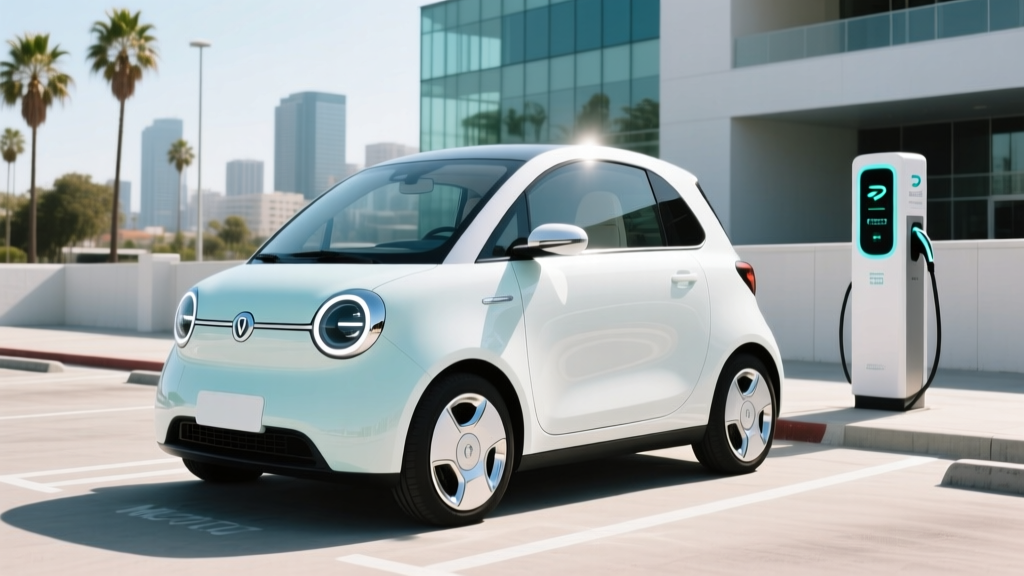
The Microlino is a neo-retro, front-opening-door microcar inspired by the 1950s BMW Isetta. Designed by Swiss entrepreneur Wim Ouboter (founder of Micro Mobility Systems, known for kick scooters), the Microlino occupies a unique vehicle class in Europe called L7e — a heavy quadricycle. This classification means it is not a full passenger car under European or US safety regulations.
The production Microlino (sometimes called Microlino 2.0 to distinguish it from early prototypes) features:
- A single electric motor producing approximately 12.5 kW (17 hp) continuous, with peak output around 19 kW (26 hp)
- A unibody steel and aluminum chassis — a significant upgrade from the early prototype's tube frame
- A single front-hinged door that opens the entire front face of the car
- Seating for two adults in a tandem-ish bench arrangement
- A top speed electronically limited to 90 km/h (56 mph)
Manufacturing takes place at a facility in Turin, Italy, under a partnership with Cecomp. Since deliveries began in late 2022, Micro Mobility has produced over 30,000 units for European markets including Switzerland, Germany, Italy, France, and Spain.
Range, Battery, and Charging Specs
The Microlino offers three battery options. Note that all range figures below are WLTP (the European standard), which tends to be 10–15% more optimistic than the US EPA cycle.
| Specification | Microlino 6 kWh | Microlino 10.5 kWh | Microlino 14 kWh |
|---|---|---|---|
| Battery Capacity (usable) | 6.0 kWh | 10.5 kWh | 14.0 kWh |
| Chemistry | NMC (Lithium-ion) | NMC (Lithium-ion) | NMC (Lithium-ion) |
| WLTP Range | 95 km (59 mi) | 177 km (110 mi) | 230 km (143 mi) |
| Est. EPA-Equivalent Range | ~50 mi | ~94 mi | ~120 mi |
| Onboard Charger (AC) | ~3.5 kW | ~3.5 kW | ~3.5 kW |
| 0–100% Charge Time (AC) | ~2 hours | ~3.5 hours | ~4 hours |
| DC Fast Charging | Not available | Not available | Not available |
Real-world range caveat: At the Microlino's typical city-driving speeds of 30–50 km/h (20–30 mph), you can expect range close to WLTP figures. However, sustained driving at its 90 km/h (56 mph) top speed, cold-weather operation below 40°F, or hilly terrain will reduce range by 20–35%. With the 6 kWh battery in winter conditions, expect as little as 30–35 miles of real range — adequate for a short urban commute but nothing more.
The Microlino charges exclusively via AC using a standard European Type 2 cable (or household Schuko plug with the included adapter). There is no DC fast charging capability on any trim. For a vehicle in this class, that's expected — the small battery fills quickly enough on AC that fast charging isn't strictly necessary. A full charge from empty takes 2–4 hours depending on battery size, which works well for overnight home charging.
How the Microlino Compares to Gas Cars and Other EVs
Since the Microlino isn't sold in the US, the more useful question for American buyers is: what would I be giving up by choosing a Microlino-sized vehicle versus a conventional EV or gas car available here?
| Metric | Microlino 14 kWh (EU Only) | Nissan LEAF SV (US) | Chevrolet Equinox EV 2LT (US) | Honda Civic (Gas) (US Baseline) |
|---|---|---|---|---|
| Purchase Price (MSRP) | ~$27,000* | $29,135 | $34,900 | $25,350 |
| Federal Tax Credit (§30D) | N/A (not US-spec) | Up to $3,750† | Up to $7,500† | N/A |
| Effective Price After Credit | ~$27,000 | ~$25,385 | ~$27,400 | $25,350 |
| EPA Range / MPG | ~120 mi (est.) | 149 mi | 319 mi | 35 MPG combined |
| Annual Fuel/Energy Cost | ~$340‡ | ~$560‡ | ~$580‡ | ~$1,500§ |
| 5-Year Fuel/Energy Cost | ~$1,700 | ~$2,800 | ~$2,900 | ~$7,500 |
| 5-Year Total (Purchase + Energy) | ~$28,700 | ~$28,185 | ~$30,300 | ~$32,850 |
| Top Speed | 56 mph | 95 mph | 115 mph | 137 mph |
| Safety Crash Rating | Not NHTSA-rated | NHTSA 5-star | NHTSA 5-star | NHTSA 5-star |
*Converted from €24,900 at approximate exchange rate; does not include import costs.
† Per IRS §30D rules as of 2026. Eligibility depends on buyer income, MSRP caps, and battery sourcing. Confirm at point of sale.
‡ Based on US average electricity rate of $0.17/kWh and 12,000 mi/yr.
§ Based on $3.40/gal regular and 35 MPG combined.
The critical takeaway: a US-available EV like the Nissan LEAF or Chevrolet Equinox EV delivers more range, full highway capability, NHTSA crash certification, and a similar or lower effective price after tax credits. The Microlino's charm and compact footprint come at the cost of versatility and regulatory compliance in the US market.
Why the Microlino Isn't Sold in the United States
This is the question most US searchers are actually trying to answer. The Microlino is classified as an L7e heavy quadricycle under European regulations. This category has different — and significantly less stringent — crash safety, airbag, and structural requirements than full passenger vehicles (M1 class).
In the United States, the NHTSA does not have an equivalent "quadricycle" category for vehicles of this weight and speed. To sell the Microlino here, Micro Mobility would need to either:
- Homologate it as a full passenger vehicle — requiring crash testing to FMVSS standards, airbag systems, reinforced crash structures, and other modifications that would substantially increase weight and cost, likely defeating the vehicle's purpose.
- Classify it as a Low-Speed Vehicle (LSV) / Neighborhood Electric Vehicle (NEV) — which limits top speed to 25 mph and restricts road usage to streets with speed limits of 35 mph or below (varies by state). The Microlino's 56 mph top speed exceeds LSV limits, so it would need to be electronically governed down, and even then it would lack the safety equipment expected in this price range.
As of early 2026, Micro Mobility has not announced a US market entry plan. CEO Wim Ouboter has stated in interviews that US homologation is "under evaluation" but remains a complex regulatory and business-case challenge. The company is prioritizing European expansion and a potential Microlino Cargo variant.
Real-World Ownership Considerations
If you're in Europe — or contemplating importing a Microlino (which is generally not practical for road use in the US) — here are the ownership realities to weigh:
Home Charging
The Microlino's small battery is its biggest practical advantage for charging. Even on a standard household outlet (Schuko in Europe, equivalent to a US 120V Level 1), a full charge takes roughly 4 hours for the 14 kWh battery. You do not need a dedicated Level 2 home charger, which eliminates the $500–$2,000 installation cost that US EV buyers typically face. Simply plug into a standard outlet in your garage or parking space.
Climate Limitations
The Microlino uses an electric cabin heater rather than a heat pump (common in larger EVs). In cold weather below freezing, expect:
- 20–35% range reduction from battery chemistry limitations
- Additional energy draw from cabin heating, further cutting range
- The 6 kWh battery variant becomes impractical for commutes over 15 miles in winter
Driving Patterns That Work
The Microlino excels as a dedicated city runabout: grocery trips, school drop-offs, short commutes on surface streets. It does not work for:
- Highway driving (56 mph top speed is unsafe and illegal on most US interstates)
- Carrying more than one passenger
- Cargo beyond a few shopping bags (trunk space is roughly 230 liters / 8 cu ft)
- Road trips or any journey exceeding ~80 miles one-way
Insurance and Maintenance
European insurance costs for the Microlino are generally low due to its low speed and limited power. Maintenance is minimal — no oil changes, no transmission fluid, and brake wear is reduced by regenerative braking. The primary long-term cost concern is battery replacement, though Micro Mobility provides a standard battery warranty (typically 2 years with options to extend, which is shorter than the 8-year/100,000-mile warranties standard on US-market EVs).
Common Misconceptions About the Microlino
| Myth | Fact |
|---|---|
| "I can import a Microlino and drive it in the US." | Importing is technically possible for display or off-road use, but registering it for road use requires meeting FMVSS standards or LSV/NEV rules, neither of which the Microlino satisfies in its current configuration. |
| "It's basically a BMW Isetta." | While aesthetically inspired by the Isetta, the Microlino has a completely modern EV powertrain, a steel/aluminum unibody, and modern electronics. It shares no mechanical components with the 1950s Isetta. |
| "The range is 143 miles, so I can road-trip it." | 143 miles is the WLTP figure for the 14 kWh battery. Real-world highway-speed or cold-weather range drops to ~95–105 miles. With no DC fast charging, mid-trip recharging means hours of waiting. |
| "It qualifies for the $7,500 US federal EV tax credit." | The Microlino is not sold in the US and does not appear on the IRS list of eligible clean vehicles. Even if imported, it would not meet §30D battery sourcing and assembly requirements. |
| "It's safer than a golf cart." | While the Microlino has a proper unibody structure (unlike most golf carts), it has not been crash-tested by NHTSA, IIHS, or Euro NCAP. Its small size and low mass are inherent disadvantages in any collision with a full-size vehicle. |
Decision Framework: Should You Wait for the Microlino or Buy Now?
If you're a US-based buyer looking for an ultra-compact EV commuter, here's how to decide:
Choose a US-available compact EV now if:
- You need highway-capable transportation (speeds above 55 mph)
- You want NHTSA crash-test ratings and modern ADAS features (AEB, lane-keeping, blind-spot monitoring)
- You want to claim the federal §30D tax credit (up to $7,500 depending on income, MSRP, and sourcing — verify at irs.gov)
- You need more than 8 cubic feet of cargo space
- You drive in cold climates where range loss matters
- You want a vehicle with an established dealer and service network
Follow the Microlino story if:
- You live in Europe (especially Switzerland, Germany, or Italy) where the L7e class is fully legal
- Your commute is under 30 miles round-trip on surface streets
- You already have a primary vehicle and want a dedicated city runabout
- You value compact size and parking ease above all else
- You can charge at home from a standard outlet
Consider these US-available alternatives with a similar urban-commuter spirit:
- Chevrolet Equinox EV — 319 mi range, ~$27,400 after credit, full highway capability, NHTSA 5-star
- Nissan LEAF SV — 149 mi range, ~$25,385 after credit, proven platform, widely available
- Used BMW i3 — 153 mi range (2019+ models), often under $20,000, uniquely compact with a carbon-fiber chassis
- Hyundai Kona Electric — 261 mi range, ~$32,975 MSRP, compact crossover footprint
Frequently Asked Questions
How much does the Microlino electric bubble car cost?
In Europe, the Microlino starts at approximately €19,900 (~$21,500 USD) for the 6 kWh base model and goes up to €24,900 (~$27,000 USD) for the 14 kWh version with higher trim. It is not available for purchase in the United States.
Can I legally drive a Microlino in the US?
No, not on public roads. The Microlino does not meet US FMVSS safety standards for full passenger vehicles, and its 56 mph top speed exceeds the 25 mph limit for Neighborhood Electric Vehicles (NEVs). Some individuals have imported them as show pieces or for private-property use, but street registration is not currently feasible.
What is the Microlino's real-world range?
With the 14 kWh battery, the WLTP rating is 230 km (143 miles). In real-world city driving at moderate temperatures, expect roughly 115–130 miles. At sustained highway speeds or in cold weather (below 40°F), expect 90–105 miles. The 6 kWh variant delivers roughly 40–50 real-world miles.
Does the Microlino have fast charging?
No. The Microlino charges exclusively via AC at approximately 3.5 kW. There is no DC fast charging port. A full charge takes 2–4 hours depending on battery size.
Will Micro Mobility bring the Microlino to the US?
As of 2026, there is no confirmed US launch date or homologation plan. Micro Mobility has expressed interest in evaluating the US market but faces significant regulatory hurdles. Follow Micro Mobility's official site for announcements.
What's the best US alternative to the Microlino?
For a compact, affordable EV commuter available in the US, the Nissan LEAF (149 mi range, ~$25,385 after credit) and Hyundai Kona Electric (261 mi range) are strong options. For a truly compact footprint closer to the Microlino's spirit, a used BMW i3 offers unique urban agility with 153 miles of range in 2019+ models.