Quick Answer: Should You Buy a Micro EV?
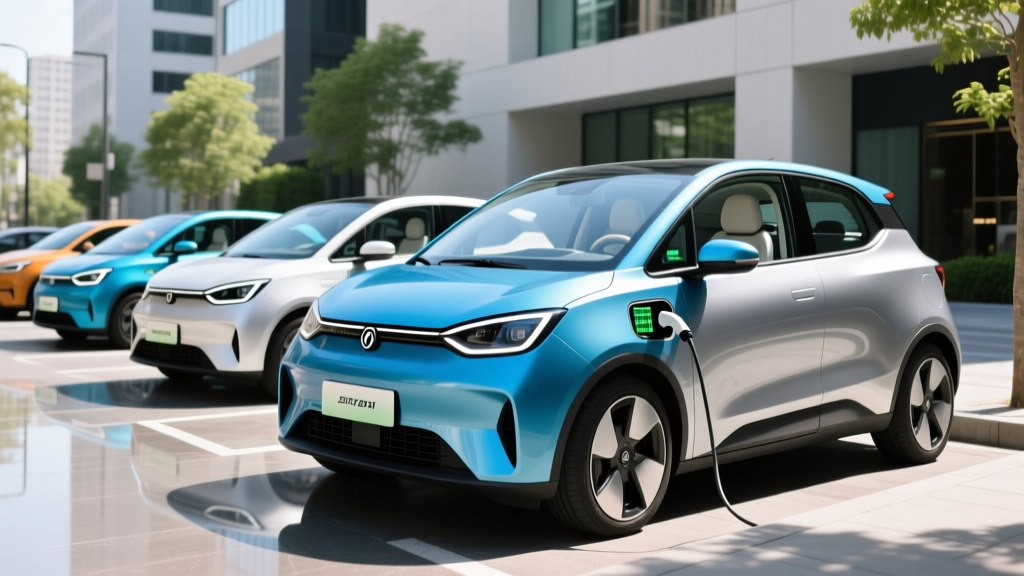
Micro EV cars are small, low-speed or highway-capable electric vehicles with batteries typically under 30 kWh and ranges of 50–150 miles. They cost between $10,000 and $35,000 before incentives, making them the cheapest way into EV ownership. They work best for urban commuters with home charging who drive under 40 miles daily. They are not practical for frequent highway trips, cold-climate drivers without garage parking, or households that need one car to do everything. If your commute is short, you can charge at home, and you want to eliminate fuel costs, a micro EV can pay for itself in fuel savings within 3–5 years compared to a gas subcompact.
What Exactly Qualifies as a Micro EV Car?
The term "micro EV" covers a broad spectrum in 2026. At one end, you have Neighborhood Electric Vehicles (NEVs) — federally limited to 25 mph, with minimal crash protection, sold by brands like GEM and Arcimoto (though Arcimoto ceased production in 2023). At the other end, you have highway-capable micro EVs — fully crash-tested, airbag-equipped vehicles that happen to be small and light. This guide focuses on the latter, because NEVs are a niche category with severe practical limitations.
Highway-capable micro EVs currently available or arriving in the US market include:
- MINI Cooper SE (2025–2026 refresh) — ~114-mile EPA range, 32.6 kWh battery, starting ~$32,000
- Fiat 500e — ~149-mile EPA range, 42 kWh battery, starting ~$34,095
- Nissan LEAF (S trim) — ~149-mile EPA range, 40 kWh battery, starting ~$29,135 (one of the cheapest new EVs in the US)
- Chevrolet Spark EV (used market only) — 82-mile range, discontinued but widely available under $8,000 used
What unites these vehicles is their footprint: shorter wheelbases, lighter curb weights (2,600–3,400 lbs), and smaller battery packs that keep MSRP down. The trade-off is range and charging speed — topics we'll cover with hard numbers below.
Micro EV Cars vs. Gas Subcompacts: The Real Cost Comparison
The most common question first-time micro EV buyers ask is whether the savings over a gas car justify the purchase. Let's run the numbers comparing a 2026 Nissan LEAF S (~$29,135 MSRP) against a similarly priced gas subcompact like the 2026 Hyundai Venue (~$22,000 MSRP). Both seat four, both fit in tight city parking spots.
| Category | Nissan LEAF S (EV) | Hyundai Venue (Gas) |
|---|---|---|
| Base MSRP | $29,135 | $22,000 |
| Federal Tax Credit (§30D, if eligible) | −$3,750 (LEAF qualifies for partial credit based on battery sourcing) | $0 |
| Effective Purchase Price | ~$25,385 | $22,000 |
| Fuel/Energy (5 yrs, 12K mi/yr, $0.14/kWh avg, $3.40/gal avg) | $4,200 | $7,285 (at 31 MPG combined) |
| Maintenance (5 yrs) | ~$1,200 (no oil changes, fewer brake replacements due to regen) | ~$3,500 |
| Insurance (5 yrs avg) | ~$7,500 | ~$6,800 |
| Depreciation (estimated 5-yr) | ~$12,000 | ~$10,500 |
| 5-Year Total Cost | ~$50,285 | ~$50,085 |
The totals are nearly identical over five years — but the EV's cost distribution is different. You pay slightly more upfront (even after the credit) and save substantially on fuel and maintenance. By year six and beyond, the LEAF pulls ahead as fuel savings compound and the gas car needs more significant repairs. Data sourced from fueleconomy.gov efficiency figures and AAA maintenance cost averages.
Range, Charging, and the Reality of Small Batteries
The defining characteristic of micro EV cars is the small battery. That creates both advantages (lighter weight, lower cost, faster Level 2 charging) and limitations (shorter range, slower DC fast charging). Here's what the numbers actually look like:
| Model | Battery (kWh usable) | EPA Range | Real-World Highway Range* | Peak DC Fast Charge | 10–80% DCFC Time | Level 2 Rate (kW) |
|---|---|---|---|---|---|---|
| MINI Cooper SE | 32.6 | 114 mi | ~85–95 mi | 95 kW | ~28 min | 11 kW |
| Fiat 500e | 42 | 149 mi | ~110–125 mi | 85 kW | ~35 min | 11 kW |
| Nissan LEAF S | 40 | 149 mi | ~110–130 mi | 50 kW (CHAdeMO) | ~60 min | 6.6 kW |
*Real-world highway range assumes 70 mph sustained speeds, moderate climate. Subtract an additional 20–30% in freezing temperatures (below 32°F) due to battery heating demands and reduced chemical efficiency.
The charging-curve reality: Micro EVs with smaller batteries hit their peak charge rate briefly. A MINI Cooper SE peaks at 95 kW for roughly the 10–30% State of Charge (SoC) window, then tapers progressively. By 60% SoC, you're looking at 50–60 kW. By 80%, it drops below 25 kW. This means the advertised "10–80% in 28 minutes" is a best-case scenario — expect 32–35 minutes in practice at a functioning 150+ kW charger.
The CHAdeMO problem: The Nissan LEAF remains the last holdout using the CHAdeMO DC fast-charging connector in the US. Nearly all new public DC fast-charging infrastructure is being built with NACS (Tesla's standard, now adopted by Ford, GM, Hyundai, and others) or CCS1. CHAdeMO chargers are becoming scarce outside of Nissan dealer networks and older Electrify America stations. This is a real ownership limitation for road-trip charging, even if your daily driving is all local.
Tax Credits, Incentives, and What You'll Actually Pay
Federal EV tax credit rules under IRS §30D are complex and change frequently. As of 2026, here's what applies to micro EV buyers:
§30D Federal Tax Credit Requirements (2026)
- Maximum credit: $7,500 ($3,750 for battery components + $3,750 for critical minerals)
- MSRP cap: $55,000 for sedans/hatchbacks (all micro EVs qualify)
- Buyer income cap: AGI ≤ $150,000 (single), ≤ $300,000 (joint), ≤ $225,000 (head of household)
- Battery sourcing: Increasing percentages of battery components and critical minerals must be sourced from the US or FTA partners — this changes annually and affects which models qualify for the full $7,500 vs. partial credit
- Point-of-sale transfer: You can transfer the credit to the dealer at purchase, reducing your out-of-pocket cost immediately (dealer handles the IRS paperwork)
- Assembly requirement: Final assembly must occur in North America
In practice, most micro EVs in 2026 qualify for a partial credit of $3,750 because their battery sourcing doesn't yet meet the full critical-minerals threshold. The Nissan LEAF (assembled in Tennessee) typically qualifies for at least $3,750. The Fiat 500e and MINI Cooper SE (both assembled outside North America — Italy and the UK/Netherlands respectively) do not qualify for the federal credit unless assembly locations change. Always verify current eligibility on the IRS website before purchasing.
Some states offer additional rebates — California's CVRP, for instance, provides up to $7,000 for income-qualified buyers — but these vary by jurisdiction and have their own application processes. Check your state's energy office for current programs.
Common Micro EV Misconceptions — Addressed with Facts
| Myth | Fact |
|---|---|
| "Micro EVs are unsafe because they're small." | Highway-capable micro EVs (LEAF, 500e, MINI SE) must meet the same NHTSA crash standards as larger vehicles. The LEAF earned IIHS Top Safety Pick ratings in prior model years. NEVs, however, offer minimal crash protection — avoid them for any road above 35 mph. |
| "The battery will need replacing in 5 years." | Modern lithium-ion EV batteries degrade slowly. Nissan warranties the LEAF battery for 8 years/100,000 miles against dropping below ~66% capacity. Real-world data from Recurrent shows most EV batteries retain 85–92% capacity after 5 years. Small batteries do cycle more frequently, but thermal management systems mitigate this. |
| "I can charge on any standard outlet quickly." | Level 1 charging (120V household outlet) adds roughly 3–5 miles of range per hour for a micro EV. A fully depleted 40 kWh LEAF battery takes 20–24 hours on Level 1. For daily use, this works if you drive under 30 miles. For anything more, a Level 2 home charger (240V, $500–$1,500 installed) is essential. |
| "Micro EVs cost the same to insure as gas cars." | EV insurance premiums run 10–25% higher on average due to expensive battery replacement costs and specialized repair requirements. Budget $100–$150/month for a LEAF or MINI SE depending on your profile. |
| "150 miles of range is enough for anything." | 150 EPA miles translates to ~110–125 real-world highway miles, and potentially ~85–100 miles in freezing weather with cabin heat. For daily commuting under 40 miles round-trip, it's ample. For a 200-mile weekend trip, you'll need to plan a DC fast-charge stop. |
Who Should (and Shouldn't) Buy a Micro EV?
Decision Framework: Is a Micro EV Right for You?
Choose a micro EV if:
- Your daily round-trip commute is under 50 miles
- You have access to Level 2 home charging (garage or dedicated driveway outlet)
- You live in a mild-to-moderate climate, OR you have a garage to mitigate cold-weather range loss
- This is a second vehicle in a multi-car household, or you have access to a car-share/rental for long trips
- You prioritize low operating costs and a low purchase price over range and cargo space
- You drive primarily in urban or suburban environments under 65 mph
Skip the micro EV (consider a larger EV or PHEV instead) if:
- You regularly drive more than 80 miles one-way without reliable mid-route charging
- You live in a region with harsh winters and no garage parking (range can drop 30–40% below 20°F)
- You rely on apartment/curbside parking with no charging access — public Level 2 charging is too slow and expensive for daily micro EV use
- You need to carry more than two passengers and cargo regularly
- You take frequent road trips over 200 miles and don't want to plan charging stops
- You live in a charging desert (rural areas with sparse DC fast-charging infrastructure)
First-Time Micro EV Buyer Checklist
If you've decided a micro EV fits your life, here's what to do before signing paperwork:
- Audit your daily driving: Track your mileage for two weeks. If 90% of your days are under 50 miles, a micro EV covers you comfortably.
- Confirm home charging feasibility: Can you install a 240V Level 2 charger? A licensed electrician will assess your panel capacity. Expect $800–$2,000 for installation if no panel upgrade is needed; $2,500–$5,000+ if you need a 200-amp service upgrade.
- Check your electrical panel: Most homes need at least a 50-amp circuit for a 40-amp Level 2 charger. Older homes with 100-amp panels may require an upgrade.
- Verify tax credit eligibility: Check IRS §30D rules for the specific model year and your income. Consult a tax professional if your situation is complex.
- Test-charge before you buy: Download PlugShare or ChargePoint apps, find your nearest DC fast chargers, and visit them. See which connectors are available. If CHAdeMO chargers are scarce near you, the LEAF becomes less practical for trips.
- Get insurance quotes first: EV insurance varies wildly by carrier. Get quotes from GEICO, Progressive, State Farm, and EV-specialty insurers before committing.
- Negotiate with the dealer: Ask about the point-of-sale credit transfer. Some dealers apply it at purchase; others require you to claim it on your tax return. Get the agreement in writing.
Frequently Asked Questions
Are micro EV cars street-legal on highways?
Highway-capable micro EVs like the Nissan LEAF, Fiat 500e, and MINI Cooper SE are fully street-legal on all US roads including interstates. They meet all FMVSS safety standards. However, Neighborhood Electric Vehicles (NEVs) like the GEM e2 are federally limited to roads with speed limits of 35 mph or less (some states allow 45 mph). Know the difference before you buy.
How long do micro EV batteries last?
Most manufacturers warranty EV batteries for 8 years or 100,000 miles against dropping below 60–70% of original capacity. Real-world data suggests modern lithium-ion packs retain 85–92% capacity after 5 years of normal use. Smaller batteries cycle more often (a 40 kWh battery used for a 30-mile daily commute cycles roughly once every 3–4 days vs. a 75 kWh battery cycling once a week), which can marginally accelerate degradation — but thermal management systems largely mitigate this. Expect 10–15 years of usable life before capacity drops below 70%.
Can I use a micro EV as my only car?
Yes, if your lifestyle fits the constraints. If you drive under 50 miles daily, can charge at home, rarely take trips over 150 miles, and don't need to haul large cargo, a micro EV works as a sole vehicle. For households that take 2–3 road trips per year over 200 miles, pairing a micro EV with occasional car rentals (or a PHEV as the primary vehicle) is often more practical and economical than buying a long-range EV you'll never fully utilize.
What's the cheapest micro EV I can buy new in 2026?
The Nissan LEAF S starts at approximately $29,135 MSRP, making it one of the least expensive new EVs in the US market. With a partial $3,750 federal tax credit (if eligible), the effective price drops to ~$25,385. Used micro EVs like the Chevrolet Spark EV or first-gen LEAF can be found for $6,000–$12,000, though battery health varies and the used EV tax credit (up to $4,000 under §25E) has its own eligibility requirements.
Do micro EVs charge faster than larger EVs?
On Level 2 (240V home charging), yes — a smaller battery fills up faster. A 32.6 kWh MINI Cooper SE charges from 0–100% in about 3.5 hours on an 11 kW Level 2 charger. A 75 kWh Tesla Model Y takes 7–8 hours at the same rate. However, on DC fast charging, micro EVs generally charge slower because their peak charge rates are lower (50–95 kW vs. 170–250 kW for larger EVs). The smaller battery also means you'll need to DC-charge more often on road trips.