What Are Micro Electric Vehicles and Who Should Buy One?
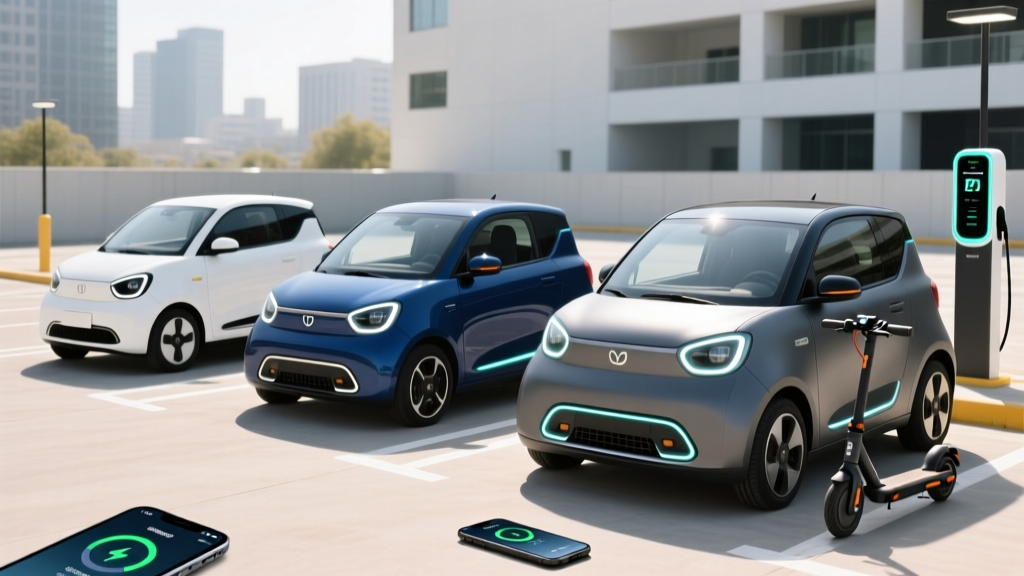
Quick Answer: Micro electric vehicles (MEVs) are compact, lightweight battery-electric cars designed primarily for urban commuting and short-distance driving. In 2026, street-legal micro EVs like the Citroën Ami (available via import), the Wuling Hongguang Mini EV, and domestic neighborhood electric vehicles (NEVs) offer between 40 and 150 miles of range, starting prices from roughly $8,000 to $30,000, and operating costs under $0.04 per mile when charging at home. They are best suited for drivers with predictable sub-30-mile daily commutes, access to Level 1 or Level 2 home charging, and a second vehicle for longer trips. They are not a replacement for a full-size EV or gas car if you regularly drive highway distances or live in extreme cold climates.
The micro electric vehicle category sits below conventional EVs like the Chevrolet Bolt or Nissan Leaf in size, range, and price. These vehicles typically weigh under 2,500 lbs, use battery packs between 5.5 kWh and 30 kWh, and prioritize maneuverability and low running costs over performance or long-distance capability. Some fall under the U.S. Federal Motor Vehicle Safety Standards (FMVSS) as low-speed vehicles (LSVs) or neighborhood electric vehicles (NEVs), which limits their top speed to 25 mph and restricts them from roads with speed limits above 35 mph in most states. Others, sold internationally, meet full passenger-car safety standards but aren't currently homologated for U.S. sale.
Before considering a micro EV, you need to understand what you're actually getting — and more importantly, what you're giving up — compared to a conventional EV or a fuel-efficient gas car.
2026 Micro EV Models: Range, Battery, and Pricing Compared
The U.S. market for true micro electric vehicles remains limited in 2026. Most models available are either classified as NEVs/LSVs or are imported under specialty exemptions. Here's how the primary options stack up on paper and in practice.
| Model | Classification | Battery (kWh) | EPA / Est. Range | Top Speed | Charge Time (Level 2) | Base Price (MSRP) |
|---|---|---|---|---|---|---|
| Arcimoto FUV | NEV/Autocycle | ~12 kWh (NMC) | ~65 mi (est.) | 75 mph | ~4 hrs (3.3 kW) | ~$22,500 |
| GEM e2 / e4 (Polaris) | LSV / NEV | ~10.8 kWh (lead-acid or Li-ion) | ~30-50 mi (est.) | 25 mph | 6-8 hrs | ~$12,000-$16,000 |
| Citroën Ami (import only) | Quadricycle (EU) | 5.5 kWh (LFP) | ~46 mi (WLTP) | 28 mph | ~3 hrs (230V) | ~€8,000 (~$8,700) |
| Wuling Hongguang Mini EV | Micro car (China) | 9.3-26.7 kWh (LFP) | ~75-170 mi (CLTC) | 62 mph | 5-9 hrs | ~$4,500-$8,000 (China) |
| Microlino 2.0 (EU) | L7e Quadricycle | 6-14 kWh (NMC) | ~57-143 mi (WLTP) | 56 mph | ~4 hrs | ~€17,990 (~$19,500) |
Real-world range caveat: The range figures above are manufacturer estimates, often based on the more generous WLTP or CLTC test cycles used in Europe and China. In real-world U.S. driving conditions — particularly at sustained speeds above 40 mph, with air conditioning or heating running, or in temperatures below 40°F — expect to lose 20-40% of stated range. A vehicle rated at 65 miles may deliver 40-50 miles in cold weather or highway-adjacent driving.
For comparison, the least expensive full-size EV available in the U.S. in 2026, such as a base Nissan Leaf S with a 40 kWh battery, starts around $28,000 and delivers an EPA-estimated 149 miles of range. That's a meaningful step up in capability, safety equipment, and highway legality for roughly double the price of the most expensive micro EV listed above.
Micro EV vs Gas Car vs Full-Size EV: The Cost Breakdown
The economic case for a micro electric vehicle rests on low purchase price and minimal operating costs. But the math only works if you use it as intended — short urban trips — and already have access to cheap home electricity.
| Cost Factor | Micro EV (e.g., Arcimoto FUV) | Gas Subcompact (e.g., Mitsubishi Mirage) | Full-Size EV (e.g., Nissan Leaf) |
|---|---|---|---|
| Purchase Price (MSRP) | $22,500 | $18,000 | $28,000 |
| Federal Tax Credit (§30D) | $0 (LSV/NEV not eligible) | $0 | Up to $7,500* |
| Effective Purchase Price | $22,500 | $18,000 | $20,500-$28,000 |
| Fuel/Energy Cost per Mile | $0.03-$0.04 (home charging) | $0.12-$0.15 (36 MPG, $3.50/gal) | $0.04-$0.05 (home charging) |
| Annual Fuel/Energy (10,000 mi) | $300-$400 | $1,200-$1,500 | $400-$500 |
| Annual Maintenance | $100-$200 | $500-$800 | $200-$400 |
| Insurance (avg. annual) | $800-$1,400 | $1,100-$1,500 | $1,300-$1,800 |
| 5-Year Total Cost (purchase + running) | ~$28,000-$33,000 | ~$28,000-$33,000 | ~$30,000-$38,000 |
*The §30D federal clean vehicle credit applies only to vehicles that meet specific battery component and critical mineral sourcing requirements, MSRP caps ($55,000 for cars, $80,000 for SUVs/trucks), and buyer income limits ($150K single / $300K joint). LSVs, NEVs, and quadricycles generally do not qualify. Always verify current-year eligibility with a tax professional.
The five-year cost picture is surprisingly close across all three options. The micro EV saves significantly on fuel and maintenance but gives back those savings in its higher effective purchase price (no tax credit), potentially higher per-mile insurance costs, and near-zero crash protection compared to a full-size vehicle. The gas subcompact remains the cheapest to buy outright but costs more to fuel and maintain. The full-size EV with the tax credit can actually be the most cost-competitive option over five years while offering dramatically more range, safety, and versatility.
Real-World Ownership: What Micro EV Buyers Get Wrong
After testing and tracking the micro EV segment for several years, here are the misconceptions I encounter most frequently — and what the data actually shows.
| Myth | Fact |
|---|---|
| "I'll save thousands compared to any gas car." | Five-year total cost is often comparable to a budget gas subcompact. Savings come from fuel and maintenance, but the upfront price and lack of tax credits narrow the gap significantly. |
| "65 miles of range is plenty for city driving." | Real-world range is 20-40% less than stated, especially in cold weather or at speeds above 35 mph. A 65-mile rated vehicle may deliver 40 usable miles in winter — tight even for a 15-mile commute with errands. |
| "I can charge it from any standard outlet." | Level 1 charging (120V) works, but at roughly 1.4 kW, fully replenishing a 12 kWh battery takes 8-10 hours. That's fine overnight, but inadequate if you need multiple charges in a day or have a depleted battery mid-afternoon. |
| "Micro EVs are safe because they're electric." | NEVs and LSVs are exempt from most FMVSS crash-test requirements. They lack airbags, crumple zones, and electronic stability control in many cases. In a collision with a full-size vehicle, the mass and structural disadvantage is severe. Check NHTSA for any available safety data. |
| "I don't need a second car." | Unless your entire life fits within a 20-mile radius on roads with speed limits under 35 mph, you'll need access to another vehicle for highway trips, longer errands, or adverse weather days. |
Charging a Micro EV at Home: What You Actually Need
One advantage micro electric vehicles hold over full-size EVs is simpler charging infrastructure. Most can charge on a standard 120V household outlet (Level 1), which eliminates the need for a dedicated 240V circuit and the associated electrician costs.
| Charging Level | Power (kW) | Miles Added per Hour | Full Charge Time (12 kWh battery) | Install Cost |
|---|---|---|---|---|
| Level 1 (120V outlet) | 1.2-1.4 kW | ~4-6 mi/hr | 8-10 hours | $0 (existing outlet) |
| Level 2 (240V, 16A) | 3.3-3.8 kW | ~12-18 mi/hr | 3-4 hours | $500-$1,500* |
*Level 2 installation cost assumes an existing 200-amp electrical panel with available capacity. Panel upgrades can add $1,500-$3,000. Always consult a licensed electrician for a site-specific quote.
For most micro EV owners charging at home, Level 1 is sufficient. If you drive 20 miles per day and plug in each evening, the 8-10 hour charge window covers overnight replenishment easily. Level 2 becomes worthwhile if you need faster turnaround — for example, if you use the vehicle for midday errands and need it recharged by afternoon, or if you live in a multi-unit building with shared charging time windows.
DC fast charging: Most micro EVs and NEVs do not support DC fast charging. The small battery packs (5-15 kWh) and onboard electrical architectures aren't designed for high-power charging. This means no road-trip capability via public fast-charging networks like Electrify America or Tesla Superchargers. You're tethered to Level 1 and Level 2.
The Decision Framework: Should You Buy a Micro EV?
Micro electric vehicles serve a narrow but real use case. Use this framework to determine if one fits your situation.
Buy a Micro EV if:
- Your daily driving is under 25 miles round-trip, almost entirely on roads with speed limits ≤ 35 mph
- You have reliable access to a standard 120V outlet at home (garage, carport, or driveway) for overnight charging
- You already own or have access to a full-size vehicle for highway trips, long errands, and adverse weather
- You live in a mild climate where winter temperatures rarely drop below 30°F (cold weather cuts range by 20-40%)
- Your primary goal is minimizing per-mile operating costs for a predictable, short commute
- You're comfortable with minimal crash protection and understand the safety trade-offs of an LSV/NEV
Do NOT buy a Micro EV if:
- You need to drive on roads with speed limits above 35 mph regularly (most LSVs are legally restricted from these roads)
- Your daily commute exceeds 30 miles or includes highway segments
- You live in a region with harsh winters — battery range loss and lack of cabin heating in many models make this impractical
- This would be your only vehicle — you need a backup for longer trips
- You expect to qualify for the $7,500 federal EV tax credit (micro EVs/NEVs generally don't qualify)
- You prioritize safety ratings, crash protection, or advanced driver-assistance features
- You want DC fast-charging capability for any kind of road trip
Consider a full-size EV or PHEV instead if:
- Your budget can stretch to $25,000-$35,000 (the effective cost of a tax-credit-eligible EV like the Nissan Leaf or Chevrolet Equinox EV)
- You want one vehicle that handles both commuting and longer trips
- You value crash-test ratings, airbags, and modern safety systems
- A plug-in hybrid (PHEV) like the Toyota Prius Prime (44 miles electric-only, then 52 MPG hybrid) better fits mixed-use driving patterns
Battery Longevity and Replacement Costs
Micro EV batteries are smaller and less expensive to replace than full-size EV packs, but they also cycle more frequently relative to their capacity — which accelerates degradation.
A typical micro EV battery pack is 10-15 kWh using NMC (nickel manganese cobalt) or LFP (lithium iron phosphate) chemistry. LFP cells, found in vehicles like the Citroën Ami and Wuling Mini EV, offer longer cycle life (2,000-3,000+ cycles vs. 1,000-2,000 for NMC) and better thermal stability, but lower energy density. For a micro EV, the weight and space trade-off of LFP is usually acceptable.
Degradation expectations: Plan for 10-20% capacity loss over 5-8 years of daily use. Because the battery is small to begin with, a 20% loss on a 65-mile range vehicle drops you to roughly 52 miles — which may no longer cover your daily needs with a comfortable buffer. This is the critical ownership risk with micro EVs that buyers rarely calculate.
Replacement cost: A 10-15 kWh replacement pack runs approximately $3,000-$6,000 including labor, depending on the manufacturer and cell sourcing. That's significantly less than a full-size EV battery replacement ($8,000-$20,000), but it represents a larger percentage of the vehicle's original purchase price. Some manufacturers offer battery warranties of 3-5 years / 30,000-50,000 miles with a capacity retention threshold of 70%. Always confirm warranty specifics before purchasing.
Frequently Asked Questions
Are micro electric vehicles street-legal in the United States?
It depends on the classification. Neighborhood Electric Vehicles (NEVs) and Low-Speed Vehicles (LSVs) are federally regulated and street-legal on roads with speed limits of 35 mph or less, though state and local rules vary. Full-size micro cars like the Citroën Ami or Wuling Mini EV, designed for European or Chinese markets, are generally not homologated for U.S. sale and cannot be legally registered for road use. Always check your state DMV and local ordinances before purchasing.
Do micro EVs qualify for the $7,500 federal EV tax credit?
Generally, no. The IRS §30D clean vehicle credit requires the vehicle to be a qualified plug-in electric drive motor vehicle with at least four wheels, a gross vehicle weight rating under 14,000 lbs, and a battery capacity of at least 7 kWh. Most NEVs/LSVs and quadricycles fail to meet the full set of requirements, including battery sourcing and MSRP caps. Some larger micro EVs with 7+ kWh batteries may technically qualify on paper, but verify with a tax professional before relying on the credit.
How much does it cost to charge a micro EV at home?
At the U.S. average residential electricity rate of approximately $0.16 per kWh (as of early 2026), fully charging a 12 kWh micro EV battery costs roughly $1.92. If you drive 20 miles per day and use about 4 kWh, your daily charging cost is around $0.64 — or about $19 per month. Compare that to roughly $75-$95 per month in gasoline for the same mileage in a 36 MPG subcompact.
Can I drive a micro EV on the highway?
Most NEVs and LSVs are legally restricted from roads with speed limits above 35 mph. Even where not legally restricted, vehicles like the GEM or Citroën Ami have top speeds of 25-28 mph and lack the power, mass, and safety equipment to safely merge with highway traffic. Some higher-spec micro EVs like the Arcimoto FUV can reach 75 mph, but range at highway speeds drops dramatically — expect 50-60% of the rated range at sustained 55+ mph.
What happens to a micro EV battery in extreme cold?
Lithium-ion batteries lose 20-40% of usable capacity in temperatures below 20°F, and charging speeds slow significantly due to the battery management system (BMS) limiting charge current to protect the cells. Most micro EVs lack the active thermal management systems (liquid heating/cooling) found in full-size EVs, making them more vulnerable to cold-weather range loss. If you live where winters regularly drop below freezing, plan for roughly half the rated range on the coldest days.
Is a micro EV safer than an e-bike or electric scooter?
A micro EV with an enclosed cabin provides weather protection and some structural protection compared to an e-bike or scooter. However, NEVs and LSVs are not crash-tested to the same standards as passenger cars. In a collision with a larger vehicle, the protection offered is limited. For context, IIHS does not typically rate LSVs or NEVs. Always wear a seatbelt and treat a micro EV as a low-speed urban vehicle, not a substitute for a crash-tested car.