When legendary investor Michael Burry—famed for his prescient short against the U.S. housing market—takes a position in Tesla, the financial press fixates on stock price. But for prospective EV buyers, Burry's thesis raises a more practical question: is the 2026 Tesla Model 3 actually worth your money as a daily driver, regardless of Wall Street sentiment? This review strips away the market noise and evaluates the Model 3 on the metrics that matter to owners: real-world range, charging speed, total cost, and livability.
2026 Tesla Model 3: At-a-Glance Specifications
| Spec | Value |
|---|---|
| EPA Range | 341 miles |
| Battery Capacity | 79 kWh usable (NMC chemistry) |
| Max DC Fast Charge | 250 kW peak |
| 10–80% DC Charge Time | ~25 minutes |
| Level 2 Home Charge Rate | 11.5 kW (~44 mi/hr) |
| 0–60 mph | 4.2 seconds |
| Horsepower | 346 hp (dual-motor AWD) |
| MPGe (Combined) | 132 MPGe (25 kWh/100mi) |
| Base MSRP | $47,740 (Long Range AWD) |
| Battery Warranty | 8 years / 120,000 miles |
The base Rear-Wheel Drive trim starts at $38,990 with an EPA-estimated 363 miles of range and a smaller 60 kWh LFP battery. The Performance variant ($54,990) drops range to 315 miles but cuts the 0–60 time to 2.9 seconds. We focus on the Long Range AWD because it represents the sweet spot for most buyers—adequate performance, maximum practicality, and strong efficiency.
Real-World Range: Beyond the EPA Sticker
EPA Estimate: 341 miles
Real-World Highway (70 mph, moderate temps): ~285–305 miles
Real-World City/Suburban: ~320–340 miles
Cold Weather (below 30°F, highway): ~240–270 miles (30% reduction typical for NMC packs)
Cold Weather with heat pump + preconditioning: ~260–290 miles
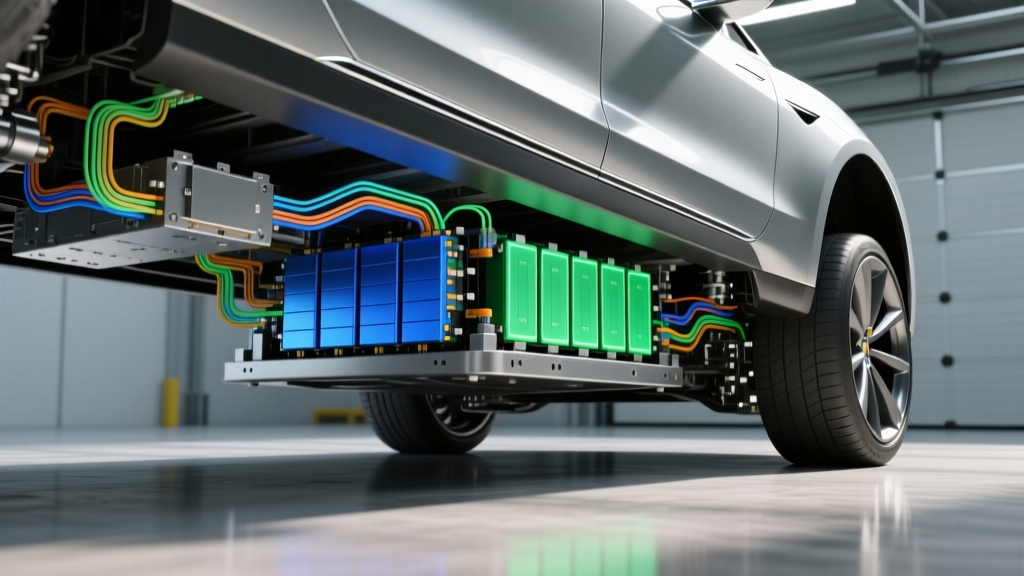
The 2026 Model 3 Long Range uses an NMC (nickel manganese cobalt) chemistry pack. NMC offers higher energy density than LFP—which is why the Long Range achieves 341 miles in a relatively compact sedan—but it is more sensitive to cold-weather capacity loss. Tesla's standard heat pump helps, but physics wins in sub-freezing temps. If you live in the upper Midwest or Northeast, budget 25–30% range reduction in winter.
The base RWD model's LFP battery, by contrast, handles cold somewhat better and can be charged to 100% daily without degradation concerns—a meaningful advantage for commuters who need every mile. However, its 363-mile EPA rating is partly a function of the lighter single-motor drivetrain and lower curb weight, not necessarily a larger battery.
According to fueleconomy.gov, the Long Range AWD achieves 132 MPGe combined (25 kWh per 100 miles). That's among the most efficient vehicles in its class, translating to roughly $0.04–$0.06 per mile on a national-average residential electricity rate of $0.16/kWh.
Charging Speed: DC Fast, Home, and the Supercharger Advantage
| Charging Level | Power (kW) | Miles Added per Hour | Typical Use Case |
|---|---|---|---|
| Level 1 (120V household) | 1.4 kW | ~5 mi/hr | Emergency / overnight trickle |
| Level 2 (240V home wall connector) | 11.5 kW | ~44 mi/hr | Daily home charging |
| DC Fast (Tesla Supercharger V3) | 250 kW peak | ~175 mi in 15 min | Road trips |
| DC Fast (Supercharger V4 / 350 kW CCS adapters) | ~200–250 kW sustained | Varies by station | Future-proofing |
Tesla's Supercharger network remains the gold standard for reliability. The Model 3 peaks at 250 kW on V3 stalls, but—as with all EVs—that peak is not sustained. The charge curve tapers significantly above 60% State of Charge (SoC). Expect the 10–80% session to take roughly 25 minutes under ideal battery preconditioning (the car heats the pack automatically when you navigate to a Supercharger). Without preconditioning—a cold-soaked pack arriving at a charger unannounced—that same session can stretch to 35–40 minutes.
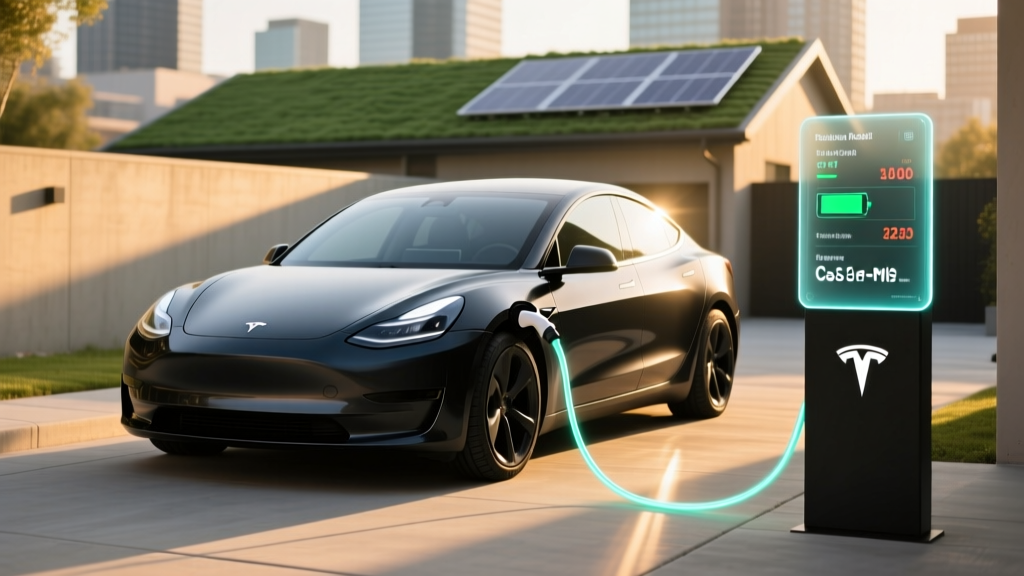
With the 2026 Model 3 now featuring the native NACS (North American Charging Standard) port, you also gain access to a growing number of non-Tesla networks adopting the connector, plus legacy CCS stations via adapter. Home charging on a Tesla Wall Connector at 48 amps delivers 11.5 kW—enough to fully replenish the Long Range's 79 kWh pack in about 7 hours, which means every morning starts with a full "tank" for anyone with a garage or dedicated parking spot.
Installation of a 240V/60A circuit typically runs $800–$2,000 depending on panel proximity and local permit costs. If your electrical panel is maxed at 100A, a panel upgrade to 200A can add $1,500–$3,000—factor this into your total purchase budget.
Performance, Efficiency, and Daily Livability
The Long Range AWD's 346 hp and dual-motor setup deliver a 4.2-second 0–60 mph time—quick enough to merge confidently onto any freeway, if not as visceral as the Performance trim's 2.9-second sprint. More importantly for daily driving, the dual-motor all-wheel-drive system provides confident traction in rain and light snow, with regenerative braking strong enough to enable one-pedal driving in most traffic scenarios.
Interior Space and Cargo
The 2026 Model 3 "Highland" refresh (introduced for the 2024 model year and carried forward) improved cabin materials and noise isolation substantially. Dimensions:
- Front legroom: 42.7 inches
- Rear legroom: 35.2 inches (tight for tall adults on long trips)
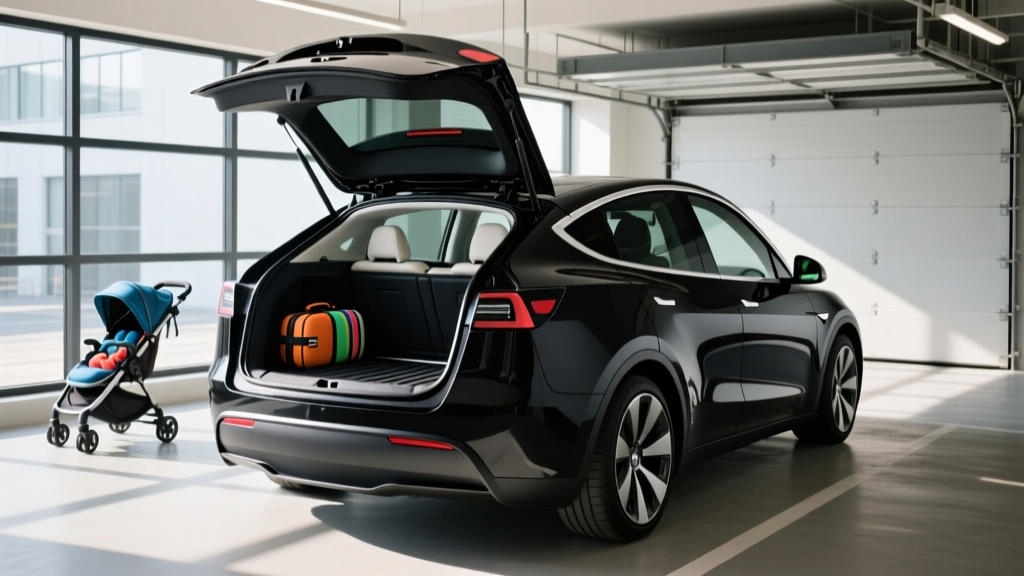
- Cargo (trunk): 21.0 cu ft
- Frunk (front trunk): 3.1 cu ft
- Total cargo: 24.1 cu ft
The rear seat is the Model 3's perennial compromise. Headroom and legroom are adequate for children or average-height adults on short trips, but anyone over 6 feet will find the cushion height and rake less comfortable than in a Model Y or Hyundai Ioniq 6. The frunk, at 3.1 cu ft, fits a charging cable and a small bag—not the generous storage some competitors offer.
Tech and Driver Assistance
The 15.4-inch center touchscreen runs Tesla's latest software, which is responsive and feature-rich but consolidates nearly all vehicle controls (including climate, mirror adjustment, and glovebox release) into the display. There is no traditional instrument cluster; speed and navigation info appear in the upper corner of the main screen. Some buyers love the minimalism; others find it distracting.
Standard Autopilot is a SAE Level 2 driver-assistance system—it handles lane centering and adaptive cruise competently but requires constant driver supervision and hands-on-wheel confirmation. Full Self-Driving (Supervised) remains an $8,000 option (or $99/month subscription) and, despite its name, is also Level 2. It can navigate on-ramps, stop signs, and some city streets, but the driver must remain fully engaged. It is not autonomous driving.
Pricing, Tax Credits, and Total Cost of Ownership
| Trim | MSRP | EPA Range | Drivetrain |
|---|---|---|---|
| Rear-Wheel Drive | $38,990 | 363 mi | Single-motor RWD |
| Long Range AWD | $47,740 | 341 mi | Dual-motor AWD |
| Performance | $54,990 | 315 mi | Dual-motor AWD |
Federal Tax Credit Eligibility (§30D)
- Maximum credit: $7,500 (if all requirements met)
- MSRP cap (sedans): $55,000 — all Model 3 trims qualify
- Buyer income cap: AGI ≤ $150,000 (single) / $300,000 (joint) / $225,000 (HoH)
- Battery sourcing: Critical minerals and battery components must meet escalating domestic-content thresholds (2026: 80% critical minerals from U.S. or FTA partners, 100% battery components manufactured/assembled in North America)
- Point-of-sale transfer: Eligible buyers can apply the credit as an immediate rebate at the dealer, reducing out-of-pocket cost
- FRT (Foreign Entity of Concern) exclusion: Vehicles with battery components from FEOC entities are disqualified
Source: IRS.gov — Clean Vehicle Credits. Eligibility varies by build date, battery sourcing, and buyer tax situation. Consult a tax professional.
As of early 2026, the Model 3 RWD and Long Range AWD have qualified for the full $7,500 credit for eligible buyers, thanks to Tesla's North American battery production and supply-chain compliance. However, the 100% battery-component sourcing threshold is stringent, and mid-year supply-chain changes can shift eligibility. Always verify the specific VIN's credit status on the DOE's fueleconomy.gov tax credit lookup tool before purchasing.
With the full credit applied at point of sale, the effective price of the RWD drops to ~$31,490 and the Long Range AWD to ~$40,240—competitive with mid-trim Toyota Camrys and Honda Accords when you factor in fuel savings.
5-Year Cost of Ownership Snapshot
Assuming 15,000 miles/year, $0.14/kWh home charging, $3.40/gallon gas for a comparable sedan at 30 MPG:
- Model 3 Long Range energy cost (5 yr): ~$5,250
- Gas sedan fuel cost (5 yr): ~$12,750
- Estimated savings: ~$7,500 over 5 years (before maintenance savings, which favor EVs further)
Tesla's battery and drive-unit warranty covers 8 years / 120,000 miles (Long Range) with a guaranteed minimum 70% capacity retention. This is industry-standard and comparable to Hyundai's 10-year/100,000-mile coverage, though Hyundai's higher year limit offers longer peace of mind for low-mileage drivers.
How the Model 3 Stacks Up Against Key Competitors
| Vehicle | EPA Range | DC Fast Charge | 0–60 mph | Starting MSRP |
|---|---|---|---|---|
| Tesla Model 3 LR AWD | 341 mi | 250 kW | 4.2s | $47,740 |
| Hyundai Ioniq 6 SEL | 361 mi | 350 kW (800V) | 5.1s | $42,750 |
| BMW i4 eDrive40 | 307 mi | 205 kW | 5.5s | $57,900 |
| Polestar 2 LRDM | 320 mi | 205 kW | 4.3s | $51,300 |
The Ioniq 6's 800V architecture gives it a charging-speed advantage (10–80% in ~18 minutes at a 350 kW station), but Hyundai's public-charging reliability and dealer network are less proven than Tesla's Supercharger ecosystem. The BMW i4 and Polestar 2 offer more traditional interiors and build quality but at a significant price premium with less range.
Pros, Cons, and Verdict
- Class-leading efficiency (25 kWh/100mi)
- Supercharger network reliability
- Strong OTA software updates add features over time
- Competitive pricing after $7,500 credit
- Excellent regenerative braking / one-pedal driving
- High resale value relative to EV segment
- Rear seat space is tight for adults
- Touchscreen-only controls distract from driving
- Insurance premiums run 15–25% higher than ICE equivalents
- FSD ($8,000) remains Level 2 despite the name
- Minimal physical buttons; learning curve for new owners
- Repair costs after collision can be high (aluminum/structural battery pack)
Who Should Buy the 2026 Tesla Model 3?
- Choose the Model 3 RWD if: You commute under 60 miles round-trip, want the lowest entry price (~$31,490 after credit), and prefer LFP chemistry for daily 100% charging.
- Choose the Model 3 Long Range AWD if: You take regular road trips, live in a cold-weather state, or need dual-motor traction. The 341-mile EPA range and AWD justify the $8,750 premium.
- Choose the Ioniq 6 instead if: You prioritize faster DC charging (800V architecture), a more traditional instrument cluster, or a slightly roomier rear seat.
- Skip the Model 3 if: You regularly carry rear-seat adults (get a Model Y), need over 25 cu ft of cargo, or prefer physical controls for climate and volume.
What Michael Burry's Tesla Position Means for Buyers
Burry's investment thesis—whether bullish or hedged—reflects a macro view on Tesla's energy business, software margins, and manufacturing scale. For individual car buyers, the relevant takeaway is simpler: Tesla remains the only EV maker with a truly mature charging network, proven over-the-air update pipeline, and strong residual values. The Model 3, post-Highland refresh, is a more refined product than the 2018–2023 versions, with better ride quality, ventilated seats, ambient lighting, and a rear passenger touchscreen.
Whether Burry is long, short, or hedging with options, the car itself must stand on its own merits. By the numbers—341 miles, 250 kW charging, ~$40,000 after incentives—the 2026 Model 3 Long Range AWD remains the efficiency-and-tech benchmark for electric sedans. The caveats (rear-seat space, screen-centric controls, insurance cost) are real but well-documented. If they don't disqualify it for your use case, the Model 3 earns its spot on the shortlist.
Frequently Asked Questions
What is the real-world range of the 2026 Tesla Model 3?
The EPA rates the Long Range AWD at 341 miles. In mixed real-world driving at highway speeds (70–75 mph), expect 285–305 miles. In cold weather below 30°F, plan for 240–270 miles. The RWD model's LFP battery degrades slightly less in cold but starts from a 363-mile EPA baseline.
How fast does the Model 3 charge at home and on the road?
At home on a 240V Level 2 Wall Connector (11.5 kW), the Long Range adds ~44 miles per hour—a full charge takes about 7 hours. On a Tesla V3 Supercharger, it peaks at 250 kW and charges 10–80% in roughly 25 minutes with battery preconditioning.
Does the 2026 Model 3 qualify for the $7,500 federal EV tax credit?
The Model 3 RWD and Long Range AWD have been eligible for the full $7,500 §30D credit for buyers meeting income caps (≤$150K single / ≤$300K joint). The MSRP is under the $55,000 sedan cap. However, battery-sourcing rules tighten annually—verify your specific VIN's eligibility on fueleconomy.gov before purchase. The credit can be transferred at point of sale as an immediate rebate.
Is the Model 3 worth buying vs. the Hyundai Ioniq 6 or BMW i4?
The Model 3 wins on efficiency, Supercharger access, and software. The Ioniq 6 charges faster (800V / 350 kW) and offers slightly more rear-seat room. The BMW i4 provides a more traditional luxury interior but costs $10,000+ more with less range. For most buyers prioritizing value and charging infrastructure, the Model 3 remains the default choice.
Is Tesla's Autopilot or FSD actually self-driving?
No. Both Autopilot and Full Self-Driving (Supervised) are SAE Level 2 driver-assistance systems. They require the driver to remain fully attentive, keep hands on the wheel, and be prepared to take over at any moment. True autonomous (Level 4) driving is currently limited to geofenced robotaxi services like Waymo in select cities.
What is the battery warranty on the 2026 Model 3?
Tesla covers the Long Range AWD battery and drive unit for 8 years or 120,000 miles, whichever comes first, with a minimum 70% capacity retention guarantee. The RWD model is covered for 8 years / 100,000 miles. If the battery degrades below 70% within the warranty period, Tesla will repair or replace it at no cost.