The Short Answer: No Factory Electric Miata Exists Yet
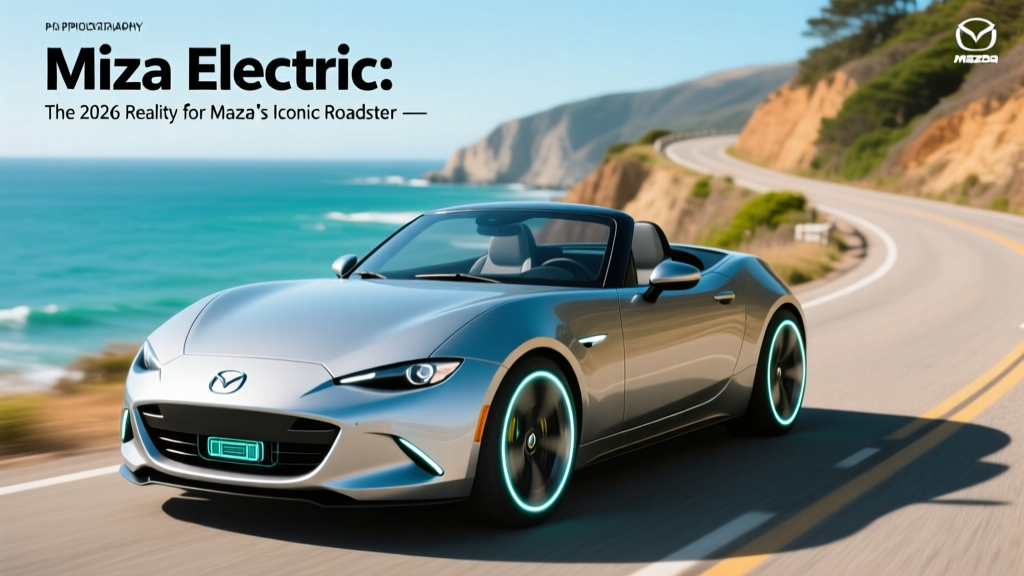
As of early 2026, Mazda has not released a production electric Miata (MX-5). There is no battery-electric MX-5 you can buy from a dealership. However, Mazda has confirmed an next-generation MX-5 is in development with an electrified powertrain, and a thriving aftermarket EV-conversion community has built functional electric Miatas with 100–180 miles of range. If you want an electric Miata today, your only path is a custom conversion costing roughly $25,000–$45,000 on top of a donor car, or waiting for Mazda's official announcement expected no earlier than 2027–2028.
Why an Electric Miata Matters to Enthusiasts
The Mazda MX-5 Miata has sold over 1.2 million units since 1989, making it the best-selling two-seat roadster in history. Its formula—lightweight (the current ND2 weighs just 2,341 lbs curb), rear-wheel drive, 50/50 weight distribution, and a rev-happy engine—has defined affordable sports car motoring for decades.
Electrification poses a fundamental tension with that formula. Batteries are heavy. A 50 kWh battery pack alone weighs roughly 700–800 lbs, which would push a Miata-class car well past 3,000 lbs and compromise the nimble handling that defines the car. This physics problem is precisely why Mazda has been cautious about electrifying the MX-5, and why the company's official roadmap has focused electrification efforts on larger vehicles like the CX-70 and CX-90 PHEVs first.
That said, electric motors deliver instant torque, a low center of gravity when batteries are floor-mounted, and near-zero maintenance—qualities that could make an electric roadster compelling if the weight problem is solved.
Mazda's Official Electrified MX-5 Plans: What We Know
Mazda CEO Masahiro Moro confirmed in 2024 that the next-generation MX-5 is being developed and will incorporate some form of electrification. However, Mazda has been deliberately vague about whether that means:
- Mild hybrid (48V): A small electric motor assisting the gasoline engine—adds minimal weight, preserves the lightweight character, but offers no electric-only driving.
- Plug-in hybrid (PHEV): A larger battery enabling 20–30 miles of electric range, but adding 300+ lbs—problematic for a car defined by lightness.
- Battery electric (BEV): Full electric powertrain, heaviest option, but delivers the lowest running costs and instant torque.
Industry analysts and Japanese automotive press have suggested Mazda may pursue a mild-hybrid or a very small-battery BEV approach to keep weight manageable. Mazda's long-term technology strategy emphasizes a multi-solution approach rather than full BEV commitment across all models.
Timeline reality: No official unveiling date has been announced. The current ND-generation Miata received its most recent update for the 2024 model year. A next-generation model is not expected before the 2027–2028 timeframe at the earliest, with deliveries likely following 6–12 months after reveal.
EV Conversion: Building Your Own Electric Miata Today
If waiting isn't an option, the aftermarket EV conversion route is real and increasingly viable. Several specialist shops and kit manufacturers offer Miata-specific electric conversions.
What a Typical Conversion Involves
A professional electric Miata conversion replaces the internal combustion engine, transmission, fuel tank, and exhaust with:
- An electric motor (commonly 100–200 kW / 134–268 hp)
- A battery pack (typically 25–45 kWh usable, using salvaged Tesla modules, Nissan Leaf cells, or new LFP packs)
- A motor controller and DC-DC converter
- An onboard charger (typically 3.3–7.2 kW for Level 2 AC charging)
- Custom mounts, wiring, and thermal management
Conversion Cost Breakdown
| Component | DIY Kit Cost | Professional Shop Cost |
|---|---|---|
| Battery pack (25–45 kWh) | $6,000–$12,000 | $10,000–$18,000 |
| Electric motor + controller | $3,500–$6,000 | $5,000–$8,000 |
| Charger, DC-DC, wiring | $2,000–$3,500 | $3,000–$5,000 |
| Fabrication & mounts | $1,500–$3,000 | $5,000–$8,000 |
| Labor (shop installs) | N/A | $5,000–$8,000 |
| Donor Miata (NA/NB/NC) | $3,000–$12,000 | $3,000–$12,000 |
| Total estimated | $16,000–$36,500 | $31,000–$59,000 |
Note: These are 2026 estimates based on current component pricing. Battery costs continue to decline roughly 8–12% annually.
Realistic Performance and Range Expectations
| Spec | Gas Miata (2025 ND2) | Typical EV Conversion (35 kWh) |
|---|---|---|
| Power | 181 hp | 134–268 hp (motor dependent) |
| Torque | 151 lb-ft | 180–250 lb-ft (instant) |
| 0–60 mph | 5.8 sec | 5.0–7.5 sec (weight dependent) |
| Curb weight | 2,341 lbs | 2,600–2,900 lbs |
| Range | ~340 mi (11.9 gal tank) | 80–140 mi (real-world) |
| "Fuel" cost per mile | ~$0.14 (at $3.50/gal, 30 mpg) | ~$0.04–$0.06 (home charging) |
| Maintenance/year | ~$600–$900 | ~$150–$300 |
| DC fast charging | N/A | Usually not available |
| Level 2 charge time (0–100%) | N/A | 5–8 hours at 7.2 kW |
Electric Miata vs. Gas Miata vs. Other Electric Sports Cars
To put the electric Miata concept in context, here's how the ownership picture compares against alternatives you can actually buy today:
| Vehicle | Starting Price | Est. Annual Fuel/Energy | Annual Maintenance | EPA Range |
|---|---|---|---|---|
| 2025 Mazda MX-5 Sport (gas) | $30,170 | $1,400 | $750 | ~340 mi (tank) |
| EV-converted Miata (35 kWh) | $35,000–$65,000 | $400–$600 | $200 | 80–140 mi |
| 2026 MG4 XPOWER (EV) | ~$38,000 | $500–$700 | $250 | 227 mi (EPA est.) |
| 2026 Mini Cooper SE (EV) | $32,900 | $450–$600 | $300 | 168 mi |
The gas Miata remains the most affordable path to the MX-5 experience by a wide margin. An EV conversion only makes financial sense if you value the project itself, want zero tailpipe emissions, or plan to keep the car for many years and drive it primarily in short, local trips where the per-mile energy savings accumulate.
Real-World Ownership Considerations Before You Commit
Home Charging Is Nearly Mandatory
Most EV conversions use only Level 2 AC charging (no DC fast-charge capability). Without a home Level 2 charger, you're dependent on public Level 2 stations that may charge $0.25–$0.49/kWh—erasing much of the cost advantage over gasoline. A home Level 2 installation typically costs $800–$2,500 including the charger and electrician labor, assuming your electrical panel has capacity. If a panel upgrade from 100A to 200A is needed, add $1,500–$3,500.
Registration and Insurance Complications
EV-converted vehicles often face registration hurdles. Many states require a special inspection for converted vehicles, and some DMVs are unfamiliar with the process. Insurance for a custom EV conversion can be 30–60% higher than a stock Miata because insurers struggle to value modified vehicles. Specialty insurers like Hagerty or agreed-value policies are often the best route.
Resale Value Uncertainty
A professionally converted electric Miata may appeal to a niche buyer, but the resale market is thin. Expect to recover 40–60% of the conversion cost at sale time, compared to the strong resale values that stock Miatas typically command. The IRS §30D federal tax credit does not apply to EV conversions of existing vehicles—it's only available for new qualified plug-in EVs purchased from a manufacturer.
Climate Matters
If you live in a region with harsh winters, a converted electric Miata faces compounded challenges: reduced battery range in cold weather, limited cabin heating capacity (most conversions use resistive heaters drawing 2–4 kW from the traction battery), and the inherent impracticality of a lightweight roadster in snow. Southern and coastal climates are far better suited.
Common Misconceptions About an Electric Miata
| Myth | Fact |
|---|---|
| "Mazda is releasing an electric Miata in 2026." | No official electric Miata has been announced for sale. Mazda has confirmed the next MX-5 will have some form of electrification, likely mild-hybrid, with no confirmed BEV variant or release date before 2027–2028. |
| "An EV conversion will make it faster and lighter." | It may be quicker off the line (instant torque), but it will be 300–500 lbs heavier. The weight penalty affects braking distances, tire wear, and the nimble handling that defines the Miata. |
| "I'll save thousands on fuel." | At 3,000–5,000 miles/year (typical Miata usage), annual fuel savings are roughly $800–$1,000. It would take 15–25 years to recoup a $25,000+ conversion cost through fuel savings alone. |
| "It qualifies for the $7,500 EV tax credit." | Federal §30D credits apply only to new qualified plug-in EVs from approved manufacturers. A DIY or shop conversion of an existing gas car does not qualify. |
| "Electric Miatas have no maintenance." | They have less maintenance (no oil changes, spark plugs, or timing belts), but still need brake fluid, coolant, tire rotations, cabin filter replacements, and eventual battery cell balancing or replacement. |
Decision Framework: Should You Pursue an Electric Miata?
Choose an EV-Converted Miata If:
- You already own a Miata with a blown engine and want to repurpose it
- You're a hobbyist who values the build process as much as the result
- You drive less than 5,000 miles/year in fair weather with home charging
- You want a unique, zero-tailpipe-emission weekend car
- You understand this is a passion project, not a cost-saving strategy
Stick with a Gas Miata If:
- You want the lowest total cost of ownership and strongest resale value
- You drive your Miata on long back-road trips or track days
- You don't have reliable home charging access
- You want factory warranty coverage and straightforward insurance
- You value the lightweight, rev-happy character that defines the MX-5
Wait for Mazda's Next-Gen MX-5 If:
- You want a factory-engineered solution with full warranty and support
- You're open to a mild-hybrid that preserves the lightweight character
- You can wait until 2027–2028+ for availability
- You want potential §30D tax credit eligibility (if it qualifies as a new PHEV/BEV)
Alternatives to Consider Right Now
If the electric sports car itch needs scratching today, several production EVs deliver engaging driving dynamics without the conversion headaches:
- 2026 Mini Cooper SE ($32,900): 168 mi EPA range, go-kart handling, 181 hp. The closest production EV to the Miata's fun-per-dollar spirit.
- 2026 Hyundai Ioniq 5 N ($67,500): 220 mi range, 641 hp, simulated gear shifts, track-capable. Expensive but genuinely thrilling.
- 2026 Porsche Taycan ($92,000+): 246–318 mi range, benchmark handling for a production EV, but far from Miata pricing.
- 2025 Mazda MX-5 Sport ($30,170): Still the answer if driving purity matters more than electrification. Per fueleconomy.gov, it achieves 26 city / 35 highway / 30 combined mpg.
Frequently Asked Questions
Will Mazda ever make a fully electric Miata?
Mazda has confirmed the next MX-5 will use an electrified powertrain, but has not confirmed a full BEV variant. A mild-hybrid is considered more likely given the MX-5's lightweight philosophy. No release date has been announced—expect 2027–2028 at the earliest for a next-generation reveal.
How much does it cost to convert a Miata to electric?
A professional conversion runs $31,000–$59,000 including the donor car. A DIY kit approach costs $16,000–$36,500 in parts plus your own labor and a donor Miata ($3,000–$12,000 depending on generation and condition).
What range does an electric Miata conversion get?
Most conversions with a 25–45 kWh battery pack deliver 80–140 miles of real-world range depending on driving style, speed, and temperature. Highway and cold-weather driving significantly reduce this figure.
Does an electric Miata conversion qualify for tax credits?
No. The IRS §30D federal EV tax credit applies only to new qualified plug-in electric vehicles purchased from an approved manufacturer. Converting an existing gasoline vehicle to electric does not qualify for any federal incentive.
Can I fast-charge a converted electric Miata?
Most EV conversions do not include DC fast-charging capability due to cost, complexity, and space constraints. Expect Level 2 AC charging only (3.3–7.2 kW), meaning a full charge takes 5–8 hours. Some high-budget conversions can integrate CCS or CHAdeMO fast charging, but this adds $3,000–$6,000 to the build.
Is an electric Miata a good daily driver?
For most people, no. The limited range (80–140 mi), lack of DC fast charging, minimal cargo space, and two-seat layout make it impractical as a primary vehicle. It works best as a weekend car, short-commute vehicle, or hobby project in a climate with mild winters.