Quick Answer: Should You Buy the MG Cyberster Electric Convertible?
The MG Cyberster is a two-seat electric roadster with an estimated 270–310 miles of range (WLTP), a ~77 kWh NMC battery, and scissor-door drama that no other EV in its price bracket offers. In the U.S., expect a starting price around $55,000–$65,000 if and when MG confirms a stateside launch — and note that MG (owned by SAIC Motor) faces significant §30D federal tax-credit hurdles due to Chinese battery-sourcing rules. If you want a wind-in-your-hair EV with real range and you can charge at home, it's compelling. If you need back seats, all-weather practicality, or guaranteed federal incentives, look at a Tesla Model Y or Ford Mustang Mach-E instead.
MG Cyberster Electric Convertible: What It Actually Is
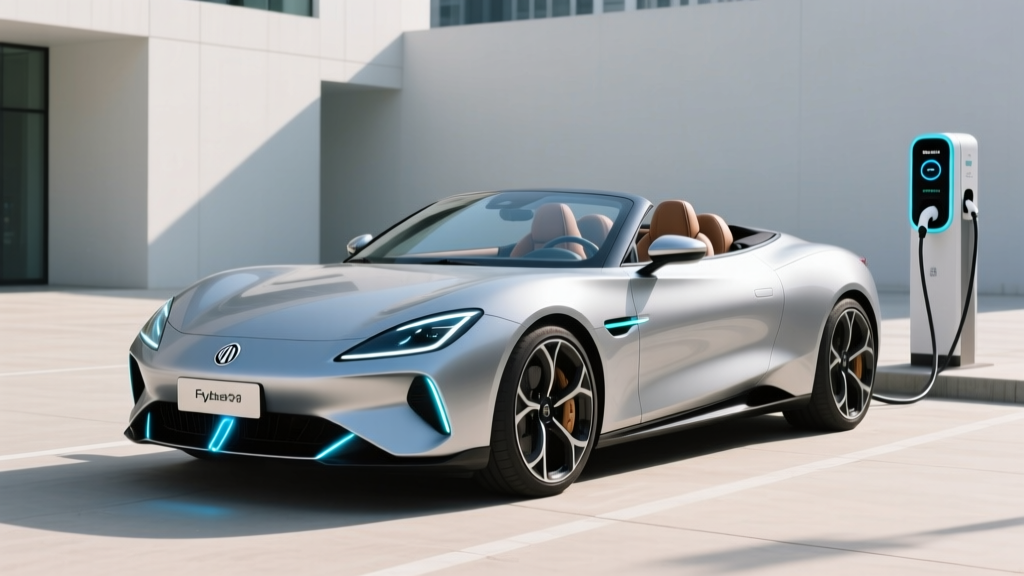
The MG Cyberster is a battery-electric, two-seat convertible roadster — a spiritual successor to the classic MGB roadster, but with a fully electric powertrain and a power-folding soft top. It debuted in China in 2023 and began expanding to select right-hand-drive and European markets in 2024–2025. As of early 2026, MG has not officially confirmed U.S. availability, making any American pricing or tax-credit discussion preliminary.
What makes it stand out: powered scissor doors (on higher trims), a triple-screen curved dashboard, and a low-slung roadster silhouette that's genuinely rare in the EV space. The closest electric analogues — a Tesla Roadster (still unreleased) or a Polestar 6 (delayed) — are either unavailable or far more expensive.
Specs, Range, and Charging: The Numbers That Matter
Below are the key figures for the MG Cyberster based on confirmed international-market specifications. U.S.-spec EPA numbers may differ once (or if) the car is certified for American sale.
| Specification | Single Motor (RWD) | Dual Motor (AWD) |
|---|---|---|
| Battery Capacity (usable) | ~64 kWh (LFP option) | ~77 kWh (NMC) |
| Range (WLTP) | ~310 mi (500 km) | ~270 mi (435 km) |
| Est. EPA Range (U.S.) | ~260–280 mi | ~225–245 mi |
| Horsepower | ~309 hp (231 kW) | ~536 hp (400 kW) |
| 0–60 mph | ~4.9 sec | ~3.2 sec |
| Max DC Fast Charge | ~120 kW peak | ~140 kW peak |
| 10–80% DC Charge Time | ~30 min | ~28 min |
| Level 2 AC Charge Rate | 7 kW (onboard) | 7 kW (onboard) |
| Level 2 Full Charge Time | ~9–10 hours | ~11 hours |
| Drivetrain | Rear-Wheel Drive | All-Wheel Drive |
| Est. U.S. MSRP (if launched) | ~$55,000 | ~$65,000 |
| Battery Warranty | 8 years / 100,000 mi (typical MG) | |
Real-World Range Reality Check
EPA estimate: ~260–280 mi (RWD), ~225–245 mi (AWD) — projected, pending U.S. certification.
Real-world highway (70 mph): Expect ~210–240 mi (RWD) and ~180–210 mi (AWD). Convertibles add aerodynamic drag with the top down, which can shave another 5–10% off highway range.
Cold weather (below 32°F): Plan for 20–30% range loss, bringing the AWD model down to roughly 155–195 mi in winter conditions. The Cyberster's thermal management helps, but NMC chemistry is sensitive to extreme cold without preconditioning.
The charging curve matters as much as peak kW. The Cyberster's ~120–140 kW peak is respectable but not class-leading. Expect that peak rate to hold from roughly 10–50% State of Charge (SoC), then taper to ~60 kW by 70%, and below 30 kW past 85%. This is normal for NMC packs at this capacity, but it means the last 20% of charging takes nearly as long as the first 60%.
MG Cyberster vs Gas Roadsters: Cost and Driving Comparison
The Cyberster doesn't have a direct electric rival in the U.S. at its price point, so the most meaningful comparison is against the gas roadsters it aims to replace: the Mazda MX-5 Miata and the Toyota GR86/Subaru BRZ convertible-adjacent coupe.
| Factor | MG Cyberster (AWD, est.) | Mazda MX-5 Miata (2026) | BMW Z4 sDrive30i (2026) |
|---|---|---|---|
| Base Price | ~$65,000 | ~$30,000 | ~$56,000 |
| Horsepower | ~536 hp | 181 hp | 255 hp |
| 0–60 mph | ~3.2 sec | ~5.8 sec | ~5.2 sec |
| Fuel/Energy Cost per Mile | ~$0.04–$0.06 (home L2) | ~$0.14 (30 MPG, $3.50/gal) | ~$0.15 (28 MPG, $3.50/gal) |
| Annual "Fuel" Cost (12k mi) | ~$480–$720 | ~$1,680 | ~$1,800 |
| Annual Maintenance | ~$300–$500 | ~$600–$900 | ~$800–$1,200 |
| EPA Range / Tank Range | ~225–245 mi | ~340 mi (11.9 gal) | ~370 mi (14.5 gal) |
| Federal Tax Credit (§30D) | Unlikely (SAIC/China sourcing) | N/A | N/A |
The Cyberster is dramatically more powerful and cheaper to "fuel" than any gas roadster, but it costs roughly double a Miata upfront. Against the BMW Z4, the price gap narrows, and the Cyberster's performance advantage is enormous. The trade-off: no manual transmission, heavier curb weight (~4,100 lbs vs the Miata's ~2,400 lbs), and a less proven U.S. service network.
Real Ownership Costs: 5-Year Breakdown
Assuming the AWD Cyberster at ~$65,000, 12,000 miles/year, home Level 2 charging at $0.14/kWh average, and no federal tax credit:
| Cost Category (5 Years) | MG Cyberster AWD (est.) | Mazda MX-5 Miata | BMW Z4 sDrive30i |
|---|---|---|---|
| Purchase Price | $65,000 | $30,000 | $56,000 |
| Federal Tax Credit | $0 (likely ineligible) | $0 | $0 |
| Fuel / Electricity (5 yr) | $3,000 | $8,400 | $9,000 |
| Maintenance (5 yr) | $2,000 | $3,750 | $5,000 |
| Insurance (5 yr, est.) | $12,500 | $6,500 | $9,500 |
| Estimated Depreciation | $26,000 (40%) | $9,000 (30%) | $22,400 (40%) |
| Total 5-Year Cost | ~$110,500 | ~$57,650 | ~$101,900 |
Key takeaways: The Cyberster's fuel and maintenance savings over gas cars are real — roughly $5,400–$6,000 less over five years than the Miata in those categories alone. But insurance for an exotic-looking, 536-hp electric convertible will be steep, and depreciation on a low-volume MG in the U.S. is a genuine wildcard. The Miata remains the budget king. Against the BMW Z4, the Cyberster's 5-year cost is close, with much more power but higher uncertainty on resale and service.
Home Charging, Climate, and Practical Ownership
Before buying any EV — especially a niche convertible — you need a realistic plan for charging and daily use.
Home Charging Access
The Cyberster's 7 kW onboard AC charger means a full Level 2 home charge takes 9–11 hours. That's fine for overnight top-ups but slower than the 11–19 kW onboard chargers in vehicles like the Tesla Model 3 or Hyundai Ioniq 5. You'll need a 240V/40A circuit at minimum. If your home electrical panel is older or near capacity, a panel upgrade ($1,500–$3,000) may be required on top of the typical $800–$1,500 Level 2 installation.
Public DC Fast Charging
At ~120–140 kW peak DC, the Cyberster will add roughly 100–130 miles in a 20-minute session on a 150 kW+ charger. That's adequate for road trips but not exceptional — the Hyundai Ioniq 5 peaks at 240 kW and charges 10–80% in ~18 minutes. Connector compatibility is another question mark: international Cybersters use CCS2 or GB/T; a U.S. model would likely adopt NACS (Tesla-style) given the industry shift, but MG has not confirmed this.
Climate Considerations
A convertible EV in cold climates faces compounding challenges: NMC battery range loss (20–30% below freezing) plus the energy cost of cabin heating with no engine waste heat. A heat pump (confirmed on higher Cyberster trims) mitigates this, but expect winter range to drop to ~155–195 mi for the AWD model. If you live in Minnesota or Maine, a hardtop EV is simply more practical for six months of the year.
Driving Patterns That Fit
The Cyberster is ideal if: your daily commute is under 80 miles round-trip, you have home charging, you live in a temperate or warm climate, and you want a weekend canyon carver that also handles daily duty. It is not ideal if: you regularly drive 300+ miles between charges, you need rear seats or cargo space, or you rely exclusively on public charging infrastructure.
Tax Credit Eligibility: The MG Cyberster Problem
This is where the Cyberster faces its biggest U.S. headwind. Under current IRS §30D rules, the $7,500 federal tax credit requires:
- MSRP cap: ≤$55,000 for sedans; ≤$80,000 for SUVs/trucks/vans. The Cyberster (a two-seat roadster) would likely be classified as a sedan, capping eligibility at $55,000 — meaning only the base RWD model might qualify on price.
- Buyer income cap: AGI ≤$150,000 (single) or ≤$300,000 (joint).
- Battery sourcing: Critical minerals and battery components must meet escalating U.S./FTA-country thresholds. MG is owned by SAIC Motor (Chinese state-owned), and the Cyberster's battery is manufactured in China. As of 2025–2026, any vehicle with battery components from a "foreign entity of concern" (FEOC) — which includes most Chinese state-linked manufacturers — is disqualified from the credit entirely.
- Final assembly: Must occur in North America. The Cyberster is assembled in China.
Bottom line: The MG Cyberster is almost certainly ineligible for the $7,500 federal EV tax credit under current rules. Some states (California, Colorado, New York) offer their own incentives that may apply regardless of sourcing, but check your state's specific program. Consult a tax professional before assuming any credit.
Common Misconceptions About the Cyberster and Electric Convertibles
| Myth | Fact |
|---|---|
| "Electric convertibles don't exist." | The Cyberster is a production EV convertible available in multiple markets. The Fiat 500e Cabrio and Mini Cooper SE Convertible also exist, though with shorter range. |
| "The battery will need replacing in 5 years." | NMC batteries in modern EVs typically retain 85–90% capacity after 100,000 miles. MG's battery warranty covers 8 years/100,000 mi with a typical 70% capacity retention threshold. |
| "It qualifies for the $7,500 tax credit." | Almost certainly not. Chinese assembly and SAIC battery sourcing disqualify it under §30D FEOC rules. |
| "A convertible EV has no range." | The RWD Cyberster's ~260–280 mi EPA-projected range is competitive with the Tesla Model 3 RWD (~272 mi) and far exceeds most gas roadsters' per-tank cost efficiency. |
| "It's basically a Chinese Tesla." | MG is a British-heritage brand owned by China's SAIC Motor. The Cyberster uses its own platform and design, not Tesla architecture. Service, software, and Supercharger access are entirely separate ecosystems. |
Decision Framework: Is the MG Cyberster Right for You?
Choose the MG Cyberster if:
- You want a genuine electric convertible with 225+ mi range and sports-car performance
- You have reliable home Level 2 charging
- You live in a mild climate (or accept winter range compromise)
- You value unique design (scissor doors, roadster silhouette) over mainstream brand cachet
- You don't need back seats, large cargo space, or frequent 300+ mi road trips
- You understand the federal tax credit likely won't apply
Choose something else if:
- Budget is paramount: A used Tesla Model 3 or new Chevy Equinox EV offers more practicality at lower cost
- You need federal incentives: Look at the Ford Mustang Mach-E, Tesla Model Y, or Hyundai Ioniq 5 — all currently eligible for at least partial §30D credits
- You live in a cold climate without a garage: A hardtop EV with a heat pump and LFP battery (like the Tesla Model 3 RWD) is more winter-resilient
- You want a manual, lightweight roadster experience: The gas Mazda MX-5 Miata at ~$30,000 is half the price and 1,700 lbs lighter
- You need a proven U.S. dealer/service network: MG has no current U.S. retail presence; parts and service logistics are uncertain
First-Time EV Buyer Essentials
If the Cyberster would be your first electric vehicle, keep these fundamentals in mind:
kW vs kWh: Kilowatts (kW) measure power — how fast you charge or how hard the motor pushes. Kilowatt-hours (kWh) measure energy — the battery's total capacity, like gallons in a gas tank. The Cyberster's ~77 kWh battery stores energy; its ~140 kW DC charge rate determines how fast that energy replenishes.
Charge curve taper: No EV charges at peak kW the entire session. The Cyberster will peak near 140 kW at low SoC, then taper significantly above 70%. Plan road-trip stops around 10–80% charges (~28 min) rather than trying to fill to 100%.
Preconditioning: If the Cyberster supports battery preconditioning for DC charging (common but unconfirmed for U.S. spec), always navigate to a charger via the car's system — this warms the battery for faster charging, especially in cold weather.
Insurance: EV insurance averages 15–25% higher than equivalent gas cars due to repair costs and battery replacement risk. For a 536-hp exotic convertible, expect quotes well above average. Get quotes before committing.
Frequently Asked Questions
Is the MG Cyberster available in the United States?
As of early 2026, MG has not officially launched in the U.S. market. The Cyberster is available in China, the UK, Australia, and select European and Southeast Asian markets. Any U.S. pricing or availability discussed here is projected based on international specs.
How fast does the MG Cyberster charge?
On DC fast charging, the AWD model peaks at ~140 kW, reaching 10–80% in approximately 28 minutes on a capable charger. On Level 2 home charging (7 kW AC), a full charge takes about 11 hours. Level 1 (120V household outlet) would take 50+ hours and is not practical for daily use.
Does the MG Cyberster qualify for any EV tax credits?
Under current IRS §30D rules, the Cyberster is almost certainly ineligible for the $7,500 federal credit due to Chinese final assembly and SAIC-linked battery sourcing (FEOC disqualification). Some state-level incentives may still apply. Check IRS.gov and your state's energy office for current rules.
What's the real-world range of the MG Cyberster?
Expect roughly 210–240 highway miles in the RWD model and 180–210 in the AWD model under moderate conditions (65–70 mph, 60–80°F). Cold weather (below freezing) reduces this by 20–30%. Driving with the top down at highway speeds adds aerodynamic drag and may reduce range an additional 5–10%.
How does the Cyberster compare to a Tesla Roadster?
The Tesla Roadster (announced 2017, repeatedly delayed) targets 620+ miles of range, sub-2-second 0–60, and a $200,000+ price. It remains unreleased as of 2026. The Cyberster is a real, shipping product at a fraction of that price, with more modest but still impressive performance. They are not in the same segment.
What's the battery warranty and replacement cost?
MG typically offers 8 years / 100,000 miles of battery warranty with a 70% capacity retention threshold. A full NMC battery replacement for a ~77 kWh pack would likely cost $12,000–$18,000 out of warranty, though most EV batteries retain 85%+ capacity well past 100,000 miles based on industry-wide data.