Quick Verdict: Is the MG Comet EV Worth Buying?
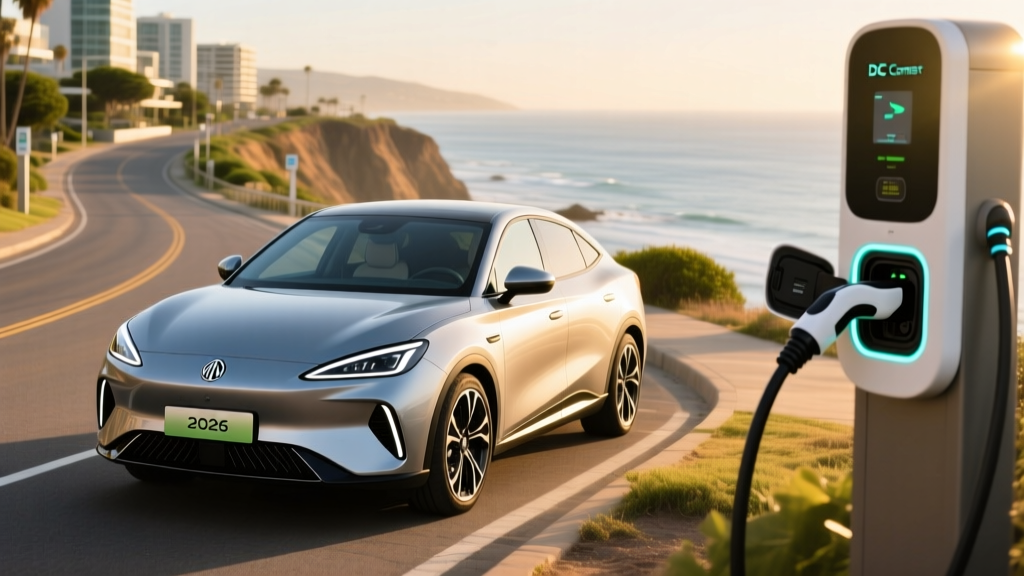
The MG Comet EV (also marketed as the Wuling Air EV / MG Air EV depending on region) is a purpose-built urban micro-car designed for short commutes and dense city driving. With a 17.3 kWh lithium iron phosphate (LFP) battery, it delivers an ARAI-certified range of 230 km (≈143 miles), though real-world city driving yields closer to 170–190 km (105–118 miles). Starting at approximately ₹7.98 lakh (~$9,600 USD equivalent) in India, it is one of the most affordable four-wheeled EVs available. It excels as a second car or city runabout, but its limited highway range, slow charging, and compact dimensions make it unsuitable as a sole household vehicle for most buyers.
MG Comet EV Core Specifications at a Glance
| Specification | Value |
|---|---|
| Battery Capacity (usable) | 17.3 kWh (LFP chemistry) |
| ARAI-Certified Range | 230 km (143 miles) |
| Real-World City Range | 170–190 km (105–118 miles) |
| Real-World Highway Range | 120–140 km (75–87 miles) |
| Motor Output | 30 kW (40 hp) / 110 Nm torque |
| Top Speed | 100 km/h (62 mph) |
| 0–60 km/h | ~6.5 seconds |
| AC Charging (3.3 kW) | 0–100% in ~5.5 hours |
| DC Fast Charging | Not supported (no CCS/NACS port) |
| Seating | 4 (2+2 configuration) |
| Cargo Volume | Minimal (rear seats fold for utility) |
| Base Price (India, ex-showroom) | ₹7.98 lakh (~$9,600 USD) |
| Battery Warranty | 8 years / 160,000 km |
Real-World Range: What the Sticker Doesn't Tell You
The ARAI-certified 230 km range is measured under controlled laboratory conditions — as with all EVs worldwide, your actual experience will differ. Here is what to expect based on driving context:
City commuting (30–50 km/h avg, frequent stops): 180–190 km. Regenerative braking recovers energy in stop-and-go traffic, keeping efficiency high. Expect roughly 9–10 kWh/100 km.
Mixed suburban driving (50–80 km/h): 155–175 km. Efficiency drops to ~11–12 kWh/100 km as sustained speeds increase aerodynamic drag.
Highway driving (90–100 km/h sustained): 120–140 km. The 30 kW motor is near its continuous ceiling, and the small frontal area offers limited aero advantage. Expect 13–15 kWh/100 km.
Hot climate with A/C (35°C+): Subtract 10–15% from city range. The Comet lacks a heat pump; cabin cooling draws directly from the traction battery.
Cold climate (below 10°C): Subtract 15–25%. LFP chemistry is more resilient than NMC in cold, but cabin heating and increased internal resistance still reduce usable capacity. Notably, the MG Comet EV is primarily sold in tropical and subtropical markets (India, Southeast Asia), where cold-weather loss is a secondary concern.
Charging the MG Comet: Home Setup and Practical Timelines
The MG Comet EV charges exclusively via AC Level 2 (single-phase, 3.3 kW) using a standard Type 2 or regional equivalent connector. There is no DC fast-charging capability — a significant limitation for anyone who might need a quick top-up mid-day.
| Charging Method | Power | 0–100% Time | Km Added per Hour |
|---|---|---|---|
| Standard 15A Household Outlet (included charger) | ~2.2 kW | ~8 hours | ~28 km/hr |
| Dedicated 3.3 kW Wallbox (Level 2) | 3.3 kW | ~5.5 hours | ~42 km/hr |
| DC Fast Charger | N/A — not supported | N/A | N/A |
Home Charging Cost Breakdown (India Context)
At India's average residential electricity rate of ₹8/kWh (~$0.10 USD), a full 17.3 kWh charge costs approximately ₹138 ($1.65 USD). If you drive 40 km daily (the typical urban commute), you will consume roughly 4 kWh, costing ₹32/day ($0.38 USD) — or about ₹960/month ($11.50 USD) in electricity.
For a dedicated 3.3 kW wallbox installation, budget ₹15,000–₹25,000 ($180–$300 USD) for equipment plus ₹5,000–₹10,000 ($60–$120 USD) for electrician labor. Most urban apartments and homes with a dedicated parking spot and a 15A circuit can accommodate this without a panel upgrade.
What If You Don't Have Home Charging?
This is the Comet's Achilles heel for apartment dwellers without dedicated parking. Because it lacks DC fast charging, you cannot rely on public fast-charger networks for quick top-ups. Your options are limited to slow AC public chargers (3.3–7.4 kW), which still require multi-hour sessions. If you cannot install or reliably access overnight AC charging, the Comet EV is not a practical choice.
MG Comet EV vs. Gas Hatchback: Total Cost of Ownership
The most common cross-shopping question is whether the Comet EV saves money compared to a similarly priced petrol hatchback like the Maruti Suzuki Swift or Hyundai Grand i10. Here is a 5-year comparison assuming 15,000 km driven annually (75,000 km total):
| Cost Category (5 Years / 75,000 km) | MG Comet EV | Petrol Hatchback (e.g., Swift) |
|---|---|---|
| Purchase Price (ex-showroom) | ₹7,98,000 | ₹6,50,000 |
| Fuel / Electricity Cost | ₹72,000 (₹8/kWh, 12 kWh/100km avg) | ₹2,62,500 (₹105/L, 20 km/L avg) |
| Maintenance (oil, filters, brakes) | ₹25,000 (minimal — no oil changes, regen saves brake pads) | ₹75,000 (annual service + consumables) |
| Insurance (avg annual) | ₹90,000 total (~₹18,000/yr) | ₹70,000 total (~₹14,000/yr) |
| Estimated Resale Value (Year 5) | ~₹3,20,000 (40% retention — EV depreciation is steeper) | ~₹3,25,000 (50% retention) |
| Net 5-Year Cost | ~₹6,65,000 | ~₹7,32,500 |
The takeaway: The Comet EV breaks even within 3–4 years against a petrol hatchback on running costs alone, despite its higher purchase price. However, the savings are modest in absolute terms — roughly ₹67,500 over five years — and hinge on low electricity rates and high petrol prices. If your daily commute is under 30 km and you can charge at home, the math works. If you drive long distances regularly, a petrol or CNG hatchback remains more practical.
US Market Note: Tax Credits and Availability
As of 2026, the MG Comet EV is not sold in the United States or European markets. MG (owned by SAIC Motor) focuses the Comet/Air EV on India, Indonesia, and select Southeast Asian countries. US-based readers researching this vehicle should note that it does not qualify for the IRS §30D federal tax credit because it is not available through US dealerships. For US buyers seeking a similarly affordable compact EV, the closest analogs include the used Chevrolet Bolt EV (eligible for the up-to-$4,000 used EV credit) or the new Nissan Leaf.
Common Misconceptions About the MG Comet EV
| Myth | Fact |
|---|---|
| "230 km range means I can drive 230 km on the highway." | ARAI testing is at low average speeds. Highway range at 90–100 km/h is 120–140 km. Plan for 55–60% of the sticker figure on open roads. |
| "It charges at any public EV charger." | The Comet only accepts AC charging (3.3 kW max). It cannot use DC fast chargers (CCS, CHAdeMO, or NACS). You are limited to AC destination chargers and home outlets. |
| "LFP batteries degrade quickly." | LFP chemistry actually has superior cycle life (2,000–3,000+ cycles to 80% capacity) compared to NMC. MG backs it with an 8-year/160,000 km warranty — likely outlasting the car itself in city use. |
| "It seats four adults comfortably." | The 2+2 layout fits two adults up front and two children or very short adults in the rear. Rear legroom is under 600 mm. Treat it as a 2-seater with occasional rear use. |
| "EVs are always cheaper to own." | The Comet's purchase premium over a basic petrol hatchback (₹1–1.5 lakh more) takes years to recoup. Savings depend entirely on your mileage, electricity rate, and petrol price. Low-mileage drivers may never break even. |
Who Should Buy the MG Comet EV — and Who Shouldn't
Choose the MG Comet EV if:
- Your daily round-trip commute is under 80 km and mostly city streets
- You have access to overnight home charging (dedicated parking with a 15A outlet or wallbox)
- You need a second car for errands, school runs, or short urban trips
- You want the lowest possible per-km running cost in a four-wheeled vehicle
- You live in a congested city where its 2.97-meter length makes parking trivial
Look elsewhere if:
- You need a single vehicle for both city and highway duty
- Your daily driving exceeds 100 km or includes highway segments
- You cannot install or access overnight AC charging
- You regularly carry more than two adults
- You need cargo space beyond a few grocery bags
- You live in a region with extreme cold (below 0°C) where range loss compounds
First-Time EV Buyer Checklist for the Comet
If this is your first electric vehicle, the Comet is an accessible entry point — but it demands realistic expectations. Before purchasing, confirm the following:
- Charging access: Can you plug in overnight at home or work? Without this, ownership becomes a daily logistics burden.
- Commute audit: Track your actual daily km for two weeks. If your 95th-percentile day exceeds 120 km, the Comet's real-world range will cause stress.
- Electrical readiness: Have a licensed electrician verify your parking spot's circuit can handle a continuous 15A draw for 5+ hours. Older buildings may need wiring upgrades (₹5,000–₹15,000).
- Insurance quotes: EV insurance premiums in India run 15–30% higher than equivalent petrol cars due to battery replacement cost exposure. Get a firm quote before committing.
- Service network: MG's EV service footprint in India covers major metros but can be sparse in tier-2 and tier-3 cities. Confirm your nearest authorized service center and typical wait times.
- Resale expectations: Budget EVs depreciate faster than petrol equivalents in the current Indian market. Plan to keep the Comet 4+ years to amortize the purchase premium.
Frequently Asked Questions
Can the MG Comet EV be used for intercity trips?
Technically yes, but practically no. A 150 km intercity drive would deplete the battery entirely at highway speeds, and without DC fast-charging support, you would need to find an AC charger and wait 3+ hours for a partial top-up. The Comet is a city car by design.
How long will the LFP battery last before needing replacement?
LFP cells are rated for 2,000–3,000 charge cycles before dropping to 80% State of Health. At one full cycle per day (unrealistic for most owners), that is 5.5–8 years. Most city drivers will use 30–50% of the battery daily, meaning the battery should last well beyond the 8-year warranty period with 85%+ capacity retention. A full battery replacement, if ever needed, would cost an estimated ₹2–3 lakh ($2,400–$3,600 USD) based on current LFP pack pricing, though this is speculative as the car has not yet reached end-of-life in significant numbers.
Does the MG Comet qualify for any government incentives?
In India, the Comet EV qualifies for reduced GST (5% on EVs vs. 28% + cess on petrol cars), which is already reflected in its ex-showroom pricing. Some Indian states offer additional road-tax waivers or registration-fee exemptions for EVs — check your state transport department for current rules. It does not qualify for US, EU, or UK purchase incentives as it is not sold in those markets.
Is the MG Comet EV safe?
As of early 2026, the MG Comet EV has not been crash-tested by Global NCAP or Bharat NCAP. It includes dual front airbags, ABS with EBD, and a reinforced battery enclosure, but its sub-700 kg curb weight puts it at a physics disadvantage in collisions with larger vehicles. Treat it as a city-speed vehicle and avoid high-speed highway mixing where possible.
What is the difference between kW and kWh, and why does it matter for the Comet?
kW (kilowatts) measures power — how fast energy flows. kWh (kilowatt-hours) measures energy — how much the battery stores. The Comet has a 17.3 kWh battery (energy capacity) and accepts up to 3.3 kW of charging power (charge rate). Think of kWh as the size of the fuel tank and kW as the diameter of the hose filling it. Confusing these leads to unrealistic charging-time expectations.
How does the Comet compare to other affordable EVs like the Tata Tiago EV?
The Tata Tiago EV (24 kWh battery, ~315 km ARAI range, ~₹8.69 lakh) offers significantly more range and a more conventional hatchback form factor with usable rear seats and boot space. The Comet trades range and practicality for a lower entry price and an ultra-compact footprint. If you need only a city pod for one or two people, the Comet wins on price and parking ease. If you need a functional family car that happens to be electric, the Tiago EV is the more versatile choice.