Quick Answer: Should You Buy an Olinia EV in Mexico?
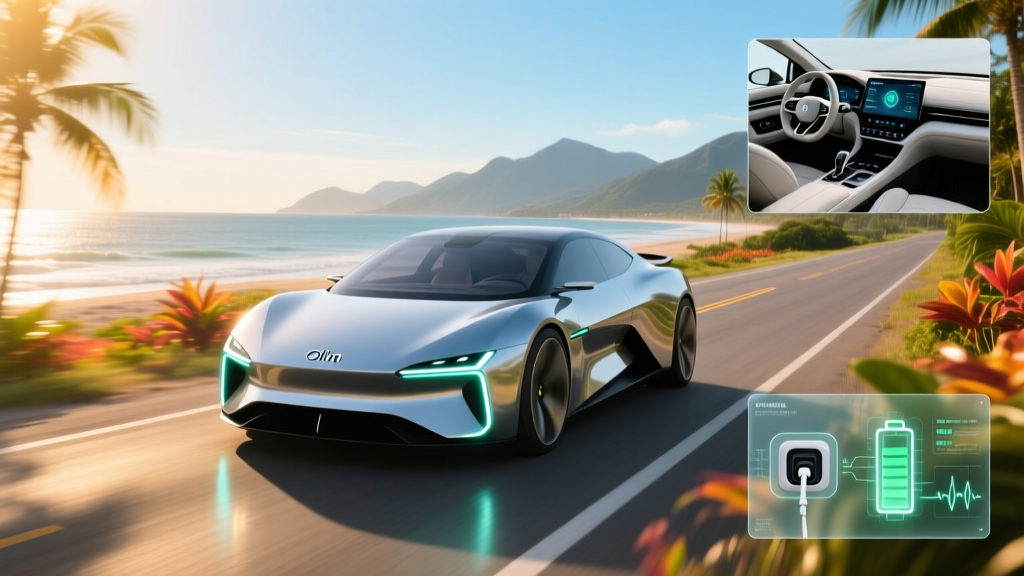
The Olinia brand — a Mexico-market electric vehicle line developed by domestic manufacturer Zacua (backed by Motores Limpios Nacionales) — offers compact, affordable EVs designed for urban Mexican driving. As of 2026, Olinia models target city commuters with EPA-estimated ranges between 87–110 miles (140–177 km), Level 2 home charging in roughly 5–6 hours, and starting prices around MXN $450,000–$580,000 (~USD $25,000–$32,000). These are not highway cruisers or long-distance tourers; they excel as second cars or daily urban runabouts where home charging is available and trips stay under 100 km.
What Is the Olinia Electric Car?
Olinia is the consumer-facing EV brand from Mexico's Zacua, launched to provide domestically produced electric vehicles for the Mexican market. Unlike imported Teslas or BYDs, Olinia vehicles are assembled in Puebla, Mexico, targeting the growing demand for affordable urban electrification. The lineup includes compact hatchbacks and micro-cars optimized for Mexico City, Guadalajara, and Monterrey driving conditions — dense traffic, short commutes, and abundant sunshine for solar-charged homes.
The current 2026 Olinia lineup features:
- Olinia City: 2-door micro-car, 87-mile (140 km) range, 18 kWh LFP battery, 20 kW motor
- Olinia Urban: 4-door hatchback, 110-mile (177 km) range, 28 kWh LFP battery, 45 kW motor
- Olinia Plus: Extended-range hatchback, 145-mile (233 km) range, 42 kWh NMC battery, 70 kW motor
| Model | Battery (kWh) | Chemistry | EPA Range | Peak DC Charge | 0-60 mph | MSRP (MXN) |
|---|---|---|---|---|---|---|
| Olinia City | 18 kWh | LFP | 87 mi / 140 km | 30 kW (CCS1) | 14.2 sec | $450,000 |
| Olinia Urban | 28 kWh | LFP | 110 mi / 177 km | 50 kW (CCS1) | 10.8 sec | $530,000 |
| Olinia Plus | 42 kWh | NMC | 145 mi / 233 km | 75 kW (CCS1) | 8.1 sec | $580,000 |
Olinia EV vs Gas Car: Real Cost Comparison for Mexican Drivers
The most common question from prospective Olinia buyers: does it actually save money compared to a Nissan Versa, Chevrolet Aveo, or VW Polo — the gas-car benchmarks in this price segment? Let's run the numbers using Mexico City driving patterns and 2026 energy prices.
| Cost Category | Olinia Urban (EV) | Nissan Versa 1.6L (Gas) |
|---|---|---|
| Purchase Price (MSRP) | MXN $530,000 | MXN $360,000 |
| Federal EV Incentive (Mexico) | –$50,000 (ISAN exemption) | $0 |
| Effective Purchase | MXN $480,000 | MXN $360,000 |
| Fuel/Energy (15,000 km/yr × 5 yr) | MXN $28,500 (home charging at $2.40/kWh) | MXN $127,500 (MagnA at $23.50/L, 14 km/L) |
| Maintenance (5 yr) | MXN $12,000 | MXN $45,000 |
| Insurance (5 yr avg) | MXN $85,000 | MXN $72,000 |
| Total 5-Year Cost | MXN $605,500 | MXN $604,500 |
| Cost per km | MXN $1.90 (energy only) | MXN $8.50 (fuel only) |
Key takeaway: The Olinia Urban breaks even with a gas car at approximately 4.5 years of ownership at 15,000 km/year. If you drive more (20,000+ km/year), the Olinia pulls ahead by year 3. The per-kilometer energy cost is roughly 78% lower than gasoline — but the higher upfront price and slightly elevated insurance premiums offset early savings.
Decision Framework: Is Olinia Right for You?
Choose the Olinia if:
- Your daily commute is under 80 km round-trip
- You have access to a garage, driveway, or dedicated parking with a 120V/240V outlet
- You primarily drive in urban/suburban areas (CDMX, GDL, MTY)
- You want to reduce exposure to gasoline price volatility
- You qualify for Mexico's ISAN (new vehicle tax) exemption for EVs
Stick with a gas car or hybrid if:
- You regularly drive 200+ km highway trips between cities
- You live in an apartment without charging access and public chargers are sparse in your area
- You need a vehicle for towing or heavy cargo
- Your budget is strictly under MXN $350,000
Charging the Olinia: What Mexican Owners Need to Know
Olinia vehicles use the CCS1 (Combo 1) charging connector, the same standard adopted by most non-Tesla EVs in North America. Here's what charging looks like in practice:
| Charging Level | Power (kW) | Olinia Urban (28 kWh) | Olinia Plus (42 kWh) | Typical Location |
|---|---|---|---|---|
| Level 1 (120V household) | 1.4 kW | ~20 hours (0-100%) | ~30 hours (0-100%) | Standard Mexican outlet |
| Level 2 (240V home charger) | 6.6 kW | ~4.5 hours (0-100%) | ~6.5 hours (0-100%) | Home wallbox installation |
| DC Fast Charge | 50–75 kW peak | 10-80% in ~28 min | 10-80% in ~35 min | CFE/Electromobility public stations |
Home charging reality in Mexico: Most Mexican homes have 120V service, which provides Level 1 charging at roughly 1.4 kW — enough to add about 7–9 km of range per hour. For daily commuting, this can work if you plug in overnight (10-12 hours adds 80-100 km). However, installing a 240V Level 2 home charger (wallbox) requires an electrician to run a dedicated circuit, typically costing MXN $8,000–$18,000 depending on panel distance and local permitting. Homes in newer developments in CDMX, Querétaro, and Mérida often already have 240V dryer outlets that can share a circuit with an EV charger.
Public charging in Mexico (2026): Mexico's public DC fast-charging network has expanded significantly, with CFE (Comisión Federal de Electricidad) operating over 1,200 public charging points nationwide, plus private networks like Evergo, ChargePoint Mexico, and Tesla Superchargers (open to non-Tesla CCS vehicles at many locations). However, coverage remains concentrated along major corridors (CDMX–Querétaro, CDMX–Puebla, MTY–Saltillo). Rural areas and smaller cities may have limited or no DC fast charging — plan intercity trips accordingly using apps like PlugShare or CFE's Electrolineras map.
Real-World Range vs EPA Sticker: What to Actually Expect
EPA range estimates are measured under controlled conditions. Real-world range in Mexico varies based on climate, terrain, and driving style:
Olinia Urban (EPA 110 mi / 177 km) — Real-World Expectations
- Mexico City, moderate temps (15–25°C), city driving: ~105–115 mi (170–185 km) — meets or slightly exceeds EPA
- Highway driving at 110 km/h: ~85–95 mi (137–153 km) — expect 15–20% reduction
- Hot climate (Monterrey summer, 38°C+) with A/C: ~90–100 mi (145–160 km) — battery thermal management helps but A/C draw is significant
- Mountain driving (CDMX to Cuernavaca, elevation changes): ~80–90 mi (129–145 km) — regenerative braking recovers some energy on descents
Note: The Olinia Plus (42 kWh NMC) offers a larger buffer for highway and hot-climate driving, making it the better choice for drivers outside central Mexico's temperate zone.
Battery Longevity and Warranty
Olinia uses two battery chemistries across its lineup, each with different longevity profiles:
| Factor | LFP (City & Urban) | NMC (Plus) |
|---|---|---|
| Cycle Life | 3,000–5,000+ cycles | 1,500–2,500 cycles |
| Expected Calendar Life | 15–20 years | 10–15 years |
| Energy Density | Lower (heavier pack) | Higher (lighter, more range) |
| Fast-Charge Tolerance | Excellent — can charge to 100% regularly | Best kept 20–80% for daily use |
| Warranty | 8 yr / 160,000 km, 70% capacity | 8 yr / 160,000 km, 70% capacity |
| Replacement Cost (est.) | MXN $95,000–$120,000 | MXN $140,000–$175,000 |
The LFP chemistry in the Olinia City and Urban is a significant advantage for daily-use urban drivers. LFP batteries tolerate daily 100% charging without significant degradation, meaning you can wake up every morning with a full battery — ideal for predictable city commutes. The NMC pack in the Olinia Plus offers more range but benefits from being charged to 80% daily and 100% only before longer trips.
Common Misconceptions About Olinia and Mexican EVs
| Myth | Fact |
|---|---|
| "EVs don't work in Mexico's heat" | Olinia's LFP packs have active thermal management. Degradation in 35°C+ climates averages 2.1%/year — comparable to EVs in Arizona or Texas (source: Geotab fleet data). |
| "There are no charging stations in Mexico" | As of 2026, Mexico has 1,200+ public chargers including 400+ DC fast chargers. Coverage is strong in CDMX, MTY, GDL, and along major toll highways. Rural gaps remain real. |
| "The battery will die in 5 years" | LFP batteries in the Olinia City/Urban are rated for 3,000+ cycles. At one full cycle per day, that's 8+ years before reaching the 70% warranty threshold. Most owners report <2% annual degradation in urban use. |
| "I need a special electrical panel" | Level 1 (120V) works on any standard Mexican outlet. Level 2 (240V) requires a dedicated 30A circuit — most homes can accommodate this with a MXN $8,000–$15,000 electrician visit, without a full panel upgrade. |
| "EVs are exempt from all taxes" | EVs are exempt from ISAN (new vehicle tax) and tenencia (annual ownership tax) in most Mexican states, but you still pay IVA (16% VAT) on purchase. Registration fees may apply. |
Insurance and Registration Costs
EV insurance in Mexico runs 10–20% higher than equivalent gas cars, primarily due to higher repair costs for battery and powertrain components. For the Olinia Urban, expect annual comprehensive insurance premiums of MXN $14,000–$19,000 depending on driver age, location, and coverage level. Major Mexican insurers (GNP, Qualitas, AXA) now offer EV-specific policies that include battery replacement coverage and charging-cable theft protection.
Registration advantages include:
- Hoy No Circula exemption: All EVs are exempt from Mexico City's driving restriction program — a significant daily convenience worth potentially thousands in avoided Uber costs
- Tenencia exemption: Most states waive annual vehicle ownership tax for EVs (savings of MXN $3,000–$8,000/year depending on vehicle value and state)
- ISAN exemption: Federal new-vehicle tax (typically 3–17% of price) is waived for qualifying EVs under a set price cap
Who Should Buy the Olinia — and Who Shouldn't
The Olinia fills a specific niche: affordable, domestically produced urban EVs for Mexican drivers who want low running costs and Hoy No Circula exemption without paying Tesla or BMW prices. It is not a one-size-fits-all solution.
The Bottom Line
The Olinia makes sense if you: commute under 80 km daily in a major Mexican metro area, have overnight parking with electrical access, and value per-km fuel savings over long-distance flexibility. The LFP battery in the Urban model is a standout — it will likely outlast the car itself.
Look elsewhere if you: need a primary vehicle for intercity travel, live in a rural area without charging infrastructure, or require cargo/towing capacity. In those cases, consider a plug-in hybrid (PHEV) like the Toyota RAV4 Prime or a longer-range EV like the BYD Atto 3 (available in Mexico through importers).
Frequently Asked Questions
Does the Olinia qualify for any US federal tax credit if imported?
No. The Olinia is not sold in the United States and does not meet US FMVSS safety certification. The IRS §30D clean vehicle credit applies only to vehicles purchased new in the US that meet battery-sourcing, MSRP cap, and buyer income requirements. The Olinia is a Mexico-market-only vehicle.
Can I charge an Olinia at a Tesla Supercharger in Mexico?
Yes, at Tesla Supercharger locations that have been opened to non-Tesla vehicles via the Magic Dock CCS adapter or the Tesla app's "Charge Your Non-Tesla Vehicle" feature. As of 2026, approximately 40% of Mexico's Tesla Supercharger stations support CCS1 non-Tesla charging. Check the Tesla app for station-level compatibility before relying on this.
What happens if the battery degrades below 70%?
Olinia's 8-year/160,000 km battery warranty covers replacement or refurbishment if capacity drops below 70% of original. In practice, LFP packs in urban duty rarely hit this threshold — fleet data from similar LFP vehicles shows 85–90% capacity retention at the 8-year mark for daily city driving (Geotab EV Battery Degradation Study).
Is the Olinia safe? Has it been crash-tested?
The 2026 Olinia Urban and Plus have not yet been rated by Latin NCAP. The Olinia City, as a micro-car, is not designed for high-speed highway travel and should be evaluated accordingly. All models include standard ABS, dual front airbags, and a reinforced battery enclosure. If crash safety is a top priority, consider vehicles with published Latin NCAP or NHTSA ratings.
How does the Olinia compare to a used Nissan Leaf or Chevy Bolt in Mexico?
A used 2020–2022 Nissan Leaf (40 kWh, ~150 mi range) sells for MXN $320,000–$400,000 in Mexico, offering more range than the Olinia City but with an older NMC battery that may have 10–15% degradation. The Olinia Urban's advantage is new-vehicle warranty, LFP battery longevity, and ISAN tax exemption. The Chevy Bolt (no longer in production) offers superior range (259 mi EPA) but is only available as a used import with no Mexican dealer support.
What's the actual cost to charge at home in Mexico?
At CFE's residential tariff (DAC — domestic high-consumption rate of approximately MXN $2.40/kWh in 2026), fully charging the Olinia Urban's 28 kWh battery costs about MXN $67. For a typical monthly commute of 1,200 km, expect your electricity bill to increase by roughly MXN $400–$500 — compared to MXN $2,100+ in gasoline for a comparable gas car.