The Short Answer
Mexico's electric car market in 2026 is dominated by Chinese-manufactured EVs from brands like BYD, JAC, MG, and Chirey — offering base prices as low as $14,000–$25,000 USD. However, none of these vehicles are currently sold or warrantied in the United States, and importing one involves significant regulatory, safety, and charging-infrastructure hurdles. For US-based shoppers, Mexico's EV boom is a fascinating market signal about where affordable electric transportation is headed — but it does not offer a practical purchase path today.
What Is Mexico's Electric Car Landscape in 2026?
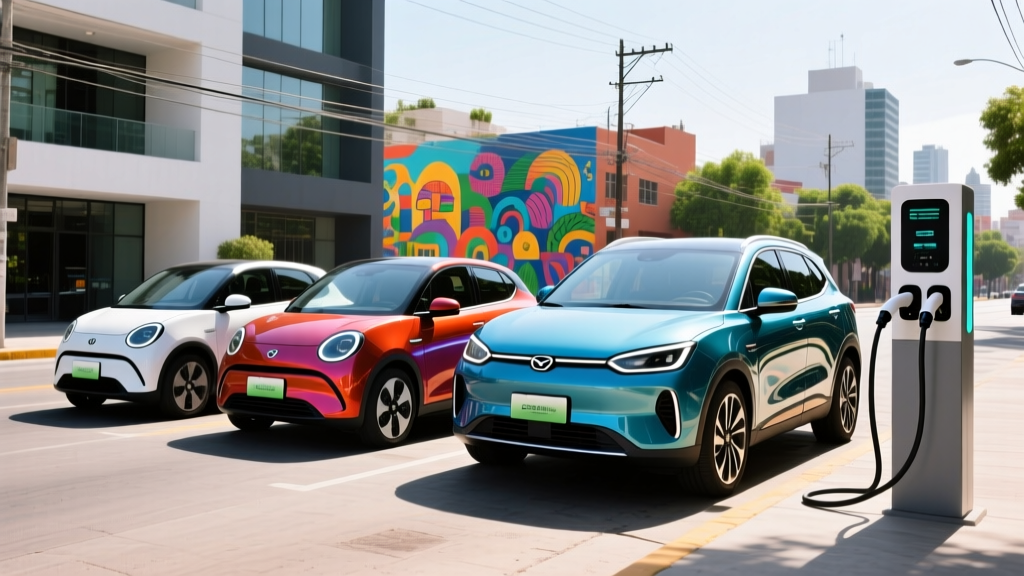
Mexico has become one of Latin America's fastest-growing EV markets, driven by aggressive pricing from Chinese automakers, government incentives including exemption from the ISAN (new vehicle tax) on electric models, and expanding urban charging networks in Mexico City, Guadalajara, and Monterrey.
The market breaks down into three tiers:
- Budget city EVs: JAC E10X, Wuling Mini EV — priced around $14,000–$18,000 USD, with 150–200 km (93–124 miles) of range on smaller 30–40 kWh LFP batteries.
- Mid-range crossovers and sedans: BYD Dolphin, BYD Yuan Plus (Atto 3), MG4, Chirey Omoda E5 — priced $22,000–$32,000 USD, offering 300–420 km (186–261 miles) WLTP range.
- Premium/established brands: Tesla Model 3 and Model Y (assembled at Giga Texas but sold in Mexico), Volvo EX30, BMW iX1 — priced $38,000–$65,000+ USD with familiar global specs.
According to Mexico's national auto industry association AMIA, EV and plug-in hybrid sales in Mexico grew roughly 40% year-over-year through 2025, though total volumes remain a small fraction of the overall market — approximately 3–4% of new vehicle sales.
Key Models Defining Mexico's Electric Car Market
Let's look at the specs that matter for the most popular EVs sold in Mexico that US buyers might encounter in research or cross-border contexts:
| Model | Battery (kWh) | Range (WLTP) | Peak DC Charge (kW) | 0-100 km/h | Approx. Price (USD) |
|---|---|---|---|---|---|
| BYD Dolphin | 60.4 (LFP Blade) | 427 km / 265 mi | 88 kW | 7.0 sec | $24,500 |
| BYD Yuan Plus (Atto 3) | 58.56 (LFP Blade) | 420 km / 261 mi | 88 kW | 7.3 sec | $27,000 |
| MG4 EV | 64 (NMC) | 450 km / 280 mi | 135 kW | 6.5 sec | $25,500 |
| JAC E10X | 30.2 (LFP) | 200 km / 124 mi | 30 kW | 13.0 sec (est.) | $14,500 |
| Chirey Omoda E5 | 61 (NMC) | 430 km / 267 mi | 90 kW | 7.6 sec | $28,000 |
| Tesla Model 3 RWD (Mexico trim) | 60 (LFP) | 491 km / 305 mi | 170 kW | 6.1 sec | $38,500 |
Real-world range caveat: WLTP figures are optimistic compared to EPA testing. Expect 10–15% lower range in real-world mixed driving, and 20–30% reduction in sustained highway speeds above 110 km/h (68 mph) or in Mexico's high-altitude mountain corridors where temperature swings are significant. The BYD Dolphin's 427 km WLTP translates to roughly 220–250 miles of usable real-world range in mixed conditions.
Why Can't US Buyers Simply Import Mexico's Electric Cars?
This is the question every US-based researcher eventually asks. The barriers are structural, not incidental:
Federal Safety and Emissions Certification
Any vehicle imported for permanent US road use must comply with Federal Motor Vehicle Safety Standards (FMVSS) administered by NHTSA. Chinese-market EVs sold in Mexico — including BYD, JAC, and Chirey models — are not FMVSS-certified. Obtaining certification independently is a multi-million-dollar process that only manufacturers can realistically undertake.
EPA Compliance
The EPA requires emissions testing and certification even for zero-emission vehicles (the certification covers evaporative systems, onboard diagnostics, and other requirements). Without EPA certification, a vehicle cannot be legally registered in most states.
The 25-Year Import Rule
Non-conforming vehicles can be imported under the "25-year rule" (once a model is 25 years old, it's exempt from FMVSS), but this obviously doesn't apply to 2026 model-year EVs. There is also the "Show or Display" exemption for historically significant vehicles — again, not applicable here.
Charging Connector Incompatibility
Most Chinese-market EVs sold in Mexico use the GB/T charging standard — China's national DC fast-charging connector. The US has standardized on NACS (Tesla's connector, now adopted by nearly all major automakers for 2025+ models) and the legacy CCS1 connector. While GB/T-to-CCS adapters exist, they are expensive ($500–$1,200), not widely available, and may not support full communication protocols required by US charging networks like Tesla Superchargers or Electrify America.
Cost Comparison: Mexico's EVs vs. US-Available Alternatives
Since direct import isn't practical, here's how Mexico's popular EVs compare in price to what US buyers can actually purchase in 2026:
| Vehicle | Market | Base MSRP (USD) | EPA Range | US Federal Credit Eligible? |
|---|---|---|---|---|
| BYD Dolphin | Mexico | $24,500 | N/A (not EPA-rated) | No — not sold in US |
| MG4 EV | Mexico | $25,500 | N/A (not EPA-rated) | No — not sold in US |
| Chevrolet Equinox EV LT | United States | $33,600 | 319 mi (EPA) | Up to $7,500 (§30D)* |
| Nissan LEAF S | United States | $28,140 | 212 mi (EPA) | Up to $3,750 (§30D)* |
| Hyundai Kona Electric SE | United States | $32,975 | 261 mi (EPA) | Depends on sourcing* |
*Federal §30D tax credit eligibility depends on MSRP caps ($55,000 for sedans, $80,000 for SUVs/trucks), buyer income limits ($150K single / $300K joint AGI), and battery critical-mineral and component sourcing requirements. Rules are subject to change — consult IRS guidance and a tax professional before purchasing.
The price gap is real: a BYD Dolphin at $24,500 in Mexico undercuts the cheapest US-available EV by $3,500–$9,000. But the US models carry EPA certification, NACS/CCS charging compatibility, full US warranty coverage, and potential access to the §30D federal tax credit — which can bring a Chevy Equinox EV's effective price down to roughly $26,100.
Real-World Ownership Considerations on Both Sides of the Border
Charging Infrastructure
In Mexico: Public charging remains concentrated in major metros. Mexico City has the densest network with Electrify America Mexico (branded locally), CFE (national utility) chargers, and Tesla Superchargers. Outside urban corridors, DC fast-charging deserts are common — particularly on highways between smaller cities. Most Mexican EV owners charge at home using standard 120V (Level 1) outlets, which adds roughly 3–5 miles of range per hour — adequate for city-commute vehicles like the JAC E10X but painfully slow for the BYD Yuan Plus on longer trips.
In the US: The public charging network has expanded dramatically, with over 70,000 public charging ports nationwide as of early 2026, per the Alternative Fuels Data Center. However, reliability remains inconsistent — broken chargers, payment app failures, and occupied stalls are common complaints on networks other than Tesla Superchargers.
Climate and Range Impact
Mexico's diverse climate affects EVs differently than US conditions. Mexico City sits at 2,240 meters (7,350 feet) elevation — thinner air reduces aerodynamic drag slightly (a minor efficiency gain), but cooler highland temperatures in winter can reduce range by 10–15%. Northern Mexican cities like Monterrey and Ciudad Juárez experience summer temperatures exceeding 40°C (104°F), which accelerates battery degradation if vehicles lack active thermal management. Most budget Chinese EVs (JAC, lower-trim BYD) use passive or minimal thermal management — a concern for long-term battery health in extreme heat.
Insurance and Parts Availability
For the handful of US residents who have imported Mexican-market vehicles (typically under temporary import permits near the border), insurance is extremely difficult to obtain. US insurers generally will not cover non-FMVSS vehicles for comprehensive/collision. Parts availability for brands like JAC and Chirey is nonexistent in the US, meaning even minor collision damage could total the vehicle.
Common Misconceptions About Mexico's Electric Cars
| Myth | Fact |
|---|---|
| "I can just drive to Mexico, buy a BYD, and drive it home." | US Customs will not allow permanent import of a non-FMVSS, non-EPA-certified vehicle. You may be able to drive it temporarily in border zones under specific permits, but registration in a US state is not possible. |
| "These cheap EVs must be low quality." | BYD's Blade LFP battery technology is globally recognized for safety and longevity. The Dolphin and Atto 3 have earned 5-star Euro NCAP ratings. Build quality is competitive with Hyundai/Kia at similar price points. |
| "Mexico has no charging infrastructure." | Mexico City has a robust and growing network. The CFE (national utility) has installed hundreds of public chargers. However, rural and intercity charging remains a legitimate gap — similar to many rural US regions. |
| "Chinese EVs will be in the US within a year or two." | Current US tariffs on Chinese-manufactured vehicles (100% tariff on Chinese EVs as of 2024, maintained through 2026) make direct Chinese EV imports economically unviable. BYD has stated it is evaluating US market entry via a non-China manufacturing plant, but no timeline has been announced. |
| "The GB/T charging connector is compatible with CCS." | GB/T is physically and electronically incompatible with CCS1 or NACS. Adapters exist but are costly, may not support all communication protocols, and are not certified for use on US public networks. |
Decision Framework: What Should US Buyers Do?
If You're a US-Based Buyer Researching Mexico's Electric Cars:
IF you live in a US border city and commute to Mexico regularly → Consider whether a Mexican-market EV makes sense as a second vehicle kept in Mexico for local driving. You'll need Mexican registration, Mexican insurance, and acceptance that the vehicle cannot be legally driven on US roads. Charging at a Mexican residence makes this feasible for city use.
IF you're looking for the cheapest new EV available in the US → The Nissan LEAF S at $28,140 (before any tax credit) remains the price floor for EPA-certified, warrantied, CCS-compatible EVs. With a partial §30D credit, effective cost may drop to ~$24,390. The Chevrolet Equinox EV at $33,600 offers 319 miles of EPA range — a far more practical vehicle for most American driving patterns.
IF you're watching the market for when affordable Chinese EVs reach the US → Monitor BYD's manufacturing expansion in Thailand, Brazil, and potentially Mexico (for export to non-US markets). The 100% US tariff on Chinese-manufactured EVs is the primary barrier. If BYD or another brand establishes a Mexican or South American plant specifically for North American export with compliant sourcing, the timeline could shift — but nothing is announced as of 2026.
IF you're considering a used EV in the US instead → The §25E used clean vehicle credit offers up to $4,000 (30% of sale price, capped at $4,000) on qualifying pre-owned EVs priced under $25,000. This can bring a 2-3 year old Chevy Bolt EUV or Nissan LEAF into the same price range as Mexico's budget EVs — with full US road legality, warranty, and charging compatibility.
Frequently Asked Questions
Can I legally import a BYD or JAC electric car from Mexico to the United States?
No, not for permanent road use. These vehicles lack FMVSS safety certification and EPA certification required for US registration. The 25-year import exemption does not apply to new vehicles. Temporary import permits exist for non-residents near the border, but these do not allow US state registration.
Why are EVs so much cheaper in Mexico than in the United States?
Three main factors: (1) Chinese manufacturers price aggressively for emerging markets with lower average incomes; (2) Mexico exempts EVs from the ISAN new-vehicle tax, which can add 15–20% to gas-car prices; (3) These vehicles often have smaller batteries (30–60 kWh vs. 75–100+ kWh in US-preferred long-range models), fewer mandated safety features (no FMVSS requirements), and lower trim content.
Are BYD's LFP Blade batteries actually good?
Yes. BYD's Blade battery (lithium iron phosphate in a cell-to-pack structural design) is widely regarded as one of the safest and most durable EV battery architectures available. LFP chemistry offers 3,000+ full charge cycles before significant degradation — roughly double typical NMC cycle life — and is far less prone to thermal runaway. The trade-off is lower energy density (heavier for the same kWh) and reduced cold-weather performance compared to NMC.
Will Chinese EV brands like BYD eventually sell in the United States?
BYD has expressed interest but faces the 100% US tariff on Chinese-manufactured vehicles, which effectively doubles the import cost. BYD could theoretically build a factory in Mexico, but USMCA rules of origin and potential additional tariff actions make this uncertain. No Chinese EV brand has announced a concrete US launch timeline as of 2026.
What's the best alternative if I want an affordable EV in the US right now?
For new vehicles: the Chevrolet Equinox EV ($33,600 MSRP, 319 mi EPA range, potentially $7,500 §30D credit). For used: a 2022–2024 Chevy Bolt EUV (259 mi EPA range, widely available under $20,000 used, eligible for the $4,000 §25E used EV credit). Both offer NACS/CCS charging, full US warranty, and established service networks.