What Is the 'Mexican Cybertruck' — and Can You Actually Buy One?
If you've been searching for the Mexican Cybertruck, you're likely reacting to one of two things: Tesla's long-discussed Giga Mexico factory in Nuevo León, or the wave of speculation about a smaller, more affordable Tesla pickup built south of the border for the North American market. Let's separate fact from rumor before diving into specs.
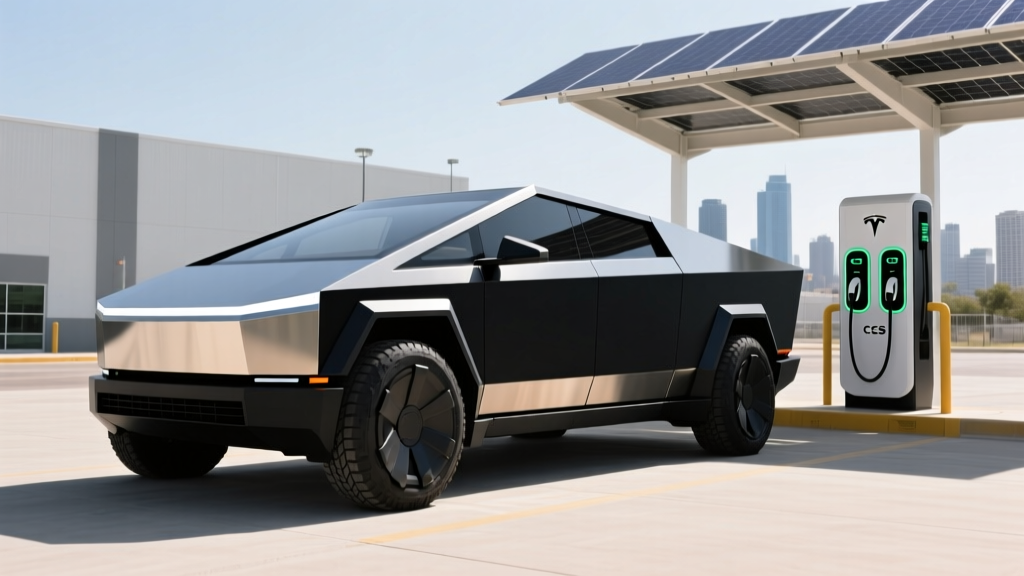
As of early 2026, Tesla has not officially launched a distinct "Mexican Cybertruck" model. The Cybertruck currently sold in the U.S. is manufactured at Giga Texas in Austin. However, Tesla's Giga Mexico project — announced in early 2023 and repeatedly delayed — remains a live initiative. Industry reporting and Tesla's own earnings calls have indicated that Giga Mexico, once operational, is expected to produce Tesla's next-generation, lower-cost vehicle platform, which could include a compact pickup or a more affordable variant of the Cybertruck architecture.
This review covers what we know based on Tesla's announced next-gen platform details, current Cybertruck specs (as the closest proxy), and Giga Mexico's stated production goals. Any specs tied to an unreleased Giga Mexico vehicle are clearly labeled as announced/estimated.
Projected Specs: Next-Gen Tesla Pickup (Giga Mexico Platform)
Below is a spec table combining confirmed current Cybertruck data with projected figures for Tesla's next-generation platform, which Giga Mexico is expected to produce. Tesla CEO Elon Musk has stated the next-gen vehicle will target roughly half the production cost of the Model 3/Y, suggesting a compact form factor.
| Specification | Current Cybertruck (AWD) ★ Proxy | Next-Gen Giga Mexico Pickup ★ Estimated |
|---|---|---|
| EPA Range | 340 miles | ~280–330 miles ★ |
| Battery Capacity | ~123 kWh usable (NMC) | ~75–90 kWh (LFP expected) ★ |
| Max DC Fast Charge | 250+ kW peak | ~200–250 kW ★ |
| 10–80% Charge Time | ~28 minutes | ~22–30 minutes ★ |
| Level 2 Home Charging | 11.5 kW (~37 mi/hr) | ~11.5 kW (~30–37 mi/hr) ★ |
| 0–60 mph | 3.9 sec (AWD) | ~5.5–6.5 sec (RWD/AWD) ★ |
| Horsepower | 600 hp (AWD dual-motor) | ~300–450 hp ★ |
| Drivetrain | Dual-motor AWD | RWD or AWD ★ |
| Efficiency (MPGe) | ~64 MPGe combined | ~90–110 MPGe ★ (lighter platform) |
| Base MSRP | $79,990 (AWD) | ~$35,000–$45,000 ★ (target) |
| Battery Warranty | 8 yr / 120,000 mi | 8 yr / 100,000–120,000 mi ★ |
★ = Projected/estimated based on Tesla's next-gen platform disclosures. Not confirmed production specs.
Real-World Range: What to Actually Expect
Current Cybertruck AWD: EPA 340 miles. Real-world highway driving at 70+ mph yields approximately 260–290 miles. In cold weather (below 32°F), expect a further 15–25% reduction, bringing effective range to ~200–245 miles.
Projected Next-Gen Pickup: If EPA-rated at ~300 miles, real-world highway range would likely land around 230–260 miles, with cold-weather range dropping to ~180–210 miles. The smaller battery and lighter curb weight may partially offset efficiency losses.
The Cybertruck's angular stainless-steel exoskeleton creates significant aerodynamic drag (estimated Cd around 0.38–0.42), which hammers efficiency at highway speeds. A next-gen compact pickup from Giga Mexico would likely adopt a more conventional, aerodynamic profile, improving real-world highway efficiency. However, any pickup truck will lose more range at sustained highway speeds than a sedan or crossover.
Tesla's use of a heat pump across its current lineup helps mitigate cold-weather cabin energy draw, but battery chemistry itself suffers in the cold. According to EPA testing, EVs can lose 20–30% of range at 20°F compared to 77°F baseline conditions.
Charging Speed: DC Fast Charging and Home Setup
Charging speed is where the Cybertruck — and likely any Giga Mexico successor — shows its strengths and its compromises.
| Charging Level | Power / Rate | Miles Added per Hour | Notes |
|---|---|---|---|
| Level 1 (120V) | ~1.4 kW | ~3–5 mi/hr | Emergency/trickle only |
| Level 2 (240V, 48A) | 11.5 kW | ~37 mi/hr | Full overnight charge (~9–10 hrs) |
| DC Fast (V3 Supercharger) | 250 kW peak | ~130+ mi in 15 min | 10–80% in ~28 min; tapers above 80% |
| DC Fast (V4 Supercharger) | 350 kW capable | Faster ramp, similar peak | Cybertruck currently capped below V4 max |
A critical detail many buyers miss: peak kW is not sustained kW. The Cybertruck may hit 250 kW briefly around 10–20% State of Charge, but the charge curve tapers significantly as the battery fills. Average charging power from 10–80% is closer to 150–170 kW, which is why the 10–80% time is 28 minutes rather than the ~15 minutes you'd calculate from peak rate alone.
For a next-gen Giga Mexico vehicle with a smaller ~80 kWh battery (likely LFP chemistry), charging could actually be faster in absolute time despite a similar or slightly lower peak kW. LFP batteries can accept high charge rates across a broader portion of the charge curve, and a smaller battery reaches 80% sooner.
Home charging note: Installing a 48A Level 2 charger (like the Tesla Wall Connector) typically requires a 60A dedicated circuit. Budget $500–$2,000+ for installation depending on your electrical panel's capacity. Older homes with 100A service panels may need a $1,500–$3,000 panel upgrade to support Level 2 charging alongside other household loads.
Performance and Drivetrain
The current Cybertruck AWD is brutally quick — 3.9 seconds to 60 mph from 600 horsepower across its dual-motor setup. The Cyberbeast tri-motor variant drops that to 2.6 seconds with 845 hp, but at a $99,990 MSRP, it's a performance halo, not a volume seller.
A next-generation compact pickup from Giga Mexico would likely prioritize efficiency and affordability over raw performance. Expect:
- RWD base model: Single rear motor, ~300 hp, 0–60 in ~6.0–6.5 seconds
- AWD variant: Dual motor, ~400–450 hp, 0–60 in ~4.5–5.5 seconds
- Towing capacity: Likely 5,000–7,500 lbs (vs. Cybertruck's 11,000 lbs rating)
For most pickup buyers — commuters with occasional hauling needs — these figures are more than adequate. The real question is whether Tesla can deliver them at a price point that undercuts the Ford Maverick Hybrid and the Chevrolet Colorado.
Pricing, Trims, and Federal Tax Credit Eligibility
Here's where the Mexican Cybertruck concept gets interesting — and complicated.
| Model / Trim | Est. Base MSRP | §30D Credit Eligibility ★ | Est. Net Price |
|---|---|---|---|
| Current Cybertruck AWD | $79,990 | No (exceeds $80K truck cap) | $79,990 |
| Current Cybertruck RWD (2025+) | $60,990 | Yes, if under $80K cap + sourcing met | ~$53,490 |
| Next-Gen Giga Mexico Pickup (RWD) ★ | ~$35,000–$40,000 | Depends on battery sourcing ★ | ~$27,500–$32,500 ★ |
| Next-Gen Giga Mexico Pickup (AWD) ★ | ~$42,000–$48,000 | Depends on battery sourcing ★ | ~$34,500–$40,500 ★ |
★ = Projected. Final eligibility depends on IRS rules at time of purchase.
IRS §30D Tax Credit: Key Rules for 2026
The federal EV tax credit under IRS §30D offers up to $7,500 for qualifying new EVs, but eligibility is far from guaranteed. Here's what matters for any Giga Mexico-built vehicle:
- MSRP cap: Trucks, vans, and SUVs must have an MSRP at or below $80,000; sedans at or below $55,000. A compact pickup would likely fall under the $80K truck cap.
- Buyer income limits: Modified adjusted gross income must not exceed $300,000 (joint filers), $225,000 (head of household), or $150,000 (individual).
- Battery component sourcing: Increasingly strict requirements mandate that a growing percentage of battery components be manufactured or assembled in North America. A Mexico-built vehicle has a strong geographic advantage here, as Mexico is part of the USMCA free-trade zone.
- Critical minerals: A percentage of critical minerals must be sourced from the U.S. or FTA partners. This is the trickiest hurdle — and the one most likely to disqualify otherwise eligible vehicles.
- Point-of-sale transfer: As of 2024+, buyers can transfer the credit to the dealer at purchase, reducing the sale price directly rather than waiting for a tax refund.
Bottom line: A Giga Mexico-built compact pickup is well-positioned for the §30D credit if Tesla meets the critical-minerals and battery-component sourcing thresholds. Vehicles manufactured in Mexico count as North American assembly under USMCA, which helps with the component requirement. However, the critical-minerals rule is separate and depends on Tesla's supply chain — not the assembly location. Always verify eligibility on fueleconomy.gov before purchasing.
Technology, Interior, and Standout Features
Based on the current Cybertruck's tech suite, a next-gen Giga Mexico pickup would likely include:
- 15.4-inch center touchscreen running Tesla's latest vehicle software
- Autopilot standard (SAE Level 2 driver assistance — adaptive cruise + lane centering); FSD (Supervised) available as a paid upgrade ($8,000 or $99/month as of 2025 pricing)
- Over-the-air updates continuously adding features and refining performance
- V2L (Vehicle-to-Load) capability — Cybertruck currently offers 120V and 240V bed outlets for powering tools or appliances
- Stainless steel or composite body — whether the next-gen model retains the Cybertruck's polarizing exoskeleton or adopts conventional stamped body panels remains unconfirmed
Tesla's Autopilot and Full Self-Driving (Supervised) are SAE Level 2 driver-assistance systems. The driver must remain fully attentive, keep hands on the wheel, and be prepared to take over at any time. These are not autonomous driving systems. Only Level 4 services like Waymo operate without a human driver in defined areas.
Notable Drawbacks to Consider
- Bed size uncertainty: A compact pickup would likely offer a 4.5–5.5 foot bed — adequate for home-improvement runs but limiting for larger cargo.
- No confirmed production timeline: Giga Mexico has faced repeated delays, political negotiations, and infrastructure challenges. First production could be 2027 or later.
- Service center access: Tesla's service network is already stretched thin in many U.S. markets. Adding a high-volume, lower-priced vehicle could worsen wait times.
- Insurance costs: Cybertruck insurance premiums have been notably higher than comparable trucks due to repair costs for the stainless-steel body. A more conventional design could help, but Tesla vehicles generally carry above-average insurance rates.
Cargo, Passenger Space, and Practicality
For the current Cybertruck:
- Bed length: 6 feet (74.3 inches with tailgate up)
- Cargo volume (bed): ~67 cu ft
- Front trunk (frunk): ~7.1 cu ft
- Seating: 6 passengers (3-across bench front and rear)
- Rear legroom: ~41.5 inches
A next-gen compact pickup from Giga Mexico would likely shrink these dimensions. Expect a 4.5–5 foot bed, seating for 5 passengers, and a smaller frunk. This positions it against the Ford Maverick (4.5-ft bed, ~34 cu ft cargo) rather than full-size trucks.
Who Should Wait for the Mexican Cybertruck — and Who Shouldn't
- You want a compact electric pickup under $40,000 (after potential tax credits)
- You're a daily commuter who occasionally needs a truck bed for DIY projects or gear
- You can wait until 2027+ for availability and accept early-production risk
- You have reliable home charging access
🚫 Look at Current Alternatives If:
- You need a truck now — the Ford F-150 Lightning, Rivian R1T, or current Cybertruck are available today
- You need heavy towing (10,000+ lbs) or a full-size bed
- You live in an area with limited Tesla Supercharger coverage
- You prefer established dealer service networks over Tesla's direct model
How It Compares to Key Competitors
While we wait for a confirmed Giga Mexico pickup, here's how the current landscape shapes up for affordable electric trucks:
| Vehicle | EPA Range | Base MSRP | §30D Credit | Availability |
|---|---|---|---|---|
| Tesla Cybertruck RWD | ~250 mi (est.) | $60,990 | Likely eligible | 2025+ |
| Ford F-150 Lightning | 240–320 mi | ~$54,995 | Eligible (select trims) | Now |
| Rivian R1T (Dual-Motor) | 270–420 mi | ~$69,900 | Not eligible (over MSRP cap) | Now |
| Chevrolet Silverado EV | ~350–440 mi | ~$55,000+ | Eligible (select trims) | Now (limited) |
| Giga Mexico Pickup ★ | ~280–330 mi ★ | ~$35,000–$45,000 ★ | Likely ★ | 2027+ ★ |
The price gap is the story here. If Tesla can deliver a sub-$40,000 electric pickup with 280+ miles of range, it would undercut every current electric truck by $15,000–$30,000. That's transformative — if it happens on schedule.
Frequently Asked Questions
What is the real-world range of the Mexican Cybertruck?
A distinct "Mexican Cybertruck" is not yet in production. For the current Cybertruck AWD, EPA range is 340 miles, but real-world highway driving yields approximately 260–290 miles, with cold weather reducing that further to around 200–245 miles. A next-gen compact pickup from Giga Mexico is projected at 280–330 miles EPA, with real-world highway range likely around 230–260 miles.
How fast does it charge at home and on the road?
The current Cybertruck charges at up to 250+ kW on DC fast chargers, reaching 10–80% in approximately 28 minutes. Home Level 2 charging at 11.5 kW adds about 37 miles per hour, meaning a full overnight charge takes roughly 9–10 hours. A next-gen vehicle with a smaller LFP battery could see similar or slightly faster DC charge times due to a smaller total capacity to fill.
How much does the Mexican Cybertruck cost after tax credits?
There is no confirmed price yet, as the vehicle hasn't been released. Tesla's stated goal for its next-gen platform is approximately $35,000–$40,000 base MSRP. If it qualifies for the full $7,500 federal §30D tax credit (which depends on battery sourcing, buyer income, and MSRP caps), the effective price could drop to roughly $27,500–$32,500. Verify eligibility at purchase via fueleconomy.gov and the IRS.
Is the Mexican Cybertruck worth waiting for vs. buying a current EV truck?
If you need a truck now, no — the wait could extend to 2027 or beyond, and early-production vehicles often have build-quality issues. The Ford F-150 Lightning and current Cybertruck are proven options today. However, if you can wait and want a significantly more affordable electric pickup, the Giga Mexico vehicle could be worth monitoring. Just don't delay a purchase you need today on the promise of a future model.
What are the biggest pros and cons?
- Sub-$40K price point (if achieved)
- Tesla Supercharger network access
- Likely §30D tax credit eligible
- OTA software updates
- Strong efficiency on next-gen platform
- Not yet available — 2027+ timeline
- Unconfirmed specs and pricing
- Likely smaller bed than full-size trucks
- Tesla service capacity already strained
- Higher insurance premiums typical of Teslas
Does it qualify for the federal EV tax credit?
Cannot be confirmed until the vehicle is in production and the IRS verifies battery sourcing compliance. However, a Mexico-assembled vehicle has a structural advantage under USMCA for the North American battery-component requirement. The critical-minerals threshold is the wildcard — it depends on Tesla's supply chain, not assembly location. Always check fueleconomy.gov and consult a tax professional before relying on the credit.
Final Verdict
The "Mexican Cybertruck" — a next-generation, affordable Tesla pickup built at Giga Mexico — remains one of the most anticipated and most delayed vehicles in the EV space. The concept is compelling: a compact electric truck at roughly $35,000–$45,000, eligible for federal tax credits, with Tesla's software and Supercharger ecosystem. But as of 2026, it exists only as projected specs and corporate intentions.
If Tesla delivers on its next-gen platform promises, this could be the vehicle that finally makes electric trucks accessible to mainstream buyers. Until then, the Ford F-150 Lightning, Chevrolet Silverado EV, and the current Cybertruck RWD remain your real-world options. We'll update this review the moment Giga Mexico begins production and official specs are confirmed.
Sources: fueleconomy.gov (EPA), IRS §30D Clean Vehicle Credits, Tesla Cybertruck specifications.