Quick Answer: Is the Mercury Avator 7.5e Right for You?
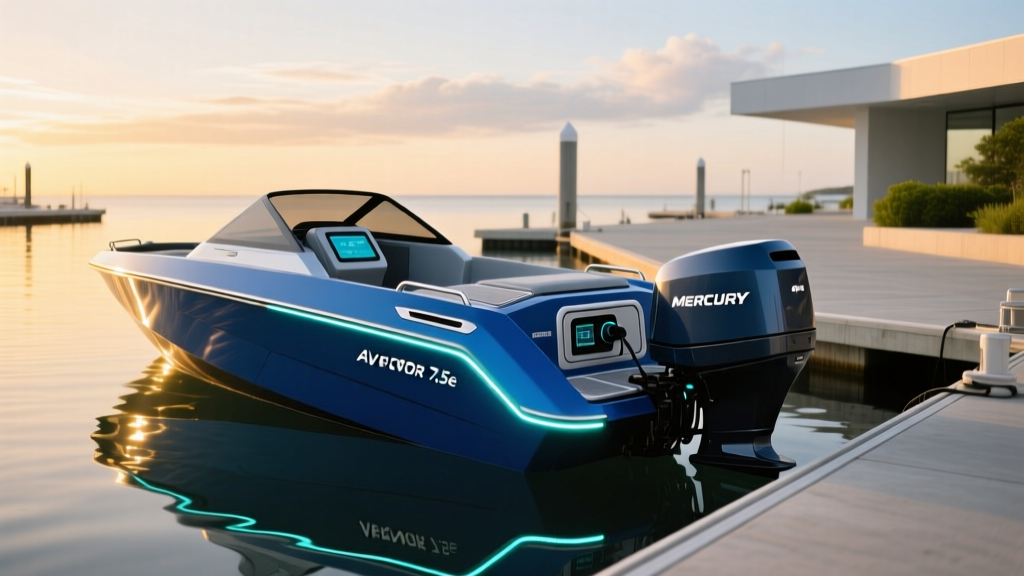
The Mercury Avator 7.5e is a battery-electric outboard motor delivering the equivalent of 7.5 horsepower, powered by a removable 1.8 kWh lithium-ion battery pack. It's designed for small boats — tenders, jon boats, inflatables, and light fishing craft — where silent, zero-emission operation matters. Expect roughly 1 to 2.5 hours of runtime depending on throttle usage, and a purchase price around $2,200–$2,500 for the motor with one battery. It's ideal for calm-water, short-trip boaters who value quiet and simplicity, but it cannot replace a gas outboard for long-distance runs or high-speed applications.
Electric propulsion is reshaping personal transportation, and that shift now extends to the water. Mercury Marine, a dominant name in outboard motors, launched the Avator line to address a growing segment of boaters who want the simplicity of electric power — no fuel mixing, no pull-starts, no exhaust fumes. The Avator 7.5e sits in the middle of the lineup, bridging the gap between the entry-level 3.5e and the more powerful 35e. But marine electrification faces different constraints than cars: water resistance is relentless, battery weight directly affects boat trim, and there's no regenerative braking to recapture energy on a lake.
This guide breaks down the Avator 7.5e's specs, real-world performance, costs, and how it compares to a gas equivalent — so you can decide whether electric outboard power fits your boating life.
Mercury Avator 7.5e: Core Specifications
Before evaluating whether this motor makes sense, you need the hard numbers. Marine electric motors are rated differently than EVs — there's no EPA range sticker, but battery capacity (kWh) and equivalent horsepower tell most of the story.
| Specification | Mercury Avator 7.5e |
|---|---|
| Equivalent Power | 7.5 HP (gas equivalent) |
| Battery Capacity | 1.8 kWh (lithium-ion) |
| Battery Weight | ~17 lbs (removable) |
| Motor Weight (without battery) | ~37 lbs |
| Total System Weight | ~54 lbs |
| Voltage | 48V nominal |
| Propeller | 3-blade, included |
| Tilt/Trim | Manual tilt, 5-position trim |
| Steering | Tiller handle |
| Charging (120V AC) | ~10 hours (full charge, included charger) |
| Charging (optional fast charger) | ~3.5 hours (full charge) |
| MSRP (with 1 battery) | ~$2,200–$2,500 |
| Additional Battery Pack | ~$1,100–$1,300 each |
| Warranty | 3 years (motor), 3 years (battery) |
A critical distinction: kW is power (how much energy flows at a given moment — like horsepower), while kWh is energy (total capacity — like gallons in a fuel tank). The Avator 7.5e's 1.8 kWh battery holds 1.8 kilowatt-hours of energy. At full throttle, the motor might draw close to 5.5 kW, meaning that battery would drain in roughly 20 minutes. At quarter throttle (~1.4 kW draw), you'd get closer to 1.3 hours. This is why runtime varies so dramatically with usage.
Real-World Runtime: What to Actually Expect
Mercury doesn't publish a single "range" number because marine runtime depends entirely on boat hull type, load, water conditions, and throttle habits. Here's a realistic breakdown based on typical use cases:
Runtime Estimates by Throttle Setting (Single 1.8 kWh Battery)
- Full throttle (100%): ~18–22 minutes — usable for short bursts to clear a channel or fight current
- Half throttle (~50%): ~45–60 minutes — practical for casual cruising on small lakes
- Quarter throttle (~25%): ~1.2–1.8 hours — trolling speed, ideal for fishing
- With 2 batteries (3.6 kWh total): Double all figures above
- With 3 batteries (5.4 kWh total): Triple all figures — up to ~5+ hours at trolling speed
The Avator 7.5e supports up to three battery packs connected simultaneously. For fishing applications where you're mostly trolling at low speed, three batteries give you a genuinely full day on the water. For pleasure cruising at moderate speeds, plan on one to two batteries as your practical limit before needing to return to shore and recharge.
Cold water and cold air temperatures will reduce battery performance — expect roughly 15–25% less runtime when air temperatures drop below 40°F, consistent with lithium-ion chemistry behavior across all EV applications.
Avator 7.5e vs. Gas Outboard: Cost and Experience Comparison
The most common question: how does the 7.5e stack up against a comparable gas outboard? The closest gas competitor is a 6–8 HP four-stroke from Mercury, Honda, or Yamaha. Here's a data-driven comparison:
| Factor | Mercury Avator 7.5e (Electric) | Gas 6–8 HP Four-Stroke |
|---|---|---|
| Upfront Cost | $2,200–$2,500 (1 battery) | $1,400–$2,000 |
| Fuel/Energy Cost per Hour | ~$0.15–$0.30 (at $0.15/kWh) | ~$2.50–$4.00 (at $4/gal, ~0.75 gal/hr) |
| Annual Maintenance | ~$0 (no oil, filters, spark plugs) | ~$100–$250 (oil change, lower unit, impeller) |
| Noise Level | Near-silent | 65–75 dB at idle, louder under load |
| Emissions at Point of Use | Zero | CO, HC, NOx — restricted on some lakes |
| Weight | ~54 lbs total | ~55–65 lbs |
| Max Runtime (single tank/charge) | ~20 min (full) to ~1.5 hr (troll) | 4–8 hours (with integral or portable tank) |
| Refuel/Recharge Time | 3.5–10 hours | 2 minutes (pour in gas) |
| Starting | Push-button / app | Pull-start or electric start |
| Storage/Transport | Battery removable, clean, no fuel smell | Fuel venting, potential spills, fumes |
The numbers tell a clear story: the electric outboard costs more upfront but nearly eliminates ongoing fuel and maintenance expenses. The trade-off is runtime and refueling speed. Gas wins decisively for long days, high-speed runs, or situations where you can't predict how long you'll be on the water. Electric wins for predictable, short-duration outings where silence and simplicity matter.
Total Cost of Ownership: 5-Year Breakdown
Assuming you boat roughly 50 hours per year (a reasonable average for weekend use), here's how costs stack up over five years:
| Cost Category | Avator 7.5e (Electric) | Gas 8 HP Four-Stroke |
|---|---|---|
| Purchase Price | $2,400 | $1,700 |
| Fuel/Energy (5 yrs, 250 hrs total) | $50–$75 | $750–$1,000 |
| Maintenance (5 yrs) | $0–$50 | $500–$1,250 |
| Additional Battery (if purchased yr 3) | $1,200 | $0 |
| 5-Year Total | $3,650–$3,725 | $2,950–$3,950 |
Over five years, the costs converge — and if you skip the extra battery, the electric option can actually come out ahead. The gap widens further if gas prices rise or if you boat more frequently. However, battery degradation over time (typically 10–20% capacity loss over 5 years for marine lithium-ion packs under normal use) means you may eventually face a battery replacement cost of ~$1,100–$1,300.
Charging Logistics: Home, Dock, and On-the-Go
Unlike EVs with their sprawling public charging networks, electric outboards rely almost entirely on standard AC power. Here's what charging looks like in practice:
- Home charging (standard 120V outlet): The included charger fills one 1.8 kWh battery in approximately 10 hours. Plug in after your outing, and it's ready by morning.
- Fast charger (optional, ~$300–$400): Reduces charge time to roughly 3.5 hours per battery. Worth it if you boat multiple times in a day or need quick turnarounds.
- Dock power: Many marinas offer 120V shore power at slips. If you have a slip with power, you can charge on-site — but confirm amperage availability (the charger draws roughly 2–3 amps on the fast setting).
- Solar charging: The Avator batteries can accept solar input via Mercury's optional solar charging accessory (~180W panel). This adds roughly 0.5–0.8 kWh per day in good sun — enough to extend trolling time but not a primary charging strategy.
- No Level 2/DC fast charging: Unlike electric cars, there's no 240V Level 2 or DC fast-charge standard for small marine batteries. You're limited to the ecosystem Mercury provides.
Practical tip: If you plan to run multiple batteries, charge them in parallel at home using additional chargers (sold separately). Waiting 10 hours sequentially for three batteries isn't realistic for weekend-heavy boaters.
Common Misconceptions About Electric Outboards
| Myth | Fact |
|---|---|
| "Electric outboards are just toys, not real motors." | The 7.5e delivers genuine 7.5 HP equivalent thrust. It planes lightweight hulls and pushes loaded jon boats at 5–6 mph. It's not a toy — it's appropriately sized for small craft. |
| "The battery will die and strand me on the water." | The Avator displays real-time remaining runtime on the tiller display and companion app. Plan your outings within the battery's capacity (as you would with a gas tank), and this isn't an issue. Carry a charged spare for peace of mind. |
| "Electric outboards can't handle saltwater." | The Avator line is rated for both fresh and saltwater use. The motor housing is sealed, and the lower unit is designed for marine corrosion resistance. Rinse with freshwater after saltwater use, as you would with any outboard. |
| "I'll save thousands going electric." | You'll save on fuel and maintenance, but the higher upfront cost and potential battery replacement mean savings are modest over 5 years — typically a few hundred dollars, not thousands. The real benefits are silence, zero fumes, and simplicity. |
| "I can use this on my 18-foot bass boat." | The 7.5e is rated for boats up to roughly 12 feet or lightweight craft up to ~800 lbs total (boat + load). It's not designed for large, heavy hulls. Match motor to boat. |
Who Should Buy the Avator 7.5e? A Decision Framework
Choose the Mercury Avator 7.5e if:
- You boat on small lakes, ponds, or calm rivers with predictable outing lengths (1–3 hours)
- Your boat is a tender, inflatable, jon boat, canoe, or small dinghy (under 12 feet)
- You troll for fish and value silent operation that won't spook wildlife
- You boat on waterways that restrict or ban gas motors (increasingly common on reservoirs and nature preserves)
- You want zero maintenance — no winterizing fuel systems, no carburetor cleaning, no oil changes
- You store your boat at home and want clean, fume-free transport (no gas in the truck bed or garage)
- You have reliable access to 120V power at home or your dock for overnight charging
Stick with a gas outboard if:
- You need 4+ hours at moderate-to-high speed without returning to shore
- Your boat is over 14 feet or heavily loaded (you'd need the Avator 35e or a gas motor)
- You boat on large, open water where conditions can change and you need extended range as a safety margin
- You can't charge at home or at your dock reliably
- You need instant refueling — gas takes 2 minutes; batteries take hours
- Budget is tight and you need the lowest upfront cost
Federal and State Incentives: Does the Avator Qualify?
Unlike electric cars, the federal §30D tax credit (up to $7,500 for new EVs) does not apply to marine motors. The IRS clean vehicle credit is specifically for qualified on-road vehicles. There is currently no federal tax incentive for purchasing an electric outboard motor.
However, some states and local water authorities offer rebates or incentives for electric marine equipment, particularly in areas with sensitive waterways. California's Air Resources Board (CARB) has explored incentive programs for zero-emission marine equipment. Check with your state's environmental or boating agency, and ask your local marina or dealer about regional promotions.
Real-World Ownership Considerations
Battery longevity: Mercury's lithium-ion packs are designed for hundreds of charge cycles. Expect 80–90% capacity retention after 3–5 years of typical weekend use. Store batteries at roughly 50% charge during off-seasons, and avoid leaving them fully depleted or fully charged for extended periods.
Weight distribution: At 54 lbs total (motor + battery), the 7.5e is comparable to a gas 8 HP. However, if you add two or three batteries in the boat (not on the motor), you're adding 34–51 lbs of weight that affects hull trim. Position spare batteries low and centered.
App connectivity: The Avator connects via Bluetooth to Mercury's companion app, which displays battery state of charge, estimated remaining runtime, motor diagnostics, and GPS-based speed/distance tracking. Useful for planning, but don't rely solely on the app — the tiller-mounted display is your primary reference on the water.
Insurance: Most boat insurance policies will cover an electric outboard under the same terms as a gas motor, but declare the motor's value explicitly. If you carry multiple battery packs, list them as separate equipment. Premium differences between electric and gas outboards are generally negligible for small craft policies.
Cold-weather storage: If you boat in northern climates, bring batteries indoors during winter. Lithium-ion cells should not be stored below freezing, and charging a frozen battery can cause permanent damage. The motor itself can be stored in a garage or shed.
Frequently Asked Questions
Can I use the Mercury Avator 7.5e in saltwater?
Yes. The Avator line is rated for saltwater use. The motor and lower unit are sealed and corrosion-resistant. Rinse thoroughly with freshwater after each saltwater outing, just as you would with any outboard motor.
How fast will a boat go with the Avator 7.5e?
Top speed depends on hull type and load. A lightweight 10-foot jon boat with one person might reach 8–10 mph at full throttle. A loaded inflatable tender might cruise at 4–6 mph. This is displacement-to-planing territory for small, light hulls — not high-speed operation.
Can I add more batteries later?
Yes. The Avator 7.5e supports up to three 1.8 kWh battery packs connected simultaneously. Additional batteries cost approximately $1,100–$1,300 each. You can also purchase additional chargers to charge multiple packs in parallel.
Is the Avator 7.5e powerful enough for a 12-foot aluminum boat?
It depends on load. A 12-foot aluminum jon boat with one or two people and light gear will work well at trolling and moderate cruising speeds. With three adults and heavy gear, you'll be at the motor's practical limit — consider the Avator 20e or 35e for heavier loads.
What happens if the battery runs out on the water?
The motor stops. You'll need to paddle, row, or be towed back — the same scenario as running out of gas. The onboard display and app provide real-time remaining runtime estimates, so monitor your battery as you would a fuel gauge. Carrying a charged spare battery eliminates this risk entirely.
Does Mercury offer a warranty on the Avator batteries?
Yes. Mercury provides a 3-year warranty on both the motor and the battery pack. This covers manufacturing defects and premature capacity loss. Normal degradation (gradual capacity reduction over years) is expected and is not typically covered unless it exceeds warranty thresholds. Review Mercury's specific warranty terms at purchase.
How does the Avator 7.5e compare to a trolling motor?
A dedicated trolling motor (like a Minn Kota or Lowrance) typically offers 30–80 lbs of thrust and runs off your boat's 12V/24V deep-cycle batteries. The Avator 7.5e produces significantly more thrust (equivalent to 7.5 HP) and is a primary propulsion motor, not just a positioning/trolling aid. However, if you already have a boat with a deep-cycle battery bank and only need low-speed trolling, a traditional trolling motor may be more cost-effective.