Quick Answer: Is the Mercedes Sprinter Electric Right for Your Fleet?
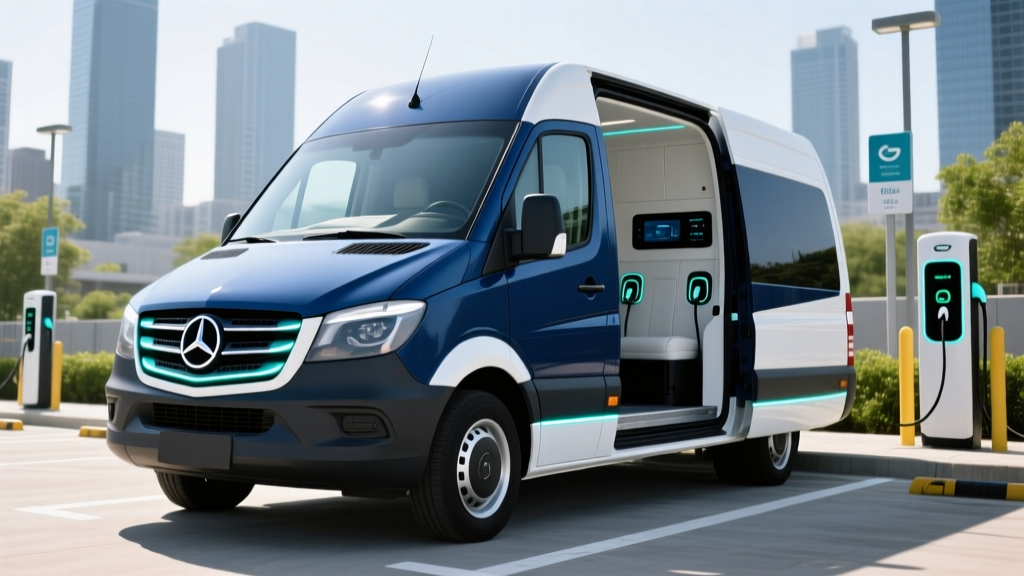
The 2026 Mercedes-Benz eSprinter (Sprinter Electric) is a battery-electric commercial cargo van built for predictable, last-mile and regional delivery routes. With a 113-kWh usable battery (LFP chemistry), an EPA-estimated range of approximately 200 miles in the standard-roof 170-inch wheelbase configuration, and peak DC fast charging at 115 kW (10–80% in roughly 42 minutes), it targets fleets that return to a depot nightly. Base MSRP starts near $72,000 before incentives — roughly double a comparable diesel Sprinter — but fuel and maintenance savings can close that gap within 4–6 years for high-utilization routes under 150 miles per day.
Range and Efficiency: EPA vs. Real-World Delivery Routes
The eSprinter is offered with a single 113-kWh usable lithium iron phosphate (LFP) battery pack across all body configurations. The EPA range rating depends on roof height, wheelbase, and payload. The most common fleet configuration — a 2500 standard-roof cargo van with 170-inch wheelbase — carries an EPA-estimated 200 miles.
Real-World Range Expectations
EPA Sticker: ~200 miles (2500 standard roof, 170" WB cargo van)
Real-World Urban Delivery: 160–185 miles (frequent stops, regen-heavy driving)
Highway (65–70 mph, loaded): 135–155 miles
Cold Weather (below 32°F, loaded): 120–150 miles — LFP chemistry loses roughly 25–35% range in freezing temperatures without preconditioning
Source: fueleconomy.gov and manufacturer testing data
Efficiency is rated at approximately 2.0–2.2 kWh/mile depending on configuration, which translates to roughly 1.5–1.7 MPGe equivalent. For fleet managers, the more useful metric is kWh per route-mile: expect 2.1 kWh/mile in mixed urban delivery with a 1,500-lb payload.
LFP chemistry is a deliberate choice here. While it offers lower energy density than NMC (meaning the pack is heavier for the same capacity), LFP provides a longer cycle life — typically 3,000+ full cycles before 80% capacity retention — and greater thermal stability. For a commercial van that charges daily, cycle life matters more than shaving weight.
Charging: Depot Level 2 and DC Fast Charging
| Level | Connector | Max Power (kW) | Miles Added per Hour | Notes |
|---|---|---|---|---|
| Level 1 (120V) | J1772 | 1.4 kW | ~3 mi/hr | Not practical for daily fleet use |
| Level 2 (240V, 48A) | J1772 | 11.5 kW | ~25 mi/hr | Full charge in ~10 hours; ideal for overnight depot |
| DC Fast Charge | CCS1 | 115 kW (peak) | ~130 mi/hr (peak) | 10–80% in ~42 min; tapers significantly above 80% |
Fleet operators should plan around Level 2 depot charging as the primary strategy. A 48-amp Level 2 station delivers a full 113-kWh charge overnight (roughly 10 hours from near-empty). For most delivery routes under 150 miles, a partial overnight charge is sufficient — you may only need to replenish 60–80 kWh, which takes 5–7 hours.
DC fast charging at 115 kW peak is adequate but not class-leading. The charge curve peaks briefly near 115 kW at low state of charge, then tapers to roughly 70–80 kW through the 40–60% range, and drops further above 80%. A 10–80% session takes about 42 minutes. For fleets needing mid-day top-ups, this means scheduling 45-minute driver breaks rather than quick 15-minute stops.
Depot charging infrastructure cost: Budget $3,500–$7,000 per Level 2 station installed (48-amp hardwired), plus potential electrical panel upgrades. For a 10-van fleet, total depot charging infrastructure typically runs $50,000–$90,000 including trenching, conduit, and load management software. Commercial EVSE incentives from local utilities can offset 30–50% of this cost — check your utility's commercial EV programs.
Specs and Performance
| Battery (usable) | 113 kWh, LFP chemistry |
| EPA Range | ~200 miles (varies by config) |
| Motor | Permanent-magnet synchronous, FWD |
| Horsepower | 201 hp (150 kW) |
| Torque | 295 lb-ft |
| 0–60 mph | ~8.5 sec (unladen) |
| Payload Capacity | Up to ~2,600 lbs (varies by config) |
| Cargo Volume | 318–533 cu ft (by body style) |
| Max DC Charge Rate | 115 kW (CCS1) |
| 10–80% DC Charge | ~42 minutes |
| Level 2 Rate | 11.5 kW (J1772) |
| Base MSRP | ~$72,000 (2500 cargo) |
| Battery Warranty | 8 years / 100,000 miles (70% capacity retention) |
| Vehicle Warranty | 3 years / 36,000 miles basic; 5 years / 60,000 miles powertrain |
The 201-hp front-mounted motor provides adequate performance for urban delivery. Acceleration is modest but acceptable — the eSprinter merges onto highways without drama at part-load. Top speed is electronically limited to 80 mph (configurable via fleet management settings to 65 mph for efficiency). Regenerative braking offers multiple levels selectable via steering-wheel paddles, enabling one-pedal-style driving in stop-and-go delivery traffic.
eSprinter vs. Diesel Sprinter: 5-Year Fleet Cost Breakdown
The purchase-price gap between electric and diesel Sprinters is substantial. Here's how the numbers work for a single van driven 25,000 miles/year on urban delivery routes:
| Cost Category | eSprinter (Electric) | Sprinter 2500 (Diesel) |
|---|---|---|
| Purchase Price (MSRP) | $72,000 | $48,000 |
| Federal Commercial EV Credit (§45W)* | –$7,500 | $0 |
| State/Utility Incentives (avg) | –$5,000 | $0 |
| Net Acquisition Cost | $59,500 | $48,000 |
| Fuel/Energy (5 yr, 125k mi) | $8,750 (electricity @ $0.14/kWh) | $21,875 (diesel @ $4.50/gal, 18 MPG) |
| Maintenance (5 yr) | $3,500 | $9,500 |
| Insurance (5 yr) | $14,000 | $12,500 |
| Depot Charging Install (amortized/van) | $5,000 | $0 |
| 5-Year Total | $90,750 | $91,875 |
*The IRS §45W Commercial Clean Vehicle Credit provides up to $7,500 for vehicles under 14,000 lbs GVWR (the eSprinter 2500 qualifies). This credit applies to businesses and tax-exempt organizations and has different rules than the consumer §30D credit. Consult a tax professional for your entity's eligibility.
The breakeven point typically arrives around year 4–5 for high-utilization urban routes. Key variables: your electricity rate (commercial rates below $0.12/kWh accelerate payback), diesel prices, and annual mileage. Routes under 100 miles/day with depot charging see the strongest economics.
Real-World Ownership: What Fleet Managers Should Know
Depot Charging Is Non-Negotiable
Unlike consumer EVs that can rely on public charging networks, the eSprinter's economics depend on depot Level 2 charging. Public DC fast charging at commercial rates ($0.35–$0.55/kWh) erases most fuel-cost savings. If your fleet lacks depot parking with electrical infrastructure access, the eSprinter is not viable today. Budget for electrical upgrades: many commercial depots need a 480V three-phase service upgrade ($15,000–$40,000) to support multiple Level 2 stations with load management.
Cold-Weather Route Planning
LFP batteries lose more capacity in cold weather than NMC chemistries. In sub-freezing climates, plan for 25–35% range reduction. A 200-mile EPA van becomes a 130–150-mile van in January in Chicago or Minneapolis. The eSprinter includes a battery preconditioning system, but cabin heating also draws 3–5 kW continuously in cold weather. Fleets in northern climates should spec routes at no more than 60% of EPA range in winter.
Payload and Route Optimization
Every 500 lbs of payload reduces range by roughly 5–8%. Fully loaded at max payload (2,600 lbs), expect range to drop to 170–180 miles EPA-equivalent in mild weather. Route optimization software that accounts for battery state of charge, elevation changes, and payload weight is essential for multi-van fleets.
Insurance Costs
Commercial EV insurance runs 10–20% higher than diesel equivalents due to higher repair costs and battery replacement risk. Budget $2,800–$3,200/year per van vs. $2,300–$2,700 for diesel. Some insurers offer EV fleet discounts — shop quotes from carriers with commercial EV experience.
Common Misconceptions About the eSprinter
| Myth | Fact |
|---|---|
| "Electric vans can't handle real delivery routes." | The eSprinter handles 100–150-mile urban routes easily with overnight depot charging. Over 80% of last-mile delivery routes in the US are under 150 miles/day (US DOT data). |
| "The battery will need expensive replacement in a few years." | LFP chemistry is rated for 3,000+ full cycles. At one cycle/day, that's 8+ years before reaching 80% capacity. Mercedes warranties the battery for 8 years/100,000 miles at 70% retention. |
| "Charging takes too long for commercial use." | Overnight Level 2 depot charging (10 hours) covers most daily needs. Mid-day DC fast charging adds ~130 miles in 42 minutes — suitable during scheduled driver breaks. |
| "The eSprinter qualifies for the $7,500 consumer tax credit." | The consumer §30D credit is for personal-use vehicles. Commercial fleets use the §45W Commercial Clean Vehicle Credit (up to $7,500 for under 14,000 lbs GVWR). Rules differ — consult a tax professional. |
| "Electric vans cost less to maintain, so savings are guaranteed." | Maintenance savings are real (~$1,200/yr less), but higher insurance, depot infrastructure costs, and higher upfront price mean breakeven takes 4–5 years on most routes. Low-mileage fleets may not break even. |
Decision Framework: Should Your Fleet Go Electric?
Choose the eSprinter If:
- Your daily routes are under 150 miles (under 120 miles in cold climates)
- You have depot parking with access to 240V electrical infrastructure (or budget for upgrades)
- Your vans return to base nightly for predictable overnight charging
- You operate in a state/city with commercial EV incentives or clean-fleet mandates
- Your fleet averages 20,000+ miles/year per van (higher utilization = faster payback)
- You want to reduce local emissions in urban delivery zones (customer-facing ESG benefit)
Stick With Diesel (or Wait) If:
- Your routes regularly exceed 180 miles/day or are unpredictable
- You lack depot charging access and rely on street parking or remote lots
- You operate long-haul regional routes requiring highway-speed driving (range drops sharply at 70+ mph)
- Your annual mileage per van is under 12,000 miles (payback period extends beyond vehicle life)
- You're in an extreme cold-weather market (Alaska, northern Montana) without heated garaging
- You need max payload (3,500+ lbs) on a 3500 dually — the eSprinter is currently 2500-only in most configs
Frequently Asked Questions
What is the real-world range of the Mercedes Sprinter Electric?
The EPA rates the eSprinter 2500 standard-roof cargo van at approximately 200 miles. In real-world urban delivery with stops and regen braking, expect 160–185 miles. Highway driving at 65–70 mph with a loaded cargo area drops that to 135–155 miles. In freezing weather, plan for 120–150 miles. Always spec your longest route at no more than 75% of EPA range to maintain a safety buffer.
How much does it cost to charge the eSprinter per day?
Assuming a 120-mile route consuming 2.1 kWh/mile (252 kWh) at a commercial depot rate of $0.14/kWh, daily energy cost is approximately $35. A comparable diesel Sprinter at 18 MPG and $4.50/gallon diesel burns 6.7 gallons ($30/day). At lower commercial electricity rates ($0.08–$0.10/kWh in some markets), the eSprinter drops to $20–$25/day — a meaningful savings over diesel.
Does the eSprinter qualify for federal tax credits?
Yes, but not the consumer §30D credit. Commercial buyers use the IRS §45W Commercial Clean Vehicle Credit, which provides up to $7,500 for qualifying vehicles under 14,000 lbs GVWR. The eSprinter 2500 (GVWR ~9,990 lbs) qualifies. Tax-exempt organizations (municipalities, nonprofits) can receive this as a direct payment. Consult a tax professional — eligibility depends on your entity type, vehicle sourcing, and tax liability.
How long does the eSprinter battery last, and what does replacement cost?
The LFP battery is designed for 3,000+ full charge cycles before degrading to 80% capacity. At one cycle per day, that's roughly 8 years. Mercedes-Benz warranties the battery for 8 years or 100,000 miles (whichever comes first) with a 70% capacity retention threshold. Out-of-warranty battery replacement is estimated at $18,000–$25,000 including labor, though prices are expected to decline as LFP cell costs continue falling.
Can I tow with the eSprinter?
The eSprinter is rated for up to 5,000 lbs of towing capacity (braked trailer). However, towing significantly reduces range — expect a 30–50% reduction depending on trailer weight and aerodynamics. For fleets that regularly tow, the diesel Sprinter remains the practical choice.
What body styles are available for the eSprinter?
The eSprinter is available as a 2500 cargo van (standard and high roof, 144" and 170" wheelbase), a crew van, and a cutaway cab for upfitting. The 1500 (light-duty) and 4500 (heavy-duty) configurations are not currently offered in electric. Passenger van configurations vary by market and model year — check with your local Mercedes-Benz commercial dealer.
How does the eSprinter compare to the Ford E-Transit?
The Ford E-Transit uses a smaller 68-kWh battery with an EPA range of ~126 miles, making it suited for shorter urban routes (under 100 miles/day). The eSprinter's 113-kWh pack delivers roughly 60% more range but at a $15,000–$20,000 higher base price. For sub-100-mile routes, the E-Transit offers better capital efficiency. For 100–150-mile routes, the eSprinter's range advantage justifies the premium.
Sources: EPA fueleconomy.gov, Mercedes-Benz USA Sprinter, IRS §45W Commercial Clean Vehicle Credit