Quick Verdict: Ultra-Luxury Meets Electric Practicality
The Mercedes-Maybach EQS SUV occupies a rare intersection: six-figure opulence with genuine zero-emission capability. Priced from $181,050 before options, it targets buyers who want chauffeur-grade comfort without the V8 soundtrack. But beneath the hand-stitched leather and champagne flutes sits a 108.4 kWh NMC battery pack, dual-motor AWD, and a 200 kW DC fast-charging architecture that must prove itself in real-world conditions — not just on the showroom floor.
After analyzing EPA data, charging curves, and ownership economics, the Maybach EQS SUV delivers genuine luxury-EV competence. Its range is adequate for most use cases, its charging speed is respectable if not class-leading, and its cabin is unmatched. But buyers must weigh its $180K+ entry against competitors offering similar or superior EV fundamentals at lower prices.
Range and Efficiency: EPA vs. Reality
Real-World Expectation: 240–260 miles highway; 220–240 miles in cold weather (below 40°F); up to 290 miles city with regen-heavy driving
The Maybach EQS SUV earns an EPA-estimated 280 miles of range, per fueleconomy.gov. That figure comes from the EQS 680 SUV variant, which pairs the 108.4 kWh usable battery with dual permanent-magnet synchronous motors producing a combined 649 horsepower and 700 lb-ft of torque.
In practice, expect real-world highway driving at 70–75 mph to yield roughly 240–260 miles before you need to plug in. Cold weather (below 40°F) reduces lithium-ion efficiency and increases cabin heating load, typically knocking 10–15% off range — putting winter highway range closer to 220–240 miles. City driving with frequent regenerative braking can push toward or slightly above the EPA sticker, since the EQS platform recaptures up to 300 kW of regen power.
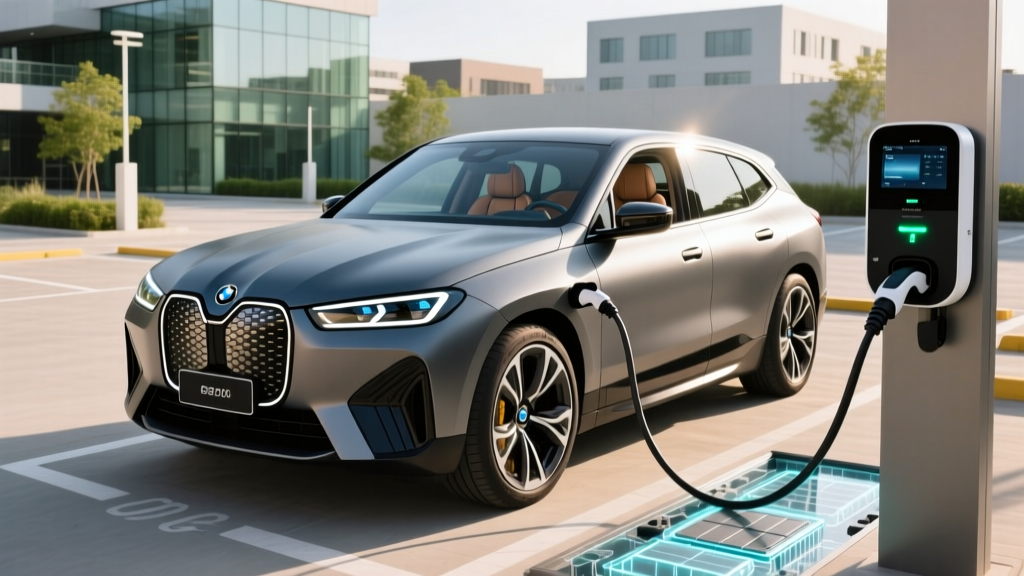
Efficiency is rated at 79 MPGe combined (78 city / 80 highway), translating to approximately 42 kWh per 100 miles. That's competitive with the BMW iX xDrive50 (87 MPGe) but slightly behind the Tesla Model X (102 MPGe), which benefits from lighter weight and a more aerodynamic profile despite its larger footprint.
| Spec | Value |
|---|---|
| EPA Range | 280 miles |
| Battery (usable) | 108.4 kWh, NMC (nickel-manganese-cobalt) |
| Drivetrain | Dual-motor AWD (4MATIC) |
| Horsepower | 649 hp combined |
| Torque | 700 lb-ft |
| 0–60 mph | 4.1 seconds |
| Max DC Fast Charge | 200 kW |
| 10–80% DC Charge Time | ~31 minutes |
| Level 2 Home Charge Rate | 9.6 kW (AC) |
| Efficiency (MPGe) | 79 combined (42 kWh/100 mi) |
| Cargo Volume (rear seats up) | 21.9 cu ft |
| Cargo Volume (rear seats folded) | 63.3 cu ft |
| Rear Legroom | 41.9 inches |
| Battery Warranty | 10 years / 155,000 miles |
| Base MSRP | $181,050 |
Charging Speed: DC Fast, Level 2, and Home Setup
| Charging Level | Power | Speed / Time |
|---|---|---|
| Level 1 (120V) | ~1.4 kW | ~3–4 miles per hour |
| Level 2 (240V, 40A) | 9.6 kW | ~22–25 miles per hour; full charge ~11 hrs |
| DC Fast Charge | 200 kW peak | 10–80% in ~31 min; 200 mi in ~15 min (ideal) |
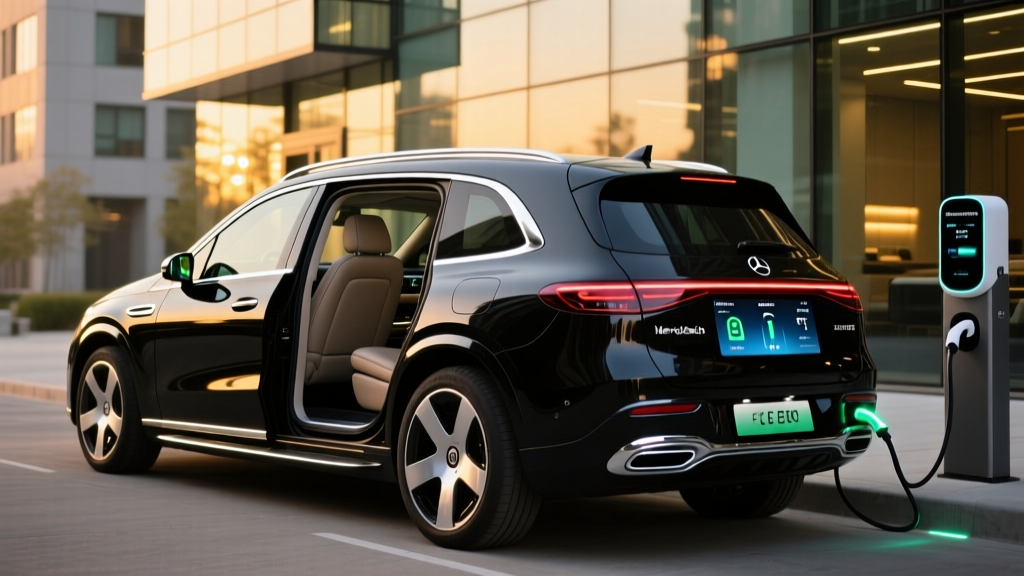
The Maybach EQS SUV supports a peak DC fast-charge rate of 200 kW via its CCS1 connector (NACS adapter available through Mercedes-Benz for Tesla Supercharger access). On a 350 kW Electrify America or EVgo station, the EQS platform can accept up to 200 kW in the 10–40% state-of-charge window, then tapers progressively. The 10–80% charge takes approximately 31 minutes under ideal thermal conditions.
Here's where charging-curve reality matters: that 200 kW peak is sustained for roughly the first 10–15 minutes, then drops to ~150 kW through 60%, and further to ~80 kW approaching 80%. If you arrive at a charger with a cold battery (below 68°F / 20°C) and haven't preconditioned via the MBUX navigation system, peak rates may be limited to 100–120 kW until the thermal management system warms the pack. Always set your DC charger as a navigation destination to trigger automatic preconditioning — it makes a measurable difference.
At home, the onboard charger accepts up to 9.6 kW on a 240V / 40A Level 2 circuit. That translates to roughly 22–25 miles of range per hour of charging, meaning a full 0–100% replenishment takes about 11 hours. Most owners will plug in overnight and wake to a full battery — the standard luxury-EV ownership pattern. A hardwired Level 2 home charger installation typically runs $800–$2,000 depending on panel proximity and local permitting, per licensed electrician estimates.
Performance and Driving Dynamics
The EQS 680's dual-motor AWD system delivers 649 hp and a 4.1-second 0–60 mph time. That's quick by any measure, and the instant torque delivery makes highway merging effortless. But this is not a sport SUV — the Maybach tuning prioritizes isolation over engagement. The standard AIRMATIC air suspension with adaptive damping absorbs road imperfections with genuine authority, and the rear-axle steering (up to 10 degrees) shrinks the turning circle to a manageable 36.7 feet despite the 207.6-inch overall length.
Drive modes include Electric, Comfort, Sport, and Individual. Sport tightens the damping and sharpens throttle response, but the 5,800+ lb curb weight is always present through corners. This is a vehicle designed for being driven in, not necessarily driving hard. Noise insulation is exceptional — laminated glass all around, acoustic foam in the wheel arches, and a near-silent drivetrain make it one of the quietest cabins on the road at any speed.
One-pedal driving is available but not default; the steering wheel paddles let you select among four regen levels (D+, D, D−, D Auto). D Auto uses radar and camera data to modulate regen based on traffic ahead — a genuinely useful feature that reduces brake pedal use in stop-and-go traffic.
Interior, Cargo, and Technology
The Maybach EQS SUV cabin is where the six-figure price begins to justify itself. Standard features include:
- Nappa leather throughout, with hand-stitched diamond quilting
- MBUX Hyperscreen — a 56-inch curved glass panel spanning the dashboard (12.3" instrument cluster + 17.7" central OLED + 12.3" passenger display)
- Rear-seat individual power-adjustable seats with heating, ventilation, and massage
- Rear-seat entertainment with dual 11.6-inch tablets
- Burmester 4D surround sound (15 speakers, 900W)
- Refrigerated compartment in rear console
- Active ambient lighting with 64 colors
- HEPA-grade ENERGIZING air filtration
Cargo space measures 21.9 cu ft behind the second row and 63.3 cu ft with rear seats folded. That's adequate for luggage on a road trip but less than the BMW iX (35.5 / 77.9 cu ft) or Tesla Model X (44.1 / 92.3 cu ft). The Maybach prioritizes rear-seat passenger volume over utility — rear legroom is a generous 41.9 inches.
On the driver-assistance front, the EQS SUV comes equipped with Mercedes-Benz Driver Assistance Package, which includes:
- Active Distance Assist DISTRONIC (adaptive cruise)
- Active Steering Assist (lane centering)
- Active Lane Change Assist
- Active Blind Spot Assist
- PRE-SAFE (predictive collision preparation)
Pricing, Trims, and Federal Tax Credit Eligibility
| Item | Amount |
|---|---|
| Base MSRP (EQS 680 SUV) | $181,050 |
| As-Tested (with typical options) | $195,000–$210,000 |
| Federal §30D Tax Credit | $0 — exceeds MSRP cap |
| Estimated Out-of-Pocket | $181,050+ (before state incentives) |
The Maybach EQS 680 SUV starts at $181,050 (including destination). Options packages — including the Executive Rear Seat Package Plus ($5,000+), MANUFAKTUR exclusive paint ($3,500+), and 22-inch forged wheels ($4,000+) — can push a well-equipped example past $200,000.
Federal tax credit eligibility: Under current IRS §30D rules, the Maybach EQS SUV does not qualify for the up-to-$7,500 federal clean vehicle credit. The reason is straightforward: the §30D credit imposes an MSRP cap of $80,000 for SUVs, and the Maybach EQS starts at more than double that threshold. Additionally, buyers must meet income caps ($300,000 joint / $150,000 single modified AGI), and the vehicle's battery must meet critical-mineral and battery-component sourcing requirements that shift annually.
Some state and local incentives may still apply — California's CVRP program, for example, has its own income and price thresholds. Check your state's energy office or DMV for current rebates. A tax professional can advise on whether any portion of the credit or state incentive applies to your specific situation.
Who Should Buy the Maybach EQS SUV?
- You want the most luxurious electric SUV cabin available, with chauffeur-grade rear seats
- You primarily drive in urban/suburban settings with reliable home charging
- You value ride isolation and silence over sporty handling
- You want a distinctive, low-volume EV that stands apart from the Tesla/BMW crowd
- You need maximum cargo utility (consider BMW iX or Tesla Model X)
- You want 350+ kW charging speeds (Porsche Macan EV, Hyundai Ioniq 5 N)
- You need federal tax credit eligibility (MSRP must be under $80K for SUVs)
- You regularly drive 300+ miles between charging stops
The Maybach EQS SUV is best suited for owners who charge at home nightly, commute 30–80 miles daily, and occasionally road-trip with planned charging stops. Its 280-mile EPA range handles most daily needs with a comfortable buffer, and the 200 kW DC charging is adequate for highway trips when you can find a reliable 350 kW station. It's not a towing vehicle (no official tow rating published), and its ground clearance isn't designed for off-road use. Think of it as an electric S-Class for the school-run-and-country-club set.
Pros and Cons
- Class-leading cabin luxury and rear-seat comfort
- Exceptional noise isolation — among the quietest EVs at highway speed
- Adequate 280-mile EPA range for daily use
- Smooth, powerful 649-hp dual-motor drivetrain
- Generous 10-year / 155,000-mile battery warranty
- MBUX Hyperscreen and rear-seat entertainment standard
- Rear-axle steering improves low-speed maneuverability
- $181K+ starting price; no federal tax credit eligibility
- 200 kW peak DC charging trails Porsche/Audi 800V platforms (270–350 kW)
- Cargo space (21.9 cu ft) is below BMW iX and Tesla Model X
- Heavy curb weight (~5,800 lbs) affects efficiency and handling
- Real-world highway range closer to 240–260 miles
- MBUX Hyperscreen learning curve; fingerprint magnet
- No frunk (front trunk) — space used for HVAC components
Competitor Comparison
| Spec | Maybach EQS 680 | BMW iX M60 | Tesla Model X Plaid |
|---|---|---|---|
| Base MSRP | $181,050 | $111,500 | $94,990 |
| EPA Range | 280 mi | 296 mi | 326 mi |
| 0–60 mph | 4.1 sec | 3.6 sec | 2.5 sec |
| Peak DC Charge | 200 kW | 200 kW | 250 kW |
| Cargo (seats up) | 21.9 cu ft | 35.5 cu ft | 44.1 cu ft |
| §30D Credit Eligible | No (MSRP cap) | No (MSRP cap) | Potentially (under $80K SUV cap) |
The BMW iX M60 offers more cargo space and slightly better range at $70K less. The Tesla Model X Plaid is dramatically quicker and more efficient, with access to the Supercharger network natively (though Mercedes now offers a NACS adapter). The Maybach's advantage is purely experiential — no competitor matches its rear-seat luxury or cabin quietness. If the question is "best EV," the Maybach doesn't win. If the question is "most luxurious electric SUV," it has no rival.
Battery Warranty and Long-Term Ownership
Mercedes-Benz backs the EQS SUV's high-voltage battery with a 10-year / 155,000-mile warranty (whichever comes first), covering defects and capacity loss below 70% of original capacity. That's among the most generous in the luxury EV segment and exceeds the federal minimum of 8 years / 100,000 miles.
The NMC (nickel-manganese-cobalt) chemistry in the EQS pack offers high energy density but is more sensitive to sustained high-state-of-charge storage than LFP (lithium iron phosphate) packs. Best practice: charge to 80% for daily use and reserve 100% charges for road trips. The MBUX system lets you set a charge limit to automate this. Expect 2–3% annual degradation under normal use, meaning roughly 90–94% capacity retention after 5 years based on industry data from similar NMC packs.
Replacement cost for the full high-voltage battery is estimated at $20,000–$30,000 out of warranty, though individual module replacement (if only certain cells degrade) can be significantly less. Mercedes has not published official module-replacement pricing.
Frequently Asked Questions
What is the real-world range of the Mercedes-Maybach EQS SUV?
The EPA rates it at 280 miles, but real-world highway driving at 70–75 mph typically yields 240–260 miles. Cold weather (below 40°F) can reduce that to 220–240 miles. City driving with regenerative braking can approach or slightly exceed the EPA number.
How fast does the Maybach EQS SUV charge?
On a DC fast charger, it peaks at 200 kW and charges from 10–80% in approximately 31 minutes under ideal conditions. At home on a Level 2 (240V / 40A) charger, it adds about 22–25 miles of range per hour, with a full charge taking roughly 11 hours.
Does the Maybach EQS SUV qualify for the federal EV tax credit?
No. Under current IRS §30D rules, the $7,500 federal clean vehicle credit has an MSRP cap of $80,000 for SUVs. The Maybach EQS starts at $181,050, well above that limit. State incentives may still apply depending on your location and income. Consult IRS.gov or a tax professional for your specific eligibility.
Is the Maybach EQS SUV worth buying over the BMW iX or Tesla Model X?
If rear-seat luxury and cabin isolation are your top priorities, yes — no competitor matches the Maybach's chauffeur-grade experience. If you prioritize cargo space, charging speed, efficiency, or value, the BMW iX and Tesla Model X are objectively stronger EVs at lower prices.
What are the biggest drawbacks of the Maybach EQS SUV?
The primary cons are its $181K+ price (with no federal tax credit), 200 kW peak charging that trails 800V competitors, limited cargo space (21.9 cu ft), and real-world highway range of ~240–260 miles. It's also heavy at ~5,800 lbs, which affects efficiency.
What battery chemistry does the Maybach EQS SUV use?
It uses an NMC (nickel-manganese-cobalt) lithium-ion battery with 108.4 kWh of usable capacity. NMC offers high energy density but benefits from daily charge limits of 80% to maximize long-term longevity.
Does the Maybach EQS SUV have a frunk?
No. The space under the hood is occupied by HVAC and power electronics. All cargo goes in the rear hatch area.
Can the Maybach EQS SUV use Tesla Superchargers?
Yes, with the Mercedes-Benz NACS adapter (available through Mercedes dealerships). The adapter allows CCS-equipped Mercedes EVs to access the Tesla Supercharger network. Alternatively, the Maybach EQS uses CCS1 natively at Electrify America, EVgo, and other public networks.