Quick Answer: Should You Buy the 2026 Mercedes GLC EV?
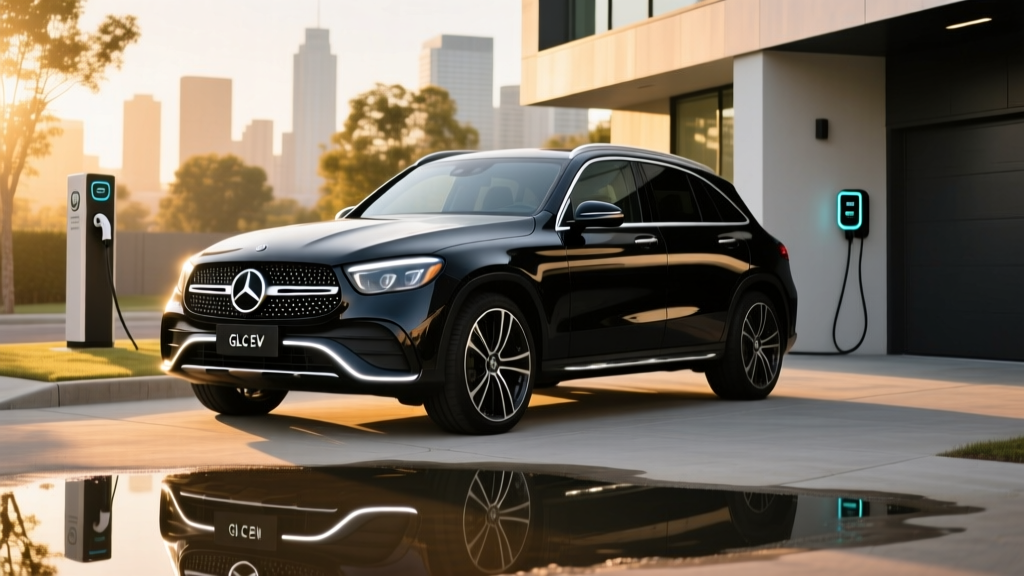
The 2026 Mercedes-Benz GLC 350 4MATIC (the fully electric GLC EV built on the MMA platform) offers an EPA-estimated 287 miles of range from its 85 kWh (usable) NMC battery, peaks at 175 kW DC fast charging (10–80% in approximately 28 minutes), and starts at $59,900 MSRP. It qualifies for partial or full federal tax credits depending on your income, battery sourcing, and point-of-sale election. Compared to the gas GLC 300 4MATIC ($48,250), the EV version costs roughly $11,650 more upfront but saves an estimated $4,800–$6,200 in fuel and maintenance over five years. Best for: luxury compact SUV buyers with home Level 2 charging who drive 30–60 miles daily and want a refined, tech-forward EV without the Tesla badge.
What Exactly Is the Mercedes GLC EV?
Mercedes-Benz restructured its EV naming convention for 2025–2026, dropping the standalone "EQ" sub-brand badges. The electric GLC is now officially the GLC 350 4MATIC (all-electric), built on the new Mercedes Modular Architecture (MMA). It sits alongside the gas-powered GLC 300 and the plug-in hybrid GLC 350e in showrooms, which creates naming confusion — so for clarity throughout this guide, we'll refer to the all-electric version as the Mercedes GLC EV.
The GLC EV is a compact luxury crossover competing directly with the BMW iX3, Audi Q6 e-tron, Genesis Electrified GV70, and Tesla Model Y (in its higher trims). It's larger than the outgoing EQA/EQB it effectively replaces and slots below the larger EQE SUV in Mercedes' electric lineup.
2026 Mercedes GLC EV Core Specs
| Specification | Value |
|---|---|
| EPA Range | 287 miles (real-world: ~240–260 mi highway, ~210–230 mi in cold weather) |
| Battery (Usable) | 85 kWh, NMC (nickel-manganese-cobalt) chemistry |
| DC Fast Charge (Peak) | 175 kW (CCS/NACS adapter); 10–80% in ~28 min |
| Level 2 AC Charge | 11 kW onboard charger; ~9 hours 0–100% |
| Drivetrain | Dual-motor AWD (4MATIC) |
| Horsepower | 282 hp combined |
| 0–60 mph | 6.4 seconds |
| EPA Efficiency | 92 MPGe combined (36 kWh/100mi) |
| Cargo Volume | 21.5 cu ft (rear seats up) / 57.3 cu ft (folded) |
| Towing Capacity | 3,500 lbs (braked) |
| Battery Warranty | 8 years / 100,000 miles (≥70% capacity retention) |
| Base MSRP | $59,900 (Premium trim); $64,500 (Exclusive); $68,900 (Pinnacle) |
Real-World Range vs. EPA Sticker
The EPA rates the GLC EV at 287 miles. In practice, expect 240–260 miles on highway trips at 70–75 mph (aerodynamic drag cuts efficiency roughly 12–16% versus mixed driving). In winter conditions (below 30°F), cabin heating and battery thermal management reduce range by an additional 15–25%, putting realistic cold-weather highway range at approximately 210–230 miles. The GLC EV's standard heat pump helps mitigate this loss compared to resistive heating systems, but the physics of cold-weather lithium-ion operation still apply. Preconditioning the battery while plugged in before departure recovers a meaningful portion of this loss.
Mercedes GLC EV vs. Gas GLC 300: The Numbers
The most common cross-shopping dilemma is the GLC EV versus its gas sibling. Here's how they stack up on the metrics that matter for your wallet and daily driving.
| Metric | GLC EV (350 4MATIC) | GLC 300 4MATIC (Gas) |
|---|---|---|
| Base MSRP | $59,900 | $48,250 |
| Fed. Tax Credit (§30D) | Up to $7,500 (eligibility varies) | $0 |
| Effective Starting Price | ~$52,400 (with max credit) | $48,250 |
| Energy/Fuel Cost per Mile | ~$0.045 (home charging, $0.14/kWh) | ~$0.16 (premium gas, $4.10/gal, 26 MPG) |
| Annual Fuel/Energy (12k mi) | ~$540 | ~$1,920 |
| Annual Maintenance | ~$350 (no oil, fewer wear items) | ~$750 |
| 5-Year Energy + Maint. | ~$4,450 | ~$13,350 |
| EPA Range / Tank Range | 287 mi | ~410 mi (15.8 gal tank) |
| "Refuel" Time (Home) | ~9 hours (Level 2, overnight) | 5 minutes (gas station) |
The math: Over five years and 60,000 miles, the GLC EV saves approximately $8,900 in fuel and maintenance versus the gas GLC 300. After accounting for the $11,650 price premium and applying a $7,500 tax credit, the EV breaks even around year 4–5 on operating costs alone — before factoring in potentially higher EV insurance premiums (typically 10–18% above gas equivalents for luxury EVs).
Charging the GLC EV: What You Actually Need
Charging infrastructure is the single biggest ownership variable. The GLC EV supports three charging levels:
| Level | Power | Miles Added per Hour | Use Case |
|---|---|---|---|
| Level 1 (120V) | ~1.4 kW | ~4 mi/hr | Emergency/overnight trickle (not practical as primary) |
| Level 2 (240V, 48A) | 11 kW | ~32 mi/hr | Home daily charging; full charge in ~9 hours |
| DC Fast Charge | Peak 175 kW | ~190 mi in 15 min | Road trips; 10–80% in ~28 min |
Home charging is essential. Relying solely on public DC fast charging costs roughly $0.35–$0.48/kWh on networks like Electrify America or EVgo, pushing your per-mile cost to $0.10–$0.14 — erasing much of the fuel savings versus gas. At home on a Level 2 charger with residential electricity at $0.14/kWh, you'll pay about $0.045/mile.
The GLC EV's 11 kW onboard charger is competitive but not class-leading (the Hyundai Ioniq 5 charges at 10.9 kW AC but supports 350 kW DC). For DC fast charging, the 175 kW peak is respectable but falls short of 800V-architecture rivals like the Ioniq 5 or Porsche Macan EV. Expect the charge curve to taper significantly above 80% SoC — the final 20% can add 15–20 additional minutes. Plan road-trip stops around the 10–80% window for maximum efficiency.
Connector note: The 2026 GLC EV ships with a NACS (Tesla-style) charge port in the US market. A CCS-to-NACS adapter is included for access to Electrify America and other CCS networks. Tesla Supercharger access is native.
Home Level 2 Installation: Cost Reality
Budget $1,200–$3,500 for a professional Level 2 home charger installation (240V/48A hardwired). If your electrical panel needs a service upgrade (100A to 200A), add $1,500–$3,000. Always hire a licensed electrician and pull permits — unpermitted work can void homeowner's insurance claims.
Federal Tax Credit and Total Purchase Cost
The IRS §30D Clean Vehicle Credit offers up to $7,500 for qualifying new EVs, but eligibility depends on several factors that change frequently:
- MSRP cap: SUVs must be under $80,000 — all GLC EV trims qualify
- Buyer income cap: AGI ≤ $150,000 (single) / ≤ $300,000 (joint) — verify against your tax return
- Battery sourcing: Critical minerals and battery components must meet phased-in domestic/free-trade requirements — confirm with your Mercedes dealer at purchase, as supply chains shift
- Point-of-sale transfer: You can elect to transfer the credit to the dealer at purchase, reducing your out-of-pocket price immediately rather than waiting for a tax refund
Critical caveat: Battery sourcing requirements tighten annually. A vehicle that qualifies in January may not qualify by December if Mercedes' supply chain composition changes. Always verify current eligibility on fueleconomy.gov before signing a purchase agreement. Consult a tax professional for your specific situation.
Real-World Ownership: What First-Time EV Buyers Should Know
If this is your first EV, the GLC EV will reshape your refueling habits — for better or worse depending on your situation.
Who Thrives With the GLC EV
- Home chargers: You have a garage or driveway where a Level 2 charger can be installed. You wake up every morning with a "full tank."
- Commuters under 60 miles/day: Your daily driving uses less than 25% of the battery. Weekly top-up charging replaces daily gas station visits.
- Mild-to-moderate climates: You live where winter temperatures rarely drop below 20°F, minimizing range loss.
- Tech-forward buyers: You value MBUX Hyperscreen integration, over-the-air updates, and advanced driver-assistance (Mercedes' Driver Assistance Package is SAE Level 2 — you must remain engaged at all times).
Who Should Reconsider
- Apartment dwellers without charging: If you can't install home charging and lack reliable workplace or public charging within 0.5 miles, EV ownership becomes a chore, not a convenience.
- Frequent road-trippers in charging deserts: Rural routes in the Mountain West, Great Plains, or parts of the Southeast still have sparse DC fast-charger coverage. Plan routes carefully using PlugShare or A Better Routeplanner.
- Extreme cold climates: If you regularly drive in sub-zero temperatures, expect 25–30% range loss and longer charge times due to battery thermal management demands.
- Budget-sensitive buyers: Even with tax credits, the GLC EV's $52,400+ effective price and higher insurance premiums make it a premium commitment. A Toyota RAV4 Prime PHEV (42 mi electric range, ~$45,000) may offer a lower-risk entry to electrification.
| Common Misconception | Reality |
|---|---|
| "EV batteries need replacing every few years" | The GLC EV's NMC battery is warrantied for 8 years/100,000 miles at ≥70% capacity. Industry data shows most EV batteries retain 85–90% capacity at 100k miles. Full replacement (if needed out of warranty) runs $12,000–$18,000. |
| "Charging takes too long for road trips" | 10–80% in ~28 minutes at a 175 kW charger. Pair with meal/rest stops. Not instant like gas, but manageable with planning. |
| "EVs are worse in winter" | Range drops 15–25%, yes. But AWD traction, instant torque, and no cold-start issues are advantages. Preconditioning while plugged in recovers much of the loss. |
| "The tax credit is guaranteed $7,500" | It's up to $7,500 and depends on your AGI, the vehicle's battery sourcing compliance, and MSRP caps. Verify before purchase. |
Five-Year Cost of Ownership Breakdown
Here's a realistic 5-year / 60,000-mile projection for the GLC EV (Premium trim) versus the gas GLC 300 4MATIC, assuming home charging at $0.14/kWh, premium gas at $4.10/gallon, and 12,000 miles/year.
| Cost Category | GLC EV | GLC 300 (Gas) |
|---|---|---|
| Purchase Price (MSRP) | $59,900 | $48,250 |
| Federal Tax Credit | –$7,500 (if eligible) | $0 |
| Effective Purchase | $52,400 | $48,250 |
| Energy/Fuel (5 yr) | $2,700 | $9,600 |
| Maintenance (5 yr) | $1,750 | $3,750 |
| Insurance (5 yr est.) | $9,800 | $8,200 |
| Home Charger Install | $2,200 | $0 |
| Estimated Depreciation | $22,000 | $18,500 |
| Total 5-Year Cost | $90,850 | $88,300 |
The GLC EV costs roughly $2,550 more over five years when all factors are included — but this gap narrows significantly if gas prices rise above $4.50/gallon, if your electricity rate is below $0.12/kWh, or if you benefit from state-level EV incentives (which vary by jurisdiction — check AFDC's state incentive database). The EV also delivers a quieter, smoother, and more tech-rich driving experience that many owners value beyond pure economics.
Decision Framework: Is the Mercedes GLC EV Right for You?
Choose the GLC EV if:
- You have reliable home Level 2 charging access
- Your daily commute is under 60 miles round-trip
- You qualify for the §30D tax credit (check income caps and sourcing rules)
- You value Mercedes MBUX tech, luxury interior materials, and a quiet powertrain
- You're willing to pay a modest premium over the gas GLC for a smoother, more modern driving experience
Choose the gas GLC 300 if:
- You live in an apartment or lack home charging installation options
- You frequently drive 300+ mile routes through areas with sparse charging infrastructure
- Your budget is firm below $50,000 and you don't qualify for the full tax credit
- You prefer the longest possible range per stop (410 mi tank) for spontaneous road trips
Consider a PHEV (like the GLC 350e) if:
- You want electric commuting (30–40 mi EV range) but gas flexibility for road trips
- You have home charging but frequently travel beyond comfortable EV range
- You want a lower-risk entry into electrification without full BEV commitment
Frequently Asked Questions
Does the Mercedes GLC EV qualify for the $7,500 federal tax credit?
The GLC EV's MSRP is under the $80,000 SUV cap, so it clears the price requirement. However, the §30D credit also depends on your adjusted gross income (≤$150k single / ≤$300k joint), battery critical-mineral sourcing compliance, and component manufacturing requirements. These sourcing rules tighten each year. Verify current eligibility on fueleconomy.gov and with your dealer before purchase. You can elect to transfer the credit at point of sale to reduce your purchase price immediately.
How long does it take to charge the GLC EV at home?
On a Level 2 home charger (240V, 48A), the GLC EV's 11 kW onboard charger fills the 85 kWh battery from empty to full in approximately 9 hours. In practice, most owners plug in nightly and charge from 30–80% SoC, which takes about 4 hours — easily done overnight. Level 1 (120V) adds only ~4 miles per hour and isn't practical as a primary charging method.
What is the real-world highway range of the GLC EV?
The EPA rates it at 287 miles combined. On sustained highway driving at 70–75 mph, expect 240–260 miles. In cold weather (below 30°F), highway range drops to approximately 210–230 miles. Preconditioning the battery while plugged in and using seat/steering wheel heaters instead of cabin air heating can recover 10–15 miles of that loss.
Is the GLC EV's driver assistance self-driving?
No. Mercedes' Driver Assistance Package (including Active Distance Assist DISTRONIC and Active Steering Assist) is an SAE Level 2 system. The driver must remain fully attentive, keep hands on or near the wheel, and be prepared to take over at any moment. This is not autonomous driving. Mercedes' Level 3 system (DRIVE PILOT) is available only on the S-Class and EQS in limited markets and under specific conditions — it is not offered on the GLC.
How much will insurance cost for the GLC EV?
Luxury EVs typically carry insurance premiums 10–18% higher than their gas equivalents due to higher repair costs, specialized parts, and battery replacement risk. Expect approximately $1,800–$2,200/year for the GLC EV versus $1,500–$1,800/year for the gas GLC 300 (rates vary significantly by driver profile, location, and coverage). Get quotes from your insurer before purchasing.
What happens if the GLC EV battery degrades?
Mercedes warrants the high-voltage battery for 8 years or 100,000 miles, guaranteeing at least 70% of original capacity retention. Industry-wide data from sources like Recurrent Auto shows that modern NMC batteries with active thermal management typically retain 85–92% capacity at the 100,000-mile mark. If degradation exceeds the warranty threshold, Mercedes will repair or replace modules to bring capacity back above 70%. Out-of-warranty full battery replacement, while rare, is estimated at $12,000–$18,000.