Quick Answer: Should You Buy the GLC Electric?
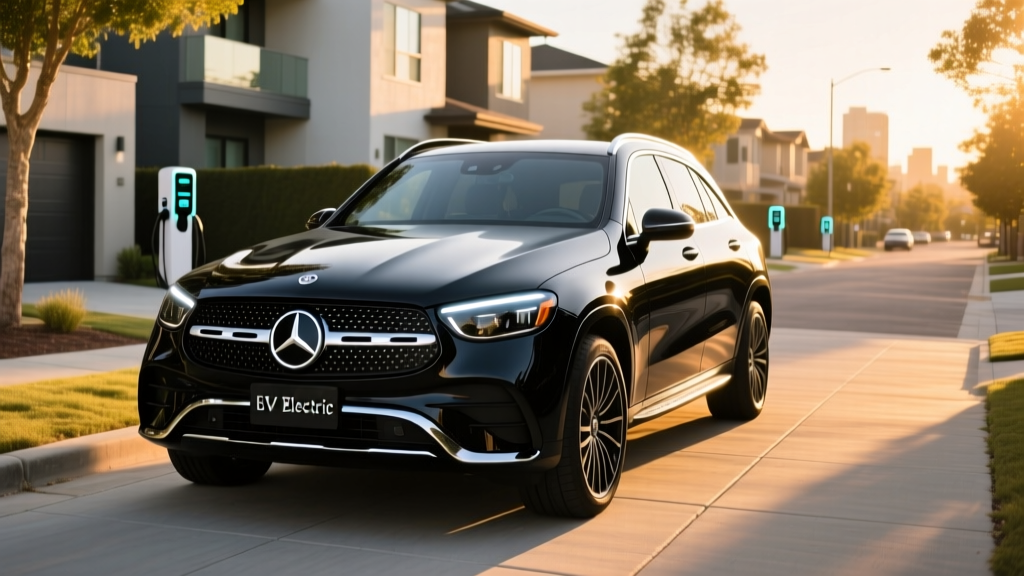
The 2026 Mercedes-Benz GLC Electric is the battery-electric successor to the gas-powered GLC, built on Mercedes' dedicated MB.EA platform. It delivers an EPA-estimated ~295 miles of range from a 110 kWh (usable) NMC battery, supports DC fast charging up to 250 kW (10–80% in approximately 22 minutes), and starts at roughly $62,000 MSRP. It competes directly with the BMW iX3, Audi Q6 e-tron, and Tesla Model Y. If you want a luxury compact electric SUV with Mercedes build quality, strong highway refinement, and access to the Tesla Supercharger network via NACS, the GLC Electric is a strong contender — but it faces stiff competition on price and efficiency from rivals.
Range, Battery, and Real-World Efficiency
The GLC Electric uses a 110 kWh usable lithium-ion NMC (nickel manganese cobalt) battery pack integrated into the MB.EA skateboard platform. Mercedes has not offered an LFP (lithium iron phosphate) option for this model, opting for NMC's superior energy density to achieve its range target in a compact SUV footprint.
EPA Range vs. Real-World Expectations
EPA-estimated range: ~295 miles (combined city/highway, base trim with 19-inch wheels). Higher trims with 20- or 21-inch wheels and sport tires may see a 5–10% reduction, landing closer to 270–280 miles EPA.
Real-world expectations:
- Mild weather, mixed driving: 270–290 miles achievable
- Highway-heavy at 75+ mph: Expect 240–265 miles (aerodynamic drag reduces efficiency significantly above 70 mph)
- Cold weather (below 32°F): 210–245 miles, depending on cabin heating use and whether preconditioning is active
- Towing (if equipped): Range drops 30–40% under load — plan for 175–200 miles
Efficiency lands at approximately 95 MPGe combined (roughly 35 kWh/100 miles), which is competitive with the Audi Q6 e-tron but trails the more aerodynamic Tesla Model Y Long Range (~120 MPGe). The GLC Electric's boxier SUV profile and heavier curb weight (~4,900 lbs) work against it on the efficiency front.
| Specification | Value |
|---|---|
| EPA Range (est.) | ~295 miles (base trim) |
| Battery (usable) | 110 kWh, NMC chemistry |
| Efficiency | ~95 MPGe / ~35 kWh/100 mi |
| DC Fast Charge (peak) | 250 kW (CCS/NACS) |
| 10–80% DC Charge Time | ~22 minutes |
| Level 2 AC Charge Rate | 11 kW (onboard charger) |
| Level 2 Full Charge Time | ~10.5 hours (0–100%) |
| Drivetrain | Dual-motor AWD (4MATIC) |
| Horsepower | ~402 hp |
| 0–60 mph | ~4.8 seconds |
| Base MSRP (est.) | $62,000 |
| Battery/Powertrain Warranty | 8 years / 100,000 miles |
Charging Speed and Infrastructure
The GLC Electric supports DC fast charging at up to 250 kW via a NACS (North American Charging Standard) port, giving it native access to the Tesla Supercharger network — a significant advantage over CCS-only competitors that still rely on adapters. The 800-volt electrical architecture enables sustained high charging power through the bulk of the session.
Understanding the charge curve: The 250 kW figure is a peak rate, not a sustained one. In real-world DC fast charging, the GLC Electric will hold close to peak power from roughly 10% to 40% State of Charge (SoC), then taper progressively. Expect an average rate of approximately 175–190 kW across the 10–80% session, yielding the ~22-minute time. Above 80%, charging slows dramatically to protect battery health — a 10–90% session may take 35+ minutes.
| Charging Level | Power | Miles Added Per Hour | Typical Use Case |
|---|---|---|---|
| Level 1 (120V household) | ~1.4 kW | ~4 mi/hr | Emergency / overnight trickle |
| Level 2 (240V home) | 11 kW | ~31 mi/hr | Daily home charging |
| DC Fast Charge | Up to 250 kW | ~180+ mi/hr (peak) | Road trips / rapid top-ups |
Preconditioning matters: The GLC Electric includes battery preconditioning when a DC fast-charger destination is set in the navigation system. This warms the battery to its optimal charging temperature before arrival, which is critical in cold weather — without preconditioning, a cold-soaked battery may charge at 50% or less of peak rate for the first several minutes, adding 5–10 minutes to your stop.
GLC Electric vs. Gas GLC: Cost Comparison
For buyers cross-shopping the electric GLC against the conventional GLC 300 (gas), the economics shift significantly based on your driving patterns, local electricity rates, and whether you can charge at home.
| Cost Category | GLC Electric (est.) | GLC 300 4MATIC (gas) |
|---|---|---|
| Base MSRP | $62,000 | $49,500 |
| Federal Tax Credit (§30D)* | Up to $7,500 (see eligibility) | $0 |
| Effective Purchase Price | ~$54,500 | $49,500 |
| Fuel/Energy (5 yrs, 60K mi)** | $5,400 (home charging avg) | $9,600 (premium gas) |
| Maintenance (5 yrs) | ~$1,800 | ~$3,600 |
| Insurance (5 yrs, avg) | ~$12,000 | ~$10,200 |
| Estimated Depreciation | ~$22,000 | ~$19,000 |
| 5-Year Total Cost | ~$95,700 | ~$91,900 |
* Federal §30D tax credit eligibility depends on MSRP caps (SUVs: $80,000), buyer income limits ($300K joint / $150K single AGI), and battery critical-mineral/battery-component sourcing requirements. Credit may be transferred to the dealer at point of sale for an upfront price reduction. Verify current rules at IRS.gov §30D guidance and consult a tax professional.
** Fuel/energy costs assume 12,000 miles/year. EV: $0.15/kWh average home rate, 35 kWh/100 mi. Gas: $4.00/gal premium, 26 MPG combined. Public DC fast-charging at $0.35–0.50/kWh would raise EV energy costs to $7,350–$10,500 over 5 years.
The takeaway: Over five years, the GLC Electric costs roughly $3,800 more than the gas GLC 300 in this baseline scenario, driven primarily by higher purchase price and insurance. However, if you qualify for the full $7,500 credit, drive more than 12,000 miles annually, or live in a state with low electricity rates and additional state incentives, the EV can break even or come out ahead — especially when factoring in the non-monetary benefits of home charging convenience and zero tailpipe emissions.
Real-World Ownership: What First-Time EV Buyers Need to Know
Transitioning from a gas GLC to the GLC Electric involves practical adjustments that go beyond the spec sheet.
Home Charging Is Non-Negotiable for Most Owners
If you can install a Level 2 (240V) home charger, the GLC Electric adds roughly 31 miles of range per hour of charging — meaning an overnight session (8–10 hours) fully replenishes the battery. A typical Level 2 home installation (dedicated 50-amp circuit, NEMA 14-50 outlet or hardwired wallbox) costs $800–$2,500 depending on panel proximity and local permitting. If your electrical panel needs upgrading from 100A to 200A service, add $1,500–$3,500. Consult a licensed electrician for a site-specific quote.
Without home charging, you'll rely on public DC fast chargers and Level 2 destination chargers. At current public DC rates ($0.35–$0.50/kWh), your "fuel" cost approaches or exceeds that of a gas car — eliminating one of the EV's primary economic advantages.
Cold-Weather Range Loss Is Real
The GLC Electric includes a heat pump for cabin heating, which is more efficient than resistive heating and helps mitigate cold-weather range loss. Still, expect 20–30% range reduction in sustained sub-freezing temperatures. A 295-mile EPA rating becomes roughly 210–245 miles in January in Chicago or Minneapolis. Preconditioning the cabin and battery while plugged in at home recovers some of this loss.
Insurance Costs Are Higher
EV insurance premiums typically run 15–25% higher than equivalent gas vehicles due to higher repair costs (specialized high-voltage components, aluminum body panels, recalibration of ADAS sensors after collision). Budget an additional $300–$500 annually. Shop quotes from multiple insurers — some now offer EV-specific policies with battery coverage riders.
Federal Tax Credit and Incentive Eligibility
§30D Federal Tax Credit Checklist (2026 Rules)
The GLC Electric may qualify for up to $7,500 in federal tax credit, but eligibility is not automatic. You must meet all of the following:
- MSRP cap: Vehicle MSRP must not exceed $80,000 for SUVs (the GLC Electric base and most trims fall under this)
- Buyer income cap: Modified AGI must not exceed $300,000 (joint filers), $225,000 (head of household), or $150,000 (single)
- Battery sourcing: At least 50% of critical minerals and 75% of battery components must be sourced from the U.S. or FTA partners (this requirement tightens annually — verify current-year thresholds)
- Final assembly: Vehicle must be assembled in North America (the GLC Electric for the U.S. market is assembled at Mercedes' Vance, Alabama plant)
- Point-of-sale transfer: You may transfer the credit to the dealer at purchase for an immediate price reduction, even if you have no federal tax liability
Verify eligibility at fueleconomy.gov and consult a tax professional before relying on the credit in your purchase decision.
Common Misconceptions — Fact vs. Fiction
| Myth | Fact |
|---|---|
| "The battery will need replacement in 5 years" | NMC batteries in modern thermal-managed packs like the GLC Electric's typically lose 10–15% capacity over 10 years/150,000 miles. The 8-year/100,000-mile warranty covers defects and capacity loss below 70%. |
| "Charging takes too long for road trips" | A 10–80% DC fast charge takes ~22 minutes — roughly the time for a rest stop. With 295 miles of range, most drivers charge once every 3–4 hours, aligning with natural break schedules. |
| "EVs are worse in the cold" | Range drops 20–30% in extreme cold, but EVs start reliably (no cold-cranking issues), and preconditioning while plugged in means you leave home with a warm cabin and full battery every morning. |
| "I'll save a fortune on fuel" | Savings depend on your electricity rate and whether you charge at home. At $0.15/kWh home rates, you'll save ~$4,200 over 5 years vs. premium gas. At public DC rates ($0.45/kWh), savings shrink to near zero. |
| "The GLC Electric is self-driving" | Mercedes' DRIVE PILOT system is SAE Level 2 driver assistance in most conditions — you must remain engaged and supervise. Level 3 capability (conditional hands-off in specific highway traffic-jam scenarios, below 40 mph) is available in approved regions only and does not replace the driver. |
Decision Framework: Is the GLC Electric Right for You?
Choose the GLC Electric If:
- You have (or can install) Level 2 home charging
- You value Mercedes interior quality, ride refinement, and brand prestige in an electric package
- You want native NACS / Tesla Supercharger access without an adapter
- You drive 12,000–15,000 miles/year and can capture meaningful fuel savings
- You qualify for the §30D tax credit and/or state incentives
- You want a dual-motor AWD SUV with ~400 hp and sub-5-second 0–60 performance
Look Elsewhere If:
- You cannot charge at home and lack reliable workplace or destination charging
- You regularly tow heavy loads (range drops 30–40% under trailer load)
- You live in an extreme-cold climate and need 300+ miles of winter range (consider a larger-pack SUV or wait for next-gen battery options)
- Budget is tight — the Tesla Model Y Long Range offers ~330 miles EPA from ~$48,000 MSRP with higher efficiency
- You prefer the driving dynamics and lower curb weight of the BMW iX3 or Porsche Macan EV
Frequently Asked Questions
What is the real-world range of the GLC Electric?
The EPA estimates ~295 miles for the base trim. In real-world mixed driving, expect 270–290 miles in mild weather, 240–265 miles on highway-heavy trips, and 210–245 miles in sustained cold weather. Wheel size, tire choice, and driving style all affect these numbers.
Does the GLC Electric qualify for the $7,500 federal tax credit?
It may, depending on your income, the vehicle's MSRP, and current battery-sourcing requirements. The GLC Electric is assembled in Alabama (meeting North American final assembly rules) and falls under the $80,000 SUV MSRP cap. However, battery-component and critical-mineral sourcing thresholds tighten annually. Verify at IRS.gov and fueleconomy.gov before purchasing.
How long does it take to charge the GLC Electric at home?
On a Level 2 (240V, 11 kW) home charger, a full 0–100% charge takes approximately 10.5 hours. Most owners charge from 20–80% overnight (about 6 hours), which is more than sufficient for daily driving. A standard 120V outlet (Level 1) adds only ~4 miles per hour — suitable only for emergencies or very low daily mileage.
What's the difference between kW and kWh?
kW (kilowatts) measures power — the rate at which energy flows. A 250 kW charger delivers energy very quickly. kWh (kilowatt-hours) measures energy capacity — how much the battery holds. The GLC Electric's 110 kWh battery is like a 25-gallon gas tank; the 250 kW charger is like a high-flow fuel pump. Never confuse the two.
Is Mercedes DRIVE PILOT self-driving?
No. In most driving conditions, DRIVE PILOT operates at SAE Level 2 — it assists with steering, acceleration, and braking, but you must keep your hands on or near the wheel and remain fully attentive. In limited, approved scenarios (specific highway sections, below 40 mph, in traffic congestion), Level 3 conditional automation allows hands-off driving, but the system will request you take over with several seconds' notice. This is not equivalent to Level 4 driverless operation.
How does the GLC Electric compare to the Tesla Model Y?
The Model Y Long Range starts at roughly $48,000, delivers ~330 miles EPA, and achieves ~120 MPGe — significantly more efficient and affordable than the GLC Electric. However, the GLC Electric offers superior interior materials, a quieter cabin, more traditional luxury-SUV styling, and Mercedes' dealership/service network. It's a premium-price, premium-experience choice versus the Tesla's value-and-efficiency play.
What will battery replacement cost if needed out of warranty?
Current NMC battery replacement costs for a pack of this size run $15,000–$22,000 (parts and labor) at a Mercedes dealer. However, data from similar platforms shows that the vast majority of packs retain 85–90% capacity at 10 years — full replacement is uncommon unless there's a manufacturing defect (covered under the 8-year/100,000-mile warranty).