The Short Answer: Is the Electric GLC Worth It?
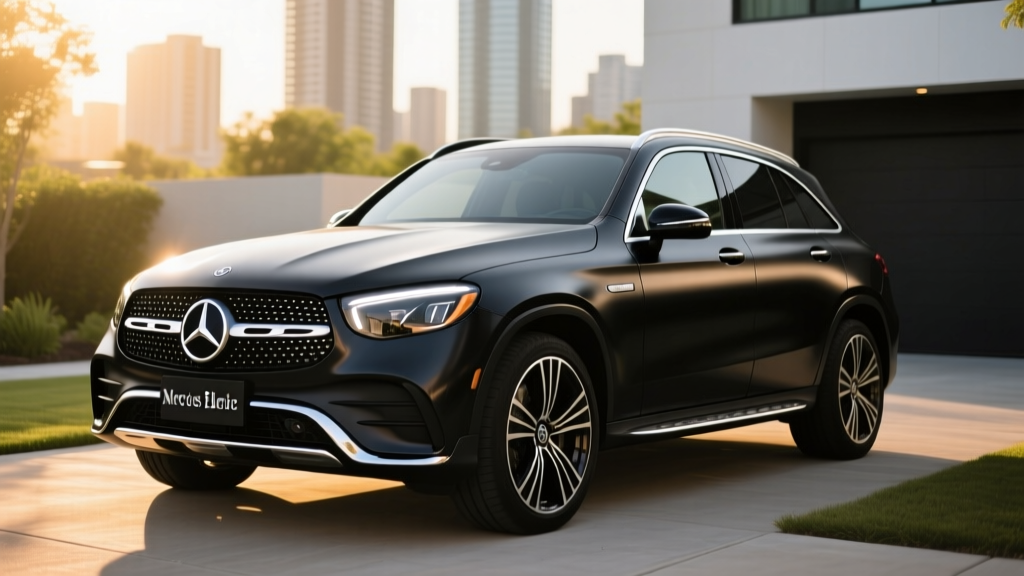
The 2026 Mercedes-Benz GLC EQ (the GLC electric Mercedes buyers have been waiting for) arrives on the MMA platform with an EPA-estimated 310 miles of range, 800-volt architecture enabling 10–80% DC fast charging in approximately 22 minutes, and a starting MSRP of $58,900 before incentives. It replaces the outgoing EQB as Mercedes' compact electric SUV offering and directly competes with the BMW iX3, Audi Q6 e-tron, and Tesla Model Y. For buyers with home Level 2 charging and daily commutes under 80 miles, it delivers a tangible fuel-cost advantage over the gas GLC 300. For apartment dwellers without charging access or frequent cold-climate road-trippers, the math is less clear.
Range, Battery, and Charging: The Numbers That Matter
The electric GLC rides on Mercedes' new Modular Architecture (MMA), which supports both battery-electric and hybrid powertrains. The EV variant uses an 87 kWh usable NMC (nickel-manganese-cobalt) battery pack with silicon-oxide anode chemistry for improved energy density. Here's what that translates to in real driving:
| Spec | GLC 350e (Electric) | GLC 300 (Gas Baseline) |
|---|---|---|
| EPA Range / Fuel Economy | 310 mi / 94 MPGe | 28 MPG combined |
| Battery / Fuel Tank | 87 kWh usable (NMC) | 16.4 gal |
| Peak DC Fast Charge | 250 kW (800V) | N/A |
| 10–80% DC Charge Time | ~22 min | ~5 min (refuel) |
| Level 2 (11 kW onboard) | ~9 hrs (0–100%) | N/A |
| 0–60 mph | 5.2 sec (RWD) / 4.4 sec (4MATIC) | 6.2 sec |
| Horsepower | 288 hp (RWD) / 382 hp (4MATIC) | 258 hp |
| Base MSRP | $58,900 (RWD) / $62,400 (4MATIC) | $47,150 |
| Powertrain Warranty | 8 yr / 100,000 mi (battery ≥70% SoH) | 4 yr / 50,000 mi |
Real-World Range Reality Check
The EPA sticker says 310 miles, but real-world conditions change that figure significantly. Expect approximately 260–280 miles on sustained highway driving at 70+ mph. In cold weather (below 30°F), plan for a 15–25% range reduction, dropping effective range to roughly 230–265 miles. The GLC electric Mercedes includes a standard heat pump, which mitigates some winter loss compared to resistive-heating EVs, but physics still applies. On road trips, the 800V architecture means you'll spend less time at chargers — a sustained average of ~180 kW from 10–80% is realistic at a 350 kW Electrify America or Tesla Supercharger (NACS adapter included).
Electric GLC vs. Gas GLC 300: The Cost Breakdown
The electric GLC costs roughly $11,750 more upfront than the gas GLC 300. The question every buyer asks: does the fuel savings close that gap? Here's a five-year, 60,000-mile ownership comparison assuming $3.50/gallon regular fuel, $0.14/kWh home electricity, and $0.48/kWh public DC fast charging (national averages per the EPA and EIA data):
| Cost Category (5 yr / 60k mi) | GLC 350e (Electric) | GLC 300 (Gas) |
|---|---|---|
| Purchase Price (base MSRP) | $58,900 | $47,150 |
| Est. Federal Tax Credit (§30D) | $0–$7,500* | $0 |
| Fuel / Energy (70% home, 30% public) | $4,680 | $7,500 |
| Scheduled Maintenance | $1,200 | $3,400 |
| Insurance (avg. national) | $10,800 | $9,000 |
| 5-Year Total (pre-incentive) | $75,580 | $67,050 |
| 5-Year Total (with max credit) | $68,080 | $67,050 |
*§30D tax credit eligibility depends on battery critical-mineral sourcing, buyer income caps ($150k single / $300k joint), and MSRP limits ($80k for SUVs). The electric GLC qualifies as an SUV under IRS classification. Verify current-year rules at IRS.gov or with a tax professional. The credit can now be transferred at point of sale as an immediate price reduction.
The takeaway: with the full $7,500 credit applied, the five-year costs are nearly identical. Without the credit (due to income or sourcing phase-outs), the electric GLC costs roughly $8,500 more over five years. The savings inflection point — where the EV becomes cheaper overall — typically arrives around year 6–7, depending on your electricity rate and annual mileage.
Charging at Home: What Installation Actually Costs
Most electric GLC owners will charge at home overnight using Level 2. The GLC's 11 kW onboard charger means a full 0–100% charge takes about 9 hours — perfectly suited for overnight replenishment. But home installation costs vary widely:
| Item | Typical Cost Range |
|---|---|
| Level 2 Charger (hardwired, 48A / 11.5 kW) | $500–$800 |
| Electrician Labor (240V / 60A circuit) | $800–$2,500 |
| Permit & Inspection | $100–$300 |
| Electrical Panel Upgrade (if needed, 200A) | $1,500–$4,000 |
| Total (no panel upgrade) | $1,400–$3,600 |
| Total (with panel upgrade) | $2,900–$7,600 |
If your home has a 200-amp panel with spare capacity, expect the lower range. Older homes with 100-amp service will likely need a panel upgrade. Always get a quote from a licensed electrician before committing to the vehicle — this is the single most overlooked cost in EV ownership. Mercedes also offers a Wallbox Home charger bundled with the vehicle in some markets, which can reduce equipment cost.
Common Misconceptions About the Electric GLC
| Myth | Fact |
|---|---|
| "The battery will need replacing in 5 years." | NMC batteries in modern thermal-managed packs typically retain 85–92% capacity after 100,000 miles. Mercedes warranties the battery for 8 years / 100,000 miles at ≥70% State of Health. Full replacement (rare) costs $12,000–$18,000. |
| "I can charge on any DC fast charger in 15 minutes." | Peak 250 kW only applies at 10–30% SoC on a 350 kW-capable station. The charge curve tapers significantly above 80%. Expect ~22 min for 10–80%, and 40+ min for 10–100%. |
| "It qualifies for the full $7,500 tax credit automatically." | Credit depends on critical-mineral and battery-component sourcing requirements that change annually. Confirm eligibility on the IRS clean vehicle credit page for the specific model year. |
| "Electric means zero maintenance." | You still need tire rotations, cabin air filter replacement, brake fluid checks, and wiper service. But oil changes, spark plugs, and transmission fluid are eliminated. |
| "The NACS adapter means full Supercharger access." | Mercedes includes a NACS adapter, and Supercharger V3/V4 stalls work. However, some older V2 stalls (150 kW max) may require CCS-to-NACS compatibility verification. The native port is NACS for 2026. |
Who Should Buy the Electric GLC — And Who Shouldn't
Decision Framework: Is This Your EV?
Choose the electric GLC if:
- You have access to home Level 2 charging (garage or driveway with 240V outlet potential)
- Your daily driving is under 80 miles round-trip (covers ~90% of American commutes)
- You value cabin quietness, instant torque, and lower per-mile energy costs
- You live in a state with favorable electricity rates (under $0.16/kWh) or time-of-use plans
- You qualify for the §30D credit based on income and the vehicle's sourcing compliance
- You want a luxury compact SUV without the EQE SUV's $85,000+ price tag
Stick with the gas GLC 300 (or consider a PHEV) if:
- You live in an apartment or condo without charging infrastructure and have no workplace charging
- You regularly tow over 2,000 lbs (the electric GLC is rated for 3,500 lbs, but range drops sharply under load)
- You frequently drive in sub-zero climates where range loss exceeds 25% and charging infrastructure is sparse
- Your budget is firm under $50,000 and you don't qualify for the federal credit
- You put on fewer than 8,000 miles per year (fuel savings won't offset the price premium within a reasonable timeframe)
What First-Time EV Buyers Need to Know Before Signing
If this is your first electric vehicle, the ownership experience differs from gas cars in ways that aren't always obvious on the showroom floor:
Charging is a habit, not an event. Unlike filling a gas tank weekly, most EV owners plug in at home nightly — like charging a phone. You wake up to a "full tank" every morning. This is genuinely more convenient than gas, but only if home charging is available.
Plan road trips around chargers, not gas stations. Apps like A Better Routeplanner or the Mercedes me connect navigation will auto-route you through DC fast chargers. On a 500-mile trip, expect two charging stops of 20–25 minutes each. That's longer than gas stops, but most drivers combine them with meal or restroom breaks.
Insurance costs 15–20% more on average. EVs carry higher repair costs (specialized parts, battery safety protocols, trained technicians). Get insurance quotes before purchasing — some carriers offer EV-specific discounts that narrow the gap.
Tires wear faster. The GLC 4MATIC's 382 hp and instant torque, combined with the vehicle's ~5,100 lb curb weight, accelerate tire wear. Budget for replacement tires every 30,000–40,000 miles rather than the 50,000+ miles typical on the gas GLC.
Preconditioning matters. Use the Mercedes me app to precondition the battery before DC fast charging (the nav system does this automatically when a charger is set as your destination). A cold battery charges significantly slower — preconditioning can shave 5–8 minutes off a fast-charge session.
Frequently Asked Questions
Does the electric GLC qualify for the $7,500 federal tax credit in 2026?
Eligibility depends on the vehicle's battery-component and critical-mineral sourcing meeting IRS §30D requirements for the 2026 model year, plus buyer income limits ($150,000 single / $300,000 joint AGI) and the $80,000 MSRP cap for SUVs. The credit can be applied at point of sale. Confirm eligibility with your dealer and a tax professional before relying on it.
How does the electric GLC compare to the Tesla Model Y?
The Model Y Long Range starts around $44,990, offers ~320 miles EPA range, and charges at up to 250 kW on the Supercharger network. The electric GLC costs ~$14,000 more but delivers a significantly more refined interior, MBUX infotainment, superior ride quality, and the Mercedes dealer service experience. The Model Y wins on value; the GLC wins on luxury execution.
Can I charge the electric GLC at Tesla Superchargers?
Yes. The 2026 electric GLC comes with a native NACS charge port (the North American Charging Standard adopted by Mercedes for 2025+). You can charge at Tesla Supercharger V3 and V4 stalls directly without an adapter. Access to non-Tesla networks (Electrify America, EVgo) may require a CCS adapter, which Mercedes provides.
What happens if the battery degrades significantly?
Mercedes warranties the high-voltage battery for 8 years or 100,000 miles, guaranteeing at least 70% State of Health (capacity retention). Real-world data from similar NMC packs suggests most will retain 85%+ capacity at 100,000 miles with proper care (avoiding habitual 100% charges and extreme heat exposure). Out-of-warranty replacement, while rare, runs $12,000–$18,000.
Is the electric GLC better than the GLC PHEV (350e plug-in hybrid)?
They serve different buyers. The PHEV variant offers ~50 miles of electric-only range with a gas backup — ideal if you can charge at home but take frequent long road trips where charging infrastructure is unreliable. The full EV is better if your driving is predictable and you want to eliminate gasoline entirely. The PHEV starts around $56,000 and qualifies for up to a $3,750 credit under §30D (lower due to smaller battery).