Quick Answer: Should You Buy the 2026 GLC Electric?
The 2026 Mercedes-Benz GLC Electric (officially the GLC EQ variant on the MMA platform) is a luxury compact electric SUV targeting an EPA-estimated 310–340 miles of range from an ~85 kWh usable NMC battery, with DC fast charging peaking at 220 kW (10–80% in ~22 minutes). Pricing starts around $58,000–$62,000 MSRP before incentives. It qualifies for a partial or full federal tax credit depending on battery-sourcing compliance — verify current-year §30D eligibility on IRS.gov before purchasing. If you have Level 2 home charging and drive under 300 miles weekly, the GLC Electric can save $1,200–$1,800 annually in fuel and maintenance versus the gas GLC 300.
What Is the 2026 Mercedes-Benz GLC Electric?
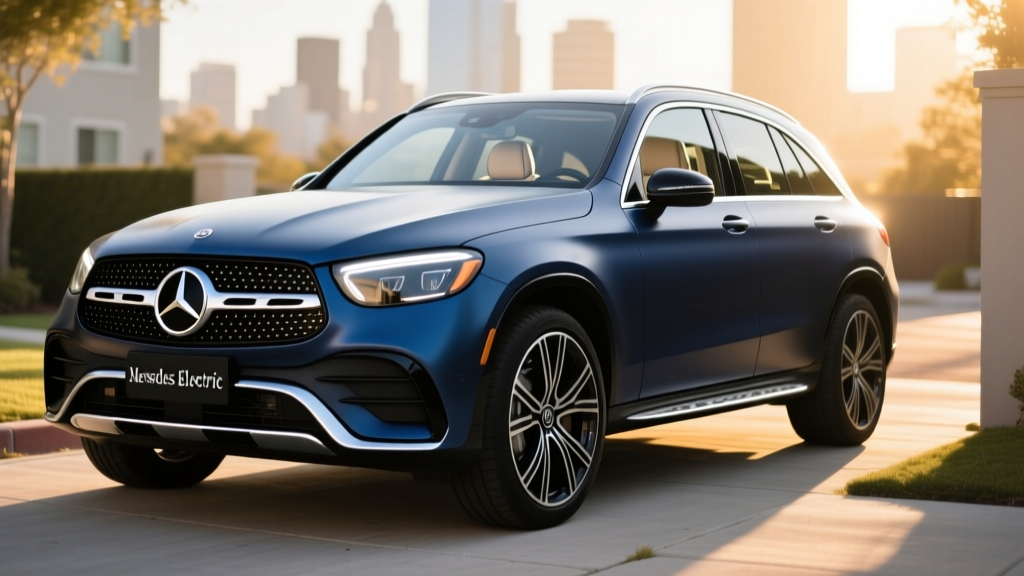
Mercedes-Benz has restructured its EV naming convention, and the compact electric SUV slotting beneath the EQE SUV wears the GLC Electric badge for 2026. Built on the dedicated MMA (Mercedes Modular Architecture) platform — the same 800-volt-capable skateboard underpinning the CLA electric sedan — this is not a retrofit of the gas GLC. It is a ground-up battery-electric vehicle with a flat floor, optimized weight distribution, and Mercedes' latest MBUX infotainment with a hyperscreen-style pillar-to-pillar display option.
The GLC Electric slots into one of the most competitive luxury EV segments, facing the BMW iX3, Audi Q6 e-tron, Tesla Model Y, Genesis GV70 Electrified, and the upcoming Porsche Macan Electric. Mercedes' play here is comfort, build quality, and long-range efficiency rather than outright performance dominance.
| Spec | GLC 300e (Base AWD) | GLC 350e (Performance AWD) |
|---|---|---|
| Battery (usable) | ~85 kWh NMC | ~95 kWh NMC |
| EPA Range (est.) | ~310–320 mi | ~330–340 mi |
| Motor Output | 288 hp / 325 lb-ft | 402 hp / 443 lb-ft |
| 0–60 mph | ~6.0 sec | ~4.5 sec |
| Peak DC Charge Rate | 220 kW | 220 kW |
| 10–80% DC Charge | ~22 min | ~25 min |
| Level 2 (240V, 48A) | 11.5 kW | 11.5 kW |
| MPGe (combined, est.) | ~95 MPGe | ~88 MPGe |
| Base MSRP | ~$58,500 | ~$65,000 |
| Battery Warranty | 8 yr / 100,000 mi | 8 yr / 100,000 mi |
Note: Specs are based on Mercedes-Benz MMA platform announcements and preliminary 2026 model-year data. Final EPA-certified figures may differ. Check fueleconomy.gov for official ratings once published.
Real-World Range: What the EPA Sticker Won't Tell You
Mercedes' MMA platform is designed for class-leading efficiency — the company claims energy consumption as low as 12 kWh/100 km (roughly 5 mi/kWh) in ideal conditions. But real-world driving rarely matches lab tests.
Range Reality Check
- EPA estimate: 310–340 mi depending on trim
- Highway (75 mph, 70°F): Expect ~260–285 mi — aerodynamic drag cuts efficiency 15–20% at sustained speeds
- Cold weather (30°F, mixed driving): Expect ~220–250 mi — NMC chemistry loses 15–25% range in freezing temps, even with a heat pump
- City / suburban (moderate climate): 300–330 mi — regenerative braking recovers energy in stop-and-go traffic
The GLC Electric uses a heat pump as standard equipment, which reduces cold-weather cabin-heating energy draw by roughly 30% compared to resistive heating. This is a meaningful advantage in northern climates. Still, if your commute regularly exceeds 200 miles round-trip in winter, plan for a mid-route DC fast-charge stop.
Mercedes' 800-volt electrical architecture enables the 220 kW peak charge rate, but remember: peak kW is not sustained kW. The charge curve typically holds near peak from ~10–40% SoC, then tapers progressively. A 10–80% session takes roughly 22 minutes at a 350 kW-capable station, but charging from 80–100% can add another 20+ minutes due to cell-balancing protocols. Plan road trips around 10–80% top-ups for maximum efficiency.
GLC Electric vs Gas GLC 300: Cost & Driving Comparison
The gas-powered GLC 300 (AWD) remains a benchmark compact luxury SUV. Here's how the electric version stacks up on the metrics that matter to your wallet and daily routine.
| Metric | GLC Electric 300e | GLC 300 4MATIC (Gas) |
|---|---|---|
| Base MSRP | ~$58,500 | ~$47,500 |
| Fed. Tax Credit (§30D) | Up to $7,500 (varies) | $0 |
| Effective Price After Credit | ~$51,000 | $47,500 |
| EPA Range / Tank Range | ~315 mi | ~400 mi (17.4 gal × 23 mpg) |
| Fuel/Energy Cost (15,000 mi/yr) | ~$660 (home L2) / ~$1,200 (public DC) | ~$2,100 ($3.50/gal, 23 mpg) |
| Annual Maintenance | ~$300 (cabin filter, wipers, tires) | ~$800 (oil, brakes, filters) |
| 5-Year Fuel + Maint. | ~$4,800 (home) / ~$7,500 (public) | ~$14,500 |
| 0–60 mph | ~6.0 sec | ~6.3 sec |
| CO₂ Tailpipe | 0 g/mi | ~384 g/mi |
The math: Even with an $11,000 MSRP premium, the GLC Electric can close the gap to under $3,500 after the federal tax credit (if eligible), and then recovers roughly $1,500–$2,000 per year in fuel and maintenance savings. Break-even arrives in approximately 2–3 years for home-charging owners driving 15,000 miles annually. If you rely exclusively on public DC fast charging, break-even stretches to 4–5 years.
Charging at Home and on the Road
The GLC Electric's 800V architecture and NACS/CCS compatibility (Mercedes has adopted the NACS connector for North American models starting in 2025) give it broad charging access, including the Tesla Supercharger network via native port.
| Level | Power | Miles Added Per Hour | Use Case |
|---|---|---|---|
| Level 1 (120V, 12A) | ~1.4 kW | ~4–5 mi/hr | Emergency / overnight trickle |
| Level 2 (240V, 48A) | 11.5 kW | ~38–42 mi/hr | Daily home / workplace charging |
| DC Fast Charge | Up to 220 kW | ~180+ mi in 15 min | Road trips, rapid top-ups |
Home Charging Setup Costs
A Level 2 home charger is essential for convenient EV ownership. Budget for the following:
| Item | Low End | High End |
|---|---|---|
| Level 2 Charger (48A, hardwired) | $400 | $750 |
| Electrician labor (240V/60A circuit) | $600 | $2,000 |
| Permit & inspection | $100 | $400 |
| Electrical panel upgrade (if needed) | $1,500 | $3,500 |
| Total (no panel upgrade) | $1,100 | $3,150 |
| Total (with panel upgrade) | $2,600 | $6,650 |
Homes with existing 200-amp panels and garage proximity to the panel typically fall in the $1,200–$2,500 range. Older homes with 100-amp service or panels on the opposite side of the house may require the higher-cost scenario. Always get a licensed electrician's assessment before purchasing.
Mercedes' partnership with ChargePoint and access to the Mercedes me Charge network (which aggregates Electrify America, EVgo, and others) provides reasonable public charging coverage. With the NACS port, you also gain native access to over 20,000 Tesla Superchargers — a significant reliability advantage for road trips.
Federal Tax Credit & Incentive Eligibility
The §30D federal clean vehicle credit offers up to $7,500, but eligibility is not guaranteed. For the 2026 GLC Electric, you must verify:
- MSRP cap: SUVs must be under $80,000 MSRP — the GLC Electric qualifies at all expected trims
- Buyer income cap: AGI must not exceed $150,000 (single), $225,000 (head of household), or $300,000 (joint filers)
- Battery sourcing: Critical minerals and battery components must meet escalating domestic-content thresholds — this is where eligibility often gets restricted for European-built vehicles
- Point-of-sale transfer: You can transfer the credit to the dealer at purchase for an immediate price reduction, rather than claiming it on your tax return
- Assembly: Final assembly must occur in North America — verify the GLC Electric's production location for your model year
The GLC Electric is expected to be produced at Mercedes' plant in Tuscaloosa, Alabama, which should satisfy the North American assembly requirement. However, battery-cell sourcing from CATL or SK Innovation may or may not meet the critical-minerals threshold in a given tax year. Check the current eligibility list at fueleconomy.gov and consult a tax professional before relying on the credit.
Ownership Costs: 5-Year Breakdown
| Category | GLC Electric 300e | GLC 300 Gas |
|---|---|---|
| Purchase Price (after credit) | $51,000 | $47,500 |
| Home Charger Install | $2,000 | $0 |
| Energy/Fuel (5 yr, 75K mi) | $3,300 (home) / $6,000 (public) | $10,500 |
| Maintenance (5 yr) | $1,500 | $4,000 |
| Insurance (5 yr avg.) | $12,500 | $10,000 |
| Depreciation (est. 5 yr) | $22,000 | $18,000 |
| 5-Year Total (home charging) | $92,300 | $90,000 |
| Cost Per Mile | $1.23/mi | $1.20/mi |
The 5-year TCO is remarkably close. The GLC Electric's higher insurance premiums (~15–25% more for EVs, per industry data) and steeper depreciation partially offset the fuel and maintenance savings. Where the EV pulls ahead is years 6–10: as the gas GLC requires transmission service, brake overhauls, and timing-chain inspections, the electric version's maintenance costs stay flat.
Insurance note: EV premiums are higher due to battery replacement costs and specialized repair networks. Get quotes from your insurer before committing — some carriers offer EV-specific discounts.
Common Misconceptions — Addressed with Facts
| Myth | Fact |
|---|---|
| "The battery will need replacing in 5 years" | NMC batteries on modern thermal-management systems degrade ~1.5–2% per year. Mercedes warranties the pack for 8 years/100,000 miles at ≥70% capacity. Real-world data from similar platforms shows ~88–92% capacity at 100K miles. |
| "I can't take road trips" | With 310+ mi range and 220 kW DC charging, you add ~180 miles in 15 minutes. A 600-mile trip requires one 20-minute stop — comparable to a gas-car lunch break. |
| "Charging takes too long" | Home Level 2 charging adds ~40 miles per hour. Plug in overnight and wake up to a full battery every morning — no gas station visits for daily driving. |
| "EVs are worse in cold weather" | Range drops 15–25% in freezing temps, but preconditioning (warming the battery while plugged in) restores charging speed and recovers ~5–8% range. The heat pump helps significantly. |
| "I'll save $10,000 per year on fuel" | Realistic annual savings are $1,200–$1,800 for home-charging owners driving 15K miles/year. Public-DC-only charging cuts savings roughly in half. |
Decision Framework: Is the GLC Electric Right for You?
Choose the GLC Electric If:
- You have Level 2 home charging (garage or driveway with 240V access)
- Your daily driving is under 80 miles round-trip (covers 95% of US commutes)
- You value cabin quietness, instant torque, and one-pedal driving in traffic
- You qualify for the §30D tax credit (income and sourcing requirements met)
- You plan to keep the vehicle 5+ years (TCO advantage grows over time)
- You want access to the Tesla Supercharger network via native NACS port
Stick with the Gas GLC 300 or Consider a PHEV If:
- You live in an apartment or condo without charging access and public infrastructure is sparse
- You regularly drive 400+ miles in a single day in regions with limited DC fast chargers
- You experience extreme cold (sub-zero °F) for extended periods and cannot garage the vehicle
- Your budget is firm at under $50,000 and you cannot absorb the MSRP premium even after credits
- You prefer the lower insurance premiums and proven long-term depreciation curve of the gas model
Frequently Asked Questions
Does the 2026 GLC Electric qualify for the $7,500 federal tax credit?
It may qualify for the full $7,500, a partial credit ($3,750), or nothing — depending on battery-component and critical-mineral sourcing compliance in the 2026 tax year. North American assembly at the Tuscaloosa plant should satisfy the assembly requirement, but cell sourcing is the variable. Verify at fueleconomy.gov before purchasing and consult a tax professional regarding your income eligibility.
What is the real-world range of the GLC Electric?
Expect 260–285 miles on highway trips at 75 mph in moderate temperatures, and 220–250 miles in freezing weather. City and suburban driving with regenerative braking returns closer to the EPA estimate of 310–340 miles. Preconditioning the battery before departure (while plugged in) helps mitigate cold-weather losses.
How fast does the GLC Electric charge at home?
On a Level 2 home charger (240V, 48 amps, 11.5 kW), the GLC Electric adds approximately 38–42 miles of range per hour. A full charge from 10% to 100% takes roughly 7–8 hours — ideal for overnight charging. A standard 120V outlet (Level 1) adds only ~4–5 miles per hour and is suitable only for emergency or supplemental use.
Is the GLC Electric better than the Tesla Model Y?
They serve different priorities. The Model Y offers more cargo space (~76 cu ft vs an estimated ~55 cu ft), a more mature Supercharger network experience, and a lower starting price (~$44,000). The GLC Electric counters with superior interior materials, a quieter cabin, Mercedes' MBUX ecosystem, and potentially a more compliant ride. If luxury finish and brand cachet matter more than maximum practicality, the GLC wins. If value and space lead your decision, the Model Y is the stronger pick.
What happens if the battery degrades significantly?
Mercedes warranties the high-voltage battery for 8 years or 100,000 miles against capacity loss below 70%. If degradation exceeds 30% within the warranty period, Mercedes will repair or replace the pack at no cost. Out-of-warranty replacement costs for an ~85 kWh NMC pack currently range from $12,000–$18,000, though prices are expected to decline as cell costs continue to fall. Real-world degradation data from similar Mercedes EQ models shows ~8–12% capacity loss at 100,000 miles with proper charging habits (avoiding frequent 100% charges and DC fast-charging exclusively).
Can I tow with the GLC Electric?
Mercedes has not yet published a final towing rating for the 2026 GLC Electric. The MMA platform is engineered for towing capability, and comparable electric SUVs in this class typically rate between 3,500–4,500 pounds. Towing significantly reduces range — expect a 30–40% reduction at highway speeds with a loaded trailer. If towing is a priority, confirm the official rating before ordering.
Final Assessment
The 2026 Mercedes-Benz GLC Electric is a credible luxury EV that trades outright performance for refinement, efficiency, and long-range comfort. Its 800V charging architecture and NACS connector solve the two biggest pain points of luxury EV ownership — charging speed and network access. For buyers with home charging and moderate daily mileage, it delivers a genuinely lower-stress, lower-operating-cost alternative to the gas GLC 300 after the first 2–3 years of ownership. For apartment dwellers or frequent long-distance drivers in charging-desert regions, the gas GLC or a plug-in hybrid alternative remains the more pragmatic choice.