The 2026 G Wagon EV at a Glance
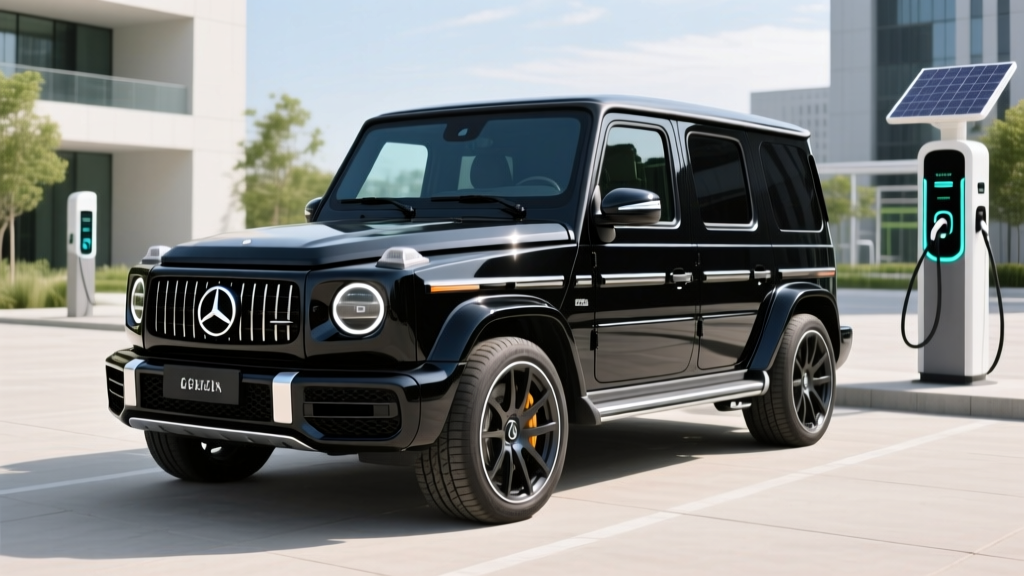
The Mercedes-Benz G580 with EQ Technology — the electric G Wagon — starts at $161,900 (including destination) for the 2026 model year. It delivers an EPA-estimated 239 miles of range from a 116 kWh usable lithium-ion (NMC) battery, produces 579 horsepower, and peaks at 200 kW DC fast charging (10–80% in approximately 32 minutes). It does not qualify for the federal §30D tax credit due to its MSRP exceeding the $80,000 SUV cap and foreign battery sourcing. For buyers cross-shopping the gas G550 ($148,250), the EV costs more upfront but saves roughly $3,800–$4,500 annually on fuel and maintenance depending on local electricity rates.
What Is the Electric G Wagon, Exactly?
Mercedes-Benz launched the battery-electric G-Class under the name G580 with EQ Technology, avoiding the previously teased "EQG" badge. It rides on a heavily modified version of the ladder-frame chassis shared with the 2025+ gas G-Class, but swaps the twin-turbo V8 for a four-motor setup — one near each wheel — enabling torque vectoring, individual wheel braking, and signature off-road modes like G-Turn (tank turns) and G-Steering (tight-radius pivots).
This is not a unibody crossover pretending to be rugged. The G580 retains solid-axle-equivalent articulation, three mechanical-style differential locks (simulated via software), and a wading depth of 33.5 inches. The question for prospective buyers is whether the EV powertrain makes sense at this price point compared to the gas G550 or the AMG G63.
Range, Battery & Charging: The Numbers That Matter
The G580's 116 kWh usable battery is one of the largest in any production passenger vehicle. Mercedes uses an NMC (nickel manganese cobalt) chemistry, chosen for its higher energy density versus LFP — necessary to keep the pack physically manageable in a ladder-frame chassis.
| Specification | 2026 Mercedes-Benz G580 |
|---|---|
| EPA Range | 239 miles |
| Real-World Range (highway, 70 mph) | ~195–215 miles |
| Real-World Range (cold, 20°F) | ~165–185 miles |
| Battery Capacity (usable) | 116 kWh (NMC) |
| MPGe (combined) | 68 MPGe |
| Efficiency | 49 kWh/100 mi |
| Peak DC Fast Charge Rate | 200 kW |
| 10–80% DC Fast Charge Time | ~32 minutes |
| Level 2 Charge Rate (AC) | 11 kW (~30 mi/hr) |
| Level 1 (120V, 12A) | ~1.4 kW (~3 mi/hr) |
| Charge Port | CCS1 (NACS adapter available) |
EPA vs. Reality
The EPA's 239-mile figure assumes a mix of city and highway driving at moderate temperatures. In real-world testing, the G580's boxy aerodynamics (drag coefficient of ~0.44) exact a heavy toll at sustained highway speeds. Expect 195–215 miles on a 70-mph road trip in fair weather. In sub-freezing temperatures, range drops to approximately 165–185 miles due to battery heating demands and cabin climate load — though the G580's standard heat pump mitigates some of this loss. Plan road-trip charging stops at roughly 150-mile intervals for comfort.
Charging Speed & the Curve
The G580 peaks at 200 kW on DC fast chargers, but like all large-battery EVs, it does not sustain that rate. The charge curve tapers meaningfully above 60% State of Charge (SoC). From 10–80%, the average sustained rate is closer to 140–155 kW, yielding the ~32-minute time. Above 80%, charging slows dramatically to protect battery longevity — a 10–95% session can take 55+ minutes. For daily driving, Level 2 home charging at 11 kW fully replenishes the 116 kWh pack in roughly 11 hours, making overnight top-ups practical.
The G580 ships with a CCS1 connector. Mercedes offers a NACS adapter for access to Tesla Supercharger stalls, and by 2026, most new Supercharger locations have been retrofitted with the "Magic Dock" CCS adapter for non-Tesla vehicles. Access to Electrify America, EVgo, and ChargePoint networks is native via the Mercedes me Charge app.
G580 EV vs. G550 Gas: Cost & Capability Compared
For most buyers considering the electric G Wagon, the natural comparison is the gas-powered G550, which for 2026 starts at $148,250 with a 3.0L turbocharged inline-six and 48-volt mild-hybrid system.
| Metric | G580 EV | G550 (Gas) |
|---|---|---|
| Base MSRP | $161,900 | $148,250 |
| Powertrain | Quad-motor, 579 hp | Turbo I6 + 48V mild-hybrid, 443 hp |
| 0–60 mph | 4.6 seconds | 5.3 seconds |
| EPA Range / Fuel Economy | 239 mi / 68 MPGe | 19 mpg combined |
| Annual Fuel/Energy Cost* | ~$1,650 (home charging) | ~$5,450 (premium gas) |
| Annual Maintenance Estimate | ~$400 | ~$1,200 |
| Federal Tax Credit (§30D) | Not eligible | N/A |
| Towing Capacity | 7,700 lbs | 7,700 lbs |
| Off-Road Capability | Comparable (with G-Turn advantage) | Proven, mechanical diffs |
*Based on 12,000 miles/year. Electricity at $0.17/kWh national average; premium gasoline at $4.80/gallon. Source: fueleconomy.gov.
Five-Year Cost Breakdown
| Cost Category (5 Years) | G580 EV | G550 Gas |
|---|---|---|
| Purchase Price (MSRP) | $161,900 | $148,250 |
| Fuel / Electricity | $8,250 | $27,250 |
| Maintenance | $2,000 | $6,000 |
| Insurance (est. average) | $22,500 | $19,500 |
| Estimated Depreciation (5-yr) | $72,000 | $58,000 |
| Total 5-Year Cost | ~$266,650 | ~$259,000 |
The G580 saves approximately $19,000 in fuel and $4,000 in maintenance over five years. However, the higher purchase price, steeper depreciation (EVs in the luxury segment have historically depreciated faster than heritage gas models), and higher insurance premiums narrow the gap. The G580 is not a cost-saving purchase — it's a technology and experience choice.
Real-World Ownership: What First-Time EV Buyers Need to Know
Buying a $162,000 electric SUV is not the same experience as buying a $40,000 commuter EV. Here are the ownership realities specific to the G580:
Home Charging Is Essentially Mandatory
With a 116 kWh battery, Level 1 (120V) charging adds only ~3 miles of range per hour — a full charge would take over 80 hours. A Level 2 home charger (240V, 48-amp circuit) is strongly recommended. Expect to pay $1,200–$2,800 for a quality Level 2 station (such as a ChargePoint Home Flex or Emporia Vue) plus professional installation. If your electrical panel needs a 200-amp upgrade, add $1,500–$3,500. Always get a licensed electrician's assessment before purchasing.
Public Charging on Road Trips
The G580's 239-mile EPA range means road-trip planning is essential. On a 500-mile journey, expect two charging stops of 30–40 minutes each. The Mercedes me Charge app integrates route planning with charger availability, but public DC fast-charger reliability remains variable — a 2025 J.D. Power study found that roughly 1 in 5 public charging attempts encounter a problem. For remote-area or overlanding use, the G580's range limitations are more acute than the gas G550's ~400-mile cruising range.
Off-Road Considerations
The G580's four-motor torque vectoring is genuinely impressive off-road, offering individual wheel control that mechanical differentials cannot match. However, rock-crawling and deep-mud excursions consume energy rapidly. A hard off-road session can drain 2–3 kWh per mile (versus ~0.5 kWh/mi on pavement). Plan off-road outings with a full charge and know where your nearest charger is.
Warranty & Battery Longevity
Mercedes covers the G580's high-voltage battery for 8 years or 100,000 miles, with a capacity retention threshold of 70%. The general vehicle warranty is 4 years/50,000 miles. NMC chemistry degrades faster than LFP under repeated high-SoC fast charging — owners who DC fast-charge daily to 100% may see accelerated degradation. Best practice: charge to 80% daily and only to 100% when a long trip demands it.
Federal Tax Credit & Incentive Reality
The G580 does not qualify for the IRS §30D federal EV tax credit. Two rules disqualify it:
- MSRP Cap: §30D limits the credit to SUVs with an MSRP at or below $80,000. The G580 starts at $161,900 — nearly double the threshold. (Source: IRS §30D)
- Battery Sourcing: Even at a lower price, the G580's battery cells are manufactured outside the U.S., and critical-mineral sourcing does not currently meet the phased-in domestic-content requirements.
Some states offer additional incentives that are not MSRP-capped. California's CARB programs, for example, may provide rebates depending on income and air-district jurisdiction — check your local air quality management district for current availability. Several states also waive sales tax on EVs above a certain price, which can save $10,000+ on a G580 purchase.
Common Misconceptions About the G Wagon EV
| Myth | Fact |
|---|---|
| "The electric G Wagon can't off-road." | The four-motor system provides superior individual wheel torque control. It matches or exceeds the gas G-Class on approach/departure angles and wading depth (33.5 in). The G-Turn feature is exclusive to the EV. |
| "It gets the $7,500 federal tax credit." | It does not. The MSRP cap for SUVs under §30D is $80,000, and the battery does not meet domestic sourcing rules. |
| "239 miles of range is enough for anything." | At highway speeds in cold weather, real range drops to ~165–185 miles. Road trips require planning and charging stops every 150–180 miles for comfort. |
| "It charges as fast as a Tesla or Hyundai." | The G580 peaks at 200 kW — respectable, but below the 250–350 kW peak rates of the Tesla Model S, Hyundai Ioniq 5, or Porsche Taycan. Its massive 116 kWh battery also means longer absolute charge times. |
| "EVs have no maintenance costs." | The G580 eliminates oil changes and transmission service but still requires tire rotations (heavy EVs wear tires faster), brake fluid checks, cabin filter replacement, and coolant system service. Budget ~$400/year. |
Decision Framework: Should You Buy the G580 EV?
Choose the G580 EV If:
- You have home Level 2 charging and primarily drive in urban/suburban settings with occasional road trips.
- You want the latest technology — four-motor torque vectoring, G-Turn, and instant 579-hp torque delivery are experiences the gas G-Class cannot replicate.
- You value silent, vibration-free luxury cruising and the novelty of a 7,000-lb electric fortress.
- You are not dependent on the federal tax credit to justify the purchase.
- You want to reduce annual fuel spend by ~$3,800 versus the G550 (assuming home charging at average electricity rates).
Choose the Gas G550 (or G63) If:
- You regularly drive in remote areas or take overlanding trips where DC fast chargers are scarce.
- You need 400+ miles of range between stops without planning charging logistics.
- You want a proven, heritage powertrain with decades of off-road validation and a global service/parts network for remote repairs.
- Depreciation predictability matters — the gas G-Class has historically held value exceptionally well, while luxury EV depreciation curves are still establishing.
- You prefer the character of a turbocharged engine and exhaust note.
Frequently Asked Questions
What is the real-world range of the Mercedes G Wagon EV?
The EPA rates the G580 at 239 miles. In mixed real-world driving at moderate temperatures, expect 210–225 miles. Sustained highway driving at 70+ mph reduces this to approximately 195–215 miles. In cold weather (below 30°F), plan for 165–185 miles.
How long does it take to charge the G580 at home?
On a Level 2 home charger (240V, 48A, ~11 kW), a full 0–100% charge takes roughly 11 hours. Most owners charging from 20–80% daily will see 6–7 hour sessions — easily accomplished overnight.
Does the electric G Wagon qualify for any tax credits?
Not the federal §30D credit — the MSRP cap for SUVs is $80,000 and the G580 starts at $161,900. Some state-level incentives may apply depending on your jurisdiction. Consult a tax professional for personalized guidance.
Can the G580 tow as much as the gas G-Class?
Yes. The G580 is rated at 7,700 lbs of towing capacity, matching the G550. However, towing significantly reduces range — expect a 35–50% reduction, bringing effective range to approximately 120–155 miles per charge when towing near maximum capacity.
Is the G580's battery replaceable, and what would it cost?
The battery is technically replaceable. Mercedes has not published a consumer replacement price, but based on comparable large-battery EVs (e.g., the EQS), expect a figure in the $25,000–$35,000 range if needed out of warranty. The 8-year/100,000-mile battery warranty with a 70% capacity threshold provides substantial coverage.
How does the G580 handle in snow and ice?
Excellent. The four-motor all-wheel-drive system can send torque to any individual wheel in milliseconds, and the vehicle's 6,800-lb curb weight provides substantial traction. Combined with winter tires, the G580 is one of the most capable EVs in winter conditions — though cold weather will reduce range by 20–30%.
Will the G580 get Tesla Supercharger access?
Yes, via a NACS adapter. Mercedes-Benz has confirmed compatibility with Tesla's Supercharger network using an official adapter, and many Supercharger stalls now include the integrated "Magic Dock" CCS adapter for non-Tesla vehicles. This significantly expands the G580's road-trip charging network.