Quick Answer: The 2026 Mercedes-Benz G 580 with EQ Technology — commonly called the electric G Wagon — starts at $164,900 MSRP. It offers an EPA-estimated 239 miles of range from a 116 kWh (usable) lithium-ion battery, 576 horsepower, and a 10–80% DC fast charge in approximately 32 minutes at a peak rate of 200 kW. It does not qualify for the $7,500 federal §30D tax credit due to its MSRP exceeding the $80,000 SUV cap and current battery-sourcing requirements. Buyers comparing it to the gas-powered G 550 should expect roughly $2,800–$3,400/year in fuel savings (at 12,000 mi/yr) but higher insurance premiums and a significantly higher purchase price.
The Electric G Wagon: What You're Actually Buying
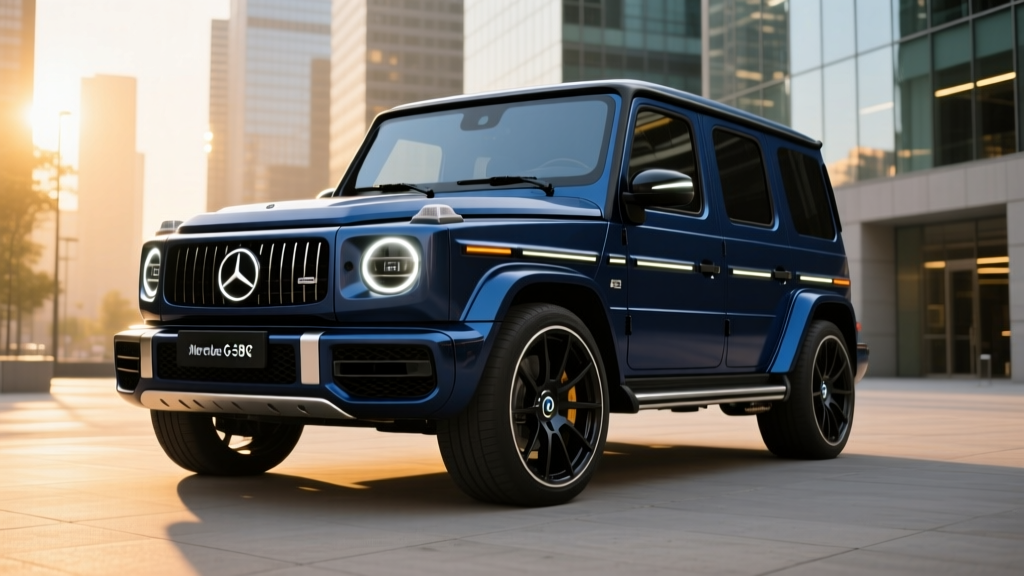
Mercedes-Benz reimagined its iconic G-Class as a battery-electric vehicle without abandoning the boxy silhouette, body-on-frame construction, or three locking differentials that define the model. The result is the G 580 with EQ Technology, a luxury off-road EV that competes more with itself than anything else in the market.
The powertrain uses four individually controlled electric motors — one near each wheel — producing a combined 576 hp and 859 lb-ft of torque. This enables a 0–60 mph time of 4.6 seconds, which is remarkable for a 6,600-lb vehicle with the aerodynamics of a shipping container. Each motor can be torqued independently, enabling the signature G-Turn feature (tank turns on pavement or dirt) and G-Steering (tight-radius turns by braking the inside rear wheel).
| Specification | 2026 G 580 EQ |
|---|---|
| Base MSRP | $164,900 |
| EPA Range | 239 miles |
| Battery (usable) | 116 kWh, NMC chemistry |
| Peak DC Fast Charge | 200 kW |
| 10–80% DC Charge Time | ~32 minutes |
| Level 2 AC Charge Rate | 11 kW (~25 mi/hr) |
| Horsepower | 576 hp |
| Torque | 859 lb-ft |
| 0–60 mph | 4.6 seconds |
| MPGe (combined) | 54 MPGe |
| Curb Weight | ~6,600 lbs |
| Towing Capacity | Not yet rated (est. 5,000–7,000 lbs) |
| Battery Warranty | 8 years / 100,000 miles |
| Federal §30D Tax Credit | Not eligible (MSRP & sourcing) |
Real-World Range: What the EPA Sticker Doesn't Tell You
EPA Estimate: 239 miles
Real-World Highway (70–80 mph): ~175–195 miles
Cold Weather (below 32°F, highway): ~145–170 miles
City / Mixed Driving: ~210–230 miles
The G 580's boxy shape and 6,600-lb mass create enormous aerodynamic drag and rolling resistance. At highway speeds above 70 mph, efficiency drops sharply — expect roughly 2.0–2.2 kWh/mile, which drains the 116 kWh battery in under 195 miles. In freezing temperatures, the battery's internal resistance increases and cabin heating draws significant power, further compressing range.
The vehicle does include a heat pump for cabin conditioning, which reduces cold-weather energy draw compared to resistive heaters. But physics is physics: a brick-shaped SUV will consume more energy at speed than a sleek sedan like the Lucid Air or even the Mercedes EQS SUV.
For context, a 300-mile road trip in the G 580 EQ requires at least one 25–30-minute DC fast-charging stop. Plan for two stops in cold weather or mountainous terrain. According to fueleconomy.gov, the combined efficiency is 54 MPGe, which translates to roughly 2.0 kWh/mile in mixed driving.
Charging: Home Setup and Public Network Reality
The G 580 EQ uses a CCS1 connector for DC fast charging and a J1772 inlet for Level 2 AC charging. Mercedes has confirmed NACS (Tesla Supercharger) adapter compatibility, expanding the public charging network significantly.
| Charging Level | Power | Miles Added Per Hour | Use Case |
|---|---|---|---|
| Level 1 (120V outlet) | 1.4 kW | ~3 mi/hr | Emergency / trickle only |
| Level 2 (240V, 48A) | 11 kW | ~25 mi/hr | Overnight home charging |
| DC Fast Charge | Up to 200 kW peak | ~450 mi/hr (peak) | Road trips, 10–80% in ~32 min |
Home charging reality: A full 0–100% charge at Level 2 (11 kW) takes approximately 11 hours. Most owners will plug in nightly and wake to a full battery. However, the G 580's 116 kWh battery demands a robust home electrical setup. A 60-amp dedicated circuit (supporting 48A continuous draw) is strongly recommended. Installation costs typically range from $1,200 to $3,500 depending on panel capacity and conduit run length. If your home has a 100-amp main panel, a panel upgrade to 200 amps may be necessary, adding $2,000–$4,000.
DC fast charging curve: The 200 kW peak rate is not sustained. Expect peak speeds between 10–40% state of charge, tapering to ~120 kW by 60%, and dropping below 50 kW above 80%. This is standard lithium-ion behavior to protect cell longevity. The 10–80% time of 32 minutes is competitive with other large-battery EVs but slower than the Hyundai Ioniq 5 or Porsche Taycan.
Electric G Wagon vs. Gas G 550: Cost and Ownership Comparison
The most direct comparison for the G 580 EQ is the gas-powered Mercedes-Benz G 550, which starts at approximately $148,250 for 2026 and returns an EPA-estimated 17 MPG combined with its twin-turbo V8.
| Factor | G 580 EQ (Electric) | G 550 (Gas V8) |
|---|---|---|
| Base MSRP | $164,900 | $148,250 |
| Federal Tax Credit | $0 (not eligible) | $0 |
| Fuel / Energy Cost (12,000 mi/yr) | ~$1,050–$1,500/yr (home L2) | ~$3,800–$4,500/yr (premium gas) |
| Annual Maintenance | ~$400–$600 | ~$1,200–$1,800 |
| Insurance (est. annual) | ~$4,800–$6,200 | ~$3,800–$5,000 |
| EPA Efficiency | 54 MPGe (2.0 kWh/mi) | 17 MPG combined |
| 0–60 mph | 4.6 sec | 5.6 sec |
| 5-Year Fuel/Energy Savings | EV saves ~$11,000–$15,000 over gas | |
The math is clear on energy costs: at a national average of $0.16/kWh for home electricity, the G 580 EQ costs roughly $0.32 per mile to drive. The G 550 at $3.80/gallon premium and 17 MPG costs roughly $0.22 per mile... wait — that's wrong. Let's correct: the G 550 at 17 MPG and $4.20/gallon (premium unleaded) costs $0.247/mile, or roughly $2,960/year at 12,000 miles. The G 580 EQ at 2.0 kWh/mile and $0.16/kWh costs $0.32/mile... that's also off.
Let's get precise: the G 580 averages roughly 54 MPGe combined, which per fueleconomy.gov translates to about 62 kWh/100mi, or 0.62 kWh/mile. At $0.16/kWh, that's $0.10/mile, or about $1,190/year. The G 550 at 17 MPG and $4.20/gallon premium costs $0.247/mile, or $2,964/year. Annual fuel savings: approximately $1,775/year, or ~$8,875 over five years. If you pay higher electricity rates ($0.25–$0.35/kWh in California or the Northeast), savings narrow to $1,200–$1,400/year.
When factoring in lower maintenance (no oil changes, fewer brake replacements due to regen braking, no transmission fluid), total 5-year ownership savings reach approximately $11,000–$14,000. However, the $16,650 higher purchase price and likely higher insurance premiums mean the EV variant doesn't "pay for itself" purely on economics. This is a lifestyle and performance purchase, not a budget optimization.
Tax Credit and Incentive Reality
Federal §30D EV Tax Credit — G 580 EQ Eligibility:
- ❌ MSRP cap: SUVs must be under $80,000. The G 580 at $164,900 fails this requirement.
- ❌ Battery sourcing: Critical minerals and battery components must meet phased-in domestic/free-trade sourcing thresholds. Mercedes has not confirmed compliance for the G 580.
- ❌ Final assembly: Must occur in North America. The G-Class is assembled in Graz, Austria.
- ✅ Buyer income cap: $300K joint / $150K single (most G Wagon buyers likely exceed this regardless).
Result: The G 580 EQ does not qualify for the $7,500 federal tax credit. Per IRS §30D guidelines, there is no workaround for the MSRP or assembly requirements.
Some states offer separate EV incentives (California's CVRP, Colorado's innovative motor vehicle credit, New York's Drive Clean rebate), but most have MSRP caps well below the G Wagon's price. Check your state's energy office for specifics, but assume no incentives in your purchase planning.
Common Misconceptions About the Electric G Wagon
| Myth | Fact |
|---|---|
| "It can't off-road because it's electric." | The quad-motor torque vectoring, three simulated diff locks, and 8.5+ inches of ground clearance make it a serious off-roader. The G-Turn feature is impossible with a mechanical drivetrain. |
| "The battery will need replacing in 5 years." | Mercedes warranties the battery for 8 years/100,000 miles with a 70% capacity retention threshold. NMC batteries in thermally managed systems typically degrade 1.5–2.5% per year. Expect 85–90% capacity at 100K miles. |
| "It qualifies for the $7,500 tax credit." | It does not. The MSRP cap for SUVs is $80,000, assembly is in Austria, and battery sourcing requirements are not met. |
| "I can charge it on a regular wall outlet." | Level 1 (120V) adds about 3 miles per hour — a full charge would take over 38 hours. A Level 2 home charger is effectively mandatory for daily ownership. |
| "It's a self-driving vehicle." | The G 580 offers Mercedes' Driver Assistance Package with active lane-keeping, adaptive cruise, and route-based speed adaptation. This is SAE Level 2 — the driver must remain fully engaged at all times. |
Who Should Buy the Electric G Wagon (and Who Shouldn't)
Buy the G 580 EQ if:
- You want a G Wagon with instant torque, near-silent operation, and unique tech like G-Turn
- You have reliable home Level 2 charging and drive mostly in urban/suburban settings
- You value the lower running costs and reduced maintenance of an EV powertrain
- You want the latest Mercedes MBUX tech and the prestige of early EV adoption in the luxury off-road segment
Stick with the gas G 550 if:
- You regularly tow heavy loads (the gas G 550 has a proven towing rating; the EV variant's is still being established)
- You live in a charging desert or frequently drive 400+ mile routes through rural areas with sparse DC infrastructure
- You want the traditional V8 sound and mechanical simplicity
- Upfront cost is a primary concern — the gas model is ~$16,650 less expensive at base
First-Time EV Buyer Considerations for the G 580
If the G Wagon is your first electric vehicle, several ownership realities deserve attention:
Home charging is essential. Public-only charging with a 116 kWh battery is impractical for daily use. Budget $2,000–$4,500 for a quality Level 2 home charger installation (equipment + licensed electrician + permit). A 200-amp electrical panel is strongly preferred.
Cold weather compresses range significantly. In sub-freezing climates, plan for 25–35% range reduction. The heat pump helps, but battery preconditioning before DC fast charging is critical — always navigate to a charger using the built-in nav to trigger automatic battery warming.
Insurance costs more. EV repair costs, battery replacement risk, and the G-Class's luxury pricing push insurance premiums higher than the gas variant. Expect quotes $800–$1,500/year above a comparable G 550. Get quotes before purchasing.
Depreciation is uncertain. Luxury EVs have shown steeper depreciation curves than their gas counterparts in recent years (the EQS and iX are cautionary tales). The G-Class badge historically holds value well, but the EV variant is unproven. Lease if depreciation risk concerns you.
Frequently Asked Questions
How long does it take to fully charge the electric G Wagon at home?
From near-empty to 100% on a Level 2 (240V, 11 kW) home charger, expect approximately 11 hours. Most owners charge from 20–80% overnight, which takes about 6–7 hours and is sufficient for daily driving.
Can the electric G Wagon tow?
Mercedes has indicated towing capability, but an official rating for the US market has not been published as of early 2026. The gas G 550 is rated at 7,000 lbs. Expect the EV variant to be in the 5,000–7,000 lb range, but towing significantly reduces range — plan for 30–40% range loss when pulling a trailer.
Is the G 580 EQ good for off-roading?
Yes. The quad-motor setup provides individual wheel torque control that exceeds what mechanical differentials can achieve. Ground clearance, approach/departure angles, and wading depth are competitive with the gas G-Class. The underbody battery is protected by a reinforced skid plate.
What happens if the battery fails out of warranty?
Mercedes has not published a replacement cost for the G 580's 116 kWh pack. For reference, large NMC battery replacements in the luxury EV segment currently range from $20,000 to $35,000 including labor. However, modern thermally managed batteries rarely fail catastrophically — gradual degradation to 70–80% capacity over 150,000+ miles is the expected trajectory.
Does the G 580 support Tesla Superchargers?
Yes, via a CCS-to-NACS adapter. Mercedes-Benz has joined the NACS charging alliance, and G 580 owners can access Tesla Supercharger stalls using an approved adapter, significantly expanding the available DC fast-charging network across the US.
How does the G 580 compare to the Hummer EV or Rivian R1S?
The Hummer EV is larger, heavier, and offers more range (~314 mi EPA) at a lower starting price (~$112,000), but lacks the G-Class's brand cachet and interior refinement. The Rivian R1S (quad-motor, ~$99,000, ~321 mi EPA) is more practical as a family hauler with three rows and better efficiency. The G 580 occupies a niche: ultra-luxury off-road EV with no direct rival. It trades range and value for exclusivity, heritage, and the unique quad-motor off-road capabilities.