Quick Answer: Should You Buy the Electric G Class?
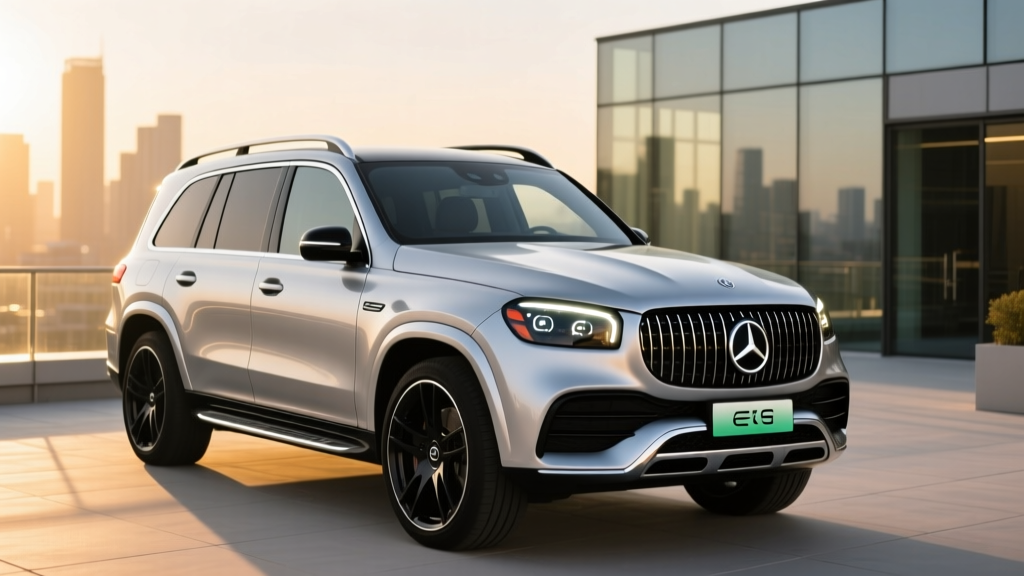
The 2026 Mercedes-Benz G 580 with EQ Technology (the electric G Class) starts at $161,900 and delivers an EPA-estimated 239 miles of range from a 116 kWh usable NMC battery. It charges at up to 200 kW DC (10–80% in ~32 minutes) and produces 579 hp. It qualifies for no federal tax credit due to its MSRP exceeding the §30D cap. Buy it if you want iconic G-Wagen styling, genuine off-road capability, and silent electric torque—and accept the range compromise. Skip it if you need 300+ mile highway efficiency or lower running costs than the gas G 550.
Range, Battery, and Real-World Efficiency
The G 580 EQ packs a 116 kWh usable lithium-ion (NMC) battery mounted in a ladder-frame enclosure. The EPA rates it at 239 miles combined, with an efficiency of roughly 53 MPGe (65 kWh/100 mi)—low for an EV, but expected for a 6,600-lb aerodynamic brick.
Real-World Range Expectations
EPA Sticker: 239 miles
Highway (70–80 mph, 65°F): ~190–210 miles
Cold weather (30°F, highway): ~155–175 miles
Off-road / towing: ~120–150 miles depending on terrain and load
The G 580's boxy shape and 2.18 Cd drag coefficient mean highway efficiency drops sharply above 65 mph. Cold weather further reduces range due to battery resistance and cabin heating demands, though the standard heat pump mitigates some loss.
| Spec | Value |
|---|---|
| EPA Range | 239 miles |
| Battery (usable) | 116 kWh, NMC |
| Efficiency | ~53 MPGe / 65 kWh/100 mi |
| Peak DC Fast Charge | 200 kW |
| 10–80% DC Charge Time | ~32 minutes |
| Level 2 Charge Rate | 11 kW (onboard charger) |
| Horsepower | 579 hp (4-motor) |
| 0–60 mph | 4.6 seconds |
| Drivetrain | Quad-motor AWD (individual wheel torque) |
| Base MSRP | $161,900 |
| Federal Tax Credit (§30D) | Not eligible (exceeds $80K SUV cap) |
| Battery Warranty | 10 years / 155,000 miles |
Charging: What to Expect at Home and on the Road
The G 580 EQ uses a CCS1 connector (NACS adapter availability depends on Mercedes' 2026 network partnerships). At a DC fast charger, it peaks at 200 kW, though the charge curve tapers significantly above 80% SoC to protect the large NMC pack. Expect 10–80% in roughly 32 minutes under optimal conditions (preconditioned battery, warm ambient temperature). The 80–100% top-off can add another 25–35 minutes.
At home, the 11 kW onboard charger means a full Level 2 charge (0–100%) takes approximately 11–12 hours on a 48-amp hardwired station. Most G 580 owners will need a dedicated 60-amp circuit. If your home electrical panel maxes at 100 amps, a panel upgrade to 200 amps could add $2,000–$5,000 to installation costs.
| Level | Power | Miles Added Per Hour | Full Charge Time |
|---|---|---|---|
| Level 1 (120V, 12A) | 1.4 kW | ~2 mi/hr | ~83 hours |
| Level 2 (240V, 48A) | 11 kW | ~22 mi/hr | ~11 hours |
| DC Fast (peak) | 200 kW | ~180 mi/hr (peak) | 10–80% in ~32 min |
Level 1 is essentially unusable for daily driving given the massive battery. Budget-conscious owners should treat a Level 2 home charger as mandatory, not optional.
Electric G Class vs. Gas G 550: Cost and Capability Compared
The closest internal-combustion comparison is the 2026 Mercedes-Benz G 550 (starting ~$148,000, twin-turbo V6, 17 MPG combined per fueleconomy.gov). Here's how the two stack up over 5 years and 75,000 miles:
| Category | G 580 EQ (Electric) | G 550 (Gas) |
|---|---|---|
| Purchase Price | $161,900 | $148,000 |
| Federal Tax Credit | $0 | $0 |
| Fuel / Energy (75K mi) | $4,875 (home L2 @ $0.13/kWh) | $15,882 (premium @ $4.50/gal, 17 MPG) |
| Maintenance (5 yr) | ~$2,200 | ~$5,500 |
| Insurance (est. 5 yr) | ~$24,000 | ~$21,000 |
| Depreciation (est. 5 yr) | ~$80,000 | ~$65,000 |
| Total 5-Yr Cost | ~$272,975 | ~$255,382 |
The G 580 saves roughly $14,300 in fuel and maintenance over five years but gives back more in depreciation and insurance. The gas G 550 remains cheaper to own overall, largely because luxury EVs depreciate faster in the current market and because the G 580's higher MSRP yields no tax credit offset.
| Factor | G 580 EQ | G 550 |
|---|---|---|
| 0–60 mph | 4.6 sec | 5.5 sec |
| Range / Tank | 239 mi (EPA) | ~370 mi (22-gal tank) |
| Off-Road Capability | Excellent (G-Turn, torque vectoring) | Excellent (3 locking diffs) |
| Refueling Time | 32 min (10–80%) or 11 hr (home) | ~5 min (gas station) |
| Towing Capacity | Not yet rated (est. ~5,500 lbs) | 7,700 lbs |
| Quietness | Near-silent | V6 exhaust note |
Real Ownership Considerations: Home Charging, Climate, and Daily Use
Home charging is non-negotiable. With 239 miles of range and 65 kWh/100 mi consumption, public DC fast-charging a G 580 daily would cost $0.35–$0.55/kWh at networks like Electrify America—roughly $11,000–$17,000 over 5 years, erasing the fuel savings versus gas. Home Level 2 charging at residential electricity rates ($0.10–$0.18/kWh national average) is what makes EV ownership economical.
Cold climate buyers should plan for 25–35% range loss in sub-freezing temperatures. A G 580 in Minnesota or Colorado will realistically deliver 155–175 highway miles in January. The heat pump helps, but the vehicle's mass and poor aerodynamics amplify cold-weather penalties. Garage parking with a Level 2 charger is ideal—the car can precondition its battery while plugged in, reducing range loss on departure.
Off-road use is where the G 580's four individual motors shine. The G-Turn function (counter-rotating wheels on each side for 360-degree tank turns) and G-Steering (torque-vectoring for tight trail turns) offer capabilities the gas G-Wagen can't match. However, aggressive off-roading at low speeds with high torque demands can drain the battery in under 150 miles. Plan trail routes with charging logistics in mind.
Tax Credits, Incentives, and Purchase Economics
The G 580 EQ does not qualify for the federal §30D clean vehicle credit. The IRS caps SUV eligibility at an $80,000 MSRP (see IRS.gov §30D rules), and at $161,900, the G 580 exceeds this by a wide margin. Buyer income limits and critical-mineral sourcing requirements are moot—the price alone disqualifies it.
Some states offer additional incentives that don't have MSRP caps (Colorado's innovative motor vehicle credit, for example, applies more broadly), but these vary by jurisdiction and change frequently. Consult your state's energy office and a tax professional before relying on local credits.
Common Misconceptions About the Electric G Class
| Myth | Fact |
|---|---|
| "It qualifies for the $7,500 federal tax credit." | It does not. The §30D SUV MSRP cap is $80,000. The G 580 starts at $161,900. |
| "Electric means cheaper to own." | Fuel and maintenance savings are real (~$14K over 5 years), but higher depreciation and insurance erase the advantage for this model. |
| "239 miles is enough for road trips." | Highway real-world range is ~190–210 miles. Plan DC fast-charger stops every 150–170 miles on long trips. |
| "It can't off-road as well as the gas G-Wagen." | Four independent motors with G-Turn and torque vectoring actually give it capabilities the gas version lacks. Ground clearance and wading depth are competitive. |
| "I can charge it on a regular outlet." | Level 1 adds ~2 miles per hour. A full charge takes 83+ hours. Level 2 home installation is effectively mandatory. |
Decision Framework: Is the G 580 EQ Right for You?
Choose the Electric G 580 EQ If:
- You want a G-Wagen with the quietest, smoothest powertrain Mercedes has ever built
- You have reliable Level 2 home charging (garage or driveway with a 60A circuit)
- Your daily driving is under 150 miles and you road-trip infrequently
- Off-road tech like G-Turn and individual wheel torque vectoring excites you
- Budget is flexible and depreciation isn't your primary concern
- You value instant 579 hp torque without turbo lag or downshifts
Choose the Gas G 550 Instead If:
- You regularly drive 300+ miles between stops or tow heavy trailers
- You lack home charging access and would rely on public DC fast-charging
- You want lower 5-year total cost of ownership and slower depreciation
- You live in a cold climate and need maximum range predictability year-round
- You prefer the traditional G-Wagen exhaust note and mechanical character
Consider a Plug-in Hybrid Alternative If:
- You want some electric daily driving but need gas range for road trips
- Look at the Range Rover PHEV or upcoming Mercedes GLE PHEV for a luxury compromise
What First-Time EV Buyers Should Know Before Purchasing
If the G 580 is your first EV, understand these fundamentals:
kW vs. kWh: Kilowatts (kW) measure power—how fast you charge. Kilowatt-hours (kWh) measure energy—how much the battery holds. The G 580 has 116 kWh of capacity and charges at up to 200 kW. Think of kWh as the size of your gas tank and kW as the diameter of the fuel hose.
Charge curve taper: The 200 kW peak only applies at low state of charge (roughly 10–40%). Above 80%, charging slows dramatically to protect the NMC battery. A "32-minute" 10–80% charge does not mean 0–100% in 40 minutes—plan for 55–65 minutes total at a DC fast charger.
Preconditioning matters: The G 580 can warm its battery before you reach a fast charger (if you set it as a navigation destination). Arriving with a cold battery can cut peak charge speed by 30–50%. Always precondition in cold weather.
Insurance costs more: Luxury EVs carry higher insurance premiums due to repair costs, battery replacement value, and parts availability. Expect $4,500–$5,500/year depending on your profile—get quotes before ordering.
Frequently Asked Questions
Does the electric G Class have the same off-road capability as the gas G-Wagen?
Yes, and in some ways it exceeds it. The G 580 retains the ladder frame, solid rear axle equivalent, and three simulated locking differentials (via torque vectoring). Its G-Turn feature enables 360-degree tank turns impossible on the gas version. Ground clearance, approach/departure angles, and wading depth are comparable. The main limitation is range: aggressive off-roading drains the battery quickly.
How long will the G 580 battery last, and what does replacement cost?
Mercedes warranties the battery for 10 years / 155,000 miles against degradation below 70% of original capacity. NMC batteries in large, thermally managed packs like this typically retain 85–90% capacity after 100,000 miles based on industry data. Out-of-warranty replacement for a 116 kWh pack would likely cost $25,000–$40,000 at current pricing, though costs are declining annually.
Can I use Tesla Superchargers with the G 580?
As of 2026, Mercedes-Benz has not announced native NACS integration for the G 580. The vehicle ships with CCS1. Check whether Mercedes offers a NACS adapter for Supercharger access in your region, or rely on the Electrify America, EVgo, and ChargePoint networks, which have robust 150–350 kW coverage in most metro areas.
What size home electrical service do I need?
The 11 kW onboard charger draws 48 amps continuously, requiring a dedicated 60-amp breaker. Homes with 200-amp panels can usually accommodate this. Homes with 100-amp service may need a panel upgrade ($2,000–$5,000). Always have a licensed electrician perform a load calculation before installation. Refer to NHTSA's EV charging guidance for safety standards.
Is the G 580 practical as a daily driver?
For city and suburban commuting under 100 miles round-trip, it's excellent—quiet, smooth, and torque-rich. For highway-heavy commutes over 200 miles daily, the 239-mile EPA range (190–210 real-world highway) becomes a constraint requiring daily charging discipline. Cargo space is adequate but not generous for the vehicle's exterior footprint, due to the battery floor.