Quick Answer: Which Mercedes EV SUV Fits You?
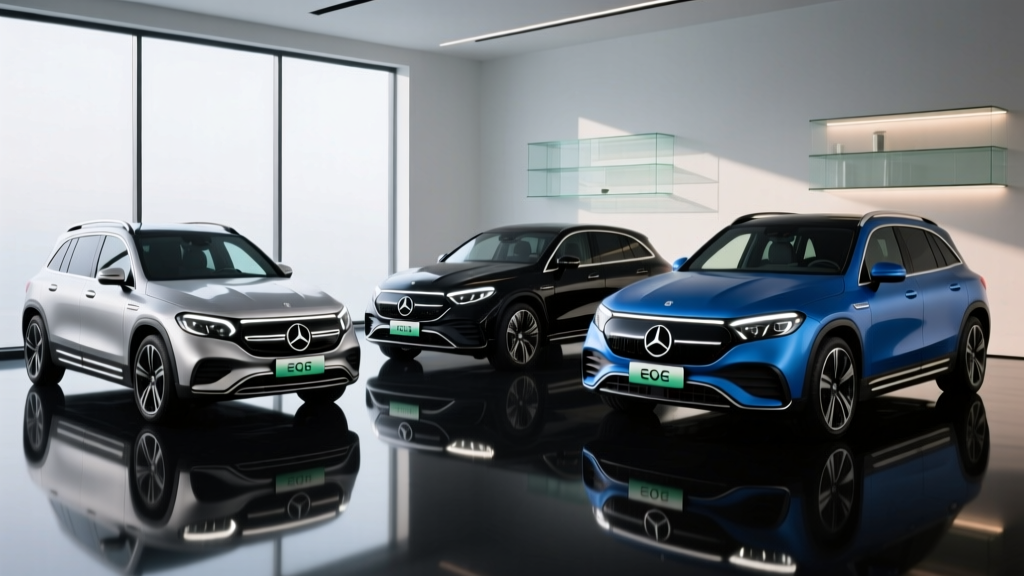
If you're shopping for a Mercedes EV SUV in 2026, you have three core choices: the compact EQB (EPA ~245 miles, ~$54,000, optional third row), the midsize EQE SUV (EPA ~305 miles, ~$78,000, sport-tuned), or the flagship EQS SUV (EPA ~330 miles, ~$106,000, three-row luxury). None currently qualify for the full federal §30D tax credit due to battery-sourcing and MSRP-cap rules. Your best pick depends on budget, passenger needs, and whether you have Level 2 home charging access.
The 2026 Mercedes EV SUV Lineup at a Glance
Mercedes-Benz structures its electric SUV range across three distinct size and price tiers. Each rides on dedicated EV architecture (not a converted gas platform), which means flat floors, frunks on select trims, and packaging optimized for battery placement. Here is how the specs stack up for the current model year.
| Spec | EQB 350 4MATIC | EQE 350+ SUV | EQS 450+ SUV |
|---|---|---|---|
| EPA Range | ~245 mi | ~305 mi | ~330 mi |
| Battery (usable) | 66.5 kWh (NMC) | 90.6 kWh (NMC) | 108.4 kWh (NMC) |
| Peak DC Fast Charge | 100 kW | 170 kW | 200 kW |
| 10–80% DCFC Time | ~32 min | ~32 min | ~31 min |
| Level 2 (240V) Rate | 7.2 kW | 9.6 kW | 9.6 kW |
| Horsepower | 288 hp | 288 hp (RWD) | 355 hp (RWD) |
| 0–60 mph | 5.8 sec | 6.4 sec | 6.2 sec |
| MPGe (combined) | ~83 MPGe | ~89 MPGe | ~85 MPGe |
| Seating | 5 or 7 (optional 3rd row) | 5 | 5 or 7 |
| Cargo (behind 2nd row) | ~22 cu ft | ~27 cu ft | ~31 cu ft |
| Base MSRP | ~$54,000 | ~$78,000 | ~$106,000 |
| Battery Warranty | 8 yr / 100,000 mi | 8 yr / 100,000 mi | 8 yr / 100,000 mi |
Real-World Range vs. EPA Sticker
EPA estimates assume a mix of city and highway driving at moderate temperatures. In practice, expect 10–20% range reduction at sustained 75+ mph highway speeds and 20–35% reduction in sub-freezing winter conditions. For the EQS 450+ SUV rated at 330 miles, plan for roughly 265–280 miles on a warm highway trip and as low as 215–240 miles in cold weather with cabin heat running. The EQB, with its smaller battery, drops to roughly 185–210 miles in winter highway driving. If your commute or road-trip pattern regularly pushes past 200 miles between charging stops, the EQE or EQS provides a far more comfortable buffer.
How Does a Mercedes EV SUV Compare to Gas and Hybrid Alternatives?
Many cross-shopping buyers land on the Mercedes GLE (gas), GLE 350e (PHEV), or GLB (gas). The economics and driving experience diverge sharply. Below is a five-year ownership comparison using the EQE 350+ SUV versus a comparably priced GLE 350 4MATIC (gas).
| Factor | EQE 350+ SUV (EV) | GLE 350 4MATIC (Gas) |
|---|---|---|
| Base MSRP | ~$78,000 | ~$63,000 |
| Fuel/Energy Cost (5 yr, 75,000 mi) | ~$5,400 (home L2 @ $0.14/kWh) | ~$11,250 (24 MPG @ $3.60/gal) |
| Maintenance (5 yr) | ~$2,500 (no oil, fewer brake jobs) | ~$5,500 (oil, filters, brake pads, transmission fluid) |
| Insurance (avg annual) | ~$2,800/yr | ~$2,200/yr |
| Federal Tax Credit (§30D) | $0 (sourcing/MSRP rules) | $0 |
| Estimated 5-yr Depreciation | ~$34,000 | ~$28,000 |
| Total 5-yr Cost of Ownership | ~$122,900 | ~$109,750 |
The takeaway: The EQE SUV costs roughly $13,000 more over five years, driven primarily by higher upfront price and steeper depreciation. Fuel and maintenance savings recover approximately $8,850 of that gap. If your electricity rate is lower (e.g., $0.10/kWh in some regions), or you have free workplace charging, the gap narrows further. The intangibles — instant torque, silent cabin, no gas station visits, and reduced emissions — are personal-value calculations no spreadsheet fully captures.
Against the GLE 350e plug-in hybrid (EPA ~48 miles electric-only, then ~23 MPG combined on gas), the EQE eliminates tailpipe emissions entirely but demands you commit to charging infrastructure. The PHEV is the pragmatic hedge if you lack reliable home charging or regularly drive 400+ miles in a single day where DC fast-charging stops would add unwanted time.
Real Costs of Owning a Mercedes EV SUV
Purchase Price and Financing
Mercedes EV SUVs carry a premium over their gas counterparts. The EQB starts around $54,000 and can climb past $62,000 with options. The EQE SUV ranges from $78,000 to over $100,000 for AMG variants. The EQS SUV tops out near $130,000 fully loaded. As of 2026, none qualify for the federal §30D clean vehicle credit — the $80,000 SUV MSRP cap disqualifies the EQE and EQS, and battery critical-mineral sourcing requirements eliminate the EQB. Always verify current rules on irs.gov before purchase, as regulations evolve.
Home Charging Setup
Level 2 home charging is nearly essential for daily Mercedes EV SUV ownership. Here is a realistic cost breakdown for a typical 240V / 48-amp home charger installation:
| Item | Cost Range |
|---|---|
| Level 2 Charger (e.g., ChargePoint Home Flex, Wallbox Pulsar Max) | $400–$700 |
| Electrician labor (run 240V/50A circuit to garage) | $800–$2,500 |
| Permit and inspection | $100–$300 |
| Electrical panel upgrade (if needed, 100A→200A) | $1,500–$4,000 |
| Total (no panel upgrade) | $1,300–$3,500 |
| Total (with panel upgrade) | $2,800–$7,500 |
At 9.6 kW (EQE/EQS), a full overnight charge from 10% to 100% takes roughly 9–11 hours. The EQB at 7.2 kW needs about 9 hours for its smaller pack. Plan your installation around a licensed electrician's assessment of your panel capacity — a 200-amp panel with spare breaker slots handles a 48-amp charger without issue in most homes.
Charging Cost Per Mile vs. Gas
At the national average residential electricity rate of ~$0.16/kWh (EIA 2025 data), charging the EQE SUV costs roughly $0.053 per mile. A comparable gas SUV at 22 MPG with fuel at $3.50/gallon costs $0.159 per mile. Over 15,000 miles annually, that is a fuel savings of approximately $1,590 per year. Public DC fast charging at $0.40–$0.60/kWh erases much of this advantage — costing $0.12–$0.18 per mile — so home charging access is the economic linchpin.
Maintenance and Insurance
EVs eliminate oil changes, spark plugs, transmission fluid, and exhaust system repairs. Regenerative braking extends pad life to 80,000–100,000+ miles in typical driving. Expect annual maintenance of $300–$600 versus $900–$1,400 for a gas GLE. Insurance, however, runs 15–30% higher on Mercedes EVs due to repair costs, battery replacement risk, and higher vehicle values. Get quotes before committing — premiums vary significantly by zip code and driving record.
Charging Speed Reality: What You Actually Get
Mercedes publishes peak DC fast-charge rates, but sustained charging speed matters more for road trips. All three SUVs use NMC (nickel manganese cobalt) battery chemistry, which supports fast charging but exhibits a pronounced taper above 80% State of Charge.
| Charging Level | Power (kW) | Miles Added per Hour |
|---|---|---|
| Level 1 (120V household) | ~1.4 kW | ~3–5 mi/hr |
| Level 2 (240V, 48A) | 7.2–9.6 kW | ~20–32 mi/hr |
| DC Fast (EQB peak) | 100 kW | ~150 mi in 30 min (10–80%) |
| DC Fast (EQE peak) | 170 kW | ~170 mi in 30 min (10–80%) |
| DC Fast (EQS peak) | 200 kW | ~190 mi in 30 min (10–80%) |
Charging curve reality: The EQS may peak at 200 kW, but that rate holds only between roughly 10–40% SoC under ideal thermal conditions. Above 60%, the rate drops to ~100 kW, and above 80%, it falls to ~40–50 kW. A 10–80% charge in ~31 minutes assumes preconditioning the battery (navigating to the charger using the MBUX system, which warms the pack). Cold-soaked batteries in winter can double charge times without preconditioning. Always use the vehicle's built-in navigation to route to chargers — it triggers thermal prep automatically.
The EQB's 100 kW peak is the lineup's weakest link for road trippers. On a 300-mile drive, you will likely need two stops, each taking 30–40 minutes. The EQE and EQS manage most 300-mile trips with a single 20–25 minute stop.
Common Misconceptions About Mercedes EV SUVs
| Myth | Fact |
|---|---|
| "The battery will need replacing in 5 years." | NMC batteries in Mercedes EVs carry an 8-year/100,000-mile warranty against degradation below 70% capacity. Real-world data from similar platforms shows ~10–15% degradation at 100,000 miles with normal use. |
| "I can charge on a standard outlet and be fine." | Level 1 (120V) adds only 3–5 miles per hour. A full EQS charge takes 70+ hours. Level 2 home installation is practically mandatory for daily use. |
| "These qualify for the $7,500 federal tax credit." | As of 2026, none of the Mercedes EV SUVs qualify for the full §30D credit due to MSRP caps (SUVs capped at $80,000) and battery-sourcing requirements. Always check the fueleconomy.gov tax credit database for updates. |
| "The range is the same year-round." | Cold weather (below 32°F) reduces range by 20–35% due to battery resistance and cabin heating. The EQB drops to under 200 real miles in winter highway driving. |
| "Mercedes EVs are self-driving." | Mercedes DRIVE PILOT is an SAE Level 2 driver-assist system (hands-on, eyes-on in most trims) or Level 3 in limited, approved conditions on specific highways in Nevada and California (60 km/h max). The driver must remain alert and ready to take over. |
Decision Framework: Which Mercedes EV SUV Should You Buy?
Choose Based on Your Situation
Choose the EQB if: Your budget is under $60,000, you need an optional third row for small children, your daily commute is under 80 miles round-trip, and you rarely road-trip more than 200 miles in a day. It is the most affordable entry point but has the weakest DC charging speed and shortest real-world range.
Choose the EQE SUV if: You want the best balance of range, performance, and technology in a five-seat midsize package. The 305-mile EPA rating and 170 kW charging give it genuine road-trip capability. It is the most defensible pick for two-row buyers who value driving dynamics and MBUX tech over third-row seating.
Choose the EQS SUV if: You need three rows, maximum range, and flagship luxury. At $106,000+, it competes with the BMW iX and Tesla Model X but offers superior cabin materials and ride comfort. The 330-mile range and 200 kW charging make it the strongest road-trip performer in the lineup.
Choose a Mercedes PHEV (GLE 350e) instead if: You lack reliable home Level 2 charging, regularly exceed 350 miles in a single day, or live in a region with sparse DC fast-charging infrastructure. The 48-mile electric-only range covers most commutes, and the gas engine eliminates range anxiety entirely.
Look outside Mercedes if: Federal tax credit eligibility is a priority. The Tesla Model Y, Ford Mustang Mach-E, and Hyundai Ioniq 5 (depending on trim and sourcing) may qualify for partial or full §30D credits, saving up to $7,500 at point of sale. Consult a tax professional for your specific situation.
What First-Time Mercedes EV Buyers Must Know
Transitioning from a gas Mercedes to an electric one requires a few practical adjustments:
- Install Level 2 charging before delivery day. Scheduling an electrician after the car arrives means weeks of Level 1 trickle charging. Get a quote and installation booked when you sign the purchase agreement.
- Learn preconditioning. Navigate to your DC fast charger using MBUX — this warms the battery for optimal charge speed. Skipping this step in cold weather can add 15–20 minutes to a fast-charge stop.
- Download charging apps before your first road trip. Mercedes me Charge integrates multiple networks, but having Electrify America, EVgo, and ChargePoint apps as backups prevents stranded situations when a network's authentication fails.
- Understand the charge-curve taper. Plan to charge from 10% to 80% on road trips, not to 100%. The final 20% takes nearly as long as the first 70% due to the battery management system protecting cell longevity.
- Check your NACS/CCS adapter situation. As Mercedes transitions to the NACS (Tesla-style) connector for newer models, confirm whether your vehicle ships with a CCS1 port and whether a NACS adapter is included or available for Supercharger access.
- Budget for higher insurance. Get quotes from at least three insurers. EV-specific policies from companies like Lemonade or traditional carriers with EV discounts can save $300–$600 annually versus standard quotes.
Frequently Asked Questions
Does any Mercedes EV SUV qualify for the federal tax credit in 2026?
As of early 2026, no Mercedes EV SUV qualifies for the full $7,500 §30D federal tax credit. The EQE and EQS exceed the $80,000 SUV MSRP cap, and the EQB does not meet the critical-mineral and battery-component sourcing thresholds. Some buyers may qualify for a used EV credit (up to $4,000) on a pre-owned EQB if income limits are met. Always verify current eligibility on irs.gov and consult a tax professional.
How long does the battery last in a Mercedes EV SUV?
Mercedes warranties the high-voltage battery for 8 years or 100,000 miles, guaranteeing it will retain at least 70% of original capacity. Real-world data from similar NMC packs suggests 85–90% capacity retention at 100,000 miles with typical use (avoiding frequent 100% charges and deep discharges). Full battery replacement costs range from $15,000 to $30,000+ depending on the model, but complete failure within the warranty period is rare.
Can I road-trip a Mercedes EV SUV cross-country?
Yes, with planning. The EQE and EQS handle cross-country trips well using Electrify America, EVgo, and (with adapter) Tesla Supercharger networks. Expect a 20–30 minute DC fast-charge stop every 180–240 miles. The EQB requires more frequent stops due to its 100 kW peak charge rate and smaller battery. Use A Better Routeplanner (ABRP) or the built-in MBUX route planner for realistic stop estimates.
Is the Mercedes EQB too small for a family?
The EQB's optional third row fits children only — adults will find it cramped beyond short trips. Cargo space behind the third row is minimal (~8 cu ft). For families needing genuine seven-seat capability with cargo, the EQS SUV or a non-Mercedes alternative like the Kia EV9 (300+ miles, three rows, lower price) is more practical. For two-child families who fold the third row flat most of the time, the EQB works well.
What is Mercedes DRIVE PILOT and is it self-driving?
DRIVE PILOT is Mercedes' advanced driver-assistance system. In most markets, it operates at SAE Level 2 — the driver must remain engaged, hands on or near the wheel, and eyes on the road. In Nevada and California, Mercedes has approval for conditional Level 3 operation at speeds up to 60 km/h (~37 mph) on specific divided highways in heavy traffic. At Level 3, the driver may look away from the road but must be ready to resume control within seconds when prompted. This is not full self-driving (Level 4/5) — it is a narrowly defined, geofenced capability.
Sources: EPA fuel economy data via fueleconomy.gov; Mercedes-Benz USA specification pages; IRS §30D credit guidance via irs.gov. Pricing and eligibility subject to change; verify with dealer and tax professional before purchase.