If you've been browsing Mercedes electric vehicle lease deals for the 2026 EQE or EQS sedan, the monthly payment is only the beginning of the ownership math. Luxury EVs from Stuttgart carry unique cost dynamics: premium insurance, steep early depreciation, significant savings on fuel and maintenance, and a federal tax credit that can make leasing the financially superior path — if you qualify and the battery sourcing rules align.
This guide runs the real numbers on owning versus leasing a 2026 Mercedes-Benz EQE 350+ and EQS 450+ over five years, integrating the current IRS §30D rules, actual electricity costs, and the depreciation realities that define luxury EV ownership in 2026.
The 2026 Mercedes-Benz EV Lineup: What You're Actually Leasing
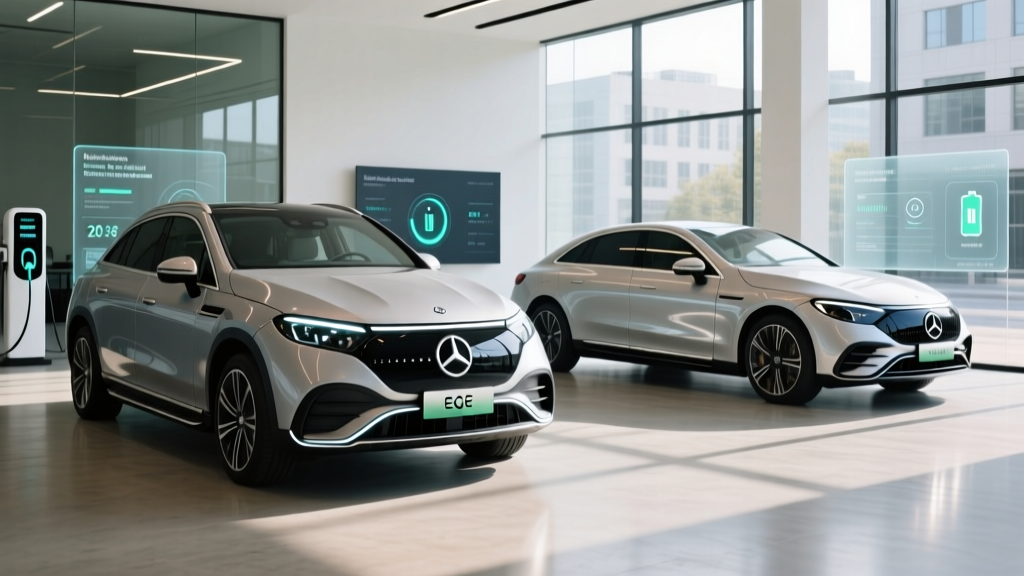
Before calculating costs, here are the exact specifications for the two core Mercedes electric sedans available for lease in the 2026 model year. Note that the compact EQA and EQB have been phased out of the U.S. market, and the EQE SUV and EQS SUV remain available but at higher price points.
| Spec | EQE 350+ Sedan | EQS 450+ Sedan |
|---|---|---|
| Battery (usable) | 90.6 kWh (NMC) | 107.8 kWh (NMC) |
| EPA Range | 305 miles | 390 miles |
| Real-World Highway Range | ~260–275 miles | ~330–350 miles |
| Peak DC Fast Charge | 170 kW | 200 kW |
| 10–80% DCFC Time | ~32 minutes | ~31 minutes |
| Level 2 (11 kW) Charge | ~9.5 hours | ~11 hours |
| Motor / Drivetrain | Single rear, 288 hp | Single rear, 355 hp |
| 0–60 mph | 6.2 sec | 5.9 sec |
| MPGe (Combined) | 91 MPGe | 97 MPGe |
| Base MSRP | $74,900 | $104,400 |
| Battery Warranty | 8 yr / 100,000 mi | 8 yr / 100,000 mi |
Federal Tax Credit (§30D): Do You Qualify on a Mercedes Lease?
The federal EV tax credit under IRS §30D offers up to $7,500 for qualifying new clean vehicles. However, Mercedes-Benz EVs face specific hurdles under the current 2026 rules that every buyer must verify before signing.
- Income Caps: Modified AGI must not exceed $300,000 (married filing jointly), $225,000 (head of household), or $150,000 (single filers).
- MSRP Caps: Vans, SUVs, and pickups capped at $80,000; sedans and other vehicles capped at $55,000. The EQE 350+ at $74,900 and EQS 450+ at $104,400 both exceed the $55,000 sedan cap.
- Battery Sourcing: Critical minerals and battery components must meet escalating domestic/free-trade-partner thresholds. Check the latest fueleconomy.gov listings for current eligibility.
- Point-of-Sale Transfer: Buyers can transfer the credit to the dealer at purchase, reducing the purchase price directly — but only if all eligibility criteria are met.
- Lease Loophole (§45W): Commercial clean vehicle credit under §45W may apply to leased vehicles regardless of MSRP or income caps. The lessor (Mercedes-Benz Financial Services) claims the credit and may pass savings to you via a lower lease payment — but is not required to.
This is the critical insight for Mercedes EV lease shoppers: because both the EQE and EQS sedans exceed the $55,000 MSRP cap, purchasing outright disqualifies you from the §30D credit. Leasing, however, may still yield a credit benefit through the §45W commercial vehicle pathway, where the leasing company claims the credit and factors it into your monthly payment. Always ask the dealer explicitly whether the advertised lease payment already reflects the passed-through credit.
Five-Year Total Cost of Ownership: The Full Picture
Below is a realistic 5-year / 75,000-mile ownership cost projection for the EQE 350+ sedan, comparing a purchase scenario (no federal credit due to MSRP cap) against a lease scenario where the lessor passes through a $7,500 §45W benefit.
| Cost Category | Purchase (No Credit) | Lease (w/ §45W Pass-Through) |
|---|---|---|
| Vehicle Cost / Lease Payments | $74,900 (purchase) | $48,000 (60 months × ~$800/mo) |
| Charging (75,000 mi) | $7,875 | $7,875 |
| Insurance (5 years) | $18,500 | $18,500 |
| Maintenance | $3,200 | $3,200 |
| Depreciation / Residual Loss | $33,700 (45% over 5 yr) | Built into lease |
| Tax Credit Benefit | $0 (MSRP cap) | −$7,500 (via lower payments) |
| Total 5-Year Net Cost | ~$104,475 | ~$70,075 |
The lease pathway shows a roughly $34,000 advantage over five years, driven primarily by avoided depreciation risk and the §45W credit pass-through. However, at lease end you own nothing — a factor that matters if you plan to keep vehicles long-term.
Charging vs. Gasoline: Real $/Mile Savings
The EQE 350+ achieves 91 MPGe combined, consuming approximately 37 kWh per 100 miles. Here's how that translates to actual fuel cost based on realistic 2026 electricity and gasoline prices.
| Scenario | Cost per kWh / Gallon | Cost per Mile | Annual (15,000 mi) |
|---|---|---|---|
| Home Level 2 (national avg) | $0.16/kWh | $0.059 | $885 |
| Public DCFC (avg) | $0.42/kWh | $0.155 | $2,325 |
| 70/30 Home/DCFC Mix | Blended $0.24/kWh | $0.089 | $1,335 |
| 2026 E-Class 350 (28 MPG combined) | $3.60/gal | $0.129 | $1,935 |
With a typical home-heavy charging mix, the EQE saves approximately $600 per year or $3,000 over five years versus the gasoline E-Class. If you rely heavily on public DC fast charging, those savings compress to under $400 annually — a crucial consideration for apartment dwellers or those without Level 2 home access.
Maintenance Savings: Where EVs Genuinely Win
Electric drivetrains eliminate several routine maintenance items, and Mercedes-Benz's published service schedules reflect this.
| Service Item | EQE 350+ (EV) | E-Class 350 (Gas) |
|---|---|---|
| Oil Changes | None ($0) | ~8 changes × $180 = $1,440 |
| Brake Pads | 1 set (regen extends life) ~$600 | 2–3 sets ~$1,800 |
| Transmission Fluid | None ($0) | $350 |
| Coolant / Misc. Fluids | $200 | $400 |
| Cabin Air Filter | $300 | $300 |
| Tire Rotation / Replacement | $2,100 (heavier EV wears tires faster) | $1,600 |
| Total Estimated | $3,200 | $5,890 |
Net maintenance savings of roughly $2,700 over five years. Note the tire cost premium: the EQE's 5,400-lb curb weight and instant torque accelerate tire wear by 15–25% compared to the gas E-Class. Budget for EV-specific touring tires (Michelin Pilot Sport EV or Pirelli Elect-rated) at replacement time.
Insurance Reality: The Premium Tax on Luxury EVs
Insurance is where Mercedes EV ownership stings. Based on 2026 national averages for a 40-year-old driver with a clean record:
- EQE 350+: ~$3,700/year ($308/month)
- E-Class 350 (gas): ~$2,800/year ($233/month)
- Premium gap: ~$900/year or $4,500 over five years
Why the gap? Insurers factor in higher repair costs for aluminum-intensive EV platforms, expensive battery replacement risk (even if warrantied, collision damage to the pack can total the vehicle), and the elevated MSRP. Some insurers like Progressive and State Farm now offer EV-specific discounts of 5–10%, and bundling home auto policies can narrow the gap — but expect to pay more than an equivalent gas model.
Depreciation: The Silent Cost in Luxury EVs
Depreciation is the single largest ownership cost for luxury vehicles, and EVs have shown steeper early depreciation than their gas counterparts. According to iSeeCars and Kelley Blue Book data through early 2026:
- Mercedes EQE sedan (3-year): ~38–42% depreciation from MSRP
- Mercedes EQS sedan (3-year): ~45–52% depreciation from MSRP
- Mercedes E-Class (gas, 3-year): ~30–35% depreciation
The higher depreciation stems from rapid EV technology advancement (newer models with better range undercut older ones), Tesla's price wars compressing the entire luxury EV market, and residual-value uncertainty among used-car buyers wary of out-of-warranty battery replacement. This is precisely why leasing a Mercedes EV is often the smarter financial play — you transfer the depreciation risk to Mercedes-Benz Financial Services, and the residual value becomes their problem at lease end.
State, Local, and Utility Incentives: Stacking the Savings
Beyond the federal credit, several states and utilities offer additional rebates that can meaningfully reduce your effective lease cost:
- California (CVRP): Up to $2,000 rebate for income-qualified buyers on new EVs; additional $1,000 in some air districts
- Colorado: Up to $5,000 state tax credit for new EVs (MSRP caps apply separately from federal)
- New York (Drive Clean Rebate): Up to $2,000 point-of-sale rebate
- Utility rebates: Many utilities (PG&E, Xcel Energy, ConEdison) offer $500–$1,500 rebates for Level 2 home charger installation, plus time-of-use rate plans that reduce charging costs by 20–40%
- HOV lane access: Several states (CA, CO, FL, VA, MD) grant solo carpool lane access for EVs — a significant time and fuel savings for commuters
Stacking a $7,500 lease credit pass-through with a $2,000 state rebate and a $1,000 utility charger incentive can reduce your effective first-year cost by over $10,000 — but only if you verify each program's current status and income requirements.
Frequently Asked Questions
How much does it really cost to own a Mercedes EV over 5 years?
For the EQE 350+, expect roughly $70,000–$105,000 in total net cost over five years depending on whether you lease (with credit pass-through) or purchase (without the federal credit due to MSRP cap). The largest line items are depreciation on a purchase and insurance premiums in either scenario.
Do I qualify for the federal tax credit on a Mercedes EQE or EQS?
For a direct purchase, almost certainly not — both sedans exceed the $55,000 MSRP cap for non-SUV body styles under §30D. For a lease, the §45W commercial credit pathway may allow the lessor to claim $7,500 and pass savings through your monthly payment. Confirm with your dealer whether the advertised lease price already reflects this.
How much do I save on fuel and maintenance versus a gas Mercedes?
Combined fuel and maintenance savings average $3,300–$4,000 over five years with mostly home charging. If you rely on public DC fast charging, fuel savings shrink substantially. Tire costs are higher on the EV due to weight, partially offsetting brake and oil savings.
Are Mercedes EVs more expensive to insure?
Yes. Expect to pay $800–$1,200 more per year in insurance versus an equivalent gas-powered E-Class or S-Class. Higher repair costs, battery replacement risk, and elevated MSRP all contribute. Shop quotes from multiple carriers and ask about EV-specific discounts.
How well do Mercedes EVs hold their value?
Not as well as their gas counterparts currently. The EQS sedan has seen 45–52% depreciation over three years, and the EQE around 38–42%. This makes leasing the lower-risk option, as you lock in the residual value at signing and walk away at term end regardless of market conditions.
Is the Mercedes EQE or EQS better for leasing?
The EQS 450+ offers 85 more miles of EPA range and a more premium experience but starts at $104,400, pushing monthly lease payments above $1,200 in most markets. The EQE 350+ at ~$800–$950/month (depending on credit pass-through and money factor) is the more accessible entry point, though its 305-mile range is adequate rather than class-leading.
The Bottom Line: When a Mercedes EV Lease Makes Sense
Mercedes electric vehicle lease deals in 2026 are financially compelling if three conditions align: (1) your dealer passes the §45W lease credit into the monthly payment, (2) you have reliable Level 2 home charging to maximize fuel savings, and (3) you accept that luxury EV insurance will cost $800+ more annually than a gas equivalent. Leasing protects you from the steep depreciation that has plagued luxury EV resale values, and the combined fuel and maintenance savings of ~$5,700 over five years partially offset the insurance premium.
If you lack home charging, drive fewer than 10,000 miles per year, or live in a state with no additional incentives, the cost equation narrows considerably. Run the numbers for your specific ZIP code, utility rate, and insurance quote before signing — the sticker deal is only the beginning of the math.