Quick Answer: Is the Mercedes eSprinter Worth It for Your Fleet?
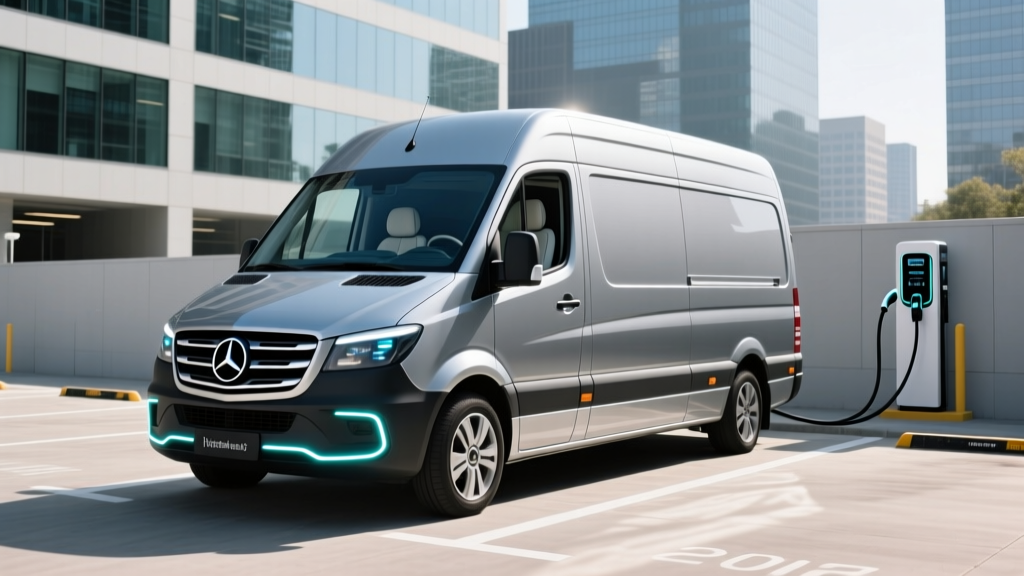
The 2026 Mercedes-Benz eSprinter is a battery-electric commercial van offering an EPA-estimated range of approximately 200 miles (115-kWh usable battery, NMC chemistry) and 115 kW peak DC fast charging. With a starting MSRP around $74,990 before the §30D federal tax credit (up to $7,500 if your business meets IRS income and battery-sourcing requirements), the eSprinter targets last-mile delivery, urban trades, and shuttle operations. It costs roughly 60-70% more upfront than a comparable gas Sprinter but can deliver fuel and maintenance savings of $3,500-$5,500 annually for high-mileage urban routes. Best fit: fleets with depot-based Level 2 charging, daily routes under 150 miles, and predictable stop-and-go driving patterns.
Range, Battery, and Real-World Efficiency
The 2026 eSprinter is offered exclusively in the US with a 115 kWh usable battery pack (NMC lithium-ion chemistry). This is the larger of two battery options Mercedes sells globally; the smaller 81 kWh pack available in Europe is not currently imported stateside. The EPA-estimated combined range sits at approximately 200 miles for the standard 150-inch wheelbase cargo van, with the extended 170-inch wheelbase variant rated slightly lower at around 185 miles due to increased weight and frontal area.
Real-World Range Expectations
EPA sticker: ~200 miles (150" WB cargo van)
Real-world urban delivery route: 160-180 miles (frequent stops, regen recovery helps)
Highway-loaded at 70 mph: 140-160 miles (aerodynamic drag dominates the boxy profile)
Cold weather (below 32°F): 120-150 miles (cabin heating and battery thermal losses; preconditioning mitigates this)
Fully loaded (max payload ~2,600 lbs): subtract 10-15% from any above figure
Efficiency is rated at approximately 2.0 kWh/mile (combined), which translates to roughly 1.6-1.7 MPGe equivalent when comparing energy cost to diesel. For context, a gas-powered 2026 Sprinter 2500 with the 2.0L turbo-four averages around 18-20 MPG combined in real-world urban use, per fueleconomy.gov class estimates for large cargo vans. The eSprinter's single-speed reduction gear and 201-hp (150 kW) electric motor deliver smooth, linear acceleration — 0-60 mph is approximately 8.5 seconds unloaded, which is adequate for merging but not brisk when carrying payload.
| Spec | 150" Wheelbase Cargo Van | 170" Extended Cargo Van |
|---|---|---|
| Usable Battery | 115 kWh (NMC) | 115 kWh (NMC) |
| EPA Range | ~200 miles | ~185 miles |
| Motor Output | 201 hp / 150 kW | 201 hp / 150 kW |
| Torque | 295 lb-ft | 295 lb-ft |
| Max DC Charge Rate | 115 kW | 115 kW |
| 10-80% DC Fast Charge | ~42 minutes | ~42 minutes |
| Level 2 AC Charge Rate | 11 kW | 11 kW |
| Level 2 Full Charge Time | ~11.5 hours | ~11.5 hours |
| Max Payload | ~2,624 lbs | ~2,425 lbs |
| Cargo Volume | 385 cu ft | 488 cu ft |
| Starting MSRP | ~$74,990 | ~$78,990 |
| Battery Warranty | 8 yr / 100,000 mi | 8 yr / 100,000 mi |
Charging Speed and Infrastructure Requirements
The eSprinter's 115 kW peak DC fast-charge rate is modest by passenger-car standards but typical for commercial electric vans in this weight class. On a 150 kW or higher CCS1 station, you'll see peak power of 115 kW from roughly 10-40% state of charge, tapering to 70-80 kW through 60%, and dropping below 40 kW past 80%. A 10-80% session takes approximately 42 minutes — acceptable for a mid-shift top-up but not fast enough to rely on public DC charging as your primary fueling strategy.
For fleet operations, Level 2 depot charging is the practical backbone. The eSprinter's onboard charger accepts up to 11 kW AC (single-phase or three-phase), meaning an 11.5-hour session from near-empty to full on a dedicated 48-amp Level 2 circuit. Most fleet operators plug in at end-of-shift and depart fully charged the next morning.
| Level | Power (kW) | Miles Added per Hour | Use Case |
|---|---|---|---|
| Level 1 (120V, 12A) | ~1.4 kW | ~3-4 mi/hr | Emergency only |
| Level 2 (240V, 48A) | 11 kW | ~18-20 mi/hr | Overnight depot charging |
| DC Fast (CCS1, 150 kW+) | 115 kW peak | ~90 mi in 30 min (tapering) | Mid-shift top-up |
Depot charging cost reality: Installing a single 48-amp Level 2 charger (hardwired, commercial-grade) typically runs $2,500-$5,000 per stall including electrician labor, conduit, and permitting, assuming adequate panel capacity. A 200-amp panel upgrade — common in older commercial buildings — adds $3,000-$7,000. For a five-van fleet, budget $20,000-$45,000 for charging infrastructure, plus potential utility demand-charge fees that vary by region. Always consult a licensed commercial electrician for site-specific quotes.
Total Cost of Ownership: eSprinter vs. Gas Sprinter
The headline number is steep: the eSprinter starts roughly $35,000-$40,000 higher than a comparably equipped 2026 gas Sprinter 2500 (base MSRP ~$40,000-$42,000). The §30D federal tax credit can offset up to $7,500 for qualifying commercial purchasers, but eligibility depends on battery critical-mineral sourcing, MSRP caps (vans fall under the $80,000 cap), and your business's tax liability. Check current rules at IRS.gov §30D guidelines and consult a tax professional — point-of-sale transfer is available if you qualify.
| Cost Category | eSprinter (EV) | Gas Sprinter 2500 |
|---|---|---|
| Purchase Price (MSRP) | $74,990 | $41,500 |
| Federal Tax Credit (§30D) | -$7,500 (if eligible) | $0 |
| Net Purchase | $67,490 | $41,500 |
| Fuel/Energy (75k mi) | $5,625 (15¢/kWh avg) | $14,060 ($3.75/gal, 19 MPG) |
| Maintenance (75k mi) | $2,250 | $5,600 |
| Insurance (5 yr avg) | $12,500 | $10,500 |
| Depot Charging Install (per van share) | $4,000 | $0 |
| Estimated Resale (5 yr) | -$22,000 | -$18,000 |
| 5-Year Net Cost | $69,865 | $53,660 |
| Cost per Mile | $0.93/mi | $0.72/mi |
The math narrows significantly at higher annual mileage and in states with commercial electricity rates below 12¢/kWh. For fleets running 20,000+ miles/year on urban routes, the break-even point versus gas typically arrives between year 5 and year 7. Maintenance savings are real — no oil changes, no transmission fluid, fewer brake replacements thanks to regenerative braking — but EV commercial insurance premiums currently run 10-20% higher due to repair-cost data on battery packs.
Who Should Buy the eSprinter (and Who Shouldn't)
Decision Framework
Choose the eSprinter if:
- Your daily routes are predictable and under 150 miles round-trip
- You have (or can install) depot-based Level 2 charging at your facility
- You operate primarily in urban or suburban areas where regenerative braking recovers energy from frequent stops
- Your business qualifies for the §30D tax credit or state commercial EV incentives
- Zero tailpipe emissions support your corporate sustainability goals or local clean-air mandates
- You plan to keep the van 5+ years to reach the TCO break-even point
Stick with the gas Sprinter if:
- Your routes regularly exceed 180 miles or involve long highway stretches between cities
- You lack access to reliable overnight charging (no depot, no dedicated parking with electrical access)
- You operate in extreme cold climates (sustained sub-zero temps) without heated garage storage
- You need maximum payload — the battery adds significant curb weight, reducing cargo capacity by ~500 lbs versus gas
- Your annual mileage is under 12,000 miles, making the fuel savings too small to close the purchase-price gap
- You need to tow — the eSprinter's towing rating is limited to 5,000 lbs vs. 7,500 lbs for the gas V6
Common Misconceptions About Electric Commercial Vans
| Myth | Fact |
|---|---|
| "200 miles of range isn't enough for a work van." | The average US last-mile delivery route is 60-90 miles/day (USPS and FedEx fleet data). The eSprinter covers 90%+ of urban delivery routes with range to spare. |
| "The battery will need replacing in 5 years." | Mercedes warranties the 115-kWh pack for 8 years/100,000 miles against degradation below 70% capacity. NMC packs in commercial duty cycles typically retain 80-85% capacity at 100,000 miles based on fleet data from early adopters. |
| "Charging takes too long for commercial use." | Overnight Level 2 charging (11.5 hours) fully replenishes the pack during off-shift hours. Most fleet vans sit 10-14 hours between shifts — charging time is a non-issue with depot infrastructure. |
| "Electric vans can't handle cold weather." | Cold reduces range by 20-35% in extreme conditions, but the eSprinter includes a heat pump for cabin heating (more efficient than resistive). Preconditioning while plugged in preserves range. Real winter range for northern fleets: 120-150 miles — still adequate for most urban routes. |
| "The tax credit makes it basically affordable." | The §30D credit has strict battery-sourcing and critical-mineral requirements that change annually. Not every eSprinter configuration qualifies for the full $7,500 every year. Verify current eligibility on IRS.gov before committing. |
Driving Impressions and Day-to-Day Usability
The eSprinter drives like what it is: a heavy commercial van with instant electric torque. The 295 lb-ft is available from zero RPM, making stoplight launches and highway merging confident even with partial payload. The single-speed transmission eliminates shift shock, and regenerative braking (adjustable via steering-wheel paddles across three levels) enables near one-pedal driving in city traffic — reducing brake wear substantially.
The cabin is identical to the current-generation gas Sprinter: MBUX infotainment with a 10.25-inch touchscreen, standard active brake assist, crosswind assist, and attention assist. What's different is the instrument cluster, which replaces the tachometer with a power-consumption gauge and adds battery state-of-charge, estimated range, and energy-flow displays. The charge port is located behind the driver-side front wheel (CCS1 connector), positioned for easy depot plug-in.
Noise levels are dramatically lower than the diesel or gas Sprinter — a genuine quality-of-life improvement for drivers making 50-100 stops per day. However, the eSprinter's curb weight (~6,200 lbs unloaded) means tire wear is higher than the gas version; budget for tire replacement at 30,000-40,000 miles rather than the 50,000+ you might see on a lighter gas van.
First-Time Fleet EV Buyer Checklist
If this is your operation's first electric commercial vehicle, these are the non-obvious items that catch fleet managers off guard:
- Electrical panel audit: Before ordering, have an electrician assess your facility's panel capacity. Five Level 2 chargers pulling 11 kW each require ~55 kW of continuous capacity — roughly 230 amps at 240V. Many small commercial buildings need a panel upgrade or a separate meter.
- Utility demand charges: Commercial electricity billing often includes demand charges based on peak kW draw. Simultaneous charging of multiple vans at shift end can spike your demand and raise your monthly bill significantly. Ask your utility about managed-charging or time-of-use commercial rates.
- Charger management software: For multi-van fleets, networked Level 2 chargers with load-balancing software (e.g., ChargePoint, Blink, or Tesla Wall Connector with fleet management) can stagger charging sessions to avoid demand-charge spikes.
- Driver training: Regen braking behavior, range-efficient driving techniques, and preconditioning routines all require brief driver onboarding. Fleets that skip this report 15-20% higher energy consumption in year one.
- Emergency towing protocol: The eSprinter cannot be flat-towed (doing so can damage the motor). Confirm your roadside-assistance provider has flatbed capability and knows the proper tie-down points.
Frequently Asked Questions
Does the eSprinter qualify for the $7,500 federal tax credit?
It can, but eligibility is not guaranteed. Under current IRS §30D rules, the van must meet MSRP caps ($80,000 for vans/trucks), the purchasing entity must meet income thresholds, and the battery must satisfy critical-mineral and component-sourcing requirements that tighten annually. The point-of-sale transfer option lets you apply the credit at purchase if you qualify. Always verify current-year rules at IRS.gov and consult a tax professional before finalizing your purchase.
What's the real-world range when fully loaded with cargo?
Expect 140-165 miles on a mixed urban route with a near-max payload (~2,500 lbs). Highway driving at 70 mph with full load drops that to approximately 110-130 miles. The eSprinter's energy consumption rises noticeably with weight — plan routes conservatively and keep a 20% range buffer for unexpected detours or weather changes.
How long does the battery last, and what does replacement cost?
Mercedes warranties the 115-kWh NMC pack for 8 years or 100,000 miles, guaranteeing at least 70% of original capacity. Real-world fleet data from early eSprinter adopters in Europe suggests 80-85% retention at 100,000 miles under typical urban duty cycles. Out-of-warranty replacement is estimated at $18,000-$25,000 including labor based on current commercial battery pricing — a significant cost, but one most fleet operators won't face within the vehicle's primary service life.
Can I charge the eSprinter at public Tesla Superchargers?
As of 2026, the eSprinter uses the CCS1 connector. Tesla's Supercharger network has opened to non-Tesla EVs at select locations via the built-in Magic Dock adapter or through the Tesla app, but coverage for CCS1 vehicles remains limited compared to Tesla-native access. For reliable public DC fast charging, rely on Electrify America, EVgo, and ChargePoint networks, which offer robust CCS1 coverage along major corridors. Check the Alternative Fuels Data Center for charger locations near your routes.
Is the eSprinter suitable for cold-climate operations?
Yes, with caveats. The eSprinter includes a heat pump for cabin climate control, which is significantly more efficient than resistive heating and helps preserve range in cold weather. Preconditioning the battery and cabin while still plugged in at the depot is essential — it warms the pack for optimal efficiency and regenerative braking from the moment you depart. Expect 20-35% range loss in sustained sub-freezing temperatures. For northern fleets with routes exceeding 120 miles in winter, the gas Sprinter remains the safer choice until solid-state batteries offer improved cold-weather energy density.
How does the eSprinter compare to the Ford E-Transit?
The Ford E-Transit is the eSprinter's primary competitor. Key differences: the E-Transit uses a smaller 68 kWh usable battery with an EPA range of approximately 126 miles — significantly less than the eSprinter's ~200 miles. However, the E-Transit starts around $47,000, roughly $28,000 less than the eSprinter. If your routes are short (under 100 miles daily) and budget is the primary concern, the E-Transit is a strong value play. If you need 150+ miles of daily range or want the extended cargo volume of the 170-inch wheelbase, the eSprinter's larger battery justifies the premium.