The Short Answer on the Mercedes Electric Truck
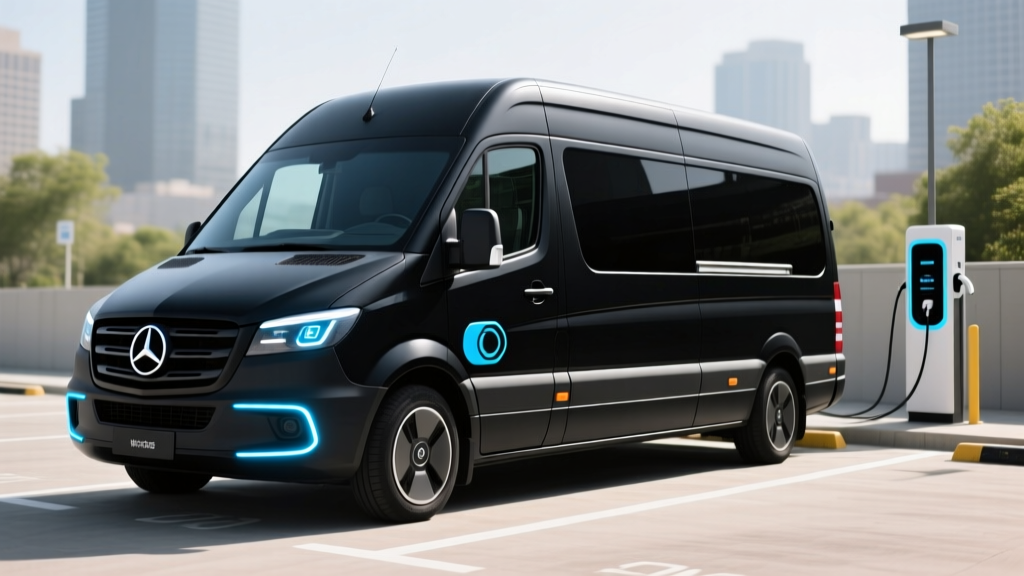
The 2026 Mercedes-Benz eSprinter is the brand's only electric "truck" available in the U.S. — technically a full-size commercial cargo van, not a pickup. It offers an EPA-estimated 205 miles of range from a 113 kWh usable NMC battery, a peak DC fast-charge rate of 115 kW (10–80% in roughly 42 minutes), and a starting MSRP around $72,000 for the 2500 cargo van with a 150-inch wheelbase. It qualifies for the IRS §30D Commercial Clean Vehicle credit (up to $7,500 for vehicles under 14,000 lbs GVWR), though eligibility depends on your business tax liability and battery-sourcing compliance. It's best suited for last-mile delivery fleets and tradespeople with predictable daily routes under 150 miles and access to depot Level 2 charging. If you need a Mercedes-branded electric pickup truck, one does not currently exist — you'd need to look at the Rivian R1T, Ford F-150 Lightning, or Chevrolet Silverado EV.
What the Mercedes eSprinter Actually Is (and Isn't)
When buyers search for a "Mercedes electric truck," they're typically looking for one of two things: a battery-electric pickup, or a battery-electric commercial work vehicle. Mercedes-Benz does not sell an electric pickup in the United States as of the 2026 model year. What it does sell is the eSprinter, a fully electric version of its ubiquitous Sprinter commercial van — the vehicle that underpins Amazon delivery fleets, contractor vans, and the entire #VanLife movement.
The eSprinter is classified as a Class 2b commercial vehicle (GVWR between 8,501 and 10,000 lbs in the standard 2500 model, stepping up to Class 3 for the 3500). For fleet operators and small-business owners who need a zero-tailpipe-emissions work vehicle, this is the Mercedes electric truck equivalent. For those wanting a lifestyle electric pickup, Mercedes has no answer yet.
The current-generation eSprinter launched for the 2024 model year with a ground-up EV architecture — a significant upgrade from the earlier 2020–2023 eSprinter, which used a smaller 47 kWh battery and managed only about 150 miles of range. The 2026 model carries over the improved powertrain with minor software and efficiency refinements.
Range, Battery, and Charging: The Numbers That Matter
For a commercial vehicle, range and charging logistics are the make-or-break buying factors. Here's the complete spec breakdown for the 2026 eSprinter:
| Specification | Value |
|---|---|
| Battery (usable) | 113 kWh, NMC (nickel manganese cobalt) |
| EPA-estimated range | ~205 miles (2500, 150" WB, high roof) |
| Real-world range expectation | ~140–175 mi loaded/highway; ~120–150 mi in cold weather (<32°F) |
| Efficiency | ~2.0–2.5 kWh/mi (varies heavily with payload) |
| DC fast-charge peak rate | 115 kW (CCS1 connector) |
| 10–80% DC charge time | ~42 minutes |
| Level 2 AC charge rate | 9.6 kW (onboard charger) |
| Level 2 full charge time (0–100%) | ~12 hours |
| Motor output | 201 hp (150 kW), 295 lb-ft torque |
| Drivetrain | Rear-wheel drive (FWD not offered in US) |
| Max payload capacity | ~2,624 lbs (2500 high-roof cargo) |
| Cargo volume | ~533 cu ft (2500, 170" WB, high roof) |
| Towing capacity | Not rated for towing (US market) |
| Starting MSRP | ~$72,000 (2500, 150" WB); ~$77,000 (3500, 170" WB) |
| Battery/powertrain warranty | 8 years / 100,000 miles (battery ≥70% capacity retention) |
Charging Curve Behavior
The eSprinter's 115 kW peak DC charge rate is modest compared to passenger EVs like the Hyundai Ioniq 5 (240 kW) or Tesla Model Y (250 kW). More importantly, the charge curve tapers noticeably: you'll see close to 115 kW between 10% and roughly 40% state of charge, after which the rate steps down progressively. The 10–80% time of ~42 minutes reflects this taper. Above 80%, charging slows dramatically to protect the NMC cells — a full 80–100% top-up can add another 45+ minutes. For fleet depot charging, the practical strategy is overnight Level 2 (9.6 kW AC fills the 113 kWh pack in ~12 hours, perfect for a 10-hour shift-plus window) and opportunistic DC top-ups only when mid-day range extension is needed.
eSprinter vs. Gas Sprinter: Total Cost of Ownership
The eSprinter's ~$72,000 starting price is a significant premium over a comparable gas-powered Sprinter 2500 cargo van, which starts around $49,000. That's a roughly $23,000 upfront gap before incentives. The question for fleet buyers and owner-operators is whether operational savings close that gap within a reasonable payback period.
| Cost Category | eSprinter (Electric) | Gas Sprinter 2500 |
|---|---|---|
| Purchase price (MSRP) | $72,000 | $49,000 |
| Federal tax credit (§30D) | −$7,500 | $0 |
| Net purchase cost | $64,500 | $49,000 |
| Fuel/energy (75,000 mi total) | $7,500–$11,250* | $18,750–$22,500** |
| Maintenance (5 years) | ~$2,000 | ~$5,500 |
| Insurance (est. annual avg) | $2,200/yr ($11,000) | $1,800/yr ($9,000) |
| 5-Year Total Cost | ~$84,750–$88,750 | ~$82,250–$86,000 |
* Assumes $0.10–$0.15/kWh depot charging and 2.0–2.5 kWh/mi. ** Assumes $3.50–$4.00/gal and 14–16 MPG combined (loaded gas Sprinter real-world).
The takeaway: over five years and 75,000 miles, the eSprinter roughly breaks even with the gas Sprinter, with the fuel savings ($9,000–$13,500 advantage) and reduced maintenance ($3,500 savings) nearly offsetting the higher purchase price even after the tax credit. The breakeven typically happens around year 4–5 for high-mileage fleet use. Beyond year five, the eSprinter's lower operating costs create a widening advantage — assuming the battery holds up (Mercedes warrants 70% capacity retention at 8 years/100,000 miles).
However, higher insurance premiums for the eSprinter (typically 15–25% more than the gas equivalent due to repair costs and battery replacement risk) partially erode savings. Get fleet insurance quotes before committing.
Common Misconceptions About the Mercedes Electric Truck
| Myth | Fact |
|---|---|
| "It gets 205 miles no matter what." | 205 mi is the EPA estimate at moderate load, moderate temperatures, and mixed driving. Fully loaded at highway speeds in winter, expect 120–150 mi. Always plan routes with a 20–30% buffer. |
| "You can fast-charge it in 20 minutes." | The 115 kW peak rate means 10–80% takes ~42 minutes. It's not a passenger car with a 350 kW architecture. DC fast charging is a supplement, not a primary strategy. |
| "Every business gets the $7,500 tax credit." | The §30D credit depends on battery critical-mineral and component sourcing requirements, your tax liability, and MSRP caps ($80,000 for vans/trucks). Consult a tax professional. The commercial credit under §45W may apply differently for fleet purchases. |
| "I can tow a trailer with it." | The US-spec eSprinter is not rated for towing. If your work requires towing, this is a dealbreaker. The gas Sprinter offers up to 7,500 lbs towing capacity. |
| "Any outlet will charge it overnight." | A standard 120V outlet (Level 1, ~1.4 kW) would take over 80 hours to fill the 113 kWh battery. You need a dedicated Level 2 station (240V, 40–48 amp circuit) for overnight depot charging. Budget $1,500–$4,000 for commercial L2 installation per stall. |
| "Mercedes makes an electric pickup truck." | They do not, as of 2026. The eSprinter is a van. Mercedes has not announced a US-market electric pickup. |
Who Should Buy the eSprinter — and Who Shouldn't
Not every business or driver is a good fit for the eSprinter. Here's a practical decision framework based on real-world operating profiles:
Decision Framework: Is the eSprinter Right for You?
✅ Choose the eSprinter if:
- Your daily routes are predictable and under 150 miles (round trip), leaving a safety buffer for weather, detours, and HVAC use.
- You have access to depot or home Level 2 charging (240V, 9.6 kW) where the van can plug in for 10–12 hours between shifts.
- Your business operates in a city or metro area with clean-air-zone mandates or where zero-emission commercial vehicles provide regulatory or client-contract advantages.
- You drive 15,000+ miles/year — higher mileage accelerates the fuel-cost payback on the EV premium.
- You don't need to tow a trailer.
- You want lower scheduled-maintenance burden (no oil changes, no transmission fluid, fewer brake replacements thanks to regenerative braking).
❌ Stick with the gas Sprinter (or a competitor) if:
- Your routes regularly exceed 170 miles in a single shift, especially in cold climates or at highway speeds.
- You need towing capability (gas Sprinter: up to 7,500 lbs; eSprinter: not rated).
- You lack reliable overnight Level 2 charging access — public DC fast charging a 113 kWh van battery is slow (42 min to 80%) and expensive ($0.35–$0.50/kWh at commercial chargers, adding $40–$55 per session).
- Your budget is strictly under $55,000 and you can't leverage the tax credit (e.g., no tax liability, or the vehicle fails sourcing requirements).
- You need AWD — the US eSprinter is rear-wheel drive only, while the gas Sprinter offers available 4×4.
Home and Depot Charging: What Installation Actually Costs
Charging infrastructure is the hidden cost that first-time commercial EV buyers underestimate. The eSprinter's 113 kWh battery is massive — more than 50% larger than a Tesla Model Y's pack. Filling it requires serious electrical capacity.
For a single Level 2 charging station (240V, 48-amp hardwired, delivering 9.6 kW to the eSprinter), here's what a typical commercial or home installation looks like:
| Item | Estimated Cost |
|---|---|
| Level 2 EVSE hardware (48A, hardwired, e.g., ChargePoint Pro or Wallbox) | $600–$1,200 |
| Electrician labor (run 60A circuit, mount station) | $800–$2,500 |
| Electrical panel upgrade (if needed — 200A service) | $1,500–$4,000 |
| Permits and inspection | $100–$400 |
| Total (no panel upgrade) | $1,500–$4,100 |
| Total (with panel upgrade) | $3,000–$8,100 |
For fleet operations with multiple eSprinters, you'll need to work with a licensed electrician on load calculations — five vans charging simultaneously at 9.6 kW each draw 48 kW continuous, which may require a commercial 480V service upgrade and potentially smart-load-management systems that stagger charging to stay within your building's capacity. Budget $5,000–$15,000+ for multi-stall commercial installations.
The eSprinter uses a CCS1 (Combined Charging System) connector for both Level 2 AC and DC fast charging. Mercedes has not adopted the Tesla NACS standard for the Sprinter line, so you'll use Electrify America, EVgo, or other CCS-equipped networks for public fast charging. The U.S. Department of Energy maintains a useful overview of charging standards and infrastructure.
Tax Credits and Incentives: What You Can Actually Claim
The eSprinter may qualify for federal incentives, but the rules are specific and vary by buyer type:
- §30D New Clean Vehicle Credit (individual buyers): Up to $7,500, subject to MSRP cap ($80,000 for vans/pickups/SUVs — the eSprinter qualifies), buyer income limits ($300K joint / $150K single AGI), and battery critical-mineral and component sourcing requirements that change annually. As of 2026, the sourcing rules are stringent, and not every eSprinter configuration may qualify for the full amount. Check the IRS Clean Vehicle credit page for the latest eligible-vehicle list.
- §45W Commercial Clean Vehicle Credit (businesses/fleets): Up to $7,500 for vehicles under 14,000 lbs GVWR. This credit is claimed by the business entity and has different qualification mechanics than §30D. Consult a tax professional to determine which credit applies to your purchase structure.
- State and local incentives: Many states offer additional rebates for commercial EVs (e.g., California's HVIP program for fleets). These vary widely by jurisdiction — check your state's energy office or air-quality district for current programs.
- Utility charging rebates: Some electric utilities offer rebates of $500–$1,500 for commercial Level 2 charger installation, and time-of-use rates that make overnight depot charging significantly cheaper ($0.06–$0.08/kWh off-peak vs. $0.15–$0.25/kWh peak).
Ownership Practicalities: What First-Time EV Fleet Buyers Need to Know
Transitioning from a diesel or gas Sprinter to the eSprinter involves operational changes that go beyond the vehicle itself:
Route planning becomes mandatory. With a gas Sprinter, you refuel in 5 minutes at any station and keep driving. With the eSprinter, you need to know your daily mileage, account for payload weight, temperature, and terrain, and ensure you return to base with enough charge for the next day. Most fleet management software now integrates EV range modeling — use it.
Regenerative braking changes driving style. The eSprinter offers adjustable regen levels. In the highest setting, one-pedal driving is possible around town, which reduces brake wear substantially. On the highway, coasting in low-regen mode is actually more efficient. Train your drivers on both techniques.
Winter operations require planning. Preconditioning the battery and cabin while the van is still plugged in at the depot preserves range significantly. The eSprinter supports scheduled preconditioning via the Mercedes me connect app. Use it — it can recover 10–15 miles of range on a cold morning.
Battery degradation is real but slow. NMC batteries in commercial applications typically lose 2–3% capacity per year under normal use. At that rate, you'd retain roughly 85–90% capacity after 5 years and 75,000 miles. Mercedes warrants 70% retention at 8 years/100,000 miles, which is a conservative floor. Full battery replacement, if ever needed out of warranty, would likely cost $15,000–$25,000 based on current NMC pricing — a significant but unlikely expense within the vehicle's operational life.
Insurance is higher. Commercial EV insurance premiums run 15–25% above equivalent gas vehicles, driven by higher repair costs (specialized high-voltage training for body shops), battery replacement risk, and the vehicle's higher MSRP. Get quotes from your commercial insurer before purchase.
Frequently Asked Questions
Does Mercedes make an electric pickup truck?
No. As of the 2026 model year, Mercedes-Benz does not sell an electric pickup truck in the U.S. market. Their electric commercial vehicle offering is the eSprinter cargo/passenger van. If you need an electric pickup, consider the Rivian R1T, Ford F-150 Lightning, or Chevrolet Silverado EV.
What is the real-world range of the Mercedes eSprinter?
The EPA estimates 205 miles for the 2500 high-roof model. In real-world commercial use with moderate payload and mixed driving, expect 160–180 miles. Fully loaded at highway speeds, expect 140–175 miles. In cold weather (below freezing), loaded range can drop to 120–150 miles. Always plan with a 20–30% buffer below the EPA number.
How long does it take to charge the eSprinter?
On a Level 2 charger (9.6 kW, 240V), a full 0–100% charge takes approximately 12 hours — ideal for overnight depot charging. On a DC fast charger at the 115 kW peak rate, 10–80% takes roughly 42 minutes, with the charge rate tapering significantly above 80% SoC.
Is the eSprinter eligible for the $7,500 federal tax credit?
It may be, but eligibility depends on multiple factors: the vehicle must be under the $80,000 MSRP cap for vans (base models qualify; high-option builds may not), the buyer must meet income requirements (§30D) or purchase through a qualifying business entity (§45W), and the battery must meet critical-mineral and component sourcing thresholds set by the IRS. These rules change annually — verify on the IRS website or with a tax professional before purchasing.
Can I tow with the Mercedes eSprinter?
No. The U.S.-spec eSprinter is not rated for towing. If your work requires towing a trailer, the gas-powered Sprinter (rated up to 7,500 lbs) or a diesel competitor remains the practical choice.
What happens if the eSprinter battery fails?
Mercedes-Benz warrants the high-voltage battery for 8 years or 100,000 miles, guaranteeing at least 70% of original capacity retention. Complete battery failure within the warranty period would be covered. Out-of-warranty replacement is estimated at $15,000–$25,000, though catastrophic failures are rare — gradual degradation is the norm, and most commercial Sprinters are retired or repurposed before reaching that threshold.