Quick Verdict: The EQS Can Tow, But Modestly
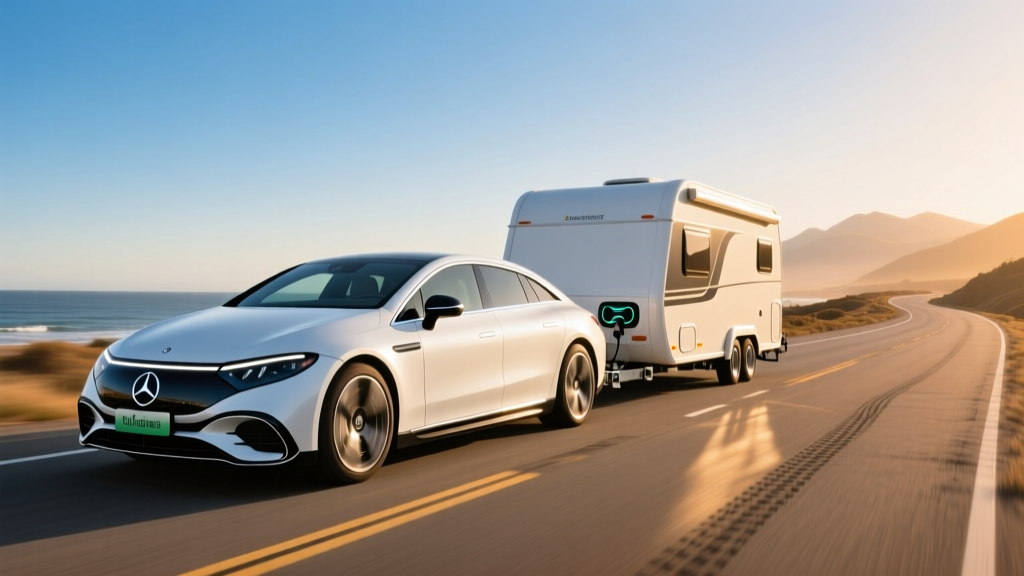
The Mercedes-Benz EQS sedan is an engineering showcase — a 108.4 kWh usable battery, up to 390 miles of EPA-estimated range, and a cabin that redefines electric luxury. But search for "EQS trailer" and you'll find a community of buyers asking whether this flagship EV can actually pull a camper, boat, or utility trailer. The short answer: yes, but with strict limits that make it a niche tow vehicle at best.
For the 2025–2026 model years, the EQS sedan carries a maximum towing capacity of 1,650 lbs (750 kg) when equipped with the factory towing package — a figure that covers a lightweight teardrop camper or small utility trailer but rules out most travel trailers, car haulers, and larger boat rigs. The EQS SUV, introduced for 2025, bumps that to 3,500 lbs, a far more practical threshold for recreational towing.
This review focuses on the EQS sedan platform, its real-world range under load, charging logistics for road trips with a trailer, and whether the math works for buyers who need both luxury and utility.
2026 Mercedes EQS Sedan: Core Specifications
| Specification | EQS 450+ (RWD) | EQS 450 4MATIC (AWD) | EQS 580 4MATIC (AWD) |
|---|---|---|---|
| EPA Est. Range | 390 mi | 365 mi | 350 mi |
| Battery (usable) | 108.4 kWh, NMC (nickel-manganese-cobalt) | ||
| Horsepower | 355 hp | 355 hp | 536 hp |
| 0–60 mph | 5.9 sec | 5.3 sec | 4.1 sec |
| Drivetrain | RWD, single motor | AWD, dual motor | AWD, dual motor |
| Max DC Fast Charge | 200 kW peak | ||
| 10–80% DC Time | ~31 min (optimal conditions) | ||
| Level 2 Charge Rate | 9.6 kW (~30 mi/hr) | ||
| MPGe (combined) | 97 MPGe | 92 MPGe | 89 MPGe |
| kWh/100 mi | 34 | 36 | 38 |
| Max Towing Capacity | 1,650 lbs (750 kg) — requires factory tow package | ||
| Cargo Volume (trunk) | 22.0 cu ft (sedan trunk); 63.0 cu ft (rear seats folded) | ||
| Rear Legroom | 42.0 in | ||
| Base MSRP (approx.) | $105,550 | $108,700 | $127,350 |
| Battery/Powertrain Warranty | 8 years / 100,000 miles | ||
Source: fueleconomy.gov, Mercedes-Benz USA spec sheets. Specs reflect latest available model-year data; verify with dealer for current-year trims.
Real-World Range — Especially When Towing
EPA sticker: 390 mi (450+ RWD)
Real-world highway (70 mph, no trailer): ~310–340 mi
Real-world highway with 1,600-lb trailer: ~210–260 mi (estimated 35–45% range reduction)
Cold weather (below 32°F, no trailer): ~280–310 mi
Cold weather + trailer: ~180–220 mi
Towing is the single biggest range destroyer in any EV. Aerodynamic drag scales with the square of speed, and a boxy trailer compounds that penalty dramatically. While Mercedes does not publish an official "range while towing" figure, real-world tests from EV owners pulling lightweight campers at highway speeds consistently show a 35–45% range reduction. That turns the EQS 450+'s class-leading 390-mile EPA estimate into roughly 210–260 usable miles before you need to unhook and charge — or charge with the trailer attached, which is logistically awkward at most DC fast-charging stations.
If your towing use case is a 1,200-lb teardrop camper for weekend trips within 150 miles of home, the EQS handles it. If you're planning 400-mile highway hauls with a trailer, you'll be stopping every 2 hours and navigating tight charging plazas with a rig in tow. The EQS SUV, with its larger battery option and 3,500-lb rating, is the more pragmatic choice for frequent towing.
Charging Speeds: What Trailer-Haulers Need to Plan For
| Charging Level | Power (kW) | Miles Added per Hour | Notes |
|---|---|---|---|
| Level 1 (120V household) | ~1.4 kW | ~4 mi/hr | Emergency/top-up only; full charge in ~77 hours |
| Level 2 (240V home/public) | 9.6 kW | ~30 mi/hr | Full charge in ~11.5 hours; ideal for overnight |
| DC Fast Charge (peak) | 200 kW | ~180 mi/hr (at peak) | 10–80% in ~31 min; tapers significantly above 80% |
The EQS sedan's 200 kW peak DC fast-charging rate is competent but not class-leading — rivals like the Lucid Air (up to 300 kW) and Porsche Taycan (up to 320 kW on 800V architecture) charge substantially faster. More importantly, the EQS's charge curve tapers hard above 80% state of charge, meaning that last 20% can take as long as the first 70%. For trailer-haulers, this matters: if you need a full battery to compensate for towing range loss, budget 50–60 minutes at a DC station, not 31.
At home on a Level 2 charger (9.6 kW), you'll recover roughly 30 miles of range per hour, or a full 108.4 kWh battery in about 11.5 hours. For towing use cases, this means plugging in every night is mandatory — you cannot rely on public charging infrastructure alone when dragging a trailer through charging-desert stretches of the interstate system.
Preconditioning matters: The EQS will automatically precondition its battery when a DC fast-charging station is set as your navigation destination. This warms the NMC cells to optimal temperature, enabling the full 200 kW peak rate. Skip preconditioning in cold weather and you may see peak rates cut in half.
Performance, Drivetrain, and Towing Dynamics
The EQS lineup offers three powertrain configurations:
- EQS 450+ (RWD): 355 hp, single rear motor, 0–60 in 5.9 seconds. Lightest variant, longest range — but RWD is less ideal for wet/uneven launch surfaces with a trailer.
- EQS 450 4MATIC (AWD): 355 hp, dual motor, 0–60 in 5.3 seconds. AWD provides better traction when starting on boat ramps or gravel — the recommended choice for towing.
- EQS 580 4MATIC (AWD): 536 hp, dual motor, 0–60 in 4.1 seconds. Power is abundant, but the extra weight of the front motor reduces range by ~40 miles vs. the 450+.
With 1,650 lbs on the hitch, expect 0–60 times to stretch by 1.5–2.5 seconds depending on grade. The EQS's air suspension is standard and automatically levels under load, which helps maintain stability and headlight aim. Regenerative braking (up to 5 m/s² deceleration in D- mode) can recover meaningful energy on downhill grades with a trailer, partially offsetting the uphill consumption penalty.
The EQS is not equipped with a traditional trailer brake controller wiring harness from the factory. Buyers planning to tow near the 1,650-lb limit should verify aftermarket brake controller compatibility with the EQS's electrical system — a non-trivial task given the sedan's 48V architecture and complex CAN bus.
Pricing, Trims, and Federal Tax Credit Reality
| Trim | Base MSRP | As-Tested (typical options) | §30D Federal Credit Eligible? |
|---|---|---|---|
| EQS 450+ Sedan | ~$105,550 | $112,000–$120,000 | No — exceeds $55,000 sedan MSRP cap |
| EQS 450 4MATIC Sedan | ~$108,700 | $115,000–$125,000 | No — exceeds $55,000 sedan MSRP cap |
| EQS 580 4MATIC Sedan | ~$127,350 | $135,000–$150,000 | No — exceeds $55,000 sedan MSRP cap |
| EQS 580 SUV (for comparison) | ~$110,000 | $120,000+ | No — exceeds $80,000 SUV MSRP cap |
- MSRP cap: $55,000 for sedans; $80,000 for SUVs/trucks/vans
- Buyer income cap: $150K single / $225K head of household / $300K joint (modified AGI)
- Battery sourcing: Critical minerals and battery components must meet escalating domestic-content thresholds
- Point-of-sale transfer: Eligible buyers can transfer the credit to the dealer for an upfront price reduction
The EQS is a six-figure vehicle, and its pricing reflects that. Options that matter for towing — the factory tow package, augmented-reality head-up display, rear-axle steering (up to 10° for tighter maneuvering with a trailer) — add $2,000–$5,000 to the bottom line. Insurance premiums for the EQS run 15–25% higher than comparable ICE luxury sedans, a factor worth modeling into your total cost of ownership.
Interior, Cargo, and Technology
The EQS sedan's cabin is dominated by the available 56-inch Hyperscreen — a single glass panel spanning the dashboard with OLED displays for instrument cluster, infotainment, and front-passenger entertainment. Rear-seat passengers get dual 11.6-inch screens and available heated/ventilated/massaging seats with 42.0 inches of legroom.
Cargo reality: The sedan's trunk offers 22.0 cu ft — generous for a luxury sedan but not SUV-competitive. Folding the rear seats opens 63.0 cu ft, though the sedan's trunk pass-through limits bulky-item utility. If you need cargo volume alongside towing, the EQS SUV (up to 88 cu ft with seats folded) is the obvious alternative.
Driver assistance: The EQS ships with Mercedes-Benz Driver Assistance Package including Active Distance Assist DISTRONIC (adaptive cruise), Active Steering Assist, and Active Lane Change Assist. This is an SAE Level 2 system — the driver must remain engaged with hands on or near the wheel at all times. The available DRIVE PILOT system (SAE Level 3, in approved conditions and limited geographies) represents a step toward conditional autonomy but is currently restricted to specific highway corridors at speeds under 40 mph in heavy traffic.
Notable tech for towing: The standard 360° surround-view camera with trailer hitch zoom makes coupling a trailer straightforward. The MBUX navigation system can factor trailer dimensions into routing (when trailer mode is activated), avoiding low-clearance bridges and restricted roads — a feature still rare among luxury EVs.
Pros and Cons: EQS as a Tow Vehicle
- Class-leading 390-mi EPA range (450+) provides buffer for towing range loss
- Standard air suspension auto-levels under trailer load
- Exceptional cabin quietness — even more noticeable when towing vs. an ICE truck
- MBUX trailer routing avoids low-clearance and restricted roads
- Instant torque (406+ lb-ft) for confident merging and grade climbing
- Regen braking recovers energy on downhill grades with trailer
- 1,650-lb tow limit excludes most travel trailers and boat rigs
- No federal tax credit eligibility (MSRP exceeds §30D cap)
- DC charging at 200 kW is slower than Lucid Air, Porsche Taycan
- Charging with a trailer attached is awkward at most public stations
- No factory trailer brake controller integration
- Sedan trunk limits cargo utility vs. EQS SUV
- Insurance costs 15–25% above ICE luxury sedan benchmarks
Who Should (and Shouldn't) Buy the EQS for Towing
- You tow a lightweight teardrop camper, kayak trailer, or small utility trailer (under 1,650 lbs)
- Your trips are primarily within 150 miles of home with overnight Level 2 charging available
- You prioritize cabin luxury, quietness, and technology over raw towing capacity
- You already own a dedicated tow vehicle for heavier loads
- You need to tow a travel trailer, car hauler, or boat over 2,000 lbs
- You frequently tow on long highway corridors with sparse charging infrastructure
- Federal tax credit eligibility is a purchasing factor
- You need significant cargo volume alongside towing capability
Better alternatives for serious EV towing: The Rivian R1S (7,700-lb tow rating, $80K–$100K, potential §30D eligibility depending on trim and sourcing), Ford F-150 Lightning (7,700–10,000 lbs, starting ~$55K), or the Mercedes EQS SUV (3,500 lbs, more cargo room, same luxury DNA) all offer more practical towing profiles. For the 1,650-lb-and-under niche, the EQS sedan is competent — but it's a luxury sedan that can tow, not a tow vehicle that happens to be luxurious.
Frequently Asked Questions
What is the real-world range of the Mercedes EQS when towing a trailer?
With a near-max 1,600-lb trailer at highway speeds, expect roughly 210–260 miles from the EQS 450+ (EPA-rated 390 mi unloaded). Cold weather further reduces this to ~180–220 miles. Plan charging stops conservatively and always leave a 30-mile buffer.
How fast does the EQS charge at home and on the road?
At home on a 9.6 kW Level 2 charger, the EQS adds about 30 miles of range per hour, fully charging in ~11.5 hours. On DC fast chargers, it peaks at 200 kW, reaching 10–80% in approximately 31 minutes under optimal (preconditioned) conditions. Above 80%, charging slows significantly — budget 50+ minutes for a near-full charge.
Does the Mercedes EQS qualify for the $7,500 federal EV tax credit?
No. Under current IRS §30D rules, new EV sedans must have an MSRP under $55,000 to qualify. Every EQS sedan trim starts above $105,000, making it ineligible. Buyer income limits and battery-sourcing requirements are additional hurdles, though moot here given the MSRP cap. Check your state for separate incentive programs.
Is the EQS worth buying vs. competitors if I need to tow?
For light towing (under 1,650 lbs) paired with luxury sedan comfort, the EQS is unique — no other luxury EV sedan offers a factory tow rating. However, if towing is a primary use case, the Rivian R1S, Ford F-150 Lightning, or even the Mercedes EQS SUV (3,500-lb rating) offer far more capability at lower prices.
Can I install an aftermarket hitch on the EQS sedan if it didn't come with the tow package?
Mercedes strongly recommends using only the factory-installed towing package, which includes specific wiring harnesses, cooling provisions, and software calibration for trailer mode. Aftermarket hitches exist but may void warranty coverage on the rear subframe and electrical systems. Consult your dealer before proceeding.
What's the biggest mistake EQS owners make when towing?
Underestimating range loss and overestimating charging convenience. Most DC fast-charging stations are not designed for vehicles with trailers attached — you'll often need to unhitch, charge, and re-hitch, adding 15–20 minutes per stop. Plan routes around trailer-friendly charging locations (some travel centers and campgrounds now offer pull-through EV charging) and always carry a Level 2 mobile charger for overnight stops.
Always verify current model-year specifications, pricing, and tax credit eligibility directly with Mercedes-Benz USA and the IRS before purchasing. Towing capacities, range estimates, and incentive rules are subject to change.