Quick Verdict: Is the EQS SUV Worth It?
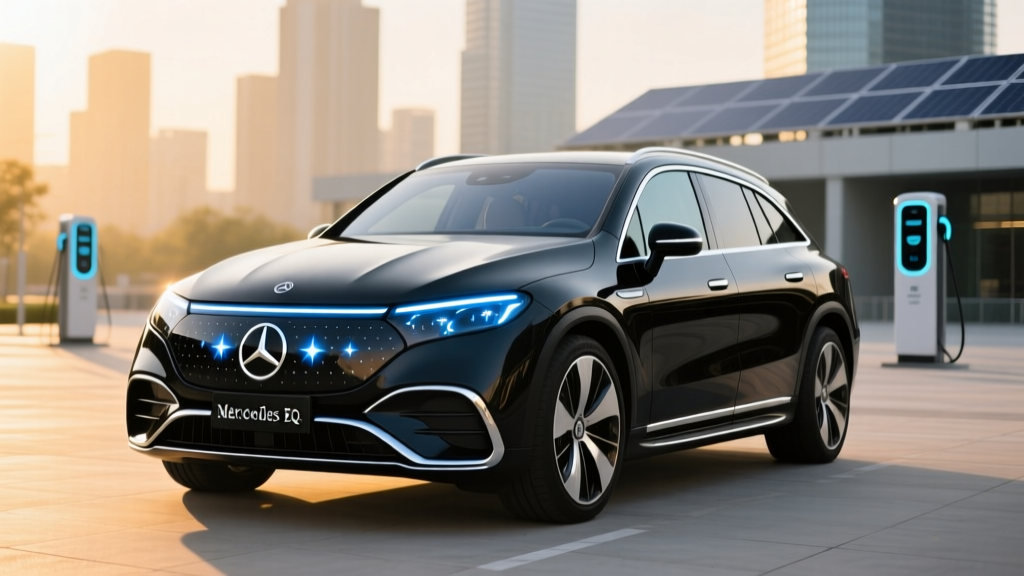
The 2026 Mercedes-Benz EQS SUV is the brand's flagship electric utility vehicle, pairing a 108.4 kWh (usable) NMC battery with up to 305 miles of EPA-estimated range, a 200 kW DC fast-charging peak, and a cabin that defines "futuristic" with its 56-inch Hyperscreen dashboard. Starting around $105,550 before destination, it competes against the BMW iX, Rivian R1S, and Tesla Model X. It's best suited for buyers who prioritize luxury, highway cruising refinement, and cutting-edge interior tech over sporty dynamics or maximum range-per-dollar. Real-world highway range drops to roughly 250–270 miles at sustained 75 mph speeds, and cold-weather performance can shave another 15–25% off that figure. Federal §30D tax credit eligibility is unlikely for this model due to battery-sourcing and MSRP-cap rules — plan your budget assuming full MSRP.
Range, Battery, and Real-World Efficiency
The 2026 EQS SUV lineup centers on a 108.4 kWh usable lithium-ion NMC (nickel manganese cobalt) battery pack. The rear-wheel-drive EQS 450+ achieves an EPA-estimated 305 miles of range, while the dual-motor all-wheel-drive EQS 450 4MATIC and EQS 580 4MATIC come in at approximately 285 and 280 miles respectively, per fueleconomy.gov.
EPA vs. Real-World Range
EPA Estimate: 305 mi (450+ RWD) / 285 mi (450 4MATIC) / 280 mi (580 4MATIC)
Real-World Highway (75 mph, moderate temps): ~250–270 mi
Cold Weather (below 30°F, highway): ~210–240 mi
Why the gap? The EPA cycle includes substantial low-speed and regenerative-braking segments that favor EVs. Sustained highway speeds, elevation changes, and cabin heating demands reduce efficiency. The EQS SUV's heat pump helps mitigate cold-weather losses compared to resistive heating, but physics still apply.
Efficiency lands around 83–86 MPGe combined depending on trim, translating to roughly 39–41 kWh per 100 miles. That's respectable for a 5,800+ lb luxury SUV, though the lighter BMW iX xDrive50 edges ahead at approximately 87 MPGe combined.
| Spec | EQS 450+ (RWD) | EQS 450 4MATIC | EQS 580 4MATIC |
|---|---|---|---|
| EPA Range | 305 mi | 285 mi | 280 mi |
| Battery (usable) | 108.4 kWh, NMC chemistry | ||
| Horsepower | 355 hp | 355 hp | 536 hp |
| 0–60 mph | 6.2 sec | 5.8 sec | 4.3 sec |
| Peak DC Fast Charge | 200 kW (CCS1; NACS via adapter) | ||
| 10–80% DC Charge Time | ~31 min (estimated) | ||
| Level 2 (240V / 48A) | ~11.5 kW, ~10–11 hr (0–100%) | ||
| MPGe (combined) | 86 MPGe | 84 MPGe | 83 MPGe |
| Base MSRP | $105,550 | $108,550 | $125,550 |
| Battery Warranty | 8 years / 100,000 miles (70% capacity retention) | ||
Charging Speed and Infrastructure Reality
The EQS SUV peaks at 200 kW on a DC fast charger using its native CCS1 connector. Mercedes-Benz now includes a NACS (Tesla Supercharger) adapter, granting access to Tesla's 15,000+ Supercharger network — a significant practical advantage for road-tripping owners.
| Level | Power (kW) | Miles Added per Hour | Typical Use Case |
|---|---|---|---|
| Level 1 (120V / 12A) | ~1.4 kW | ~3–4 mi/hr | Emergency / overnight trickle |
| Level 2 (240V / 48A) | ~11.5 kW | ~28–30 mi/hr | Home daily charging (full overnight) |
| DC Fast Charge (CCS/NACS) | Up to 200 kW peak | ~180 mi in 15 min (peak) | Road trips, 10–80% in ~31 min |
Charging-curve reality check: The 200 kW figure is a peak, not a sustained rate. Expect maximum charge rates between roughly 10% and 35% State of Charge (SoC). Above 50%, the curve tapers noticeably; above 80%, charging slows dramatically to protect battery longevity. Preconditioning the battery via the navigation system (entering a DC charger as your destination) is essential for achieving peak rates, especially in cold weather. Without preconditioning, you may see peak rates closer to 100–130 kW.
For home charging, a 48-amp Level 2 wallbox on a 60-amp circuit is the practical standard. Expect a full 0–100% charge in roughly 10–11 hours — fine for overnight replenishment. If your electrical panel is older or maxed out, a panel upgrade (typically $1,500–$3,500) may be necessary before installation.
Cost of Ownership: EQS SUV vs. Gas Luxury SUV
Luxury EV ownership economics differ sharply from mainstream EVs. Here's how the EQS 450+ stacks up against a comparable gas-powered luxury SUV — the Mercedes-Benz GLE 450 (starting ~$64,000, 24 MPG combined) — over five years and 75,000 miles.
| Category | EQS 450+ SUV | GLE 450 (Gas) |
|---|---|---|
| Purchase Price (base MSRP) | $105,550 | $64,000 |
| Federal Tax Credit (§30D) | $0 (MSRP cap + sourcing rules)* | $0 |
| Fuel / Electricity (75k mi) | ~$3,400 (home L2 avg $0.14/kWh) | ~$11,250 (gas at $3.60/gal, 24 MPG) |
| Maintenance (5 yr) | ~$1,200 (no oil, fewer brakes w/ regen) | ~$4,500 (oil, filters, brakes, spark plugs) |
| Insurance (5 yr avg) | ~$18,000 (luxury EV premium) | ~$13,500 |
| Estimated Depreciation (5 yr) | ~$52,000 (~49%) | ~$28,000 (~44%) |
| Total 5-Year Cost | ~$180,150 | ~$121,250 |
*The §30D federal EV tax credit has an MSRP cap of $80,000 for SUVs. The EQS SUV exceeds this cap, making it ineligible regardless of battery sourcing. Consult a tax professional and the IRS §30D guidelines for your specific situation.
The numbers are stark: the EQS SUV saves roughly $11,150 in fuel and maintenance over five years but costs approximately $41,550 more upfront and in depreciation. This is not a purchase you make to save money — it's a luxury and technology play. Buyers seeking pure economic advantage should consider the Hyundai Ioniq 5, Tesla Model Y, or a plug-in hybrid alternative.
Interior Tech, Driver Assistance, and the "Futuristic" Factor
The EQS SUV earns its "futuristic" label primarily through the MBUX Hyperscreen — a 56-inch curved glass panel spanning the entire dashboard, housing three OLED displays under a single surface. It's visually stunning and functionally dense, though some drivers find the touch-capacitive controls less intuitive than physical buttons for climate and volume adjustments.
On the driver-assistance front, the EQS SUV comes equipped with Mercedes-Benz's latest Drive Pilot system, which is a certified SAE Level 3 system in limited conditions (specific highway sections, below 40 mph, in certain U.S. markets where approved). This is a significant distinction:
SAE Level 3 vs. Level 2 — What It Means
Level 2 (most ADAS): Systems like Tesla Autopilot, GM Super Cruise, and Ford BlueCruise require the driver to remain engaged and ready to take over at all times. The human is the driver.
Level 3 (Drive Pilot, limited): In approved conditions, the vehicle manages driving tasks and the driver may disengage attention (but must be ready to resume when prompted). Mercedes is one of the first to offer certified Level 3 in the U.S.
Level 4 (Robotaxi): Fully driverless in defined areas (Waymo, Zoox). Not available in consumer vehicles.
Drive Pilot availability is geographically limited and condition-dependent. Check Mercedes-Benz for current approved zones.
Standard ADAS features include adaptive cruise control, lane-keeping assist, automated emergency braking, blind-spot monitoring, and a 360-degree camera system. The optional rear-axle steering (up to 10 degrees) dramatically improves the turning radius of this large SUV in parking situations.
Who Should Buy the EQS SUV — and Who Shouldn't
Decision Framework
Choose the EQS SUV if:
- You want a genuine luxury flagship with best-in-class interior tech and cabin quietness
- You have reliable home Level 2 charging access (garage or driveway with 240V circuit)
- Your typical daily driving is under 200 miles, with occasional road trips of 250–400 miles
- You value SAE Level 3 driver assistance in approved highway corridors
- Budget allows $105,000+ without relying on federal tax credits
Look elsewhere if:
- You need maximum range-per-dollar (Tesla Model X offers ~335 mi EPA at lower cost)
- You regularly drive 400+ mile routes through charging deserts (rural Mountain West, parts of the Dakotas)
- You live in an apartment or lack home charging access and your local public DC infrastructure is sparse
- You want three usable rows of seating (the optional third row in the EQS SUV is very tight; the Rivian R1S handles seven passengers far better)
- Depreciation minimization is a priority — luxury EVs currently depreciate steeply
Common Misconceptions About the EQS SUV
| Myth | Fact |
|---|---|
| "It qualifies for the $7,500 federal tax credit." | The §30D credit has an $80,000 MSRP cap for SUVs. The EQS SUV starts at $105,550 and is ineligible. |
| "305 miles of range means 305 miles no matter what." | EPA range is a laboratory estimate. Sustained 75 mph highway driving yields ~250–270 mi; cold weather drops this further to ~210–240 mi. |
| "It charges at 200 kW the whole time." | 200 kW is a peak rate achieved only at low SoC with battery preconditioning. Average rate over a 10–80% session is closer to 130–150 kW. |
| "Electric means zero maintenance." | No oil changes, but tire wear is accelerated due to vehicle weight (~5,800 lb) and instant torque. Budget for tire replacement every 25,000–35,000 miles. |
| "The battery will need replacing soon." | Mercedes warranties the battery for 8 years/100,000 miles at 70% capacity retention. Industry data shows NMC packs typically retain 85–90% after 100k miles with normal use. |
Home Charging Setup and Installation Costs
Assuming you have a garage or dedicated parking space with electrical panel access, here's a realistic cost breakdown for installing a 48-amp Level 2 home charger (such as the Mercedes-Benz Wallbox or a ChargePoint Home Flex):
| Item | Cost Range |
|---|---|
| Level 2 Charger (48A, hardwired) | $500–$750 |
| Electrician labor (run 60A circuit, 20–50 ft) | $800–$2,000 |
| Permit and inspection | $100–$300 |
| Electrical panel upgrade (if needed, 200A service) | $1,500–$3,500 |
| Total (no panel upgrade) | $1,400–$3,050 |
| Total (with panel upgrade) | $2,900–$6,550 |
Always hire a licensed electrician and pull permits. Some utilities offer rebates of $200–$500 for Level 2 installation — check with your local provider. If you live in a condo or apartment without dedicated parking, public charging reliance will significantly increase your per-mile electricity cost (DC fast charging averages $0.30–$0.48/kWh vs. $0.12–$0.18/kWh at home) and add time inconvenience.
Frequently Asked Questions
How does the EQS SUV compare to the BMW iX?
The BMW iX xDrive50 starts around $87,000, offers ~324 miles EPA range, and charges at up to 200 kW. It's lighter, slightly more efficient, and significantly cheaper. The EQS SUV counters with a larger cabin, the Hyperscreen, and available Level 3 Drive Pilot. If budget matters, the iX wins on value; if you want maximum luxury theater, the EQS SUV takes it.
Can I road-trip the EQS SUV cross-country?
Yes, with planning. Using the Tesla Supercharger network (via included NACS adapter) and Electrify America CCS stations, most interstate routes are well-covered. Plan stops every 200–240 miles for 20–30 minute charging sessions. Use the Mercedes me Charge app or A Better Routeplanner to map charging stops. Avoid rural routes in the Mountain West and northern Plains where DC infrastructure remains sparse.
What happens if the battery degrades significantly?
Mercedes-Benz warranties the high-voltage battery for 8 years or 100,000 miles, guaranteeing at least 70% of original capacity. If capacity drops below that threshold within the warranty period, Mercedes will repair or replace modules to restore it. Out-of-warranty replacement costs are estimated at $15,000–$25,000 depending on module availability, though most owners will trade or sell before reaching this point.
Is the EQS SUV eligible for any state incentives?
State incentives vary widely and change frequently. Some states (California, Colorado, New York, among others) offer rebates or tax credits that may apply regardless of MSRP caps. Check your state's energy office or the Alternative Fuels Data Center for current programs in your jurisdiction.
Does the EQS SUV have a frunk?
No. Unlike some competitors (Tesla Model X, Rivian R1S), the EQS SUV does not include a front trunk. The hood houses HVAC and power electronics components. Cargo space is limited to the rear — approximately 23 cubic feet behind the second row, expanding to ~65 cubic feet with seats folded.
What's the insurance cost like?
Luxury EV insurance is notably higher than gas equivalents. Expect annual premiums of $3,200–$4,200 depending on your state, driving record, and coverage level. The higher repair costs for EV-specific components (battery, sensors, aluminum body panels) and the vehicle's MSRP drive these rates. Get quotes before purchasing to avoid surprises.
Sources: EPA range and efficiency data from fueleconomy.gov; federal tax credit rules from IRS §30D; vehicle specifications from Mercedes-Benz USA. Pricing and incentives are based on 2026 model-year data and are subject to change. Consult a tax professional for credit eligibility.