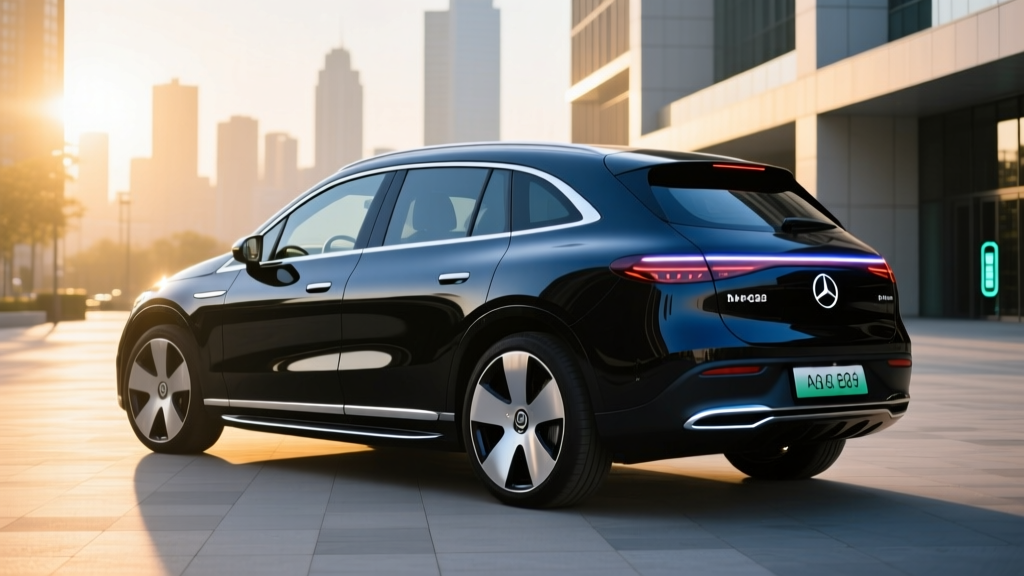
Quick Verdict: Is the 2026 EQS SUV the Futuristic Mercedes-Benz Electric SUV You're Looking For?
If you're searching for a futuristic Mercedes-Benz electric SUV, the 2026 EQS SUV is the flagship answer. With an EPA-estimated 305 miles of range (450+ trim), a 118 kWh NMC battery, DC fast charging up to 200 kW (10–80% in ~31 minutes), and the hyperscreen-dominant interior, it delivers the tech-forward luxury experience buyers expect. Starting at $105,550 MSRP, it's a premium investment — and it does not qualify for the federal §30D tax credit due to its MSRP cap and battery sourcing. It's best for buyers with home Level 2 charging, mostly suburban/highway driving, and a taste for cutting-edge cabin tech.
Range, Efficiency, and Real-World Expectations
The 2026 EQS SUV lineup carries over with two main battery and drivetrain configurations. The EQS 450+ (single-motor, rear-wheel drive) posts the highest EPA range, while the dual-motor 4MATIC variants trade a bit of range for all-weather traction and quicker acceleration.
| Trim | Battery (usable) | EPA Range | MPGe (combined) | 0–60 mph | HP | Base MSRP |
|---|---|---|---|---|---|---|
| EQS 450+ SUV | 118 kWh (NMC) | 305 mi | 84 MPGe | 6.5 sec | 355 hp | $105,550 |
| EQS 450 4MATIC SUV | 118 kWh (NMC) | 293 mi | 80 MPGe | 5.3 sec | 355 hp | $108,550 |
| EQS 580 4MATIC SUV | 118 kWh (NMC) | 285 mi | 78 MPGe | 4.3 sec | 536 hp | $125,550 |
Source: fueleconomy.gov and Mercedes-Benz USA press materials. EPA estimates; your results will vary.
Real-World Range Reality Check
EPA sticker: 305 miles (450+)
Expect in real-world highway driving (70–80 mph): ~245–270 miles
Cold weather (below 30°F): ~210–240 miles, depending on cabin heat use and whether you precondition
Mixed city/suburban: ~275–295 miles (regenerative braking helps recoup energy)
The EQS SUV's large battery gives it a buffer that smaller EVs lack, but at highway speeds and in freezing temps, physics wins. If your daily commute is under 80 miles round-trip, you'll rarely think about range. Road-trippers should plan charging stops at roughly the 220-mile mark for a comfortable safety margin.
Charging Speed: Home, Public, and the Curve You Need to Know
Mercedes equips the EQS SUV with a 200 kW peak DC fast-charging capability on CCS1-equipped models, and with the NACS adapter (now standard or available depending on your delivery date), you can access Tesla Supercharger V3/V4 stalls. Here's what that means in practice:
| Charging Level | Power | Miles Added per Hour | Typical Use Case |
|---|---|---|---|
| Level 1 (120V) | ~1.4 kW | ~4–5 mi/hr | Emergency/overnight trickle only |
| Level 2 (240V, 48A) | ~11.5 kW | ~34–38 mi/hr | Home daily charging (~9 hrs for 10–100%) |
| DC Fast Charge (peak) | 200 kW | ~500+ mi/hr (initial) | Road trips: 10–80% in ~31 min |
Charging curve reality: The 200 kW peak only holds briefly, typically between 10–30% state of charge. After that, the rate tapers — you'll see ~150 kW through the mid-range and a steep drop above 80%. The 10–80% time of ~31 minutes is accurate, but don't expect to charge 80–100% in anywhere close to the same speed. Mercedes' battery thermal management is competent, but preconditioning via the navigation system (setting a DC charger as your destination) is essential for reaching peak rates.
Home charging cost: At a national average of $0.16/kWh, fully recharging the 118 kWh battery from empty costs roughly $18.88. In practice, most owners charge from 20–80% daily, costing about $11.30. Compare that to $60–$80 for a tank of premium gas in a comparable GLS — the savings per mile are substantial.
Cost of Ownership: EQS SUV vs. Gas Mercedes GLS
The most common cross-shop for a futuristic Mercedes-Benz electric SUV buyer is the gas-powered GLS 450. Here's how the math stacks up over 5 years and 75,000 miles of driving:
| Cost Factor | 2026 EQS 450+ SUV | 2026 GLS 450 4MATIC (gas) |
|---|---|---|
| Base MSRP | $105,550 | $88,500 |
| Federal §30D Tax Credit | $0 (exceeds MSRP cap; sourcing) | $0 |
| Estimated 5-yr fuel/energy | $5,700 (home L2 charging) | $14,200 (premium gas, 19 MPG combined) |
| Estimated 5-yr maintenance | $2,800 | $5,500 |
| Estimated 5-yr insurance | $14,500 | $12,200 |
| Estimated 5-yr depreciation | $48,000 | $38,000 |
| Total 5-yr cost | ~$176,550 | ~$158,400 |
Depreciation estimates based on historical luxury-EV retention data and Kelley Blue Book projections. Insurance varies significantly by state, driver, and carrier. Fuel/energy costs based on national averages; adjust for your local rates.
The takeaway: The EQS SUV costs more upfront and depreciates faster (luxury EVs currently lose value quicker than gas counterparts), but you save roughly $11,200 on fuel and maintenance over five years. If you can charge at home and drive moderate miles, the gap narrows. If you rely solely on public DC fast charging at $0.40–$0.55/kWh, your energy costs nearly double, erasing the advantage.
First-Time EV Buyer: What You Must Know Before Signing
If the EQS SUV is your first electric vehicle, there are practical realities that no brochure will emphasize:
Home Charging Is Non-Negotiable for Most Owners
The EQS SUV's 118 kWh battery is enormous. On a standard 120V outlet (Level 1), a full charge takes roughly 85 hours — essentially unusable for daily needs. You'll want a Level 2 home charger (240V, 48-amp circuit), which requires a dedicated 60-amp breaker. Installation costs range from $800 to $2,500 depending on your electrical panel capacity. Homes with older 100-amp panels may need a $2,000–$4,000 panel upgrade. Budget accordingly.
The Federal Tax Credit Is Unlikely to Apply
The IRS §30D clean vehicle credit offers up to $7,500, but the EQS SUV faces two hurdles:
- MSRP cap: SUVs must be under $80,000 MSRP to qualify. The EQS SUV starts at $105,550.
- Battery sourcing: Critical mineral and battery component requirements further restrict eligibility.
- Buyer income cap: Even if the vehicle qualified, AGI limits apply ($300K joint / $150K single).
See the IRS §30D page for current-year rules. Consult a tax professional before assuming eligibility.
Insurance Will Cost More
Luxury EVs carry higher insurance premiums due to repair complexity, battery replacement costs, and higher claim severity. Expect to pay 15–25% more than a comparable gas GLS. Get quotes from your carrier before committing.
Cold Weather and Highway Driving Reduce Range
This isn't a flaw — it's physics. Lithium-ion batteries are less efficient in cold temperatures, and aerodynamic drag increases with speed. Plan your road trips around ~220-mile legs with a 20% buffer, and precondition the battery before fast charging.
Common Misconceptions About the EQS SUV
| Myth | Fact |
|---|---|
| "It's self-driving with Drive Pilot." | Mercedes Drive Pilot is SAE Level 3 but only approved in limited conditions (specific highways, under 40 mph, in Nevada and California as of 2026). Most daily driving requires full driver engagement — this is not a Level 4/5 autonomous vehicle. |
| "The battery will need replacing in 5 years." | Mercedes warranties the high-voltage battery for 10 years/155,000 miles against dropping below 70% capacity. NMC chemistry in this application shows ~8–12% degradation at 100,000 miles based on fleet data. |
| "I can charge it anywhere in 15 minutes." | The 10–80% time is ~31 minutes at a 200+ kW DC charger. Most public stations deliver 50–150 kW, making real-world stops 40–60 minutes. And 80–100% is significantly slower due to taper. |
| "It qualifies for the $7,500 federal tax credit." | It does not. The MSRP exceeds the §30D cap for SUVs ($80,000). No point-of-sale transfer is available for this model. |
| "Electric means zero maintenance." | You still need tire rotations (EVs wear tires faster due to weight and instant torque), cabin air filter changes, brake fluid checks, and wiper fluid. Maintenance is lower, not zero. |
Decision Framework: Is the EQS SUV Right for You?
Choose the 2026 EQS SUV If:
- You have access to Level 2 home charging (garage or driveway with a 240V circuit)
- Your daily driving is under 150 miles and you road-trip 3–5 times per year
- You prioritize cabin technology (the MBUX Hyperscreen is genuinely best-in-class)
- You want a three-row luxury electric SUV with up to 2,200 lbs towing capacity
- You can absorb higher insurance costs and faster depreciation as the cost of flagship tech
Look Elsewhere If:
- You live in an apartment or lack home/workplace charging access — public-only charging at DC rates makes this a $0.15/mile vehicle, not a $0.05/mile one
- You regularly drive more than 300 miles between charging stops in cold climates
- You need the federal tax credit to make the math work (consider the BMW iX xDrive50 at ~$87,000, though it also faces sourcing limitations)
- You want a true autonomous-driving experience — no consumer vehicle offers this in 2026
- Budget is a primary concern — the Rivian R1S or Kia EV9 deliver three rows and 300+ miles for $40,000–$70,000 less
Warranty, Battery Longevity, and Resale Outlook
Mercedes covers the EQS SUV with a 4-year/50,000-mile basic warranty and a 10-year/155,000-mile high-voltage battery warranty (capacity retention threshold: 70%). The NMC chemistry used in the 118 kWh pack is proven and energy-dense, but it degrades slightly faster than LFP (lithium iron phosphate) packs found in some competitors' standard-range models. In practice, expect ~88–92% state of health at 100,000 miles with normal charging habits (avoiding frequent 100% charges and DC fast-charging in extreme heat).
Resale values for luxury EVs remain a concern. The EQS SUV is likely to retain 45–55% of its value at 5 years, compared to 55–62% for the gas GLS. This gap may narrow as EV adoption matures, but it's a real cost today.
FAQ: Futuristic Mercedes-Benz Electric SUV
Does the 2026 EQS SUV use NACS or CCS for charging?
Mercedes-Benz has adopted the NACS (Tesla-style) connector for new vehicles. 2026 EQS SUVs ship with NACS ports, and CCS adapters are available for legacy infrastructure. You can access Tesla Superchargers natively.
How much does it cost to charge the EQS SUV at home per month?
If you drive 1,200 miles/month at ~2.8 miles/kWh and pay $0.16/kWh, expect roughly $68/month in home electricity costs. Compare this to ~$230/month in premium gasoline for a GLS 450.
Is the MBUX Hyperscreen standard on all trims?
The 56-inch Hyperscreen (spanning the full dashboard width with three displays) is standard on the EQS 580 and available as part of a package on the 450+ and 450 4MATIC trims. The base display setup is still a large 12.8-inch OLED center screen.
Can the EQS SUV tow a trailer?
Yes. When equipped with the factory towing package, the EQS SUV is rated for up to 2,200 lbs. That's enough for a small utility trailer or a pair of jet skis, but not a large camper. Towing will reduce range by 25–40%.
How does it compare to the Tesla Model X?
The Model X Plaid is quicker (0–60 in 2.5 sec) and has access to the Supercharger network natively. The EQS SUV wins on interior luxury, ride comfort, cabin quietness, and build quality. Range is similar (~305 vs ~348 EPA miles for the Model X Long Range). The Model X starts lower (~$82,000) but also does not qualify for the federal credit due to assembly and sourcing rules.