What Is an EQS? Mercedes-Benz's Flagship Electric Sedan Explained
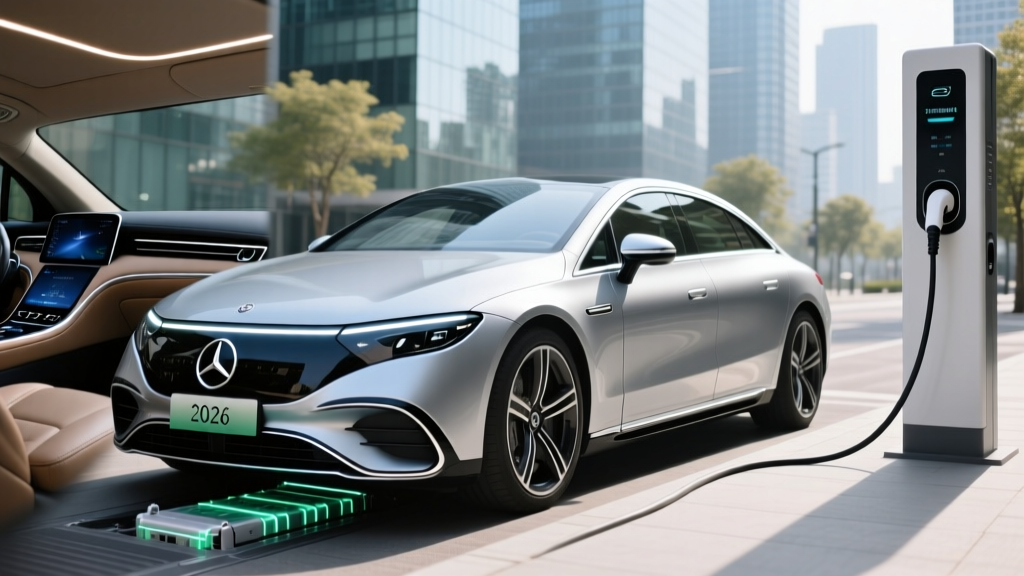
If you've searched "what is an EQS" and landed here, the short answer is this: the Mercedes-Benz EQS is the automaker's all-electric flagship sedan — the battery-powered counterpart to the S-Class. Built on Mercedes' dedicated EVA (Electric Vehicle Architecture) platform, the EQS is a full-size luxury liftback designed to deliver executive-level comfort with zero tailpipe emissions and class-leading efficiency.
For the 2026 model year, the EQS lineup includes the rear-wheel-drive EQS 450+, the dual-motor all-wheel-drive EQS 450 4MATIC, and the performance-oriented EQS 580 4MATIC. There's also the ultra-high-performance Mercedes-AMG EQS, but this review focuses on the core sedan lineup that most buyers consider.
The EQS competes directly with the BMW i7, Tesla Model S, Lucid Air, and Audi e-tron GT. What sets it apart is its aerodynamic efficiency (a drag coefficient of just 0.20 Cd — among the lowest of any production car), its massive Hyperscreen dashboard, and its S-Class-caliber ride quality. But with a base price north of $105,000, buyers need to know exactly what they're getting. Here's every number that matters.
2026 EQS Spec Table: Range, Battery, Charging, and Performance
| Spec | EQS 450+ (RWD) | EQS 450 4MATIC (AWD) | EQS 580 4MATIC (AWD) |
|---|---|---|---|
| EPA Range | 390 mi | 371 mi | 371 mi |
| Battery (Usable) | 118 kWh (NMC) | 118 kWh (NMC) | 118 kWh (NMC) |
| Horsepower | 355 hp | 355 hp | 536 hp |
| Torque | 419 lb-ft | 590 lb-ft | 633 lb-ft |
| 0–60 mph | 5.9 sec | 5.3 sec | 4.1 sec |
| Drivetrain | RWD (single motor) | AWD (dual motor) | AWD (dual motor) |
| Max DC Fast Charge | 200 kW | 200 kW | 200 kW |
| 10–80% DCFC Time | ~31 min | ~31 min | ~31 min |
| Level 2 Charge Rate | 9.6 kW (~28 mi/hr) | 9.6 kW (~28 mi/hr) | 9.6 kW (~28 mi/hr) |
| EPA Efficiency | 97 MPGe (35 kWh/100mi) | 93 MPGe (36 kWh/100mi) | 92 MPGe (37 kWh/100mi) |
| Base MSRP | $105,550 | $108,550 | $125,550 |
Source: EPA / fueleconomy.gov, Mercedes-Benz USA.
Real-World Range: What the EPA Sticker Doesn't Tell You
EPA Estimated: 390 miles
Real-World Highway (70–80 mph): ~310–330 miles
Cold Weather (below 32°F): ~270–300 miles
Mixed City/Suburban: ~350–375 miles
The EQS 450+ posts one of the highest EPA range figures in the luxury EV segment, and that 390-mile number is legitimate in moderate-temperature city driving where regenerative braking recovers energy at every stop. The NMC (nickel manganese cobalt) lithium-ion pack holds 118 kWh of usable energy — one of the largest batteries in any production sedan.
However, physics imposes a tax at highway speeds. The EQS is a heavy car (roughly 5,600 lbs curb weight), and sustaining 75–80 mph on the interstate pushes consumption to around 36–39 kWh/100 miles, dropping effective range to roughly 310–330 miles. In freezing temperatures, expect a further 15–20% reduction due to battery heating demands and cabin climate load, even with the EQS's standard heat pump.
On a real-world road trip from Los Angeles to Las Vegas (roughly 270 miles), an EQS 450+ can complete the drive without a charging stop in mild weather — but you'll arrive with roughly 15–20% state of charge remaining. Plan for one quick DC top-up in winter or if you're driving above 75 mph consistently.
Charging Speed: DC Fast Charging and Home Level 2
| Charging Level | Power (kW) | Miles Added per Hour | Notes |
|---|---|---|---|
| Level 1 (120V household) | ~1.4 kW | ~4 mi/hr | Emergency/trickle only — full charge takes 3+ days |
| Level 2 (240V home/public) | 9.6 kW | ~28 mi/hr | Full 0–100% in ~12 hours; overnight-ready |
| DC Fast Charge (CCS) | Up to 200 kW peak | ~186 mi in 31 min (10–80%) | Peak rate sustained to ~55% SoC, then tapers |
The EQS peaks at 200 kW on a DC fast charger using the CCS1 connector. In real-world testing at Electrify America and Tesla Supercharger stations (with the included NACS adapter), the EQS holds close to its peak rate from roughly 10% to 55% state of charge, then tapers progressively. The 10–80% charge takes approximately 31 minutes — competitive with the BMW i7 but noticeably slower than the Lucid Air's ~20-minute 10–80% window thanks to Lucid's 900V architecture.
For home charging, the onboard 9.6 kW AC charger adds roughly 28 miles of range per hour on a Level 2 wallbox. Plugging in at 20% state of charge overnight yields a full battery by morning. Mercedes recommends setting a daily charge limit of 80% to preserve NMC battery longevity; the vehicle's infotainment system lets you schedule this easily. Note that a Level 2 home installation on a 48-amp circuit typically costs $800–$2,500 depending on your electrical panel's proximity to the garage — budget for a potential panel upgrade if you're running a 200-amp service with limited headroom.
One practical advantage: the EQS supports plug-and-charge at most major networks, meaning authentication and billing happen automatically when you plug in — no app fumbling required.
Interior Space, Cargo, and the Hyperscreen Dashboard
The EQS is a liftback, not a traditional trunk sedan, which gives it practical versatility. Here are the key dimensions:
- Cargo volume (rear seats up): 22.0 cu ft
- Cargo volume (rear seats folded): 63.0 cu ft
- Front legroom: 41.7 inches
- Rear legroom: 42.7 inches
- Front headroom: 40.4 inches
- Rear headroom: 38.7 inches
Those rear-seat dimensions rival the long-wheelbase S-Class. The flat EVA-platform floor eliminates the transmission tunnel hump, so a middle passenger actually has usable foot space — a meaningful advantage over adapted-ICE platforms.
The dashboard is dominated by the available MBUX Hyperscreen: a 56-inch curved glass panel spanning pillar to pillar, integrating a 17.7-inch OLED center display, a 12.3-inch driver cluster, and a 12.3-inch passenger screen. It runs Mercedes' latest MBUX generation with wireless Apple CarPlay/Android Auto, over-the-air updates, and an AI-driven "zero-layer" interface that surfaces controls contextually rather than burying them in menus.
The trade-off? The Hyperscreen is a $8,500 option on the 450+ and replaces the more conventional (and less distracting) floating-screen setup. Some drivers find the glossy surface reflects sunlight in bright conditions, and the passenger screen can pull the driver's attention — Mercedes locks it to prevent video playback while the car is in motion.
Driver Assistance and Autonomous Capability
The EQS's DRIVE PILOT and Active Distance Assist DISTRONIC are Level 2 driver-assistance systems. The driver must remain engaged, hands on or near the wheel, and eyes on the road at all times. This is not self-driving.
The EQS comes standard with Mercedes' Active Distance Assist DISTRONIC (adaptive cruise with stop-and-go), Active Steering Assist (lane centering), Active Lane Change Assist, and Pre-Safe. The available DRIVE PILOT system, offered in select states (currently California and Nevada), permits conditional hands-off, eyes-off driving at speeds up to 40 mph on qualified highways — but only in heavy traffic and under specific conditions. This is an SAE Level 3 capability in narrowly defined scenarios, though the vast majority of your driving will be under Level 2 supervision.
Compared to Tesla's FSD (Supervised) or GM's Super Cruise, Mercedes takes a more conservative approach: the system is less aggressive about lane changes and more prone to disengaging in ambiguous situations. That conservatism earns safety points but frustrates drivers expecting a more assertive co-pilot.
Pricing, Trims, and Federal Tax Credit Eligibility
| Trim | Base MSRP | Typical As-Tested | §30D Tax Credit Eligible? |
|---|---|---|---|
| EQS 450+ | $105,550 | $115,000–$125,000 | No — exceeds MSRP cap |
| EQS 450 4MATIC | $108,550 | $120,000–$130,000 | No — exceeds MSRP cap |
| EQS 580 4MATIC | $125,550 | $135,000–$150,000 | No — exceeds MSRP cap |
Here's the hard truth on incentives: the EQS does not qualify for the $7,500 federal EV tax credit under IRS §30D. The credit imposes an MSRP cap of $55,000 for sedans, and every EQS trim exceeds that threshold by a wide margin. (SUVs and trucks have a higher $80,000 cap, but the EQS sedan classification disqualifies it.) Additionally, the EQS's battery cells are manufactured outside the U.S., which would independently fail the battery-component sourcing requirement.
Buyers should also be aware of the income caps ($150,000 single / $300,000 joint AGI) even though the MSRP cap is the primary disqualifier here. For the latest eligibility rules, consult the IRS clean vehicle credit page.
Some states offer their own EV rebates or HOV-lane access that may apply regardless of federal eligibility — check your state's energy office or DMV for current programs.
EQS vs. the Competition: BMW i7, Lucid Air, and Tesla Model S
- Class-leading 390-mile EPA range (450+)
- Exceptional ride comfort and cabin isolation
- Massive 63 cu ft cargo with seats folded
- Best-in-class 0.20 Cd aerodynamics
- Standard heat pump for cold-weather efficiency
- Plug-and-charge at major networks
- No federal tax credit (MSRP too high)
- 200 kW peak DCFC is behind Lucid/Porsche
- Heavy at ~5,600 lbs — affects tire wear and handling
- Hyperscreen is expensive and can be distracting
- Rear-seat headroom tight for 6'+ passengers
- Regenerative braking feel is less intuitive than Tesla
vs. BMW i7: The i7 offers a more traditional luxury sedan experience with a slightly firmer ride and iDrive's excellent interface, but its EPA range (318 miles for the i7 xDrive60) trails the EQS by over 70 miles. The i7 also starts higher at ~$120,000 and likewise misses the federal credit.
vs. Lucid Air: The Air Pure starts around $70,000 and delivers 419 miles EPA — beating the EQS on both price and range. The Air's 900V architecture enables faster DC charging. However, the Lucid's rear seat is tighter, its service network is far smaller, and its build-quality consistency hasn't yet matched Mercedes' panel gaps and material finishing.
vs. Tesla Model S: The Model S Long Range offers 402 miles EPA at roughly $80,000 — undercutting the EQS by $25,000+ with comparable range. Tesla's Supercharger network remains the gold standard for road-trip convenience. But the Model S interior feels a generation behind the EQS in material quality, noise isolation, and ride refinement. If luxury is the priority, the EQS wins; if value and charging infrastructure are paramount, the Model S is the pragmatic pick.
Who Should Buy the EQS — And Who Shouldn't
Choose the EQS if:
- You want the quietest, most comfortable EV sedan available and budget is not the primary constraint
- You prioritize real-world range for 300+ mile highway trips without frequent stops
- You value S-Class-level materials, massage seats, and rear-seat executive comfort
- You have reliable Level 2 home charging and don't depend solely on public DCFC
- Federal tax credit eligibility is a dealbreaker (consider the Lucid Air Pure or BMW i5)
- You want the fastest possible DC charging for frequent road trips (Lucid Air or Porsche Taycan)
- You need third-row seating or SUV cargo height (consider the EQS SUV or Rivian R1S)
- You prioritize driving dynamics over comfort (BMW i7 or Porsche Taycan handle better)
The EQS is best understood as a luxury-first EV that happens to have exceptional range. It's ideal for executives, frequent business travelers, and luxury-sedan loyalists who want to electrify without compromising on ride quality or cabin serenity. It's less suited for buyers who want sporty handling dynamics or who need the federal credit to justify the purchase.
Battery Warranty and Long-Term Ownership
Mercedes-Benz covers the EQS high-voltage battery with an 8-year / 100,000-mile warranty (whichever comes first), guaranteeing a minimum of 70% state of health (capacity retention) over that period. The powertrain (electric motors, power electronics) shares the same 8-year/100,000-mile coverage.
The 118 kWh NMC pack is liquid-cooled with an advanced thermal management system that preconditions the battery during navigation-routed charging — a critical feature for preserving long-term health and achieving peak DC charge rates. Based on industry degradation data for similar NMC packs, expect roughly 8–12% capacity loss over 100,000 miles under normal use, which would still leave you with over 340 miles of range in the 450+ model.
The standard vehicle warranty is 4 years / 50,000 miles, and Mercedes includes 2 years of complimentary scheduled maintenance. For NHTSA safety ratings, check the latest results at nhtsa.gov/ratings.
Frequently Asked Questions
What is the real-world range of the Mercedes EQS?
The EQS 450+ is EPA-rated at 390 miles. In real-world highway driving at 70–80 mph, expect 310–330 miles. In freezing temperatures, that drops to roughly 270–300 miles. City and suburban driving in mild weather can approach or even match the EPA figure thanks to regenerative braking.
How fast does the EQS charge?
On a DC fast charger, the EQS peaks at 200 kW and charges from 10–80% in approximately 31 minutes. At home on a Level 2 wallbox (9.6 kW), it adds about 28 miles of range per hour, fully recharging overnight in roughly 12 hours from empty.
How much does the EQS cost after tax credits?
The EQS does not qualify for the $7,500 federal §30D tax credit because its MSRP far exceeds the $55,000 sedan cap. The EQS 450+ starts at $105,550 with no federal offset. State incentives may apply — check your local programs. Expect to pay $115,000–$125,000 out the door for a well-equipped 450+.
Does the EQS use LFP or NMC battery chemistry?
The EQS uses NMC (nickel manganese cobalt) lithium-ion chemistry, which offers higher energy density than LFP but requires more careful state-of-charge management for longevity. Mercedes recommends daily charging to 80% and only charging to 100% before long trips.
Is the EQS worth buying over the Lucid Air or BMW i7?
If your priority is maximum range and traditional Mercedes luxury, the EQS 450+ is the segment leader. If you want faster charging and lower pricing, the Lucid Air Pure is compelling. If you prefer BMW's driving dynamics and iDrive interface, the i7 is worth a test drive. The EQS wins on comfort and range; it loses on price and charging speed.
Can I charge the EQS at Tesla Superchargers?
Yes. Mercedes provides a NACS adapter for accessing Tesla's Supercharger network, which significantly expands the EQS's road-trip charging options beyond CCS-only networks like Electrify America and EVgo.