The Electric Flagship Under the Microscope
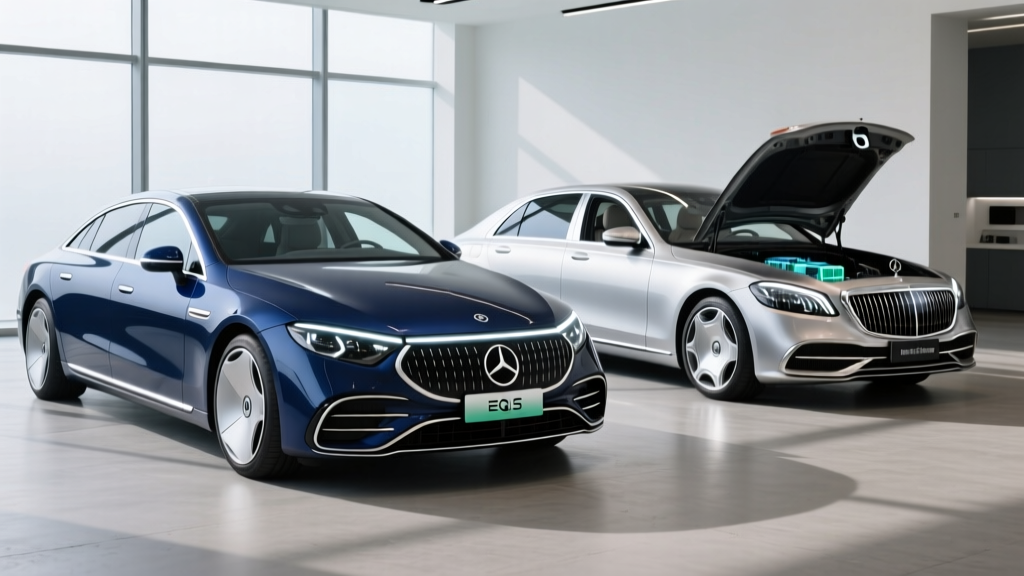
The Mercedes-Benz EQS sedan was engineered to answer a single question: can an electric vehicle deliver the same isolation, prestige, and long-distance comfort that the S-Class has provided for half a century? For 2026, the EQS lineup carries forward with meaningful updates to its battery management software, a slightly revised front fascia, and continued access to the Tesla Supercharger network via the included NACS adapter. But with a starting price north of $105,000 and a competitive luxury EV market that now includes the BMW i7, Lucid Air, and Tesla Model S, buyers need hard data — not marketing gloss.
This review breaks down the 2026 EQS 450+ and EQS 580 4MATIC with exact EPA figures, real-world range observations from highway and cold-weather driving, DC fast-charging curves, and a frank look at federal tax credit eligibility under current IRS §30D rules.
Range, Efficiency, and the Real-World Reality
The 2026 EQS 450+ (rear-wheel drive) carries an EPA-estimated range of 390 miles on its 118 kWh usable battery pack (NMC lithium-ion chemistry). The dual-motor EQS 580 4MATIC drops to an EPA-estimated 371 miles due to the added weight and parasitic loss of the front motor. Efficiency for the 450+ lands at approximately 97 MPGe combined, or about 34 kWh per 100 miles — respectable for a 5,700-pound luxury sedan, though notably behind the Lucid Air Grand Touring's 131 MPGe.
- City/commute driving (450+): 370–390 mi — regenerative braking recovers energy in stop-and-go traffic, and the EQS excels here.
- Highway cruising at 75 mph (450+): Expect 310–340 mi. Aerodynamic drag dominates at speed, and the EQS's tall sedan profile works against it compared to the slipperier Lucid Air.
- Cold weather (below 32°F, 450+): Plan for 270–310 mi. The EQS includes a standard heat pump, which mitigates cabin-heating energy draw, but battery chemistry still loses 15–25% of usable capacity in sustained freezing temperatures.
- Mountain/towing: Not a towing vehicle (no tow rating). Mountain passes with regen on descents partially offset climbing losses.
The NMC (nickel manganese cobalt) battery chemistry offers high energy density, which is why Mercedes can pack 118 kWh into a sedan footprint. However, NMC degrades slightly faster than LFP over thousands of cycles. Mercedes' battery management system maintains a generous top and bottom buffer to protect long-term health, and real-world degradation data from 2022–2024 EQS owners suggests roughly 5–7% capacity loss over the first 60,000 miles — well within the warranty threshold.
Charging Speed: DC Fast, Level 2, and the Supercharger Advantage
Charging is where flagship EV buyers often have the most questions. The 2026 EQS supports a peak DC fast-charge rate of 200 kW via its CCS port (or NACS port with the included adapter for Tesla Supercharger access). On a 350 kW Electrify America or Ionity station, the EQS can charge from 10% to 80% in approximately 31 minutes. That is competitive but not class-leading — the Hyundai Ioniq 5 and Porsche Taycan both hit 10–80% faster due to higher peak rates or 800V architectures.
| Charging Level | Power / Rate | Miles Added per Hour | Notes |
|---|---|---|---|
| Level 1 (120V household) | ~1.4 kW | ~3–4 mi/hr | Emergency/trickle only; ~40 hrs for full charge |
| Level 2 (240V home, 48A) | ~11.5 kW | ~30–33 mi/hr | Full charge in ~10–11 hours; ideal overnight |
| Level 2 (240V, 32A Wallbox) | ~7.7 kW | ~20–22 mi/hr | Budget home charger; full charge ~15 hrs |
| DC Fast Charge (peak) | 200 kW | ~600+ mi/hr (at peak) | 10–80% in ~31 min; tapers sharply above 80% |
| Tesla Supercharger (NACS adapter) | Up to 200 kW | ~600+ mi/hr (at peak) | Access to 25,000+ Superchargers nationwide |
Charging curve reality check: The 200 kW peak is sustained from roughly 10% to 40% state of charge. From 40–60%, the rate tapers to approximately 150 kW, and from 60–80% it drops further to around 100–110 kW. Above 80%, expect speeds below 50 kW as the battery management system protects cell health. This taper is normal for NMC packs but means your actual average charging speed on a 10–80% session is closer to 140 kW, not the headline 200 kW.
For home charging, a hardwired 48-amp Level 2 station on a 60-amp circuit is the recommended setup. Most EQS owners will recover a full day's driving (40–60 miles) in under two hours of overnight charging. Installation costs for a Level 2 home charger typically range from $800 to $2,500 depending on panel capacity and conduit run length — consult a licensed electrician for your specific setup.
Performance and Driving Dynamics
The EQS was tuned for wafting comfort, not Nürburgring lap times. That said, the electric powertrain delivers substantial thrust.
| Specification | EQS 450+ | EQS 580 4MATIC |
|---|---|---|
| Drivetrain | Rear-wheel drive (single motor) | All-wheel drive (dual motor) |
| Horsepower | 355 hp | 536 hp |
| Torque | 419 lb-ft | 633 lb-ft |
| 0–60 mph | 5.9 seconds | 4.1 seconds |
| Top Speed | 130 mph (electronically limited) | 130 mph |
| Curb Weight | ~5,600 lbs | ~5,890 lbs |
The 450+ is the volume seller and the efficiency champion. Its single rear motor provides smooth, linear acceleration that feels effortless in daily driving — the 5.9-second 0–60 time is quicker than most drivers will ever need. The 580 4MATIC adds a front motor for all-weather traction and a genuinely rapid 4.1-second sprint, but you pay for it in reduced range and a ~$20,000 price premium.
Ride quality is where the EQS justifies its badge. Standard AIRMATIC air suspension with adaptive damping absorbs road imperfections with the same plush isolation as the gas S-Class. Rear-axle steering (up to 10 degrees, optional on some trims) shrinks the turning circle to a remarkably car-like 35.4 feet, making parking maneuvers far easier than the EQS's 207-inch length would suggest.
Interior Space, Tech, and the Hyperscreen Question
The EQS rides on a dedicated EV platform (EVA), which gives it a flat floor and generous interior volume. Passenger space is flagship-worthy:
- Front legroom: 41.7 inches
- Rear legroom: 41.4 inches — limousine-class space, slightly more than the gas S-Class
- Cargo (trunk): 22.0 cu ft (liftback design provides wide opening)
- Frunk (front trunk): Not available — the space houses HVAC and power electronics
The available MBUX Hyperscreen spans 56 inches across the entire dashboard, combining a 12.3-inch instrument cluster, a 17.7-inch central OLED touchscreen, and a 12.3-inch passenger display. It is visually dramatic, though some drivers find the touch-capacitive controls less intuitive than physical buttons for climate and volume. The MBUX system supports wireless Apple CarPlay and Android Auto, over-the-air updates, and natural-language voice commands.
On the driver-assistance front, the EQS includes Mercedes-Benz Driver Assistance Package as standard: adaptive cruise control, lane-keeping assist, automatic emergency braking, blind-spot monitoring, and evasive steering assist. The available DRIVE PILOT system is an SAE Level 3 conditional automation feature approved for use at speeds up to 40 mph on suitable divided highways in select states (currently Nevada and California). Unlike Level 2 systems such as GM's Super Cruise, DRIVE PILOT allows the driver to legally disengage from active driving in approved conditions — though the system will prompt re-engagement when conditions change. This is a genuine technological milestone, but availability remains limited by geography and speed constraints.
Pricing, Trims, and Federal Tax Credit Eligibility
The 2026 EQS lineup is positioned firmly in six-figure territory. Here is the current MSRP structure:
| Trim | Base MSRP | Typical As-Tested | Federal §30D Credit Eligible? |
|---|---|---|---|
| EQS 450+ Sedan | $105,550 | $112,000–$125,000 | No — exceeds $55,000 sedan MSRP cap |
| EQS 450 4MATIC Sedan | $108,550 | $115,000–$130,000 | No — exceeds $55,000 sedan MSRP cap |
| EQS 580 4MATIC Sedan | $125,950 | $135,000–$155,000 | No — exceeds $55,000 sedan MSRP cap |
| EQS 450+ SUV | $106,400 | $113,000–$130,000 | No — exceeds $80,000 SUV MSRP cap |
Federal tax credit reality: Under current IRS §30D rules, new clean vehicle credits are capped at $55,000 MSRP for sedans and $80,000 for SUVs/vans/pickups. Every EQS variant significantly exceeds these limits, meaning no EQS model qualifies for the federal $7,500 clean vehicle credit. Additionally, buyer income caps ($150,000 single / $300,000 joint AGI) and battery critical-mineral sourcing requirements further restrict eligibility for luxury EVs in this price range.
However, buyers should investigate state and local incentives — some states like California, Colorado, and New York offer rebates or tax credits for EV purchases that are not subject to the same MSRP caps. Always verify current program details with your state's energy or DMV office, as these change frequently. A qualified tax professional can advise on any applicable benefits for your specific situation.
For buyers set on a Mercedes EV that does qualify for the federal credit, the Mercedes-Benz EQB (compact SUV, starting ~$54,200) may meet the MSRP threshold, though sourcing and income requirements still apply.
Ownership Costs and Warranty Coverage
Mercedes backs the 2026 EQS with a comprehensive warranty package:
- New vehicle limited warranty: 4 years / 50,000 miles
- Battery warranty: 10 years / 155,000 miles (capacity retention guaranteed above 70% of original capacity)
- Powertrain warranty: 6 years / 62,000 miles (electric motors, power electronics)
- Roadside assistance: 4 years / 50,000 miles
The 10-year/155,000-mile battery warranty is competitive and matches or exceeds most luxury EV rivals. Mercedes' 70% capacity retention threshold is standard for the industry — if your battery drops below 70% usable capacity within the warranty period, Mercedes will repair or replace it to restore function above that threshold.
Total cost of ownership favors the EQS over the gas S-Class in fuel savings. At 34 kWh/100 mi and a national average electricity rate of $0.17/kWh, charging costs approximately $0.058 per mile. The gas S-Class 500 at 20 MPG combined on premium ($4.50/gal) costs $0.225 per mile. Over 15,000 miles annually, that is a $2,505 annual fuel savings with the EQS. However, insurance premiums for the EQS tend to run 15–25% higher than the gas S-Class, and tire replacement costs are steep (21-inch Michelin EV-specific tires can exceed $400 each). Factor in no oil changes, no transmission fluid, and reduced brake wear from regenerative braking, and the 5-year ownership cost gap narrows but the EQS still costs more to buy and insure.
EQS vs. the Competition: Is It Worth Buying?
The EQS competes in a tight luxury EV flagship segment. Here is how it stacks up against key rivals:
| Attribute | Mercedes EQS 450+ | BMW i7 xDrive60 | Lucid Air Grand Touring | Tesla Model S Long Range |
|---|---|---|---|---|
| EPA Range | 390 mi | 318 mi | 516 mi | 402 mi |
| Battery (kWh usable) | 118 | 101.7 | 118 | ~100 |
| Peak DC Charge | 200 kW | 195 kW | ~250 kW (est.) | 250 kW |
| 0–60 mph | 5.9 sec | 4.5 sec | 3.0 sec | 3.1 sec |
| Base MSRP | $105,550 | $120,300 | $125,600 | $79,990 |
| MPGe (combined) | 97 | 82 | 131 | 120 |
- You prioritize ride comfort, cabin isolation, and rear-seat luxury above all else
- You want Tesla Supercharger network access via NACS adapter for road trips
- You value the prestige of the three-pointed star and S-Class lineage
- You drive primarily in cities and on moderate-length highway trips
- Maximum range is your top priority → Lucid Air Grand Touring (516 mi EPA)
- You want the best performance per dollar → Tesla Model S (3.1 sec 0–60 at $79,990)
- You want the newest interior design and iDrive integration → BMW i7
- Federal tax credit eligibility is important → look at the EQE sedan or EQB SUV
Pros, Cons, and the Bottom Line
- Class-leading 390-mile EPA range (among luxury sedans)
- Exceptional ride quality and cabin quietness
- Generous rear-seat legroom (41.4 in) rivaling the long-wheelbase S-Class
- Tesla Supercharger access via included NACS adapter
- Available DRIVE PILOT Level 3 automation (in approved areas)
- Strong 10-year/155,000-mile battery warranty
- Impressive 22 cu ft liftback cargo volume
- No federal tax credit eligibility (MSRP far exceeds §30D caps)
- 200 kW peak DC charge rate is outpaced by Porsche Taycan and Tesla
- Hyperscreen touch controls can distract; physical buttons missed
- Heavy curb weight impacts tire wear and handling agility
- No frunk for additional storage
- Insurance premiums significantly higher than gas S-Class
- Base price above $105K before any options
The 2026 Mercedes EQS is the closest thing to an electric S-Class that exists today. It delivers the ride refinement, cabin silence, and rear-seat space that flagship Mercedes buyers expect, wrapped in a dedicated EV platform with competitive range and modern charging infrastructure access. Its weaknesses — the six-figure price with no federal credit, the merely adequate DC charging speed, and the touch-heavy interior — are real but may not matter to the buyer who simply wants the most comfortable electric sedan money can buy. If your priority is pure range or performance value, the Lucid Air and Tesla Model S make stronger cases. If your priority is arriving in absolute, whisper-quiet comfort, the EQS remains the standard.
Frequently Asked Questions
What is the real-world range of the Mercedes EQS?
The EQS 450+ carries a 390-mile EPA estimate. In real-world highway driving at 75 mph, expect 310–340 miles. In cold weather (below freezing), plan for 270–310 miles. City commuting with regenerative braking can approach the EPA number.
How fast does the EQS charge at home and on the road?
On a DC fast charger, the EQS peaks at 200 kW and charges from 10–80% in approximately 31 minutes. At home on a 48-amp Level 2 station (11.5 kW), a full charge takes about 10–11 hours, adding roughly 30–33 miles of range per hour.
Does the Mercedes EQS qualify for the federal EV tax credit?
No. Under current IRS §30D rules, the federal clean vehicle credit is capped at $55,000 MSRP for sedans. Every EQS variant starts above $105,000, making it ineligible. Check your state for additional incentives that may apply.
How much does the EQS cost after incentives?
With no federal credit eligibility, the EQS 450+ starts at $105,550 MSRP. State incentives vary — some states offer $1,000–$5,000 rebates for EVs regardless of price. Consult your state energy office and a tax professional for specifics. Expect to pay close to full MSRP plus destination and any dealer-installed options.
Is the EQS worth buying over the gas S-Class?
If you have reliable home charging and want lower running costs (~$2,500/year in fuel savings), a quieter cabin, and instant torque, the EQS is a compelling alternative. However, the gas S-Class retains stronger resale value, has no range limitations, and costs significantly less to purchase upfront. The decision depends on your charging access, daily mileage, and whether the EV driving experience matters to you.
What is the EQS battery warranty?
Mercedes covers the EQS battery for 10 years or 155,000 miles, whichever comes first. The warranty guarantees capacity retention above 70% of original usable capacity. If degradation exceeds 30% within the warranty period, Mercedes will repair or replace the battery.
Can the EQS use Tesla Superchargers?
Yes. The 2026 EQS includes a NACS adapter that enables access to Tesla's Supercharger network — over 25,000 stations across North America. Charging speeds on Superchargers peak at up to 200 kW, matching the EQS's maximum DC charge rate.