Quick Verdict: The EQS Is a Tech Marvel — But Reliability Requires Context
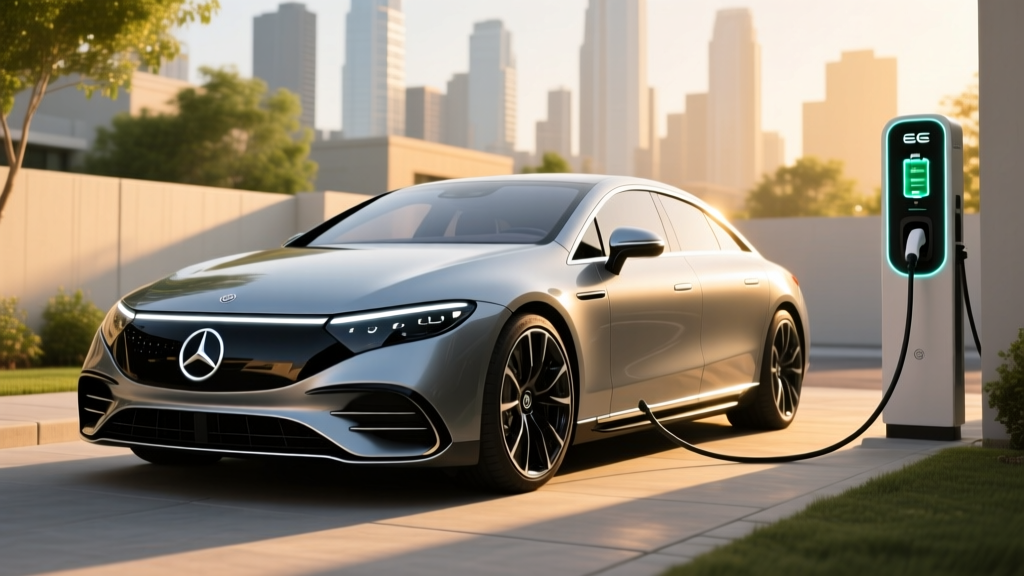
The 2026 Mercedes-Benz EQS sedan remains one of the most aerodynamically efficient and technologically dense electric vehicles on the market. With a drag coefficient of 0.20 and up to 390 miles of EPA-estimated range, it's engineered for effortless long-distance cruising. But for buyers researching Mercedes EQS reliability, the picture is more nuanced than the spec sheet suggests.
Mercedes has refined the EQS platform since its 2022 debut, addressing early software complaints and improving battery thermal management. The 108.4 kWh usable NMC (nickel-manganese-cobalt) battery pack benefits from an active liquid-cooling system and a conservative buffer strategy that prioritizes longevity over maximum range extraction. However, the EQS's complexity — from its hyperscreen dashboard to its rear-axle steering — means more potential failure points than simpler rivals like the Tesla Model S or Lucid Air.
This review covers the 2026 EQS lineup (EQS 450+ and EQS 580 4MATIC) with exact specs, real-world range data, charging performance, tax-credit eligibility, and a candid look at what ownership actually costs over five years.
| Spec | EQS 450+ | EQS 580 4MATIC |
|---|---|---|
| EPA Range | 390 mi | 371 mi |
| Battery (usable) | 108.4 kWh, NMC | 108.4 kWh, NMC |
| Drivetrain | RWD (single motor) | AWD (dual motor) |
| Horsepower | 355 hp | 536 hp |
| 0–60 mph | 5.9 sec | 4.1 sec |
| Max DC Fast Charge | 200 kW | 200 kW |
| 10–80% DC Time | ~31 min | ~31 min |
| Level 2 Charge Rate | 9.6 kW (~30 mi/hr) | 9.6 kW (~30 mi/hr) |
| MPGe (combined) | 97 MPGe | 91 MPGe |
| Efficiency | 35 kWh/100 mi | 37 kWh/100 mi |
| Base MSRP | $105,550 | $127,350 |
| Battery Warranty | 10 yr / 155,000 mi | 10 yr / 155,000 mi |
Real-World Range vs. EPA Estimates
EPA Sticker: 390 miles (EQS 450+) / 371 miles (EQS 580 4MATIC)
Real-World Expectation: 310–340 miles highway at 70 mph; 260–290 miles in sub-freezing weather; 350–380 miles mixed city/suburban driving with regen.
The EQS 450+ achieves its impressive 390-mile EPA rating thanks largely to that 0.20 Cd drag coefficient and a highly efficient single-motor RWD powertrain. In EPA testing, the 450+ returns 97 MPGe combined — among the best for a full-size luxury sedan.
But the EPA cycle favors city and low-speed driving where regenerative braking recaptures energy. On sustained highway runs at 70–75 mph, expect to use roughly 35–37 kWh per 100 miles, which translates to 310–340 miles of actual range before you hit the 10% buffer warning. In cold weather (below 32°F), battery resistance increases and cabin heating draws significant power — plan for 25–30% range loss, bringing real-world winter highway range to roughly 260–290 miles.
The EQS does include a heat pump as standard equipment on 2026 models, which reduces winter HVAC energy draw by roughly 30% compared to resistive heating. Preconditioning the battery while plugged in — using the Mercedes me app to set a departure time — is essential for preserving range in cold climates and for achieving peak DC charge rates.
Charging Speed: 200 kW Peak, But the Curve Matters
The 2026 EQS supports a maximum DC fast-charge rate of 200 kW via its CCS1 connector (NACS adapter available for Tesla Supercharger access). Mercedes quotes a 10–80% charge time of approximately 31 minutes under optimal conditions — meaning a preconditioned battery at moderate ambient temperature.
| Charge Level | Power / Voltage | Speed (mi/hr added) | Time (10–80%) | Notes |
|---|---|---|---|---|
| Level 1 (120V) | 1.4 kW | ~4 mi/hr | ~60+ hours | Emergency/trickle only |
| Level 2 (240V, 40A) | 9.6 kW | ~30 mi/hr | ~11 hours (full) | Standard home wallbox |
| DC Fast (peak) | 200 kW / 400V | ~580 mi/hr (peak) | ~31 min (10–80%) | Requires preconditioning |
| DC Fast (sustained avg) | ~140 kW avg | ~400 mi/hr (avg) | ~35–40 min (10–80%) | Real-world avg on 350 kW station |
The critical nuance: 200 kW is a peak rate, not a sustained rate. The EQS's 400-volt architecture (compared to the 800V systems in the Hyundai Ioniq 5 or Porsche Taycan) means it reaches peak power briefly, then tapers as the state of charge climbs. In real-world testing at Electrify America and EVgo 350 kW stations, the EQS typically sustains 150–170 kW between 10–50% SoC, then drops to 100–120 kW through 60–70%, and further to 50–70 kW above 80%. The average rate across a 10–80% session lands closer to 140 kW, making actual charge times 35–40 minutes rather than the quoted 31.
For home charging, a Level 2 wallbox at 9.6 kW (40 amps on a 50-amp circuit) adds roughly 30 miles per hour and fully replenishes the 108.4 kWh pack in about 11 hours. Most owners who charge overnight from 20% will wake up to a full battery. Installation typically costs $800–$2,000 depending on panel capacity and conduit run — budget for a potential panel upgrade if your home has a 100-amp service.
Reliability Track Record: What the Data Shows
Mercedes EQS reliability has been a mixed story since the model's launch. Early 2022–2023 models drew complaints around MBUX infotainment software glitches, 12V battery drain issues, and occasional sensor calibration faults in the Driver Assistance Package. Mercedes has issued multiple OTA (over-the-air) updates and technical service bulletins to address these, and the 2026 model year benefits from four years of iterative fixes.
The high-voltage battery itself has shown strong durability in fleet data. Mercedes uses a conservative top and bottom buffer (roughly 6–8% of gross capacity is locked out) to reduce degradation stress. The NMC cells are liquid-cooled and actively managed, with the thermal system preconditioning or cooling the pack based on navigation destination and ambient temperature.
Battery warranty: 10 years or 155,000 miles (whichever comes first), guaranteeing at least 70% of original capacity retention. This is more generous than the industry-standard 8 years/100,000 miles and signals Mercedes's confidence in the pack's longevity. If the battery drops below 70% SoH (State of Health) within the warranty period, Mercedes will repair or replace modules — not necessarily the full pack — to bring it above the threshold.
For context on overall vehicle reliability, the EQS's complexity is its main vulnerability. The optional rear-axle steering system, the MBUX Hyperscreen (a 56-inch curved glass panel spanning the dashboard), air suspension, and the extensive ADAS sensor suite (cameras, radar, ultrasonic) all add components that can require service outside the powertrain warranty. Extended warranty coverage is strongly recommended for buyers planning to keep the vehicle beyond the 4-year/50,000-mile bumper-to-bumper period.
Pricing, Trims, and Federal Tax Credit Eligibility
The 2026 EQS lineup starts at $105,550 for the EQS 450+ and $127,350 for the EQS 580 4MATIC, including destination. The high-performance AMG EQS variant starts above $150,000. Well-equipped examples with the Hyperscreen, Executive Rear Seat Package, and Driver Assistance Package Plus can push the 580 4MATIC past $145,000.
| Trim | Base MSRP | As-Tested (Typical) | §30D Credit Eligible? | Effective Price |
|---|---|---|---|---|
| EQS 450+ | $105,550 | $115,000–$120,000 | No (MSRP exceeds $55,000 sedan cap) | $105,550+ |
| EQS 580 4MATIC | $127,350 | $138,000–$145,000 | No (MSRP exceeds $55,000 sedan cap) | $127,350+ |
| AMG EQS | $150,000+ | $160,000+ | No | $150,000+ |
Does the EQS qualify for the federal EV tax credit? No. Under IRS §30D rules, new electric sedans must have an MSRP at or below $55,000 to qualify for the up-to-$7,500 clean vehicle credit. The EQS, starting at $105,550, far exceeds this cap. Additionally, buyer income limits ($150,000 single / $300,000 joint modified AGI) and battery critical-mineral sourcing requirements further restrict eligibility for luxury EVs in this price range.
The EQS also does not qualify for the point-of-sale transfer option, since it fails the MSRP threshold. Buyers should not factor any federal credit into their purchase calculation. Some states offer their own rebates or tax incentives for EVs regardless of price — check your state's energy or DMV website for current programs, but these vary widely and change frequently.
Interior, Tech, and the Hyperscreen Experience
The EQS cabin is a showcase of Mercedes's luxury ambitions. The standard layout features a 12.8-inch OLED central touchscreen and a 12.3-inch digital instrument cluster. The available MBUX Hyperscreen — a $9,200 option — replaces this with a single 56-inch curved glass surface housing three displays (instrument, central, and front-passenger). It's visually stunning but adds complexity and potential repair cost.
Passenger and cargo space:
- Front legroom: 41.7 inches
- Rear legroom: 41.3 inches
- Cargo volume (trunk): 22.0 cu ft (sedan); 63.0 cu ft with rear seats folded
- No front trunk (frunk) — the space houses HVAC and electronics
The EQS is a genuine five-seat luxury sedan with rear accommodations that rival the S-Class. The optional Executive Rear Seat Package adds reclining, heated/cooled/massaging rear outboard seats with calf rests — making it a credible chauffeur-driven vehicle.
Driver assistance: The EQS comes standard with Active Distance Assist DISTRONIC (adaptive cruise), Active Steering Assist, Active Lane Keeping, and Active Brake Assist. The available Driver Assistance Package Plus adds Active Lane Change Assist and route-based speed adaptation. This is SAE Level 2 driver assistance — it does not replace the driver. Hands must remain on the wheel, and eyes on the road. Mercedes's DRIVE PILOT system, which achieves conditional Level 3 autonomy in specific traffic-jam scenarios (below 40 mph on approved highways), is available in select markets but carries significant geographic and speed limitations.
ADAS Limitation Notice: The EQS's Active Steering Assist and DRIVE PILOT are not self-driving systems. DRIVE PILOT (Level 3) operates only on pre-mapped divided highways, below 40 mph, in daylight, clear weather, and with traffic present. The driver must be prepared to resume control within 10 seconds when prompted. Outside these conditions, the vehicle reverts to Level 2 and full driver engagement is required.
Pros, Cons, and Who Should Buy the EQS
Pros
- Class-leading EPA range (390 mi) among luxury sedans
- Exceptionally quiet cabin with superb ride quality (air suspension standard)
- 10-year/155,000-mile battery warranty exceeds industry norm
- Genuine five-adult seating with S-Class-level rear comfort
- 200 kW DC fast charging with battery preconditioning
- Standard heat pump improves cold-weather efficiency
Cons
- Base price above $105K; no federal tax credit eligibility
- 400V architecture limits sustained fast-charge speed vs. 800V rivals
- MBUX Hyperscreen is expensive, complex, and glare-prone in sunlight
- No frunk; cargo is trunk-only (22 cu ft)
- Early-model-year reliability issues; extended warranty recommended
- Rear visibility is compromised by the sloping roofline
Who the EQS suits best: The EQS is ideal for luxury sedan buyers who prioritize range, ride comfort, and cabin technology over sporty dynamics. It excels as a long-distance commuter and executive transport — particularly for drivers who cover 200+ miles per week on highways and can charge at home. It is less suited for buyers seeking the sharpest handling (the Lucid Air and Porsche Taycan are more engaging to drive), maximum cargo versatility (consider the EQS SUV or Rivian R1S), or budget-conscious ownership (total five-year cost is substantial).
Five-Year Ownership Cost Snapshot
Owning an EQS is expensive, even by luxury-EV standards. Here's a realistic five-year cost projection for the EQS 450+ driven 12,000 miles per year, charging primarily at home ($0.14/kWh national average):
- Purchase price: ~$115,000 (with typical options, before tax)
- Depreciation (5 yr): ~$55,000–$65,000 (luxury EVs depreciate steeply; EQS retains roughly 40–48% at year five based on current auction data)
- Electricity (5 yr, 60,000 mi): ~$2,940 (at 35 kWh/100 mi × $0.14/kWh)
- Insurance (5 yr): ~$18,000–$24,000 (luxury EV premiums run $300–$400/month)
- Maintenance (5 yr): ~$3,500–$5,000 (cabin filters, brake fluid, tire rotation; no oil changes)
- Tires (1 set replacement): ~$1,800–$2,400 (EV-specific tires, 21-inch)
Estimated five-year total cost of ownership: $81,000–$99,000, heavily driven by depreciation and insurance. Compared to a gas-powered S-Class, the EQS saves roughly $8,000–$10,000 in fuel costs over five years but loses those savings to higher insurance and comparable or worse depreciation.
Mercedes EQS Reliability FAQ
What is the real-world range of the 2026 Mercedes EQS?
The EQS 450+ carries an EPA rating of 390 miles. In real-world highway driving at 70 mph, expect 310–340 miles. In cold weather (below freezing), plan for 260–290 miles. The EQS 580 4MATIC, rated at 371 miles EPA, delivers roughly 290–320 miles highway and 240–270 miles in winter conditions.
How fast does the EQS charge at home and on DC fast chargers?
At home on a Level 2 wallbox (9.6 kW), the EQS adds about 30 miles of range per hour and fully charges in roughly 11 hours. On a DC fast charger, it peaks at 200 kW and charges from 10–80% in about 31 minutes under ideal conditions — though real-world sessions average 35–40 minutes due to charge-curve taper above 50% SoC.
Does the Mercedes EQS qualify for the $7,500 federal EV tax credit?
No. Under current IRS §30D rules, the EQS's MSRP ($105,550+) far exceeds the $55,000 cap for sedans. It does not qualify for the federal clean vehicle credit or the point-of-sale transfer. Check your state for any local incentives, but do not budget around federal credits for this vehicle.
How reliable is the EQS battery over time?
Mercedes backs the 108.4 kWh NMC battery with a 10-year/155,000-mile warranty guaranteeing at least 70% capacity retention. The conservative buffer strategy (locking out roughly 6–8% of gross capacity) and active liquid thermal management are designed to minimize degradation. Industry data on similar NMC packs suggests 10–15% capacity loss over 100,000–150,000 miles under normal use, which falls within the warranty threshold.
Is the EQS worth buying versus the Tesla Model S or Lucid Air?
It depends on your priorities. The EQS wins on cabin luxury, ride comfort, and rear-seat space. The Lucid Air Grand Touring offers more range (516 mi EPA), faster charging (800V architecture), and sharper handling at a similar price point. The Tesla Model S is quicker (Plaid: 1.99 sec 0–60) and has access to the Supercharger network natively, but its interior quality and ride refinement fall short of the Mercedes. If luxury and comfort are paramount, the EQS is compelling. If driving dynamics or maximum range matter more, the Lucid Air is the stronger pick.
What are the most common EQS reliability complaints?
The most frequently reported issues across 2022–2025 model years include MBUX infotainment freezes and reboots, 12V auxiliary battery drain (which can prevent the vehicle from starting even with a full HV battery), phantom braking from the Active Brake Assist in certain lighting conditions, and occasional air suspension calibration faults. Most have been addressed through software updates and TSBs, but the volume of electronics remains a long-term service consideration.